Some plants behave in ways that make you stop and question whether they’re even plants at all.

They snap shut on prey, ooze strange fluids, or eve put out structures that look eerily like teeth, claws, or tongues. They’re the kinds of species that blur the line between the plant world and something far stranger, and the more you learn about them, the harder it is to see them as harmless greenery. They’ve evolved tricks that feel almost creature-like, and that’s what makes them so fascinating.
Spend a little time with the weirder corners of botany, and you realise how wild these adaptations really are. These plants lure, trap, sense and respond to their surroundings with a precision that looks downright animal-like. They’ve carved out their own survival strategies, and none of them involve sitting silently in the soil waiting for luck. Once you see what they’re capable of, you’ll never look at the plant kingdom the same way again.
1. Venus flytraps count to five before they snap shut.
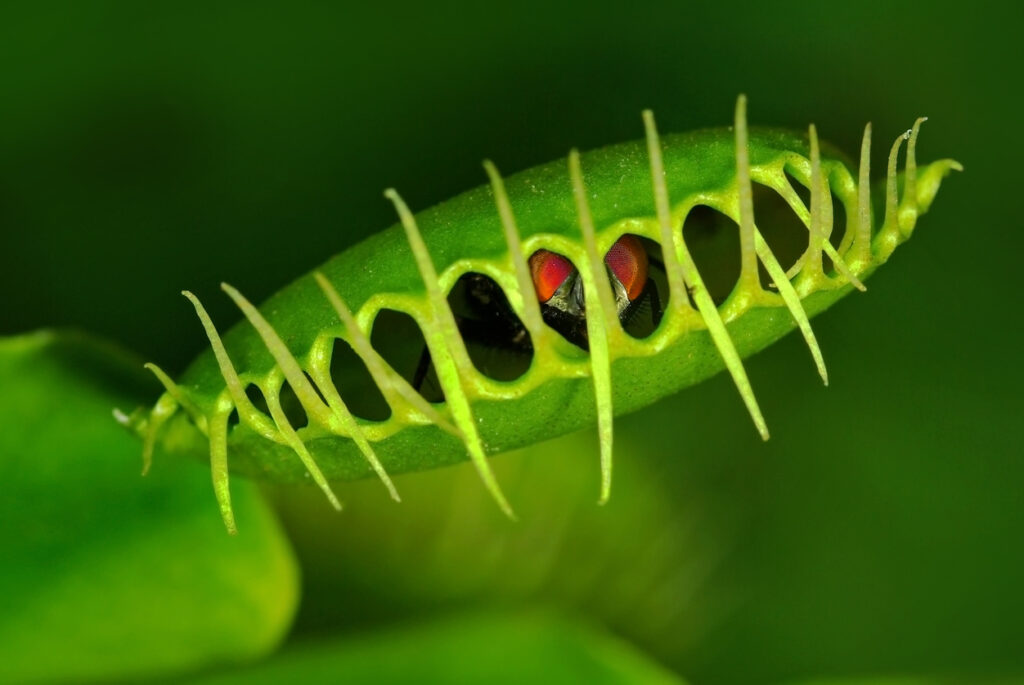
This carnivorous plant doesn’t just react blindly when something touches its trigger hairs. It actually counts the touches, needing at least two within about 20 seconds before it decides to slam shut and start digesting whatever’s inside. This stops it wasting energy on false alarms like raindrops or debris.
The really freaky part is that scientists have discovered these plants can count up to five touches and use that information to decide how much digestive enzyme to release based on how much the prey is struggling. A plant doing maths to hunt more efficiently is genuinely unsettling and way more animal-like than any stationary organism has the right to be.
2. Dodder vines smell their prey and hunt it down.
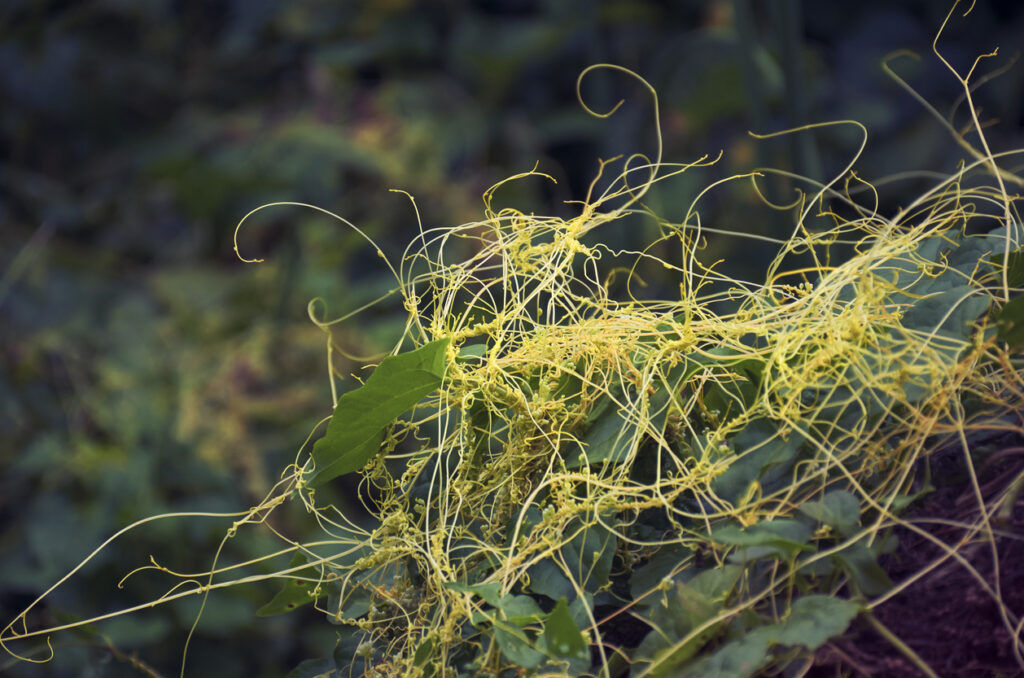
The dodder plant is basically a vampire that hunts by scent. It emerges from the soil as a seedling and immediately starts rotating around, sniffing the air for chemical signals from nearby plants. Once it picks up a promising smell, it grows directly towards that plant, ignoring less nutritious options.
When it reaches its victim, the dodder wraps around it and drives root-like structures into the plant’s tissue to suck out nutrients. It can even taste whether a plant is worth attacking or if it should keep searching for something better. A plant that actively hunts, makes decisions about prey quality, and moves with purpose towards a kill is absolutely monstrous.
3. Mimosa pudica flinches and learns from experience.
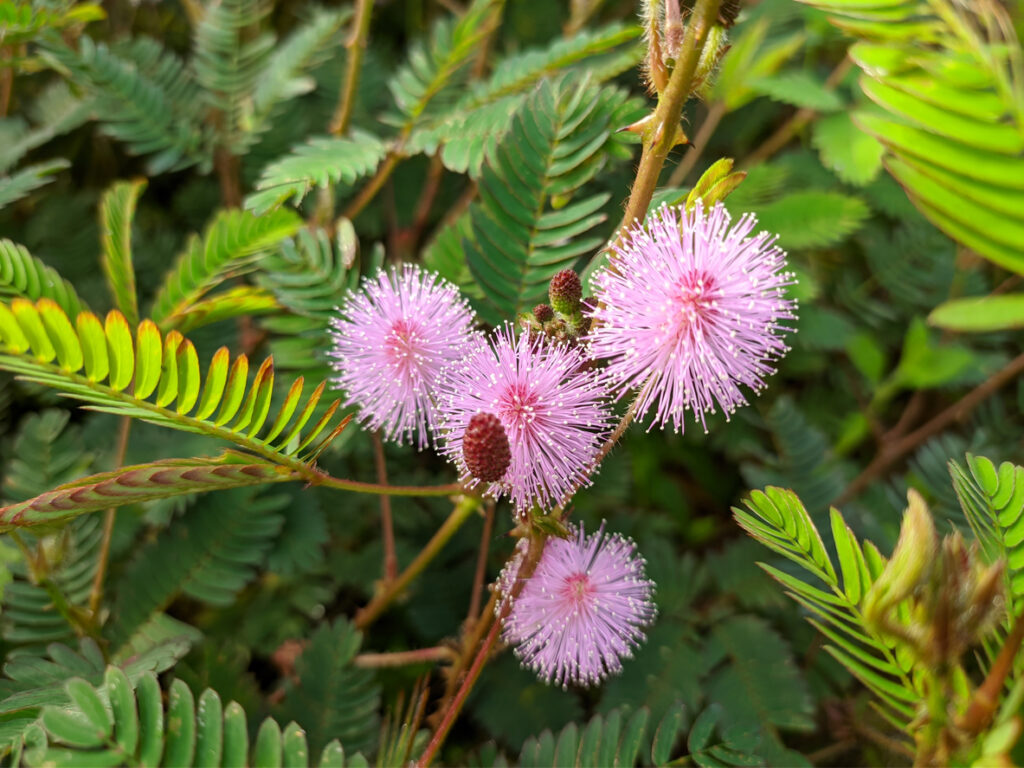
Touch a mimosa plant and it rapidly collapses its leaves as if recoiling in fear or pain, which looks disturbingly animal-like. The leaves fold up and droop within seconds of being touched, which scientists think might be to scare off insects or make the plant look less appealing to browsers.
Even weirder, researchers have found these plants can learn and remember. If you keep dropping them from a height, they initially fold up in response, but then stop bothering once they’ve learned the drop isn’t actually dangerous. They retain this memory for weeks. A plant that learns from experience and changes its behaviour accordingly has crossed a line that makes people seriously uncomfortable.
4. Sundews move their tentacles to grab struggling insects.
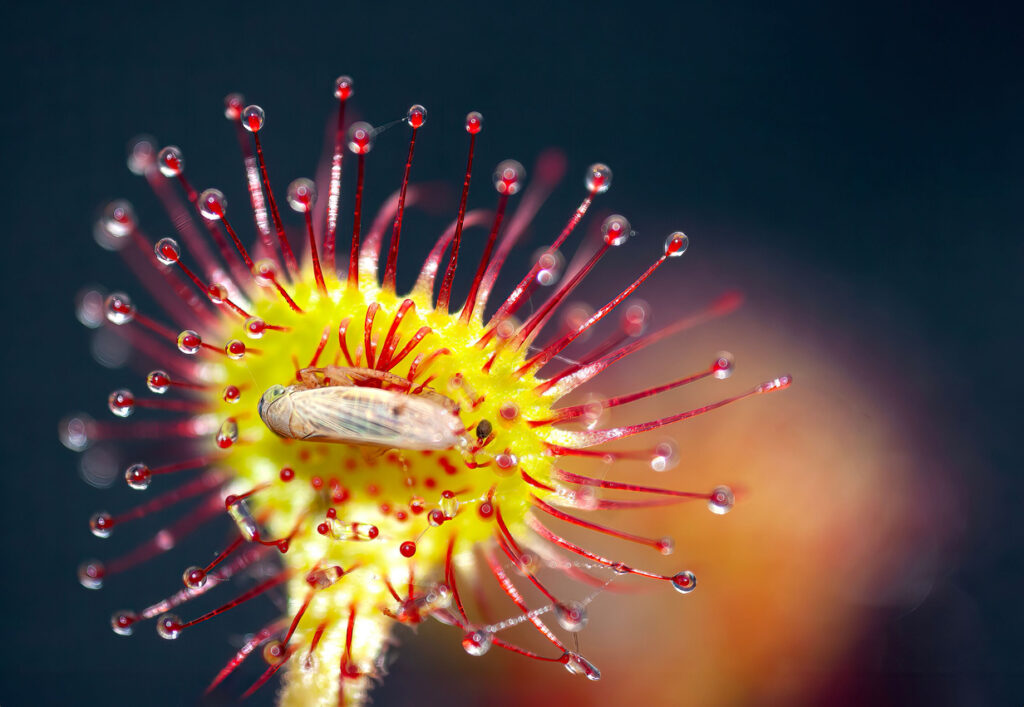
Sundew plants are covered in sticky tentacles that glisten with what looks like dew, but is actually incredibly sticky glue. When an insect lands and gets stuck, the surrounding tentacles actively bend towards the prey, curling around it to maximise contact and prevent escape.
This isn’t passive trapping, the plant is literally reaching out and grabbing its victim, which can take anywhere from a few minutes to half an hour depending on how much the insect struggles. Some sundews even curl their entire leaf around the prey like a fist closing. Watching a plant actively pursue and secure a kill in slow motion is deeply disturbing.
5. Bladderworts suck prey in faster than you can blink.

These aquatic carnivores have tiny bladders with trapdoors that create a vacuum inside. When a small organism like a water flea brushes against trigger hairs near the door, the bladder suddenly expands and the door flies open, sucking the prey inside in less than a millisecond. That’s faster than a human can blink.
The whole mechanism is so fast that it creates a vortex that drags in water and prey with incredible force. The victim is trapped before it even realises what’s happened, and the bladder resets itself to hunt again within minutes. A plant that actively hunts using a sophisticated mechanical trap at superhuman speeds is nightmare fuel.
6. Pitcher plants drug their prey before drowning them.
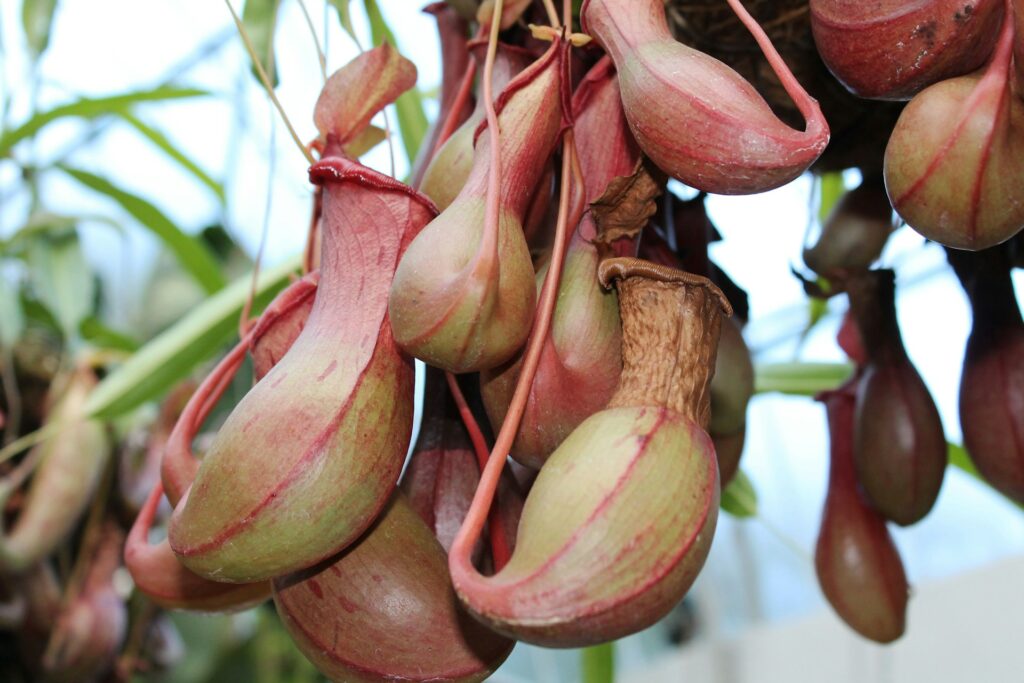
Pitcher plants lure insects with nectar that contains a cocktail of sedatives and intoxicants. The visiting insect gets progressively more drugged and clumsy as it feeds, eventually tumbling into the fluid-filled pitcher below, where it drowns in a soup of digestive enzymes.
Some pitcher plants even have ridged surfaces specifically designed to make drugged insects lose their footing, or downward-pointing hairs that let prey walk in but prevent them from climbing back out. The plant is essentially poisoning its victims to make them easier to catch and kill. That level of chemical warfare and entrapment design is disturbingly calculated for an organism without a brain.
7. Telegraph plants dance without any external stimulus.
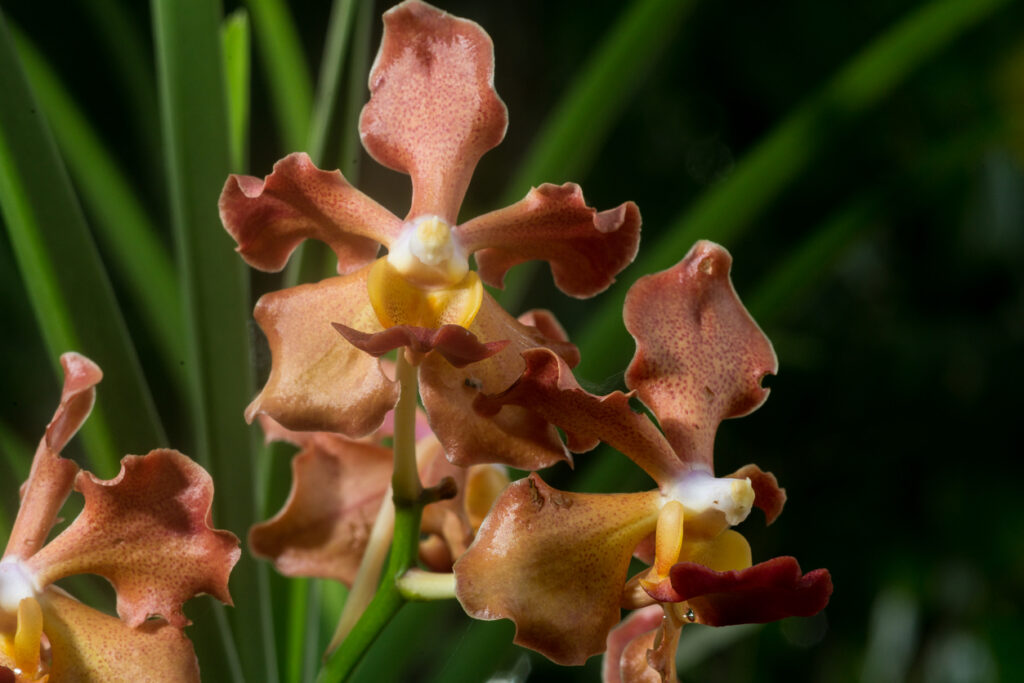
The telegraph plant moves its leaves constantly in jerky rotating motions that look exactly like deliberate gestures or dance moves. The small side leaves rotate in elliptical patterns, while the larger central leaf moves up and down, all without any wind, touch, or other obvious stimulus.
Nobody fully understands why it does this, though theories range from attracting pollinators to shaking off debris or maximising sunlight. What’s freaky is that the movement is continuous and purposeful-looking, giving the plant an unsettling sense of agency and awareness. Watching it move on its own like it’s got somewhere to be is genuinely unnerving.
8. Strangler figs slowly murder their host trees.
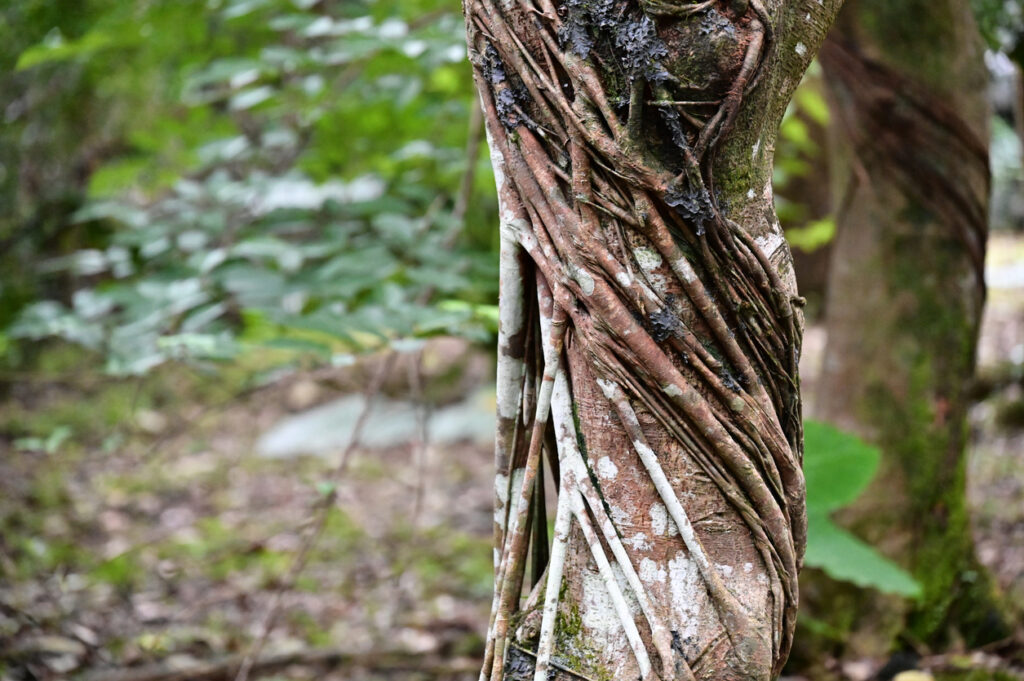
These plants start life as seeds deposited high in a tree’s canopy by birds. The seedling sends roots down towards the ground while growing leaves to photosynthesise. Over decades, those roots thicken and fuse together, forming a cage around the host tree’s trunk.
Eventually, the strangler fig’s roots completely encase the host, cutting off its nutrient flow and access to sunlight until the original tree dies and rots away, leaving a hollow fig tree shaped like the ghost of its victim. This slow-motion murder can take 50 years or more. A plant that spends half a century systematically killing another plant while using it as scaffolding is properly monstrous.
9. Corpse flowers heat themselves up and stink like rotting meat.
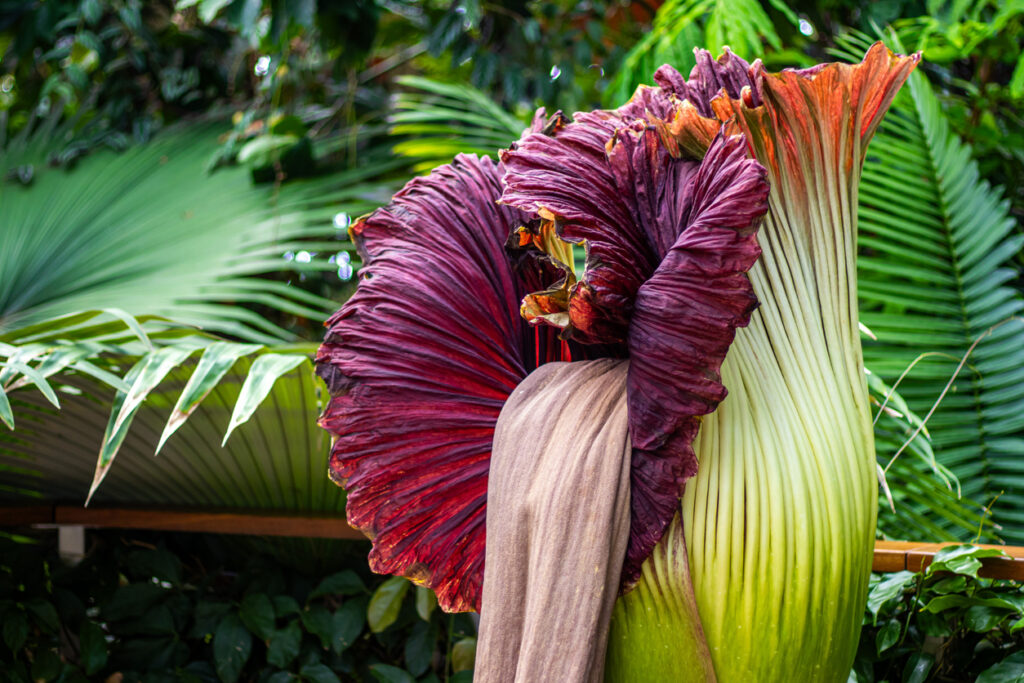
The titan arum generates its own heat, warming itself up to human body temperature when it blooms. This thermogenesis helps spread its horrific smell, which mimics rotting flesh so accurately that it attracts carrion flies and beetles looking for somewhere to lay eggs.
The flower can raise its temperature by 15 degrees Celsius above the surrounding air, using metabolic processes nearly identical to warm-blooded animals. A plant that actively warms itself, deliberately produces the smell of death, and tricks insects with chemical deception is operating at a level of sophistication that seems impossibly devious for something rooted to the ground.