
Most of the minerals we use to understand our planet were formed deep underground or shaped by heat and pressure. However, a few are far less earthly. Some minerals found on Earth weren’t created here at all. They arrived from space, carried inside meteorites that crashed into the planet long before humans existed. Scientists study these unusual materials because they reveal what the early solar system was made of and offer a glimpse into the chemistry of distant worlds.
What makes these minerals fascinating isn’t just that they’re rare. It’s the idea that something sitting in a museum case or buried under a field started its journey millions of kilometres away. In a world where so much feels mapped and explained, these minerals remind us that we’re living on a rock floating in space, and we’re still discovering pieces of other worlds that fell into ours.
1. Kamacite
This metallic iron-nickel alloy makes up the bulk of iron meteorites and is essentially metallic iron with up to 7.5% nickel. It’s what gives many meteorites their distinctive silvery appearance and heavy weight.
Kamacite forms deep within asteroid cores over millions of years of slow cooling, similar to the material in Earth’s outer core. When polished and etched with acid, it reveals beautiful geometric patterns called Neumann bands, created when meteorites experience violent impacts in space.
2. Taenite
The other major iron-nickel alloy in meteorites, taenite contains between 27% and 65% nickel, making it much richer in nickel than kamacite. Together with kamacite, it creates the famous Widmanstätten pattern seen in iron meteorites.
This distinctive crystalline intergrowth only forms under incredibly slow cooling conditions over millions of years, proving these meteorites came from the cores of shattered planetoids. The pattern is so unique that it’s impossible to fake and serves as definitive proof a metal sample came from space.
3. Schreibersite
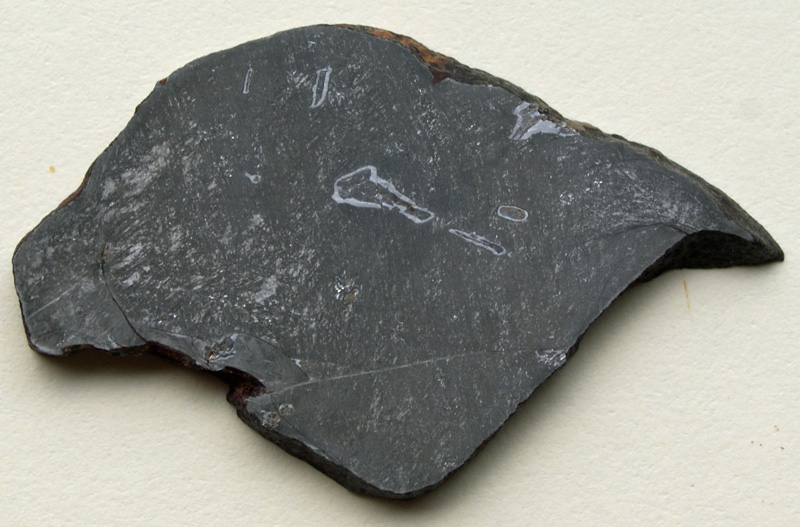
This iron-nickel phosphide mineral appears as yellowish metallic plates within meteorites and was originally found only in space rocks. It’s extremely hard, brittle, and magnetic.
Scientists recently discovered that schreibersite might have played a crucial role in the origin of life on Earth. When it reacts with water, it releases phosphorus in a form that primitive organisms could use, potentially providing one of life’s essential building blocks through meteorite impacts billions of years ago.
4. Niningerite
Named after American meteoriticist Harvey Nininger, this magnesium-iron sulfide is found exclusively in rare enstatite meteorites. It’s a dark mineral that forms under extremely reducing conditions not found on Earth’s surface.
The presence of niningerite tells scientists about the oxygen-poor environments in certain parts of the early solar system. Its chemistry reveals that some asteroids formed in completely different conditions than anything we see on our planet today.
5. Oldhamite
This calcium sulfide mineral is incredibly rare on Earth but shows up in certain types of meteorites. It’s typically brownish and forms under conditions where oxygen is virtually absent.
Scientists recovered oldhamite from a meteorite in California, and its presence indicates formation in one of the most oxygen-poor environments in the solar system. The mineral is so reactive with Earth’s atmosphere that it rarely survives long once a meteorite lands.
6. Edscottite
Discovered in 2019 inside the Wedderburn meteorite found in Australia nearly 70 years earlier, edscottite is made of a special crystalline pattern of iron and carbon atoms that doesn’t naturally occur on our planet.
The mineral is named after cosmochemist Edward R.D. Scott, who first identified its chemical composition in the 1970s but couldn’t determine its crystal structure. It likely formed when nickel-rich iron meteorites slowly cooled inside an asteroid, creating conditions impossible to replicate on Earth’s surface.
7. Elaliite
One of the newest minerals discovered, elaliite was found in 2022 in Somalia’s massive El Ali meteorite, which weighs 15 tonnes. This iron-phosphorus-oxygen mineral had been created synthetically in labs but never seen in nature until this discovery.
The mineral’s existence in the meteorite proves that the chemical conditions inside certain asteroids were even more diverse than scientists previously thought. Its discovery suggests there could be hundreds more unknown minerals waiting to be found in space rocks.
8. Elkinstantonite
Found alongside elaliite in the same Somali meteorite, elkinstantonite is named after planetary scientist Lindy Elkins-Tanton. It also has an iron-phosphorus-oxygen composition similar to materials created in French laboratories in the 1980s.
The simultaneous discovery of both minerals in one meteorite indicates this space rock experienced unique formation conditions during the chaotic early solar system. Scientists believe studying these minerals helps fill in details about the violent collisions that shaped our cosmic neighbourhood billions of years ago.
9. Wassonite
Discovered in 2011 in a meteorite that fell in 1969, wassonite is a titanium-sulfide mineral found in tiny amounts within certain space rocks. It forms at extremely high temperatures in oxygen-poor environments.
The mineral is so small that it took decades and advanced microscopy techniques to identify it properly. Its discovery shows that even meteorites studied for years can still reveal new secrets when examined with better technology.
10. Calcium-aluminium inclusions
These white mineral inclusions found in the famous Allende meteorite that fell in Mexico in 1969 are among the oldest solid materials in the solar system. They’re composed of minerals with the same composition as the sun minus hydrogen and helium.
These inclusions are essentially pre-planetary material from the solar nebula, the cloud of gas and dust from which everything in our solar system formed. They’re older than Earth itself and provide scientists with a direct window into the first half-billion years of solar system history.
11. Cohenite
This iron carbide mineral appears as hard, brittle metallic inclusions in iron meteorites. It’s one of the hardest minerals found in space rocks and contains about 6.7% carbon by weight.
Cohenite forms when carbon-rich material mixes with molten iron deep inside asteroids. While it can be created synthetically, natural cohenite on Earth is vanishingly rare outside of meteorites, making any specimen almost certainly extraterrestrial in origin.
12. Troilite
This iron sulfide mineral is common in meteorites but quite rare in Earth rocks. It’s metallic bronze in colour and often appears as nodules within iron meteorites, sometimes surrounded by metallic kamacite.
Troilite is significant because it preserves magnetic signatures from the early solar system, recording ancient magnetic fields that existed when asteroids were forming. By studying troilite, scientists can reconstruct what conditions were like in the asteroid belt over four billion years ago.