Caracals are one of those animals most people have never heard of, but once you see one, you won’t forget it.

They’re medium-sized wild cats with the most ridiculous ear tufts you’ve ever seen, like they’ve got little black paintbrushes sticking out of their heads. However, what makes them really interesting is their history with humans. For thousands of years, royalty in places like India, Persia, and Egypt trained caracals to hunt, treating them like the feline equivalent of falcons. Here’s everything you need to know about these striking wild cats and their royal past.
They’ve got the most dramatic ears in the cat world.

Caracals are famous for their ears. Long, pointed, and topped with thick black tufts that can be nearly two inches long. The name “caracal” actually comes from a Turkish word meaning “black ear.” These tufts aren’t just for show, they help with communication between caracals and possibly help with hearing too.
The ears can rotate independently like satellite dishes, helping them pinpoint prey with incredible accuracy. Those tufts might also help keep flies away from their ear canals. Whatever the exact purpose, they give caracals a distinctive look that makes them instantly recognisable.
They’re incredible jumpers.

Caracals can leap up to 10 feet straight up into the air. This insane jumping ability lets them snatch birds right out of the sky. They’ll crouch, wait for a bird to fly low, then explode upwards and grab it mid-flight. It’s absolutely spectacular to watch.
This skill made them particularly valuable for hunting. They could catch game birds that other hunting animals couldn’t reach. Their powerful hind legs are built for this explosive jumping, making them one of the most athletic wild cats relative to their size.
Ancient royalty used them like hunting dogs.
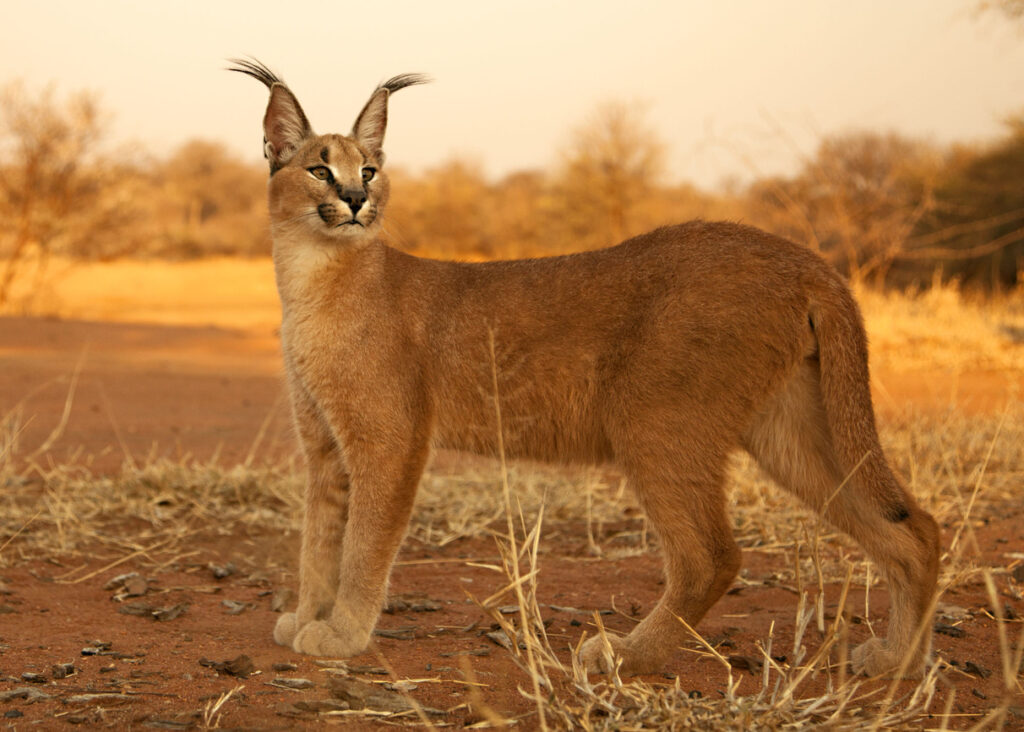
In India and Persia, emperors and nobility kept trained caracals for hunting, similar to how Europeans used falcons. They’d release caracals into flocks of birds, and the cats would leap up and knock down multiple birds in quick succession. It was considered a sport and a display of wealth.
These hunting caracals were highly prized and expensive. Keeping and training them was a status symbol. The practice was so popular in some regions that entire events were organised around caracal hunting displays, with nobility competing to see whose cat could catch the most birds.
They’re not actually closely related to lynxes.

Caracals are sometimes called “desert lynx” because of their appearance and ear tufts, but they’re not really lynxes at all. They’re in their own genus and are actually more closely related to servals and African golden cats than to true lynxes.
The confusion comes from the superficial similarities, like the tufted ears and body shape. But genetically and behaviourally, they’re quite different animals. It’s a case of convergent evolution, where unrelated cats developed similar features to deal with similar environments.
They live in surprisingly varied habitats.
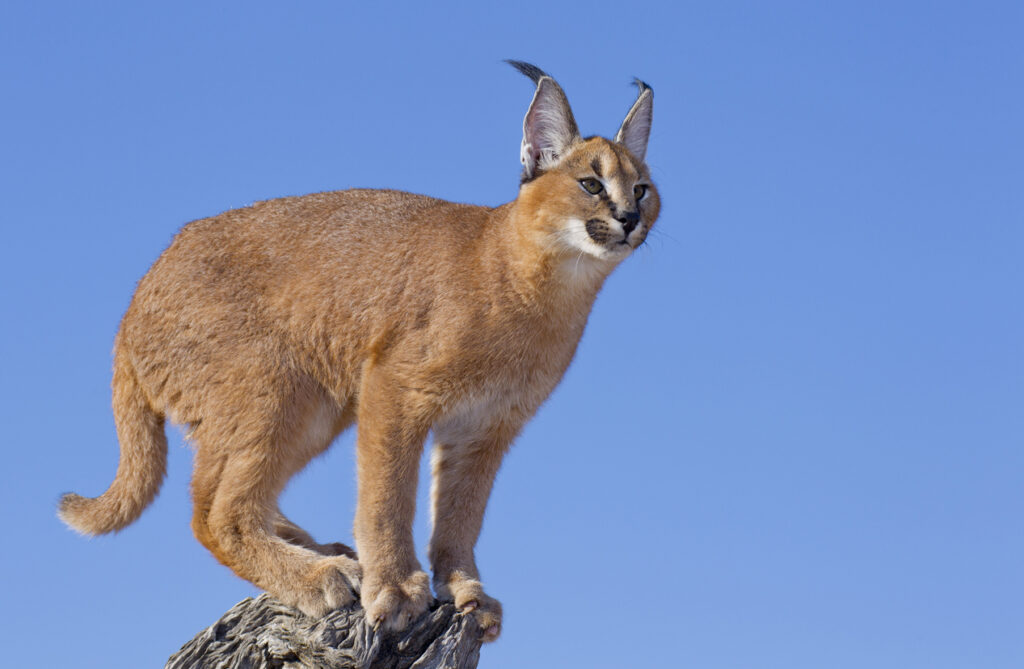
Caracals are found across Africa, the Middle East, and parts of India and Pakistan. They can survive in everything from dry savannahs and semi-deserts to woodland and scrubland. They’re incredibly adaptable and can live in areas where other wild cats struggle.
Their adaptability is part of why they were so widespread and available for royalty to train. They weren’t rare exotic creatures, they were relatively common in the regions where this hunting tradition developed. Their ability to thrive in different environments made them reliable hunting companions.
They can survive without drinking water.
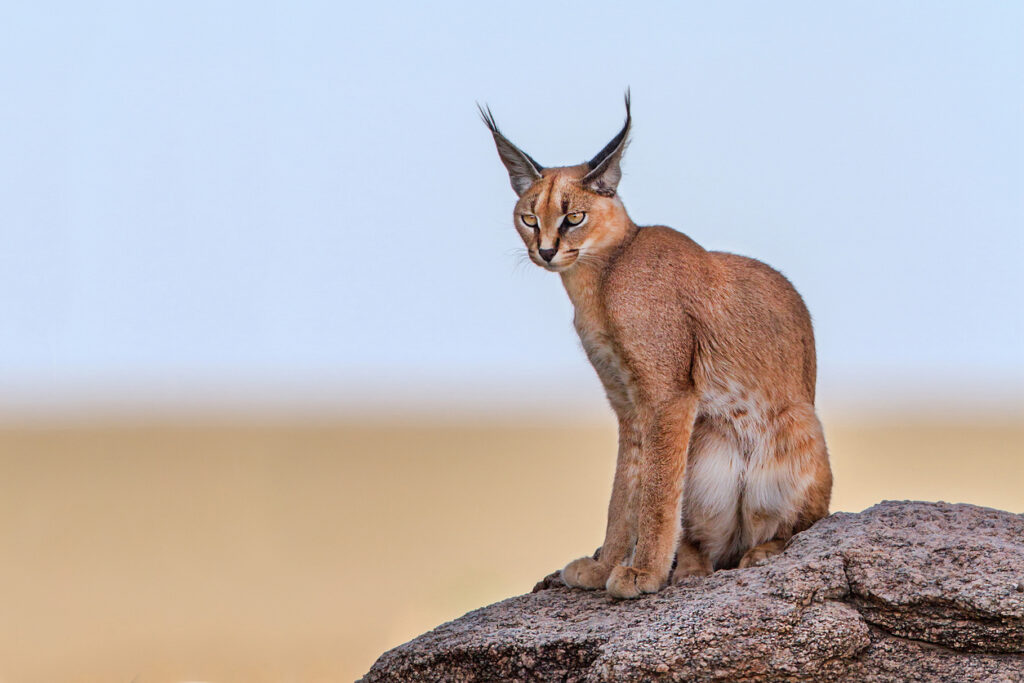
Like many desert-adapted animals, caracals can get all the moisture they need from their prey. They don’t need to drink water regularly, which lets them survive in extremely arid environments where water sources are scarce or seasonal.
Their kidneys are incredibly efficient at concentrating urine so they lose minimal water. This adaptation made them perfect for hunting in desert regions where other animals would struggle. They could accompany hunting parties on long expeditions without needing water stops.
They’re solitary and fiercely territorial.
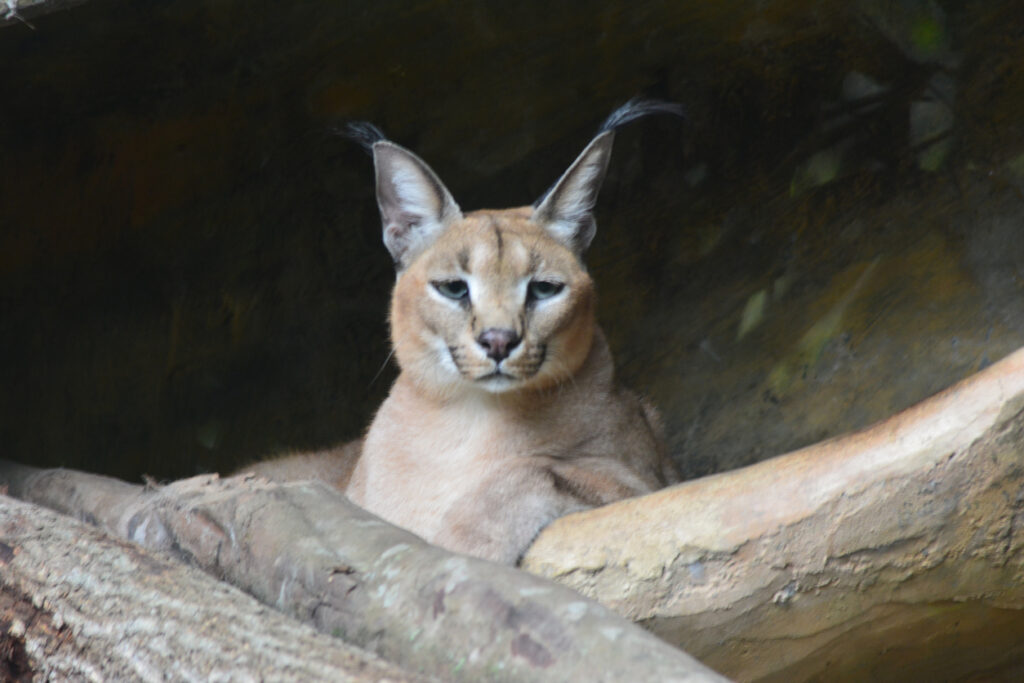
Caracals are not social cats. They live and hunt alone, only coming together to mate. Males and females maintain separate territories that they mark with urine and faeces. They’re aggressive about defending their space from other caracals.
This solitary nature actually made them easier to train for hunting because they didn’t have pack dynamics to manage. A single caracal bonded to its handler was focused and controllable. They didn’t need other caracals around, just their human and the hunt.
They’ve got a surprisingly dog-like bark.
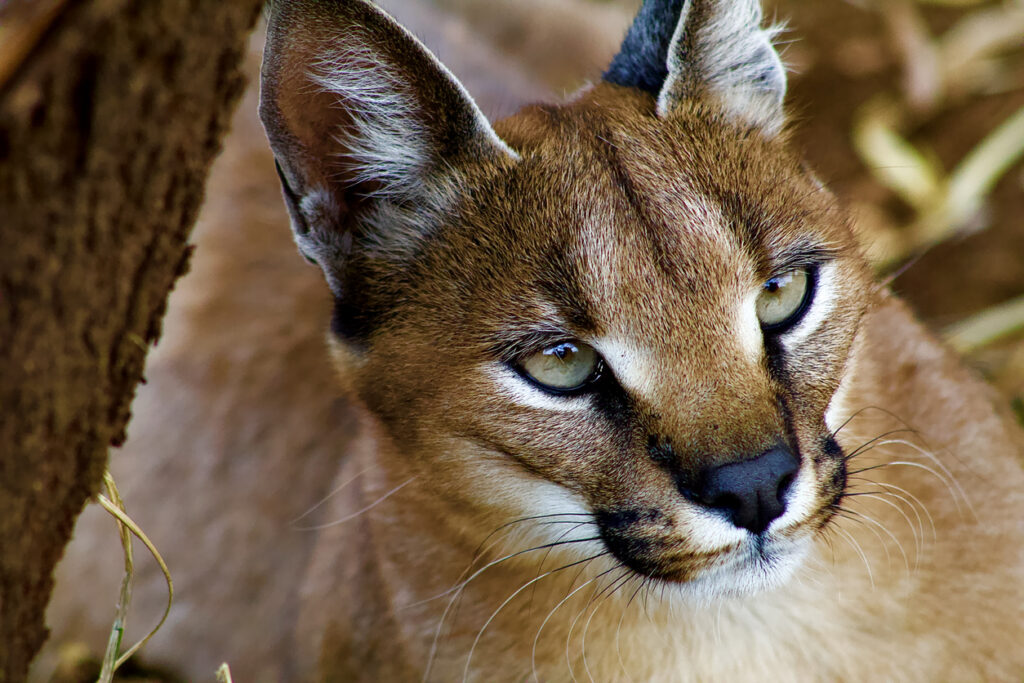
Unlike most cats that meow or roar, caracals make this weird barking sound. It’s sharp and loud, more like a dog or a seal than a cat. They also hiss, growl, and make a purring sound, but that bark is their most distinctive vocalisation.
That unusual sound probably helped handlers locate them during hunts. When a caracal made a kill or needed attention, that bark would carry across distances in a way a meow wouldn’t. It made them practical hunting animals in open terrain.
They’re still sometimes kept as exotic pets.
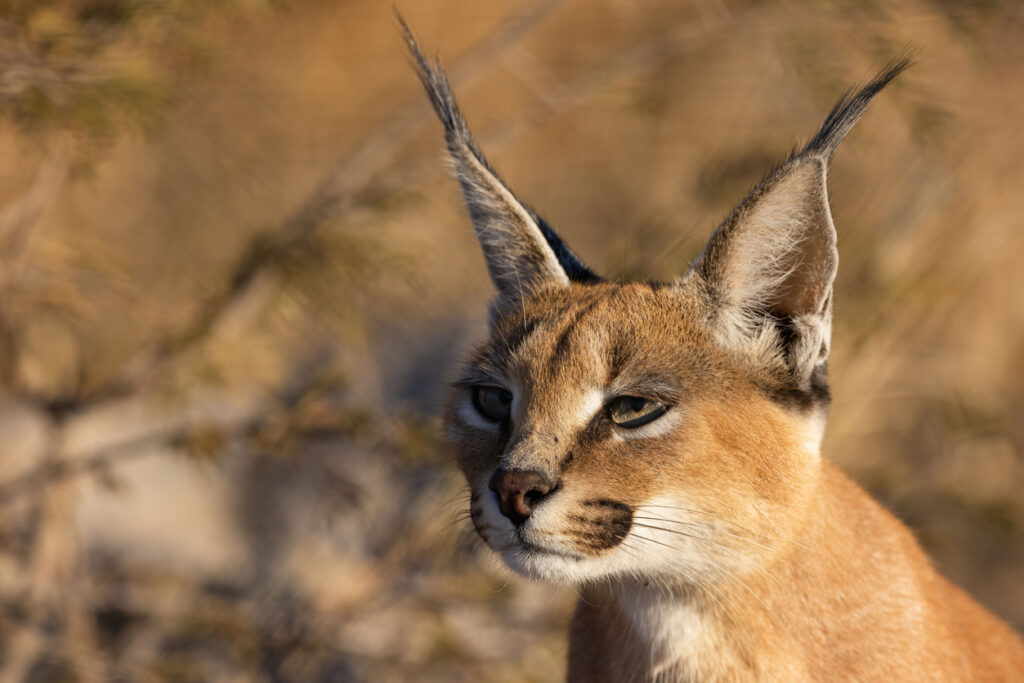
In some places, people still keep caracals as pets, continuing that ancient tradition of domestication. But it’s controversial and often illegal. They’re wild animals with strong hunting instincts, and whilst they can bond with humans, they’re not domesticated like house cats.
Caracals kept as pets often become aggressive as they mature, especially if not properly socialised. They need huge amounts of space, specialised diets, and experienced handling. Most experts say they shouldn’t be kept as pets at all, but the tradition of human-caracal relationships goes back so far that some people still try.
Their hunting success rate is impressive.
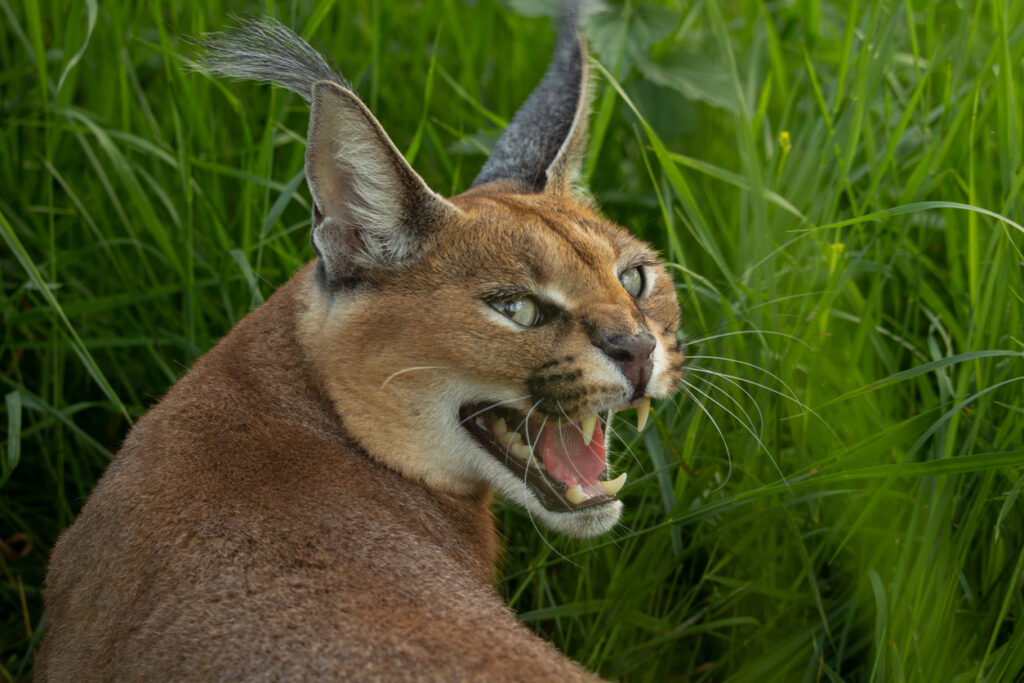
Caracals are incredibly efficient hunters, with success rates higher than many other predators. They catch prey in more than half their hunting attempts, which is exceptional. Most big cats succeed much less often, but caracals are precise and patient.
That high success rate was obviously appealing to royalty using them for hunting. You weren’t just getting a spectacle, you were getting reliable results. A well-trained caracal would consistently bring down game, making them genuinely useful rather than just ornamental.
They’re threatened by habitat loss.
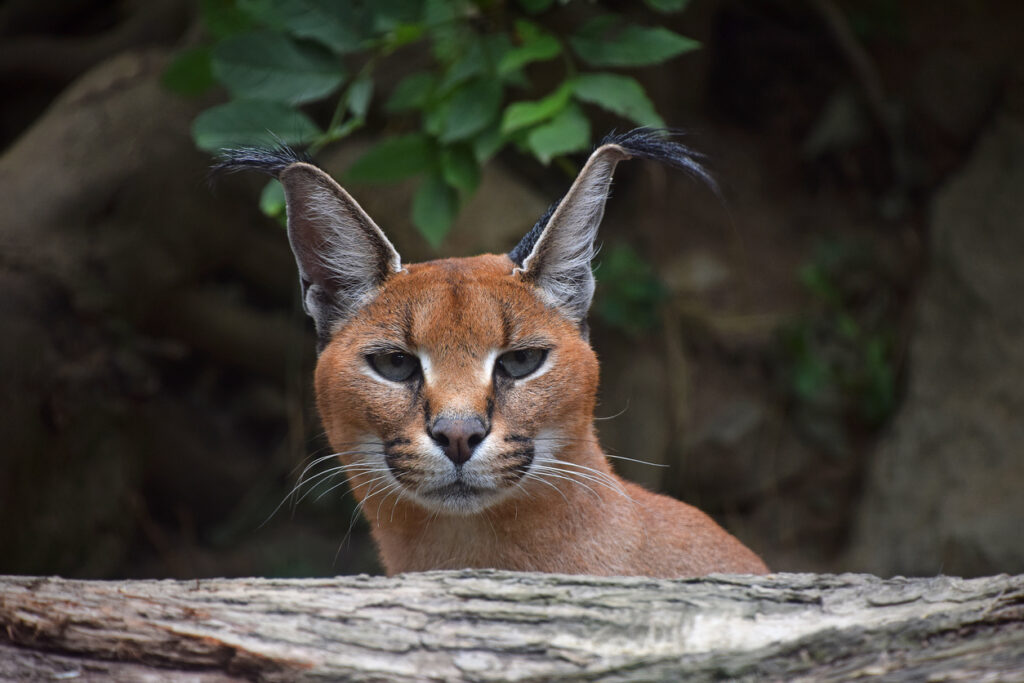
Whilst caracals aren’t endangered overall, they’re declining in some regions due to habitat destruction and conflict with farmers. In India especially, their numbers have dropped significantly. They’re killed by farmers protecting livestock, and their habitat is shrinking as land gets developed.
The irony is that these cats went from being prized by royalty to being seen as pests in many areas. The same hunting skills that made them valuable now make them threats to domestic animals. Conservation efforts exist, but they’re complicated by human-wildlife conflict.
They’re built for speed and stealth.
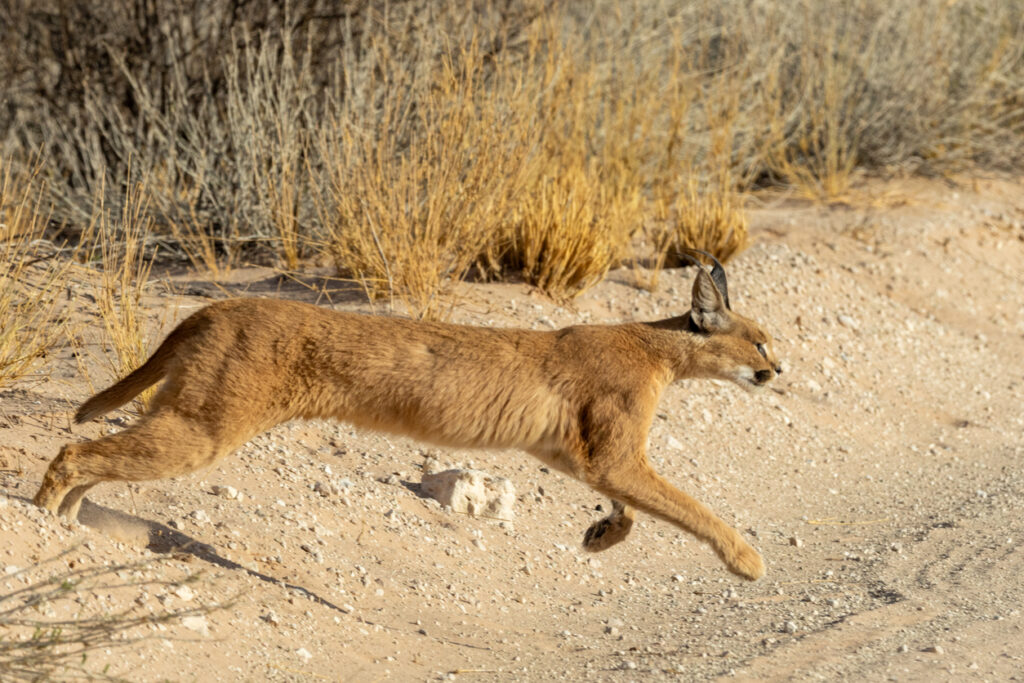
Caracals have long legs relative to their body size, making them fast runners. They can reach speeds of 50 mph in short bursts. Combined with their jumping ability, this makes them formidable predators that can catch prey through speed, stealth, or aerial acrobatics depending on the situation.
That versatility in hunting styles made them entertaining for royal hunts. They weren’t one-trick animals. Depending on the terrain and the prey, a caracal might stalk, sprint, or leap. That variety kept things interesting for the nobility, who used them for sport. The relationship between caracals and humans goes back thousands of years, with these cats featuring in ancient artwork and texts from multiple cultures. They were symbols of grace, power, and hunting prowess.
Today, most caracals live wild and free as they should, but that long history of cooperation with humans makes them unique among wild cats. They’re proof that the line between wild and domestic isn’t always clear, and that humans have been fascinated by extraordinary animals for as long as we’ve been around.