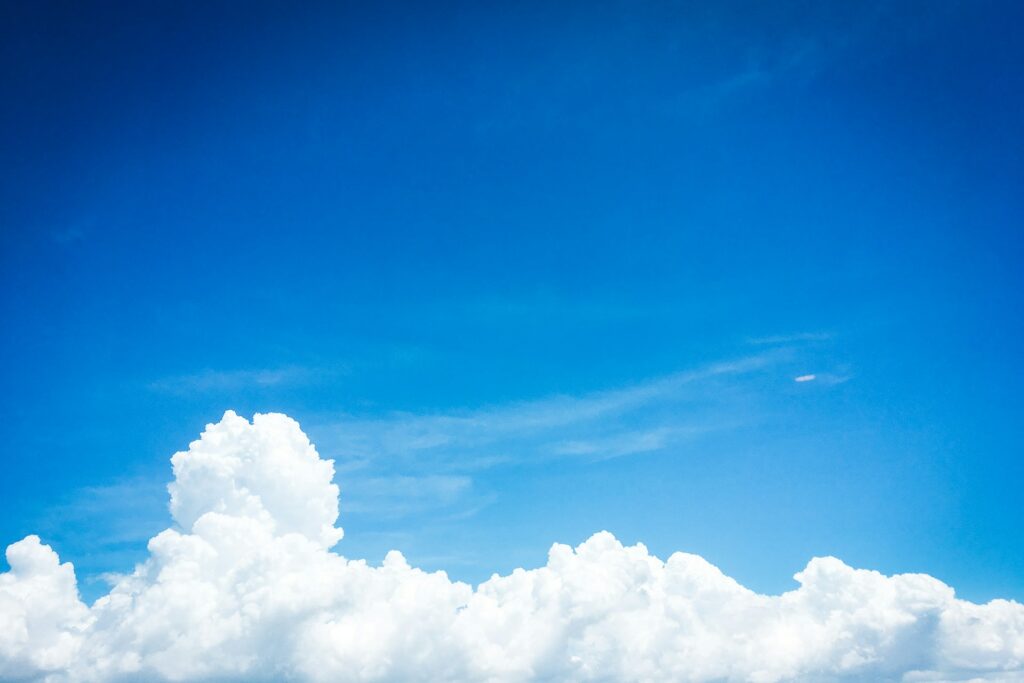
It’s one of the first science questions most of us ask as kids, and it still feels a bit magical even after you know the answer. The sky looks blue because of the way sunlight interacts with the atmosphere, but that simple fact opens up a much bigger story about light, air, and how our eyes see colour. Here are 13 clear, easy-to-understand points that explain exactly why the sky looks the way it does.
Sunlight isn’t actually white.
Even though it looks white to us, sunlight is made up of all the colours of the rainbow: red, orange, yellow, green, blue, indigo, and violet. When these colours are mixed together, they blend into what we call white light. You can see this when sunlight passes through a prism or creates a rainbow. The separation of light into different colours is what helps explain the sky’s blue tint.
The atmosphere acts like a filter.
Earth’s atmosphere is full of tiny particles like oxygen, nitrogen, and water vapour. When sunlight hits these molecules, it doesn’t travel straight through. Instead, it bounces off them, spreading in different directions. The scattering makes the light appear different depending on how it hits our eyes. The process is called Rayleigh scattering, named after the scientist who discovered it in the 1800s.
Blue light scatters more than red light.
Each colour of light travels in waves, and blue light has shorter, smaller waves than red light. Shorter waves bounce around more when they hit air molecules, while longer red waves pass through with less disturbance. That’s why, during the day, blue light fills the sky from every direction. The air spreads it evenly, giving the sky its soft, blue glow.
The sun itself looks white from space.
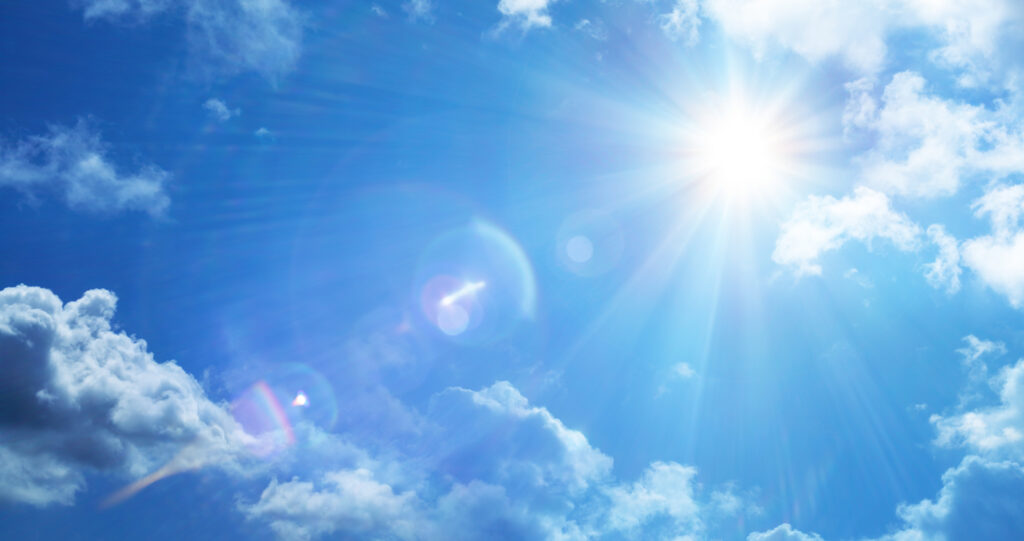
If you were outside Earth’s atmosphere, the sun and the sky would both look white because there’d be no air to scatter the light. Astronauts see a black sky, even in full sunlight because there’s nothing to reflect or bend the rays. The colour we see is entirely a result of the atmosphere’s effect on sunlight, not something that exists in space itself.
The sky can look different shades of blue.
The sky isn’t the same colour everywhere. It’s lighter near the horizon and deeper overhead. That happens because light travelling through more atmosphere loses some of its blue intensity, mixing with other colours as it spreads. On clear days with low humidity, you’ll often see that deep cobalt blue directly above, while hazy or humid air softens it into pale tones closer to white.
At sunrise and sunset, the blue disappears.
When the sun is low, its light has to travel through much more of the atmosphere before reaching your eyes. By the time it gets to you, most of the blue and violet light has already been scattered out of view. What’s left are the longer red and orange wavelengths, which is why sunrises and sunsets look fiery. The colours are simply what remains after the shorter waves have scattered away.
Pollution and dust can change the colour.
When there’s dust, smoke, or pollution in the air, those larger particles scatter light differently. They block and reflect more of the shorter blue waves, sometimes making the sky look paler or even grey. In contrast, after heavy rain or a storm, the air is clean, and the scattering effect becomes stronger, creating a bluer, clearer sky than usual.
Water vapour also plays a role.
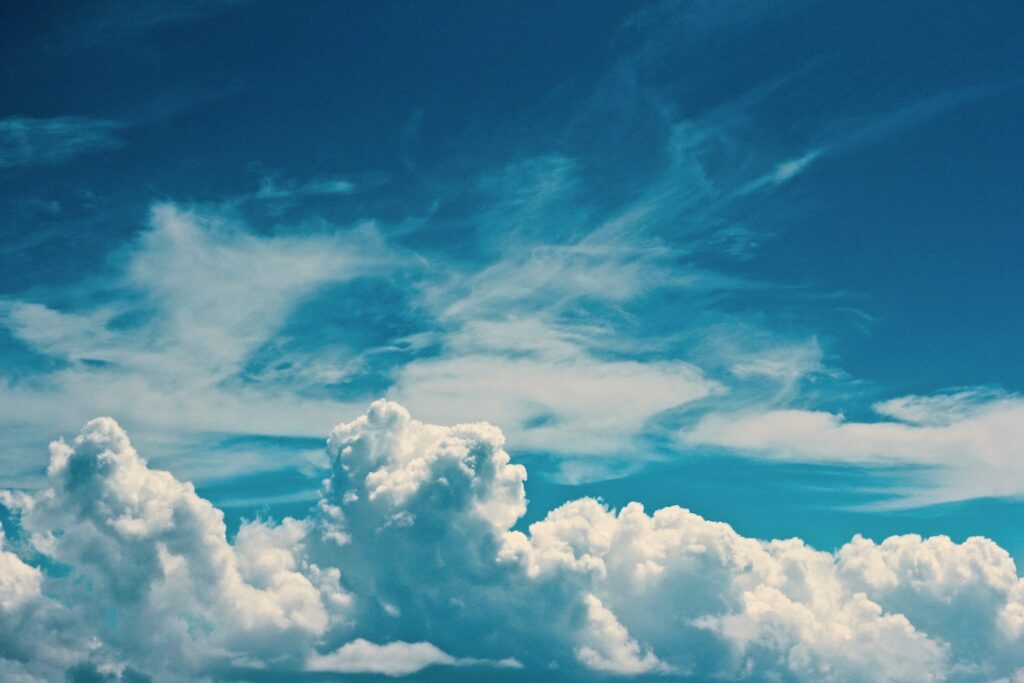
Moist air scatters light differently from dry air. Water droplets can reflect sunlight in more directions, softening the blue and adding a slight white haze to the horizon. That’s why coastal or tropical skies often look lighter and milkier compared to the crisp, darker blue you’ll find in dry or high-altitude areas.
Blue isn’t actually the most scattered colour.
Technically, violet light scatters even more than blue because its waves are even shorter. However, our eyes aren’t as sensitive to violet, and much of it is absorbed by the upper atmosphere before it reaches us. So, although violet is scattered more strongly, we mostly see blue because our eyes respond to it more vividly than any other colour in the mix.
The ocean doesn’t make the sky blue.
It’s a common myth that the sea reflects its colour onto the sky. In truth, it’s the other way around. The ocean looks blue because it reflects the colour of the sky above it, not because it creates it. Both get their blue tint from how light scatters and absorbs in air and water. The reflection just reinforces the colour we already see overhead.
The blue sky helps regulate temperature.
The scattering of sunlight doesn’t just affect colour; it helps spread solar energy evenly across the planet. Without an atmosphere to scatter light, the sun’s rays would hit the Earth directly, creating harsher temperature differences. The scattering process helps make daylight softer and the planet more liveable, keeping sunlight from being too intense in one place.
Other planets have different coloured skies.
On Mars, the sky looks red or orange because of iron dust particles floating in the air. On Neptune and Uranus, methane gas scatters blue and green light, giving them their distinctive hues. Each planet’s sky depends on its atmosphere’s composition. Change the gases, and you change the colour completely.
The sky at night reveals what daylight hides.
When the sun sets, there’s no more light to scatter, and the sky turns black. What you see then are the stars, planets, and distant galaxies that daylight conceals. The blue is gone because there’s no sunlight left for the atmosphere to bend or reflect. So the next time you look up, remember: the colour you see isn’t painted there. It’s a trick of light, air, and how your eyes perceive the world around you.