
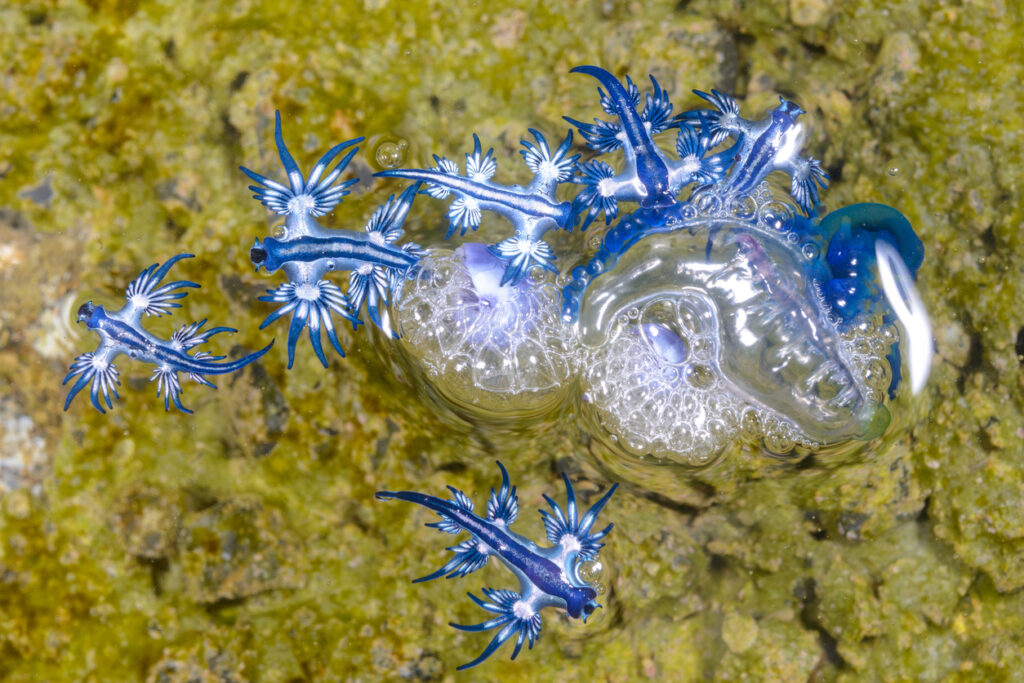
At first glance, the blue dragon sea slug looks like something out of a dream: a tiny, winged creature painted in shimmering silver and electric blue, drifting gracefully across the ocean’s surface. However, don’t let the angelic appearance fool you. This delicate-looking animal is one of the ocean’s most dangerous little predators.
Known scientifically as Glaucus atlanticus, the blue dragon doesn’t just survive on venom, it steals it from far more deadly prey and makes it even stronger. Found in warm seas around the world, it’s a perfect example of how nature can blend beauty and danger so completely that you can’t tell where one ends and the other begins. Here’s what you should know about them.
They’re actually a type of sea slug.
Blue dragons are properly called Glaucus atlanticus, but everyone just calls them blue dragons because look at them. They’re a type of nudibranch, which is basically a fancy word for sea slug, but calling them slugs feels wrong when they’re this stunning.
That slug classification doesn’t do them justice at all. They’ve got these incredible wing-like appendages and this brilliant blue colour that makes them look like something from a fantasy film, not something related to the slugs eating your garden.
They’re absolutely tiny in real life.
All those amazing photos make them look huge, but blue dragons are only about 3 centimetres long. That’s roughly the length of your thumb, which is wild when you see those dramatic close-up shots that make them look massive.
That tiny size makes them even more impressive somehow. Something that small has evolved to be both stunningly beautiful and properly dangerous, which seems like overkill for something you could lose in the palm of your hand.
They float upside down on the ocean surface.
Blue dragons don’t swim around normally like other sea creatures. They float upside down right at the water’s surface, with their blue side facing up towards the sky and their silver side facing down towards the ocean below.
That upside-down floating is actually camouflage. The blue blends in with the water when birds look down from above, and the silver blends in with the bright surface when predators look up from below. They’re basically invisible from both directions.
They eat Portuguese man o’ war jellyfish.

Blue dragons specifically hunt Portuguese man o’ war, which are those terrifying jellyfish with tentacles that can kill you. These tiny slugs just float around munching on one of the ocean’s most dangerous creatures like it’s nothing.
That diet is absolutely mental when you think about it. Portuguese man o’ war stings are excruciating and can be deadly to humans, but these little dragons just eat them whole without being affected by the venom at all.
They store the venom and become even more dangerous.
Here’s where it gets really wild. Blue dragons don’t just eat the Portuguese man o’ war, they store the stinging cells in those fancy wing-like bits on their body. Then they concentrate the venom, making it even more potent than the original.
That means touching a blue dragon can be worse than touching the jellyfish it ate. They’ve basically weaponized someone else’s defence system and made it stronger, which is both impressive and terrifying for something so small and pretty.
Their sting is incredibly painful.
If you pick up a blue dragon, you’re in for a really bad time. The sting causes intense pain, nausea, and vomiting. In some cases, it can even lead to more serious reactions, especially if the dragon’s recently eaten a particularly venomous jellyfish.
That beauty is absolutely a trap. They look like something you’d want to pick up and photograph in your hand, but that’s exactly what you shouldn’t do. The prettier they are, the more recently they’ve eaten, which means more venom stored up.
They wash up on beaches sometimes.
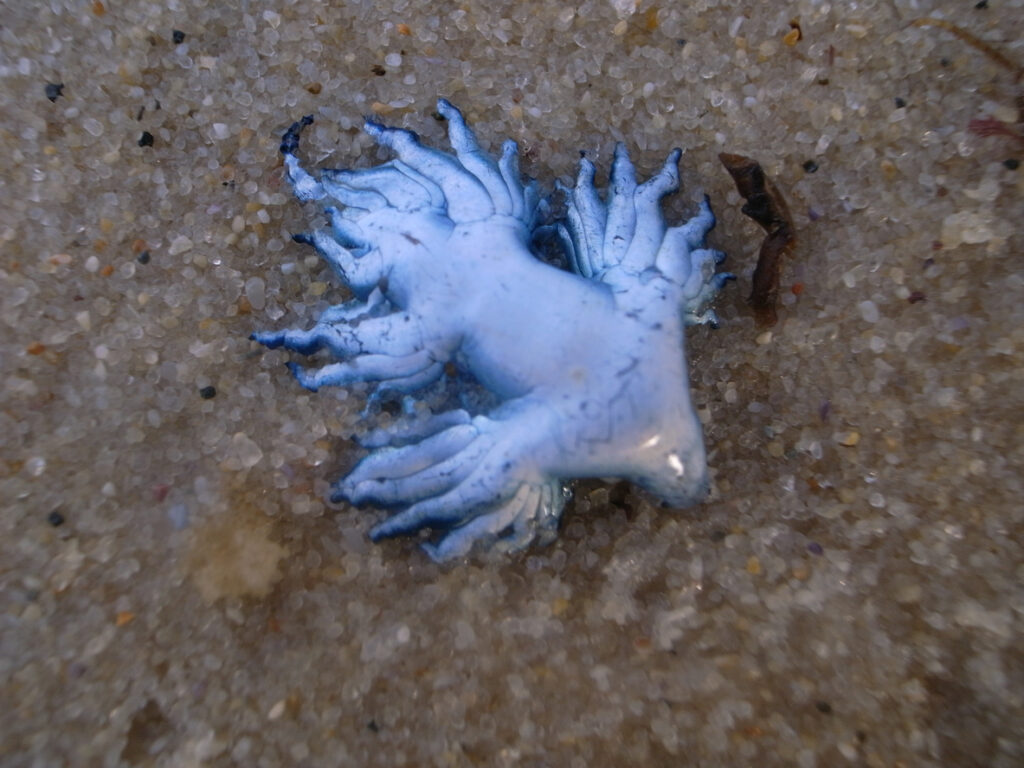
Blue dragons occasionally get washed ashore, usually in warm waters like Australia, South Africa, or sometimes even the Mediterranean. When they do, loads of people find them and try to touch them because they look so incredible.
That beach situation is dangerous because people don’t know what they’re looking at. Kids especially are drawn to them because they look like toys or decorations, not living creatures that can properly hurt you. If you see one, just photograph it and leave it alone.
They’re hermaphrodites.
Every single blue dragon has both male and female reproductive organs. When two of them mate, both of them end up producing eggs, which is pretty efficient when you’re a tiny creature floating around in a massive ocean trying to find a partner.
That reproductive strategy makes sense for something so small and spread out. You can’t afford to be picky about finding the right sex when you might only bump into another blue dragon once in a blue moon while drifting around on ocean currents.
They have no control over where they go.
Blue dragons can’t really swim properly. They just float wherever the wind and currents take them, which means they’re completely at the mercy of the ocean. They can move their little appendages a bit, but they’re basically just drifting through life.
That lack of control explains why they sometimes wash up on beaches. They can’t swim away from shore if the current’s taking them that direction. They’re stunning but also kind of tragic, just floating around hoping they bump into food and don’t get eaten.
The blue colour isn’t actually pigment.
That incredible blue colour doesn’t come from pigment like you’d expect. It’s actually a result of their diet and the way light reflects off their body structure. The exact shade can vary depending on what they’ve been eating.
That structural colour is similar to how butterfly wings work. It’s not paint or dye, it’s the physical structure creating the colour through how light bounces off it, which is why they look so iridescent and almost metallic in photos.
They’re found in warm oceans worldwide.
Blue dragons live in temperate and tropical waters all around the world. Wherever there are Portuguese man o’ war floating around, there’s a chance you’ll find blue dragons hunting them. They’re surprisingly widespread for something most people have never heard of.
That global distribution means you could potentially encounter them in loads of places. They’re not just in one exotic location, they’re out there in oceans everywhere, floating around looking gorgeous and storing up venom just in case someone’s daft enough to touch them.
Scientists still don’t know loads about them.
Despite being so striking, blue dragons are actually quite mysterious. Because they’re so small and spend their whole lives floating on the open ocean, they’re really hard to study. Loads of basic stuff about their behaviour and life cycle is still unknown.
That mystery adds to their appeal somehow. We know they’re beautiful and dangerous, but there’s still so much we don’t understand about how they live and survive out there in the open ocean, just drifting along eating jellyfish.
They’re becoming more common in some areas.
In recent years, more blue dragons have been washing up on beaches in places they weren’t common before. This might be due to changing ocean temperatures and currents from climate change, which affects where both they and their prey end up.
That increase in sightings is interesting but also concerning. When you start seeing creatures in places they don’t usually turn up, it’s often a sign that something’s changing in the ocean. They’re beautiful, but their appearance in new areas might be telling us something’s off with the environment.