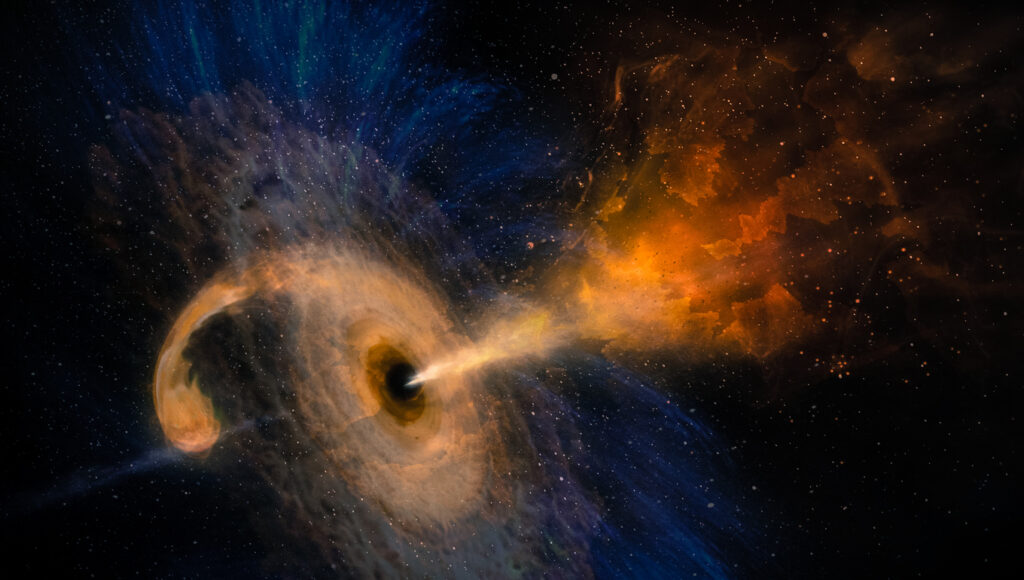
Black holes are usually known for swallowing everything nearby, not for putting on a light show. However, scientists now believe one could actually explode within the next decade, giving us one of the most spectacular space events in human history. It’s a rare chance to see what happens when a black hole starts to push back instead of just pulling everything in, and experts are already watching closely.
What’s happening out there
The black hole in question sits in a distant galaxy and has been showing unusual energy bursts for years. Astronomers think it’s reaching a tipping point where its surroundings might collapse or flare up in a huge release of radiation. If that happens, the explosion could be bright enough to see from Earth with basic telescopes.
It’s not the black hole itself that would explode, but the matter spinning around it. As that material heats and compresses, it can create a massive flare of light, possibly outshining entire galaxies for a short time.
Why this is such a big deal
We’ve never seen a black hole reach this kind of instability in real time before. Most of what we know about them comes from studying their pull on nearby stars or the radiation they give off after swallowing something. This event could give scientists a chance to watch one change dramatically while it’s still active.
That means we’d learn more about how black holes evolve, how galaxies form around them, and what happens when they start to run out of fuel. It’s like catching a volcano erupting after centuries of silence, except this one’s light-years away.
How they know it’s coming
The warning signs have been building for a while. Researchers noticed fluctuations in the light patterns around the black hole, suggesting unstable movement in its outer disc. That instability usually happens before a major burst of energy, similar to how a pressure cooker rattles before it releases steam.
Using data from telescopes around the world, astronomers have modelled what might happen next. The pattern suggests a powerful outburst could occur anytime in the next ten years, depending on how quickly the surrounding gas collapses.
What the explosion might look like
If it happens, the light could last for weeks or even months. It wouldn’t look like a traditional explosion, but more like a growing point of light that fades slowly. Because the black hole sits so far away, the energy will take years to reach us, meaning the event itself might already have happened, and we’re just waiting to see it.
Even though it’s incredibly distant, the brightness could rival that of an entire galaxy for a short time. Amateur astronomers might even catch it with modest telescopes if they know where to look.
The science behind the flare
When gas and dust spiral into a black hole, they heat up as they accelerate, forming what’s called an accretion disc. Normally, this disc stays relatively stable, but if it becomes too dense, it can erupt outward in a blast of high-energy light. That burst is what scientists expect to see: a huge flash created by energy release, not an explosion in the traditional sense.
Studying that process could explain how some black holes grow or how they affect their galaxies. These moments are rare because most black holes stay quiet for millions of years between outbursts.
Why it’s safe to watch
Even though the word “explosion” sounds dramatic, this one poses no threat to us. The black hole is located millions of light-years away, meaning any radiation or debris will never reach Earth. We’ll only see the light that’s been travelling through space since the event occurred.
So while it might sound like something out of a sci-fi film, it’s completely safe to observe, and incredibly exciting for anyone who loves astronomy.
What scientists hope to learn
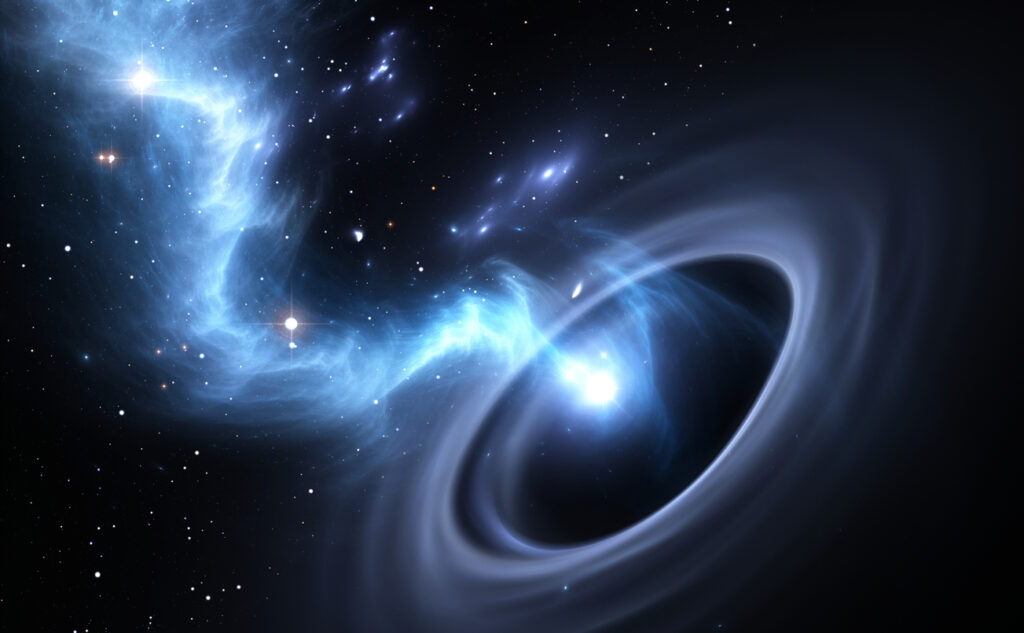
This event could confirm several long-standing theories about how black holes behave near the end of an active phase. It might also reveal clues about what happens when they stop feeding on nearby material. The energy readings will help refine models of black hole physics that have never been tested under real-time conditions.
In short, it’s a once-in-a-lifetime chance to test what we think we know about one of the universe’s most mysterious objects. It’s the kind of discovery astronomers dream about.
How to see it when it happens
When the explosion finally occurs, it’ll likely make global headlines. NASA, the European Southern Observatory, and amateur astronomers will all track it, so there’ll be plenty of ways to follow along online. Depending on how bright it gets, backyard stargazers might even spot it through simple home telescopes.
Keep an eye out for updates over the next decade, as scientists are already watching the black hole closely for any new changes. The exact timing’s impossible to predict, but it’s coming closer each year.
What it means for space research
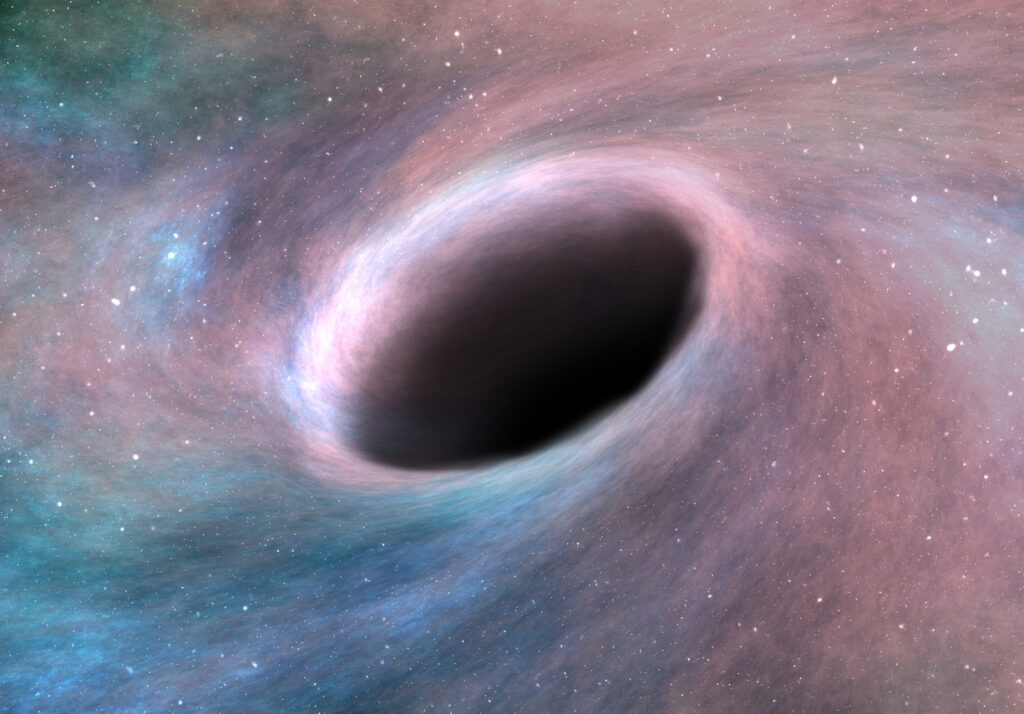
If everything goes as predicted, this will be the first time humans witness a black hole’s energy release on such a massive scale. It could change how we understand space formation, galaxy life cycles, and even dark matter. That single explosion could answer questions that have puzzled scientists for decades.
Moments like this remind us how much of the universe is still unfolding. Every new discovery brings us closer to understanding what’s really out there, and this one could be the brightest clue yet.
The bigger picture
For most of us, it’s hard to imagine something so far away having any impact on our lives. But these discoveries change how we see ourselves in the universe. Watching a black hole explode won’t just be science. It’ll be a reminder of how vast and alive the cosmos really is.
So the next time you look up at the night sky, remember there’s a small chance that one of those faint lights is history in motion. Within ten years, we might see the universe light up in a way humanity’s never seen before.