With its striking orange-gold coat, blue face, and upturned nose, China’s golden snub-nosed monkey is one of the most unusual primates on Earth.

Found only in the remote, mountainous forests of central China, it is both iconic and elusive. However, despite its unique appearance and cultural importance, this monkey is in serious danger. Its numbers have been battered for decades, and although conservation has helped in places, the species is still teetering on the edge. These are some of the most heartbreaking reasons why the golden snub-nosed monkey remains at risk of disappearing for good.
Habitat loss from logging has left deep scars.

For much of the 20th century, widespread logging tore through China’s old-growth forests. These ancient woodlands were the natural home of golden snub-nosed monkeys, offering food, shelter, and breeding grounds. As the chainsaws cleared vast areas, the monkeys were squeezed into smaller and smaller forest patches.
Even though large-scale logging has been banned since the late 1990s, the damage lingers. Forests take centuries to regenerate fully, and the loss of mature trees means the monkeys are still living in fragmented, less suitable landscapes. For a species that depends heavily on intact habitats, the scars of past logging are not easily healed.
Climate change is altering the forests they depend on.

Golden snub-nosed monkeys live in some of the harshest environments of any primate, surviving at altitudes of 1,500–3,000 metres in China’s temperate mountain forests. Snow, cold winters, and short summers define their ecosystem. But as the climate shifts, so do the conditions they have adapted to over thousands of years.
Changes in snowfall patterns, rising temperatures, and disrupted plant growth all affect their survival. Seasonal foods become less reliable, and the timing of budding leaves or lichen growth no longer matches their needs. With such a narrow diet and little flexibility, the monkeys are particularly vulnerable to these changes.
Fragmented populations reduce their genetic resilience.

Instead of living in one large, connected range, golden snub-nosed monkeys are now confined to isolated forest patches scattered across provinces such as Sichuan, Shaanxi, and Hubei. Between the patches lie farmland, towns, and roads, all of which are barriers that prevent groups from moving freely.
That fragmentation cuts off gene flow between populations. As time goes on, isolated groups lose genetic diversity, which makes them more vulnerable to disease, infertility, and environmental change. Without corridors linking habitats, each small group is essentially trapped, their long-term survival hanging by a thread.
Low birth rates slow down recovery efforts.

Golden snub-nosed monkeys reproduce slowly. Females give birth to just one infant every two to three years, and like many primates, they invest a great deal of care in each young. While this works in stable populations, it becomes a problem when numbers are already low.
High infant mortality rates make matters worse. When threats like hunting, disease, or starvation strike, the population can take decades to recover. The species’ slow life cycle means that even with conservation, progress remains painfully gradual.
Hunting has left lasting damage.

Although hunting golden snub-nosed monkeys is now illegal, it was once a serious threat. They were targeted for their fur and meat, and disturbance from hunting activity forced them away from otherwise suitable habitats. In many areas, hunting pressure helped accelerate local extinctions.
Stricter enforcement in recent decades has helped reduce the risk, but the damage was already done. The loss of breeding adults in earlier decades pushed populations dangerously low, and the species is still struggling to rebound fully.
Competition with livestock puts extra strain on resources.
In many parts of China, people rely on mountain pastures for grazing goats, cattle, and sheep. Unfortunately, these grazing animals eat the same vegetation that the monkeys need to survive. As livestock strip the land, food becomes scarcer, leaving monkeys undernourished.
That competition creates a subtle but real pressure. It doesn’t always wipe out populations overnight, but over the long term it weakens them, particularly in already fragmented forests where resources are limited.
Small groups are highly vulnerable to disease.
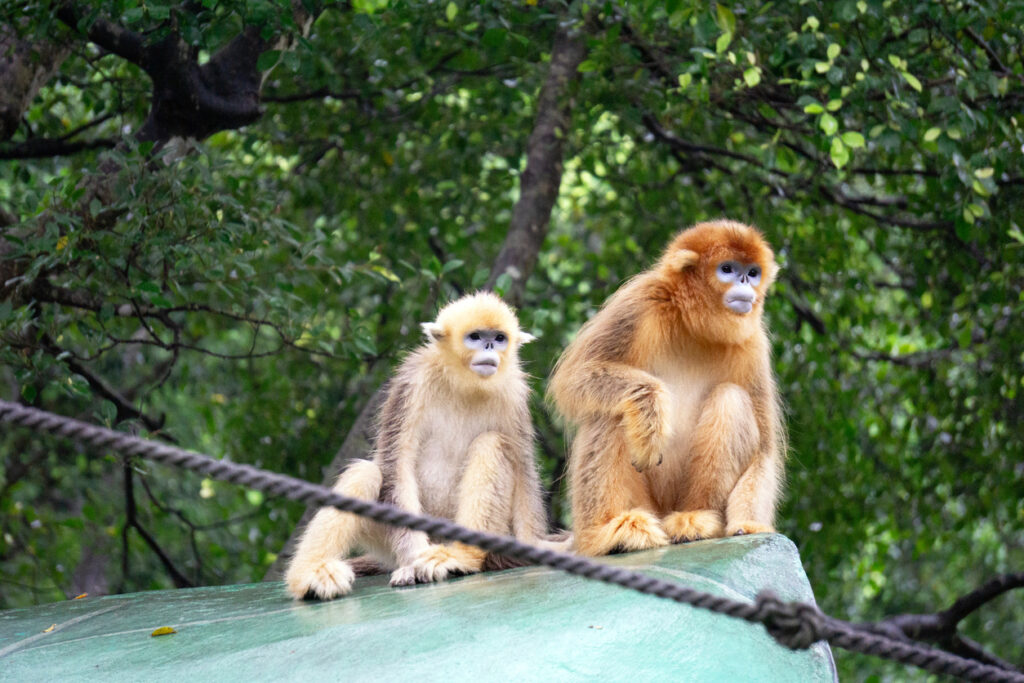
One of the greatest dangers of having small, isolated populations is that disease outbreaks can wipe out entire groups. With fewer individuals, a single epidemic can be devastating, leaving no survivors to rebuild. And because populations are so scattered, nearby colonies often can’t repopulate empty areas.
That vulnerability means conservationists must constantly monitor health risks. A disease that might cause only temporary setbacks in a larger species could push golden snub-nosed monkeys closer to extinction.
Roads have created dangerous barriers.

China’s rapid development has brought roads deep into mountain regions, splitting forests into disconnected pieces. For golden snub-nosed monkeys, roads are deadly barriers. They are reluctant to cross open ground, meaning they become stranded on either side, unable to mix with other groups.
The roads also bring vehicles, noise, and human disturbance. All of this pushes monkeys further into remote corners of already limited habitats, cutting them off from food sources and breeding opportunities.
The loss of old-growth trees removes vital resources.
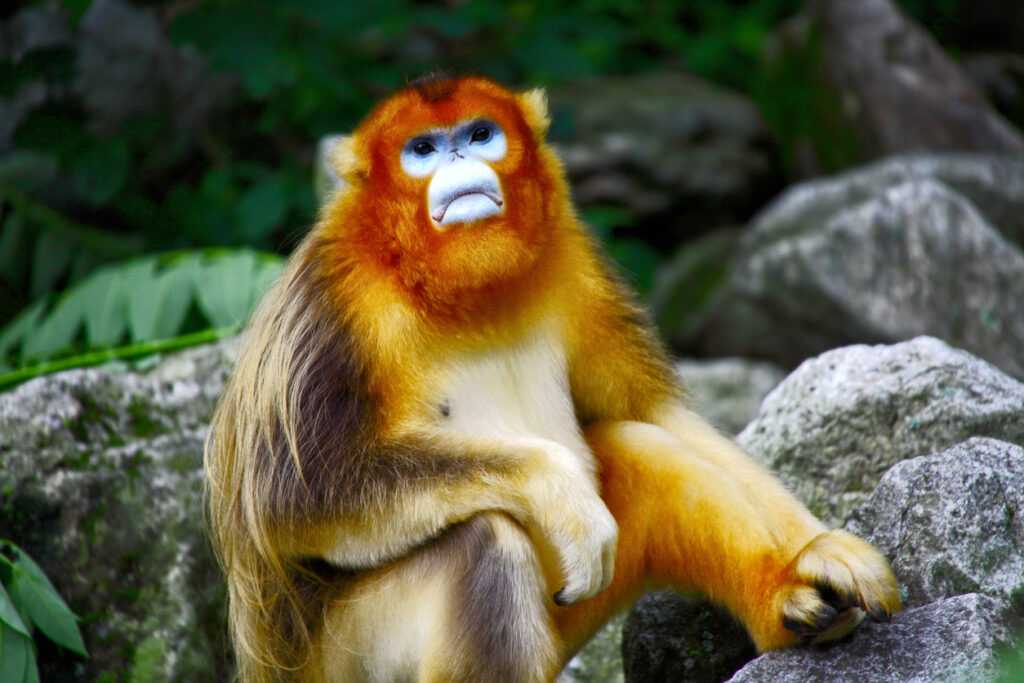
Golden snub-nosed monkeys depend on mature forests for their diet. Lichen, bark, and certain seeds are only found in older trees, meaning young plantations can’t replace what was lost to logging. Without access to these old-growth resources, the monkeys’ survival is severely limited.
That reliance makes conservation more challenging. Replanting young trees is a start, but it can take decades, even centuries, before those forests offer the same resources as the ancient habitats that were destroyed.
Tourism brings both health and harm.

In recent years, eco-tourism has raised awareness and money for golden snub-nosed monkey conservation. Tourists travel to reserves hoping to glimpse these rare primates, and their spending supports local economies.
But human presence brings problems. Crowds, camera flashes, and noise can stress the monkeys, disrupting their natural foraging and breeding behaviour. Without careful management, eco-tourism risks becoming another pressure on a species already under strain.
A limited diet makes survival precarious.

Golden snub-nosed monkeys have one of the narrowest diets of any primate. In winter, they rely heavily on lichen scraped from trees. At other times, they feed on young leaves, seeds, and fruit. When these foods aren’t available, survival becomes much harder.
Their dependence on a limited menu means they can’t easily adapt to changes in habitat or climate. If lichen growth falters or seasonal leaves arrive late, whole groups can struggle to find enough to eat.
Conservation is logistically difficult in remote areas.

The monkeys live in remote mountain ranges that are hard to reach. Monitoring, protecting, and studying them requires long treks through rugged terrain, often in extreme weather. This makes conservation expensive, slow, and resource-intensive.
While their isolation once gave them protection, it now creates barriers. Conservation teams have to battle geography as much as threats, and progress takes far longer than in more accessible species.
Protection depends on government support.

Most surviving golden snub-nosed monkeys live within reserves and national parks. While this protection is vital, it also makes the species heavily reliant on continued government commitment. Policies and funding priorities can change, leaving populations vulnerable if protections weaken.
That dependency means conservationists must constantly advocate for the monkeys. Without strong, consistent backing at the national level, even small lapses could undo years of progress.
Recovery is happening, but very slowly.
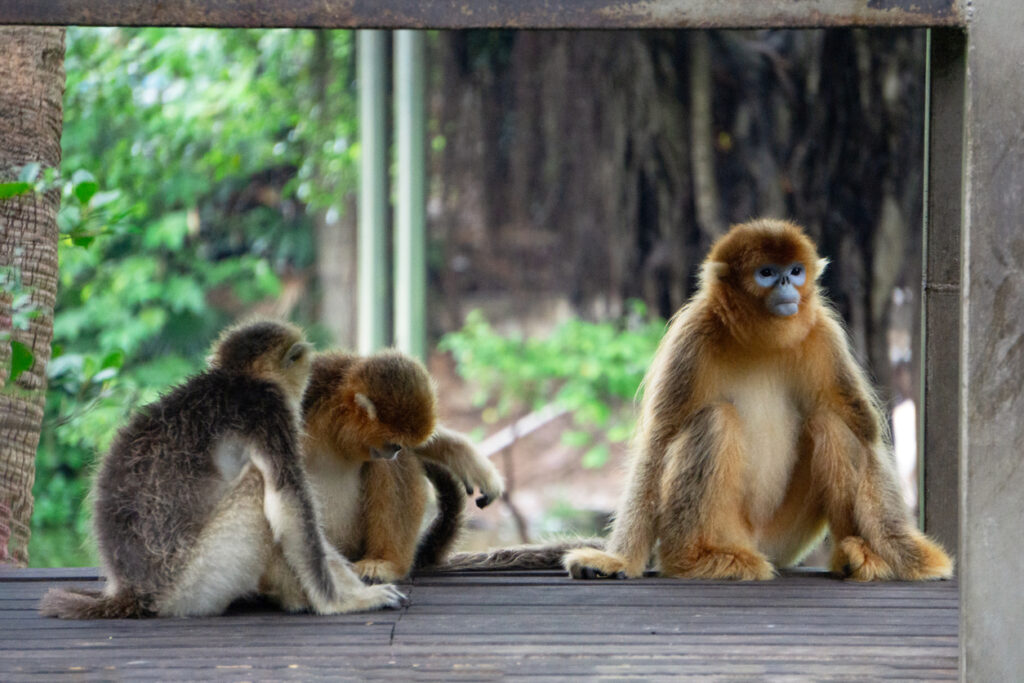
Thanks to reserves, logging bans, and conservation programmes, some populations of golden snub-nosed monkeys have stabilised. There are now estimated to be around 20,000 individuals across several provinces. But given the scale of past losses, this recovery is still fragile and incomplete.
Slow breeding, fragmented habitats, and ongoing pressures mean the species is far from safe. Without continued, long-term conservation, the golden snub-nosed monkey could once again slip closer to extinction. Its unusual beauty is a reminder that even the strangest, most remarkable animals are at risk when human impact overwhelms their fragile environments.