While many people assume the UK’s plant life is pretty boring, that couldn’t be further from the truth.
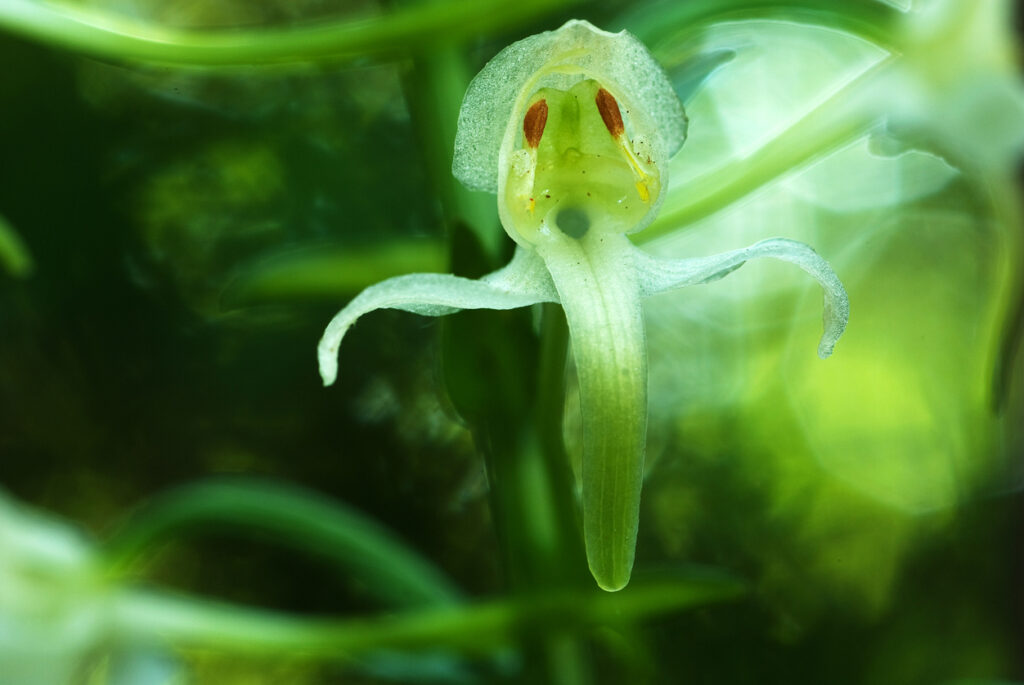
Britain’s countryside hides some genuinely bizarre botanical oddities that look more like science fiction props than actual flowers growing in our meadows and woodlands. These are some of the most impressively strange and fascinating plants that are right here on our little collection of islands.
1. The ghost orchid has to be Britain’s most elusive phantom flower.
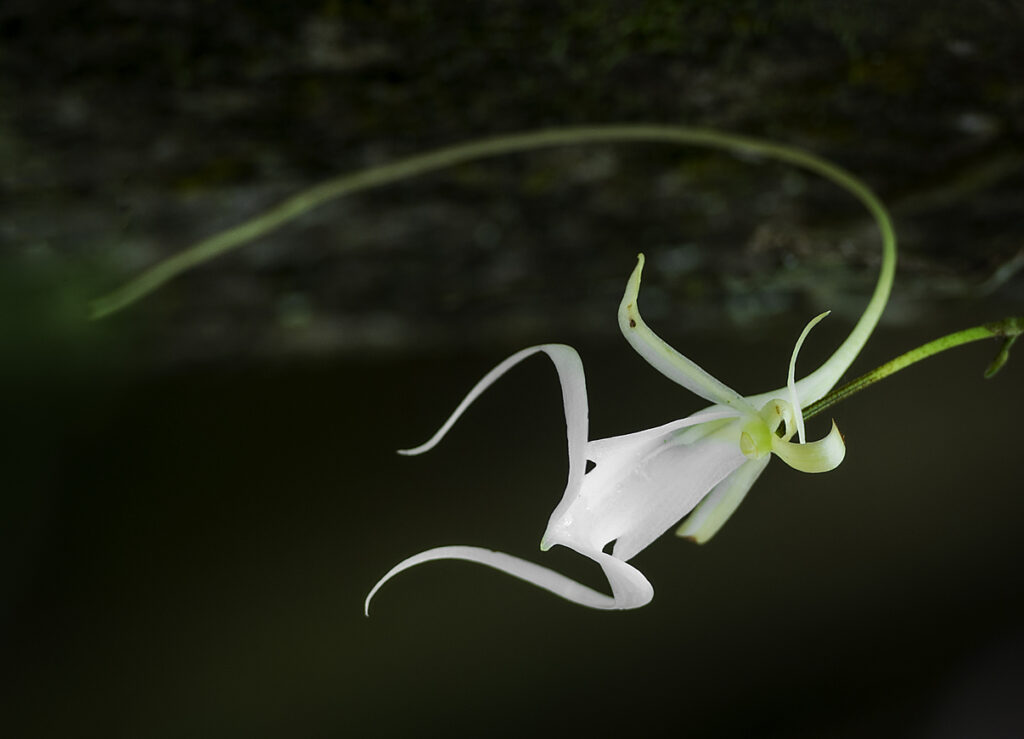
The ghost orchid has been labelled Britain’s rarest flower due to its extremely limited sightings over the years. In 2024, the ghost orchid was spotted for the first time in 15 years, and it was only the second sighting of the species since the 1980s. This translucent, ethereal flower appears to glow with an otherworldly pale light.
Finding a ghost orchid is like discovering botanical treasure. They’re so rare that each sighting makes national news. Yellow bird’s-nest has sickly looking, pale yellowish-white stems and flowers because it doesn’t contain any chlorophyll. When they do appear, ghost orchids emerge from seemingly dead woodland floor like spectral visitors from another realm.
2. Bee orchids perfectly mimic female bees.

The bee orchid is a perennial herbaceous plant native to Europe, Asia, and North Africa. The flower is pink or purple with a yellow lip, which is shaped like a female bee, and the flower emits a scent that attracts male bees. This deceptive flower has evolved one of nature’s most elaborate cons.
These orchids mimic the appearance of other organisms, such as insects, in order to attract pollinators. In the case of the bee orchid, the flower mimics the appearance of a female bee. This attracts male bees, which attempt to mate with the flower. The result is a flower so convincing that even experienced botanists do double-takes when they first encounter one.
3. Fly orchids do a pretty disturbing insect impersonation.
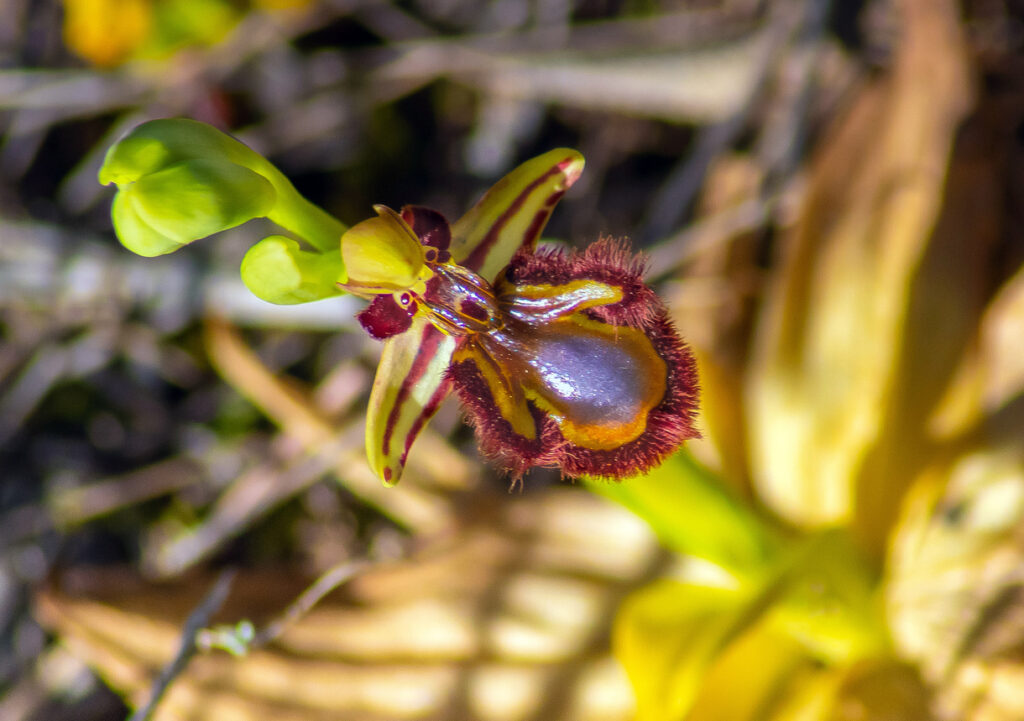
The fly orchid is a fascinating wildflower as it mimics the appearance and scent of a female fly to attract digger wasps. When the male then attempts to mate, they get a dusting of pollen and carry this to the next flower to entice them and as a result pollinate the next plant. These flowers look disturbingly realistic, complete with metallic body segments.
You’ll recognise a fly orchid from their fly-like appearance: A dark reddish brown colour, a metallic blue-white centre that looks like a pair of wings and two small spikes that look like an antenna. The attention to detail is so precise that you might instinctively swat at them before realising they’re actually rooted in the ground.
4. Snake’s head fritillaries have a weird, alien chessboard pattern.
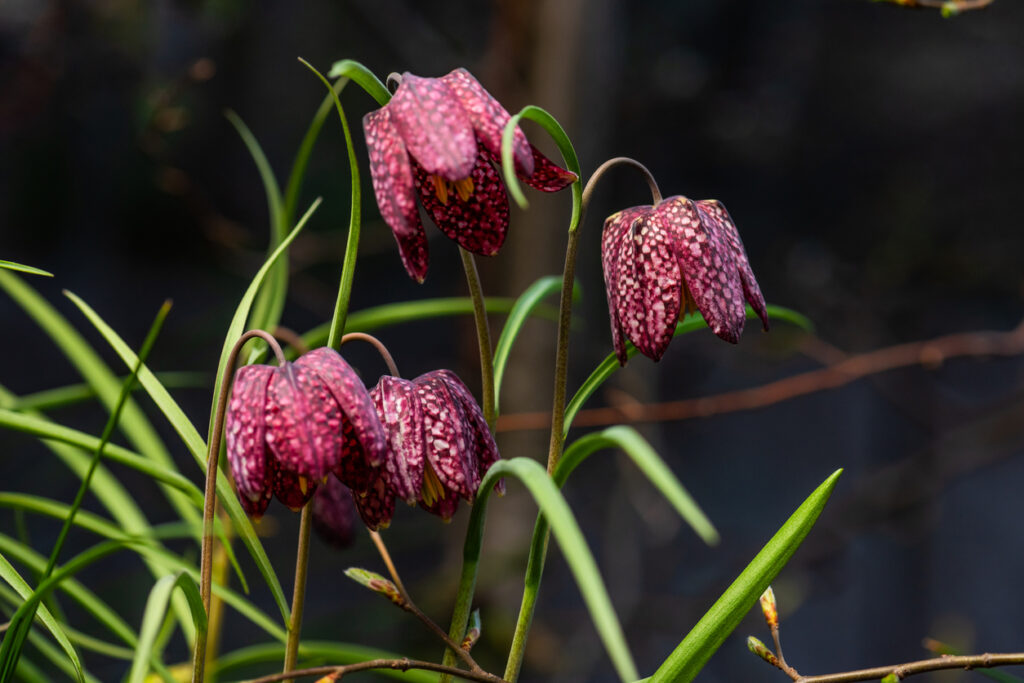
In April, the low-maintenance bulb produces delicate blossoms on slender stems. The bell-shaped blooms boast a chequered pattern in reddish brown, purple, white and gray shades. The pattern pops when the bulbs are planted in clusters. These drooping bells look like something from a Tim Burton film.
The mathematical precision of the chessboard pattern appears almost artificially designed, as if someone took a marker pen and carefully drew squares on each petal. When they sway in the breeze, the optical effect is genuinely mesmerising and slightly unsettling.
5. Crested cow-wheat has a bit of a punk rock appearance.
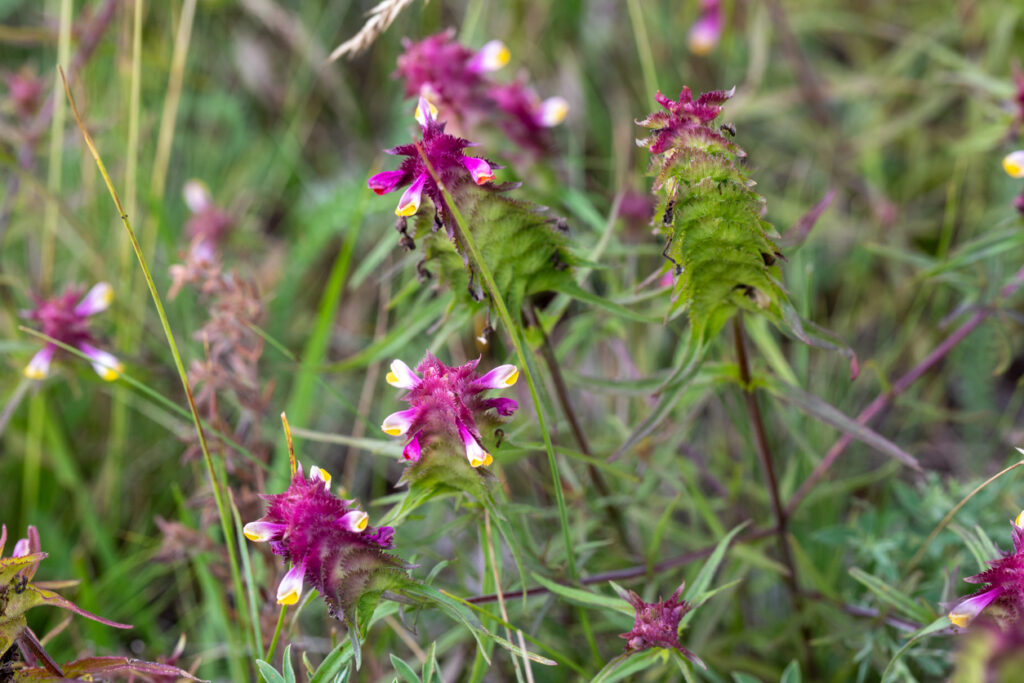
This striking flower has pink, toothed leaves which grow around pink and yellow flowerheads. Though it does create some food through photosynthesis, crested cow-wheat is semi-parasitic and utilises nearby host plants to top up its reserves. It looks like someone gave a flower a mohawk haircut.
This unique, densely packed flower has it all: toothed bracts, purple and yellow flowers and a fantastic name. It is also semi-parasitic, able to obtain nutrients from other plant species. The aggressive, spiky appearance perfectly matches its parasitic lifestyle, making it the botanical equivalent of a punk rocker.
6. Yellow bird’s-nest lives like a botanical vampire.
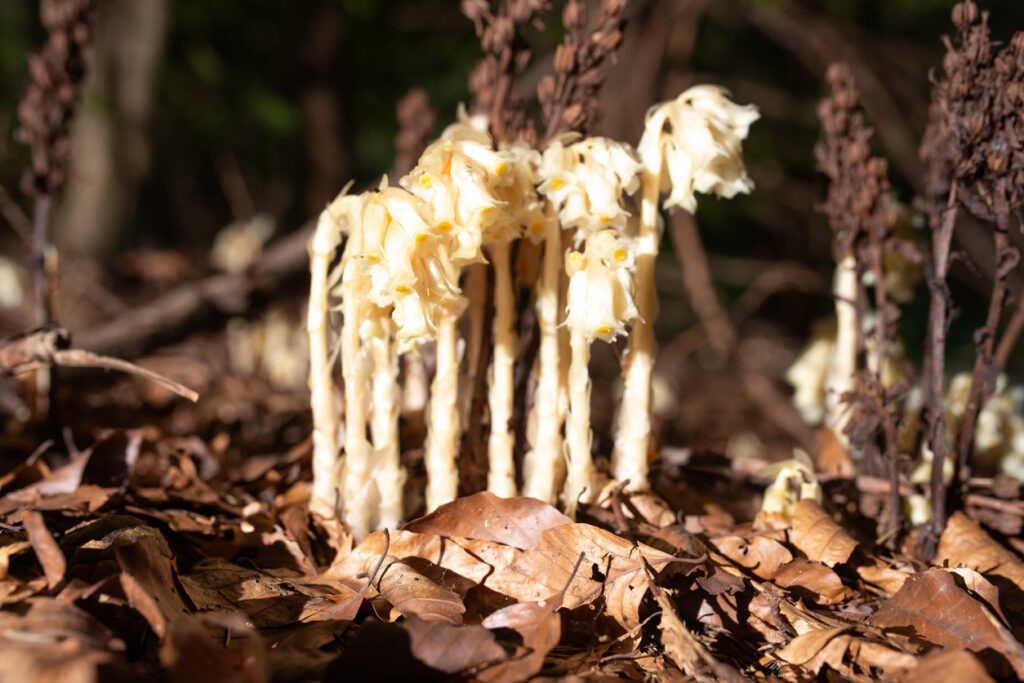
This must be one of the strangest woodland wildflowers in the UK, as well as one of the rarest. Yellow bird’s-nest has pale yellowish-white stems and flowers because it doesn’t contain any chlorophyll. Instead, it hijacks nutrients from a special kind of fungi, which itself has borrowed them through a close relationship with nearby trees. This ghostly plant looks genuinely unhealthy and alien.
The complete absence of green colouring makes yellow bird’s-nest appear almost diseased, like a plant that’s been drained of life. Yellow bird’s-nest is a tricky plant to record. Some years it may appear in large numbers, but in others, it may not flower at all. Its unpredictable appearances add to the mysterious, otherworldly atmosphere.
7. Witches’ hair actually strangles other plants.
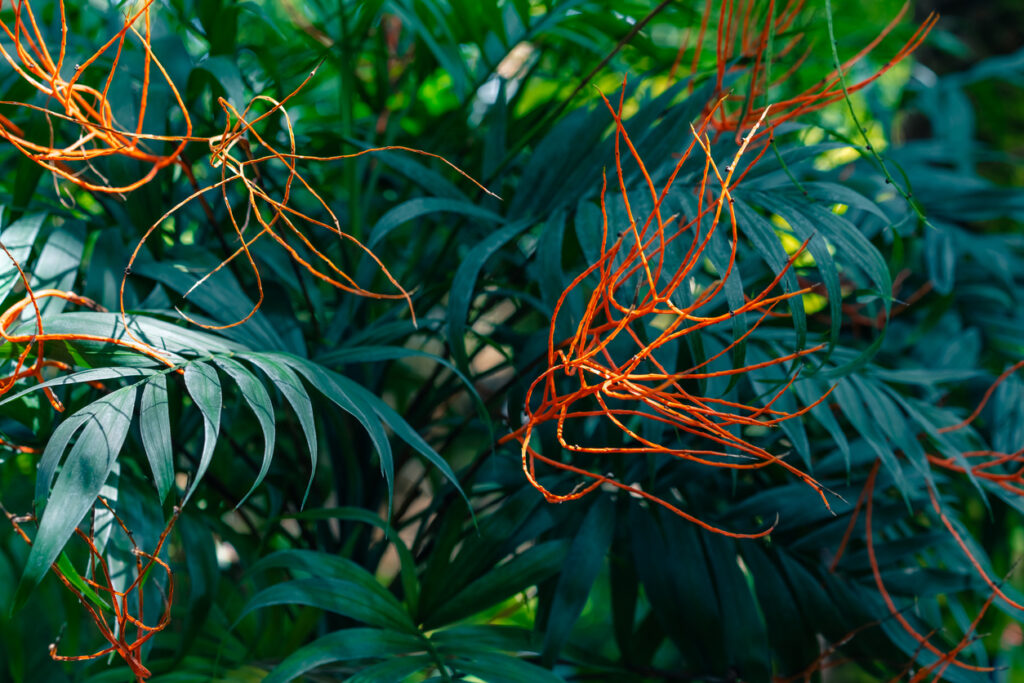
Witches’ hair (Cuscata), also known by the equally spooky name of strangleweed (and the less scary dodder), is a genus of over 200 different parasitic plants. It is native to tropical climates but also appear in temperate areas, including the UK. This plant looks exactly like its sinister name suggests.
Cuscata is often identifiable as a mass of green, brown, or orange spaghetti-like substance hanging from other trees. It lacks chlorophyll so it needs to feed from other plants (not unlike a vampire) to reproduce. The tangled mass of hair-like strands creates a genuinely creepy sight that seems to belong in a horror film rather than British countryside.
8. Purple passionflowers have a rather cosmic crown structure.
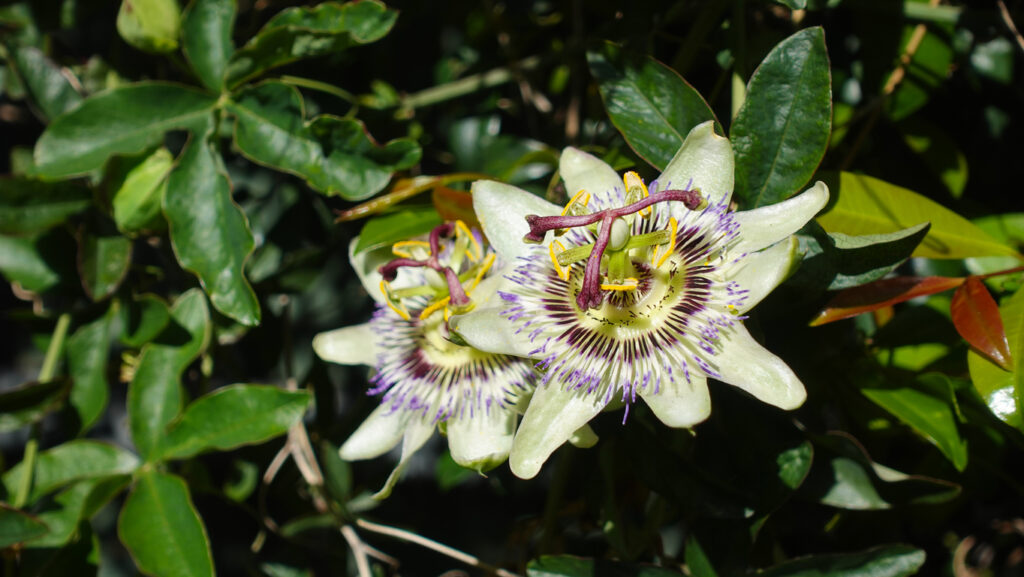
Purple passionflowers electrify garden spaces with bizarre extraterrestrial blossoms resembling complex cosmic structures. Delicate crown-shaped petals twist in mesmerizing purple and white patterns that challenge ordinary flower expectations. These flowers look like they were designed by alien engineers rather than evolution.
The intricate corona of filaments radiating from the centre creates a three-dimensional mandala that seems to pulse with energy. Each bloom appears to be a small spaceship that’s landed temporarily in British gardens before continuing its interstellar journey.
9. Black bat flowers live up to their dramatic name.
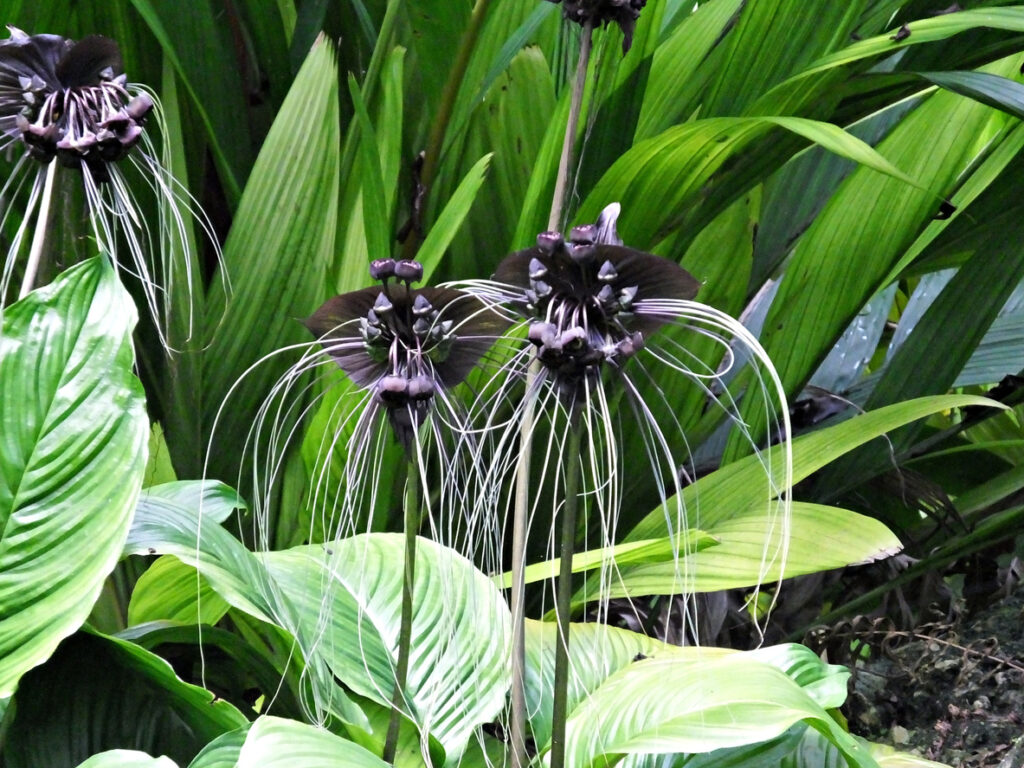
The black bat flower is a popular and unusual houseplant, as it grows in medium light conditions and requires moist soil and high humidity. Native to Southeast Asia, the black bat flower has a unique self-pollinating method. Despite being from the other side of the world, these alien-looking flowers thrive in British indoor conditions.
The drooping black petals and long whisker-like bracteoles create an unmistakable silhouette that genuinely resembles a bat in flight. When grouped together, they create an almost gothic atmosphere that transforms any space into something from a supernatural thriller.
10. Cobra lilies have a rather menacing hooded appearance.
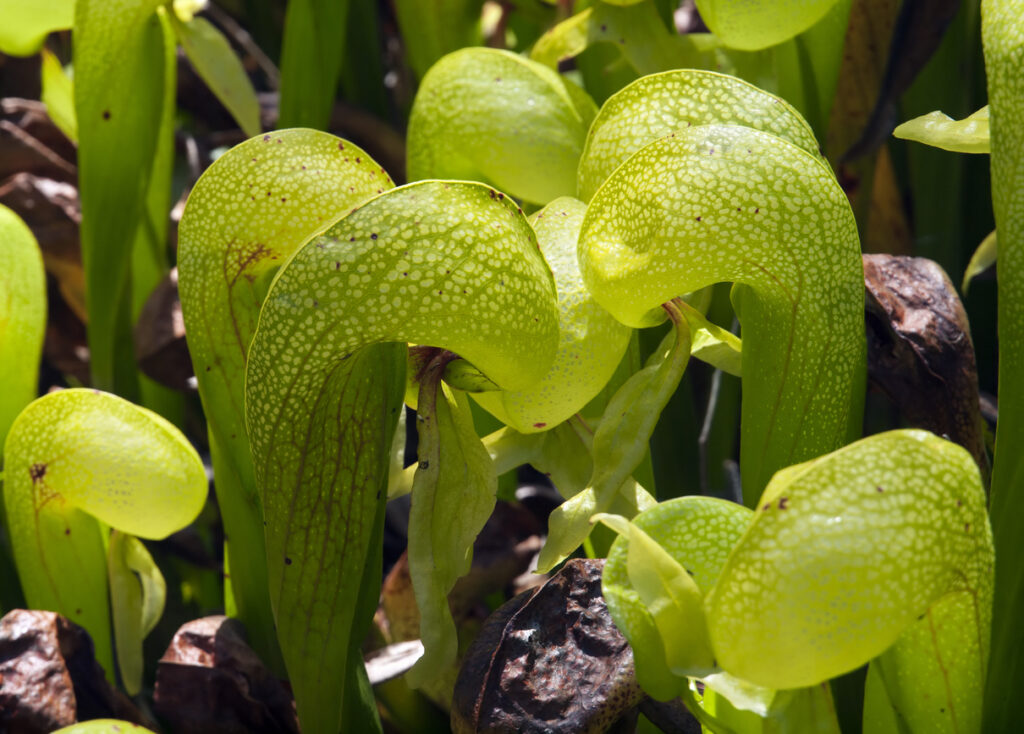
The cobra lily is native to the eastern Himalayas, but it can be grown in the UK as it thrive in moist, well-drained soil in shady spots. It has a unique mottled stem, with a palmate leaf and hooded purple spathe with white stripe. These plants look genuinely threatening, as if they might strike at any moment.
The distinctive hood creates a silhouette so reminiscent of a cobra ready to attack that you almost expect them to hiss. The mottled patterns on the stem enhance the reptilian appearance, making these flowers appear more like dangerous animals than harmless plants.