The okapi looks like it was designed by committee, with zebra stripes, a horse-like body, and a giraffe for a cousin.
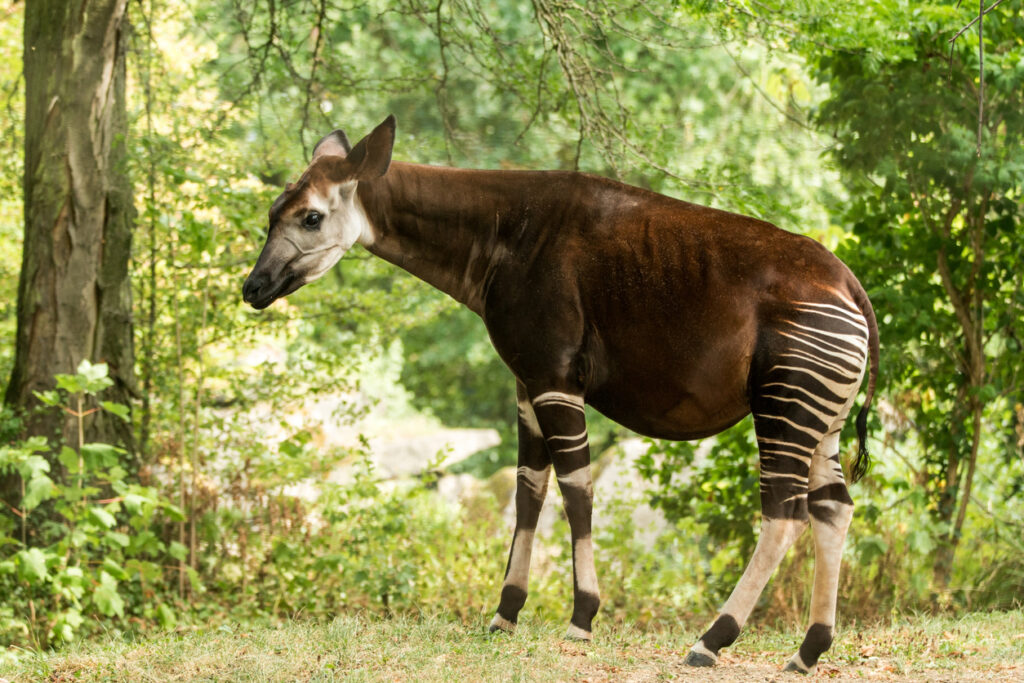
Only found in the forests of the Congo, it’s certainly one of nature’s most unique creatures. While it doesn’t have any stand-out abilities or do anything particularly exciting, it’s still a fascinating and beautiful part of the animal kingdom. Here’s what you need to know about the okapi.
1. The okapi’s unusual appearance is worth talking about.
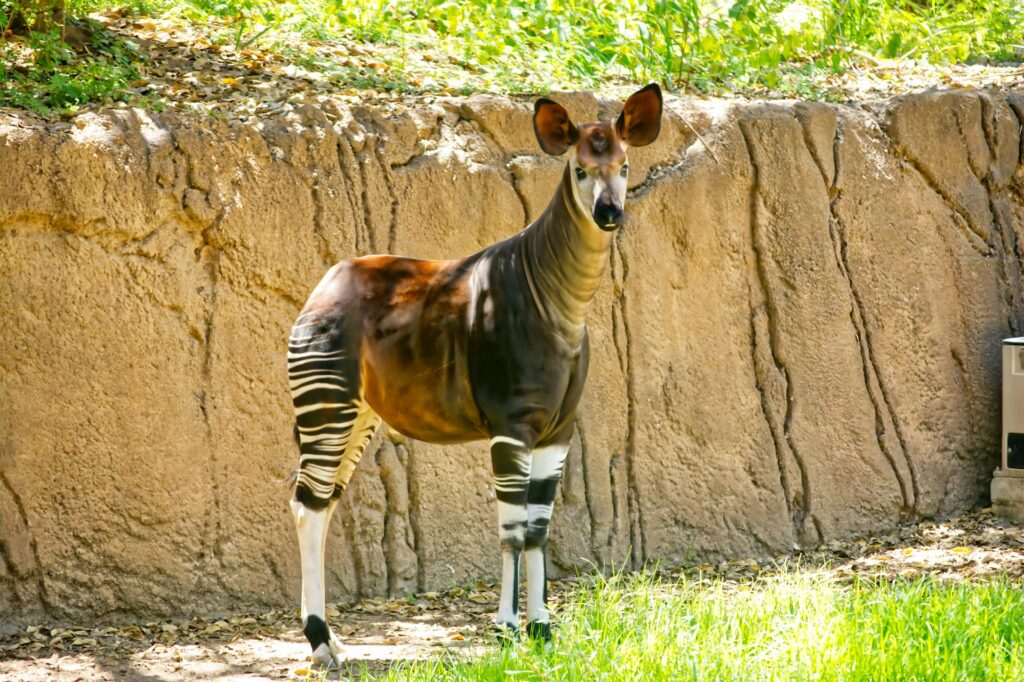
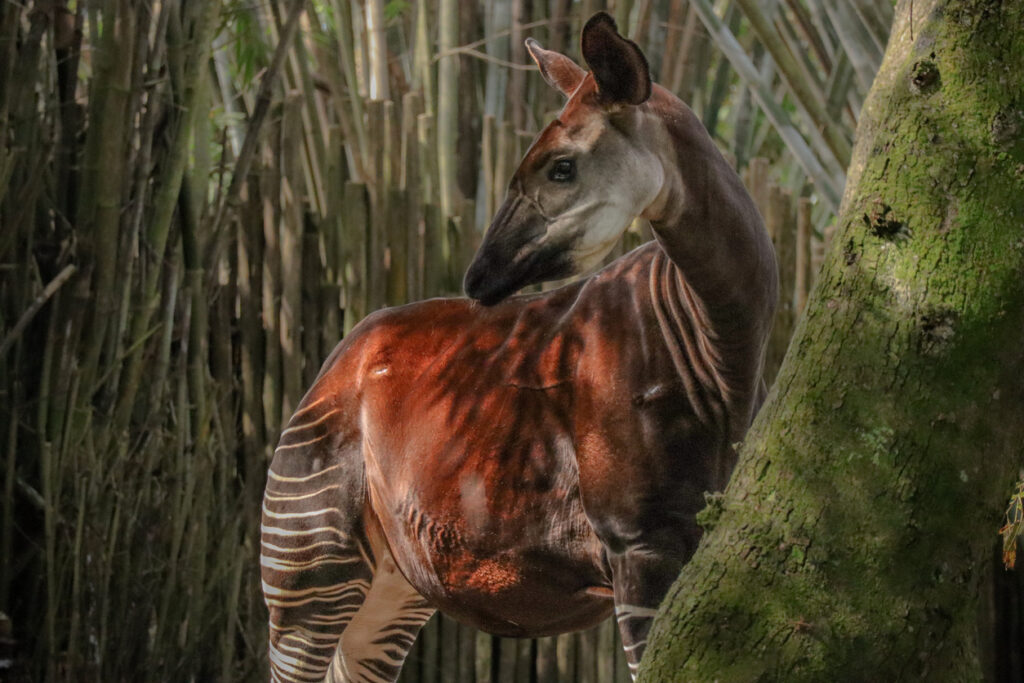
Okapis are sometimes mistaken for zebras because of their stripy legs, but they’re actually the only living relative of giraffes. Their bodies resemble horses, yet their long necks, dark velvety coats, and large ears make them instantly recognisable.
That patchwork of features helps them blend into dense forests. The stripes mimic patterns of light filtering through trees, while their colouring makes them difficult to spot—perfect camouflage for a shy animal.
2. It’s known as the “forest giraffe.”

Although their necks are shorter than giraffes, okapis share many similarities with them, including their distinctive tongue. Scientists call them “forest giraffes” because they’re adapted versions of their tall cousins, built for life under a rainforest canopy.
The link becomes clear in their skeletal structure and gait. Like giraffes, okapis move both legs on one side at the same time, a walking style that few animals share.
3. They have a tongue built for multitasking.

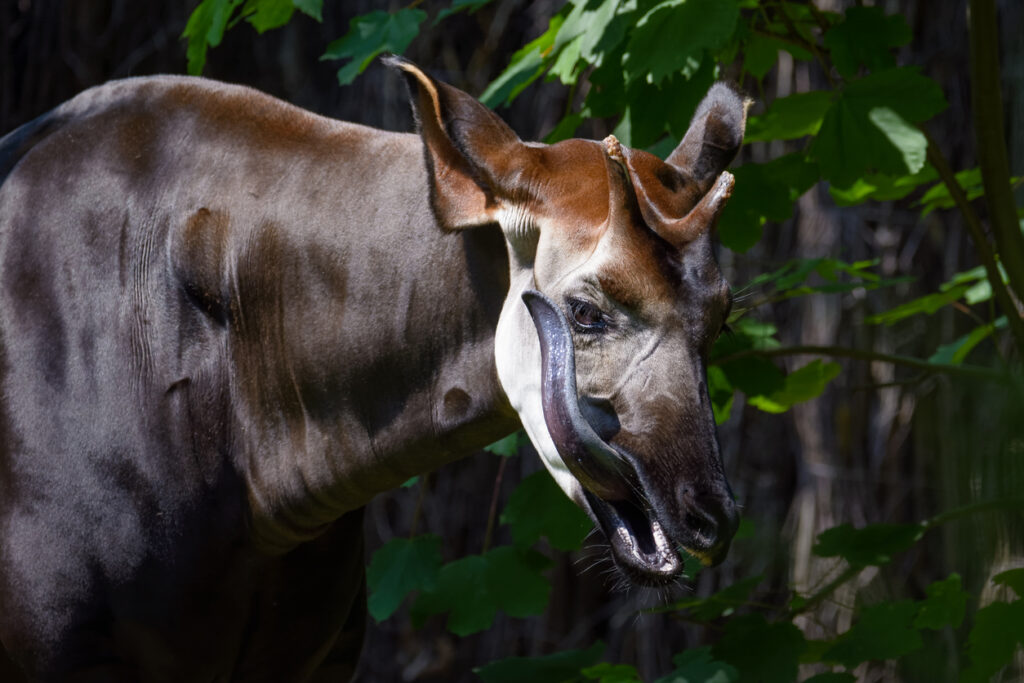
One of the okapi’s quirkiest features is its tongue. Stretching up to 45 centimetres, it’s long enough to lick its own ears and eyelids. This unusual flexibility isn’t just fun—it’s useful for grooming and feeding.
The tongue’s length allows okapis to strip leaves from trees efficiently. It also helps them keep clean in areas their hooves can’t reach, proving just how adaptable this design really is.
4. The okapi is an animal shrouded in mystery.
The okapi wasn’t known to western science until 1901. Local communities had long recognised it, but its secretive nature kept it hidden from outsiders. Early explorers described it as a strange forest zebra until scientists confirmed its true identity.
This late discovery shows how elusive okapis are. Even today, spotting one in the wild is rare because they live deep in dense forests and prefer to avoid human contact.
5. They’re masters of camouflage.
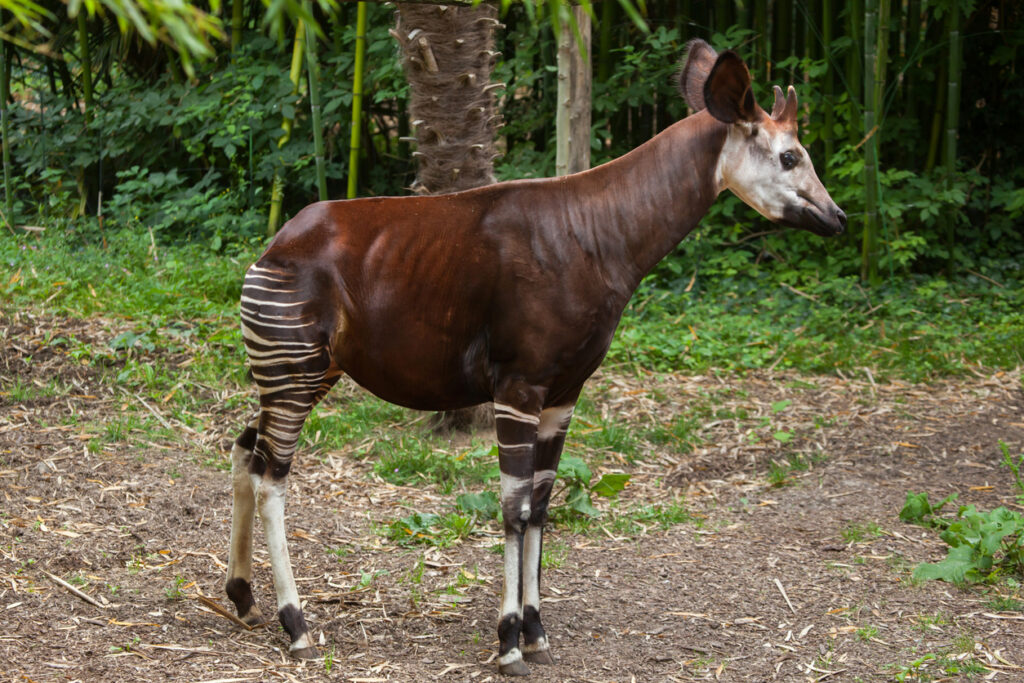
Okapis rely heavily on camouflage to survive. Their stripes break up their outline in the forest’s dappled light, making it nearly impossible for predators to track them. This natural disguise is one of their best defences.
Combined with their quiet behaviour and solitary nature, their camouflage means they often go unseen even by people living nearby. They’re proof that being less visible can be a powerful survival tool.
6. They’re solitary by choice, so don’t feel bad for them.

Unlike giraffes, which often live in groups, okapis are solitary. They roam individually through territories marked with scent glands on their feet, only coming together for short periods during mating.
Living that sort of lifestyle helps reduce competition for food in their dense rainforest homes. By keeping to themselves, okapis make the most of limited resources while avoiding unnecessary conflict.
7. They follow a strict leaf-based diet.
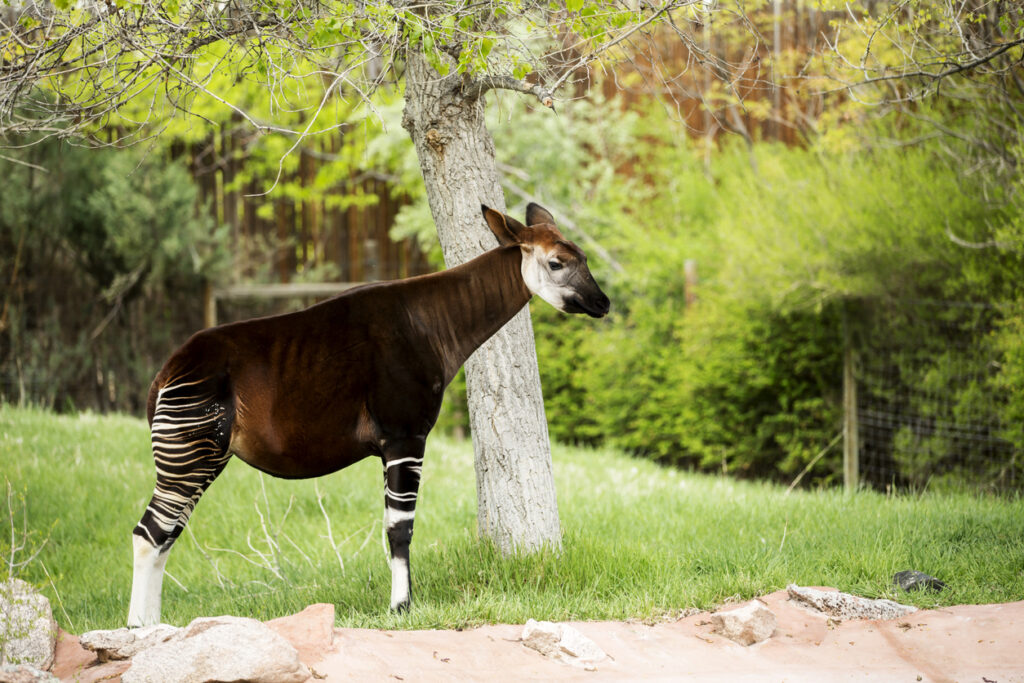
Okapis are herbivores with a preference for leaves, buds, and fruits. They use their long tongues to strip foliage from branches, much like giraffes do on the savannah, but their diet is tuned to rainforest plants.
They eat slowly and deliberately, spending hours each day foraging. That steady pace allows them to sustain their large bodies and adapt to the dense vegetation of the Congo.
8. They’re elusive, yes, but very vocal.

Though quiet most of the time, okapis use low-frequency sounds to communicate, many of which are inaudible to humans. Mothers and calves often rely on these calls to stay connected in thick vegetation.
That adaptation makes sense in their environment. It lets them signal to one another without drawing attention from predators, ensuring their survival in a forest full of hidden threats.
9. They face a whole host of predators.
Leopards are the main natural predators of okapis. Their stealth makes them formidable hunters in the same forests okapis call home. Young calves are especially vulnerable before they’re strong enough to roam independently.
Camouflage, vigilance, and maternal care are their best defences. By staying still and hidden, calves can avoid danger, while adults rely on keen senses and sharp reflexes to detect threats early.
10. They’re actually endangered in the wild.

Okapis are officially listed as endangered. Habitat loss from logging and agriculture, along with poaching, has reduced their numbers. Civil conflict in parts of the Congo also makes conservation efforts more difficult.
These challenges highlight how fragile their survival is. Protecting okapis means preserving rainforests, enforcing wildlife laws, and supporting communities who live alongside them. Without these steps, their future remains uncertain.
11. Conservation zones have been created for protection.

The Okapi Wildlife Reserve in the Democratic Republic of Congo was established to protect both the species and their habitat. Covering vast rainforest, it’s one of the main sanctuaries keeping populations alive in the wild.
International organisations support these efforts with funding, monitoring, and education. Success depends on collaboration between scientists, conservationists, and local communities who value the okapi as part of their natural heritage.
12. The okapi are a symbol of the Congo’s biodiversity.

The okapi is more than just an unusual animal—it represents the unique wildlife of the Congo’s forests. Found nowhere else in the world, it embodies the richness of an ecosystem that is vital for global biodiversity.
Protecting okapis means protecting countless other species that share their rainforest home. Their survival is a reminder of how much is at stake in conserving some of the world’s most extraordinary habitats.