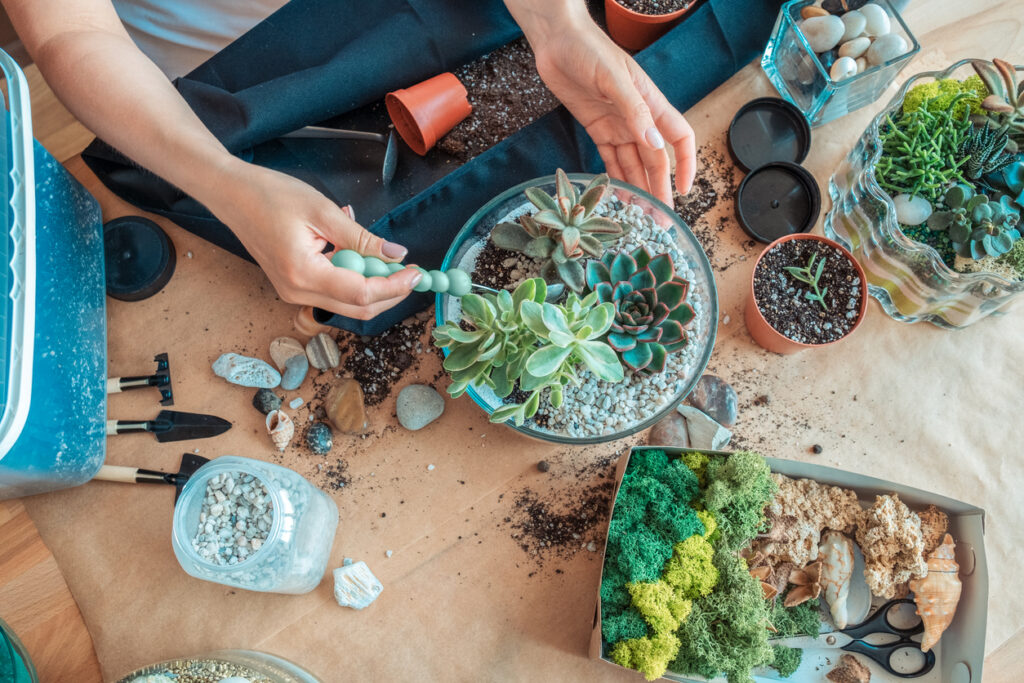
A terrarium is like a miniature ecosystem you can enjoy indoors, and with the right setup, it almost takes care of itself. From the glass container to the smallest stone, each part plays a role in keeping your plants thriving. Here’s everything you need to create a visually appealing, healthy version to brighten up your living space.
1. A clear glass container
The container is the foundation of your terrarium. Clear glass allows light to reach the plants and creates the greenhouse effect that keeps moisture circulating. Choosing the right size and shape also sets the tone for the design.
Whether you pick a jar, bowl, or geometric vessel, make sure it has enough room for layers. A lid will create a more self-sustaining, closed system, while an open top is better for plants that prefer airflow.
2. A base layer of drainage stones
Because terrariums don’t have holes at the bottom, drainage is critical. A layer of small stones or pebbles collects excess water, stopping plant roots from sitting in soggy soil that would otherwise cause rot.
This layer works like a safety net. It prevents overwatering disasters and mimics the way soil layers work in nature, keeping the environment balanced and the plants healthier for longer.
3. Activated charcoal
A thin layer of activated charcoal goes above the stones. It filters the water and absorbs impurities, which stops bacteria and mould from building up inside the terrarium where airflow is limited.
This step often gets skipped, but it makes a big difference. It keeps the small ecosystem fresher and reduces the musty smell that can develop in closed containers.
4. Quality potting soil
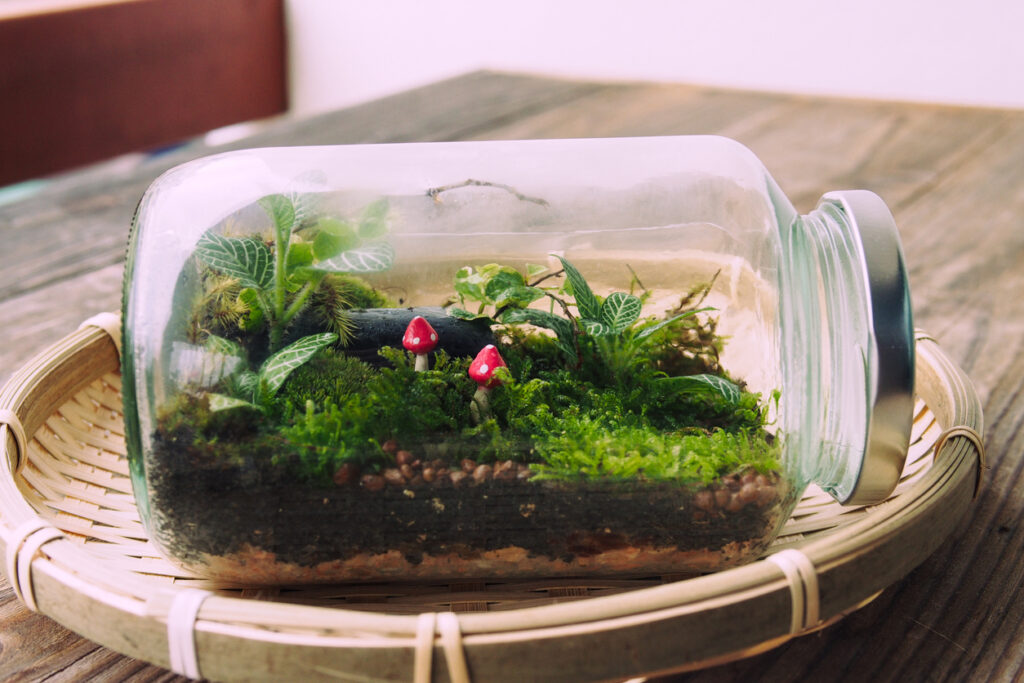
The soil is the heart of the terrarium, feeding the plants and supporting their roots. Using the right potting mix ensures proper drainage and gives the plants enough nutrients to stay strong in their confined space.
Different plants need different soil types. For succulents, a sandy mix works best, while tropical plants thrive in richer, moister soil. Choosing carefully helps avoid problems later on.
5. The right choice of plants
Not every plant will thrive in a terrarium, so the choice matters. Tropical varieties like ferns and mosses do well in closed containers, while succulents and cacti are better suited to open ones with more airflow.
Mixing plants with the same needs is key. When grouped properly, they’ll grow in harmony and require very little interference from you, which makes the terrarium easier to maintain.
6. Decorative stones or sand
A layer of decorative sand, gravel, or tiny pebbles above the soil doesn’t just look appealing. It also helps protect the soil surface, reducing evaporation and preventing mould growth in damp conditions.
These finishing touches add character to the terrarium. They turn it into something ornamental while still contributing to the overall balance of the system.
7. Moss for moisture control
Adding moss gives the terrarium a lush, green carpet and also helps regulate moisture. It absorbs excess water while keeping humidity levels steady, which is vital in closed containers where circulation is limited.
Moss also fills empty spaces and makes the design look natural. It connects the layers visually while quietly supporting the ecosystem beneath it.
8. Small tools for planting
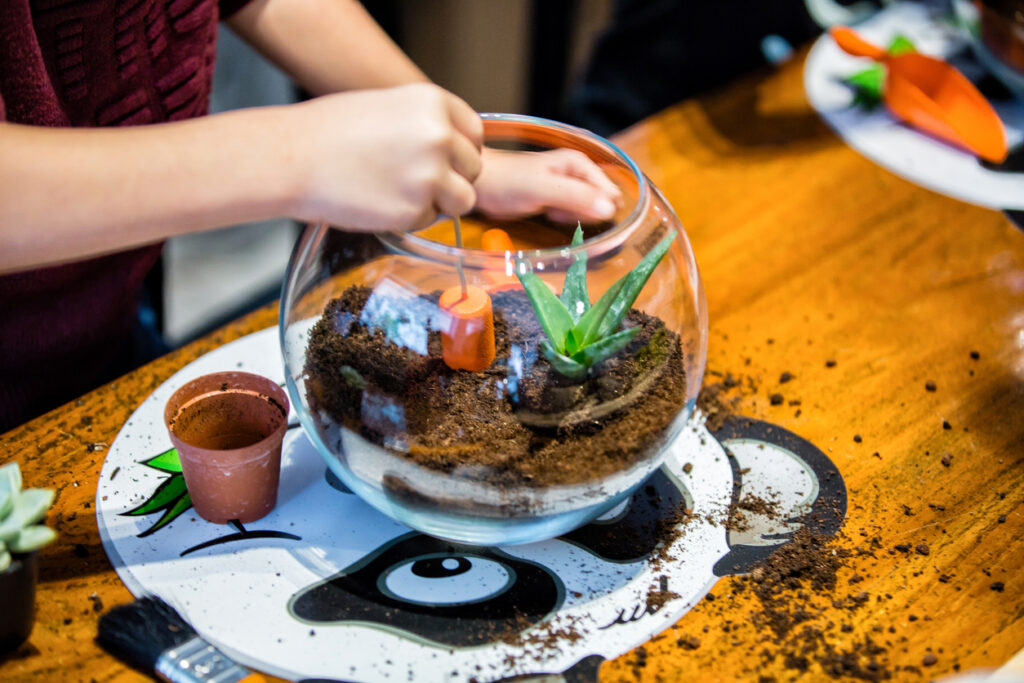
Since containers can be narrow, small tools like tweezers, chopsticks, or long spoons are useful for placing plants and arranging layers neatly. They help avoid damaging delicate roots or disturbing the design while you work.
Having these tools nearby makes the process smoother. You can adjust plants carefully and maintain the terrarium without constantly pulling things apart.
9. A light misting spray bottle
Even self-sustaining terrariums need occasional water, and a spray bottle gives you control. Misting adds just enough moisture without flooding the soil, which keeps the balance intact.
Taking a gentle approach mimics natural dew and rainfall. It’s especially helpful for moss and tropical plants that thrive with humidity rather than heavy watering.
10. Optional decorative accents
Miniature figurines, shells, or driftwood pieces turn a terrarium from a plant container into a personal display. These accents don’t affect the ecosystem but add personality and make it feel unique to you.
Adding small details makes the terrarium enjoyable to look at as well as care for. They give your creation a story, blending the natural with the personal in a way that feels satisfying and lasting.