
The full moon has long been linked to strange behaviour, from sleepless nights to sudden mood swings. Myths and science have clashed for centuries on the subject. Some people think it’s absolute rubbish, while others believe that the moon really does have the power to turn some people into absolute maniacs when at its fullest. Here’s what we really know about it.
The myth has ancient roots.
Belief in the moon’s power goes back thousands of years. Ancient cultures saw the moon as tied to cycles of fertility, madness, and magic. The word “lunacy” itself comes from Luna, the Roman goddess of the moon. Knowing the history helps explain why the idea persists today. When something is embedded so deeply in culture, it takes on a life of its own, influencing how people interpret behaviour around a full moon.
Sleep patterns do actually change.
Modern research suggests the full moon may affect sleep. Studies show some people take longer to fall asleep or sleep less deeply when the moon is brightest, though the effect is subtle and not universal. If you find yourself restless during a full moon, creating a darker environment helps. Blackout curtains, avoiding late-night screen time, and winding down earlier can reduce the impact of extra light.
Brightness plays a role outdoors.
Before artificial lighting, the full moon made nights much brighter. This change in environment influenced hunting, farming, and even social activity. Animals and humans alike were more active simply because they could see more clearly. Even today, the effect lingers. Campers, city strollers, and wildlife watchers still notice how a full moon changes the night atmosphere, making activity feel easier and altering natural rhythms.
The crime connection is exaggerated.

Police folklore often claims crime spikes during full moons, but the evidence is inconsistent. Some studies show small increases, while many show no link at all. The connection is often more perception than fact. Confirmation bias plays a part. When unusual behaviour coincides with a full moon, people notice and remember it. When it happens on another night, they are less likely to connect the dots.
Hospitals feel the strain.
Nurses and doctors often report busier times during full moons. From emergency admissions to unpredictable patient behaviour, the belief is strong in healthcare circles, even if scientific proof is mixed. Regardless of the cause, staff often prepare mentally for chaos when a full moon approaches. This anticipation itself can shape how they experience the night, making any unusual event feel amplified.
Animals respond visibly.
Wildlife studies show many animals adjust behaviour around the full moon. Predators hunt differently, and prey animals stay hidden for longer under bright skies. The change in animal activity may influence how humans perceive the night, too. Noticing changes in pets or wildlife during full moons might reinforce the belief in human effects. While animals are more directly affected by light levels, people often interpret these changes as proof of wider influence.
Mental health links are debated.
Some people living with conditions like bipolar disorder or epilepsy report patterns linked to lunar cycles. Scientists have investigated these claims, but results remain inconsistent, with no clear explanation for how the moon would cause such effects. That said, dismissing personal experience isn’t helpful. For individuals who feel sensitive to lunar phases, tracking patterns and adjusting routines may provide a sense of stability, even if the science remains unclear.
The menstrual cycle adds to the myth.
Because the menstrual cycle is close in length to the lunar cycle, the two have been linked for centuries. Folklore often claimed the moon controlled fertility, behaviour, and mood in women in particular. Science shows menstrual cycles are not universally aligned with lunar phases, but the connection helped reinforce beliefs about the moon’s mysterious power over human bodies and emotions.
Festivals and rituals strengthen belief.
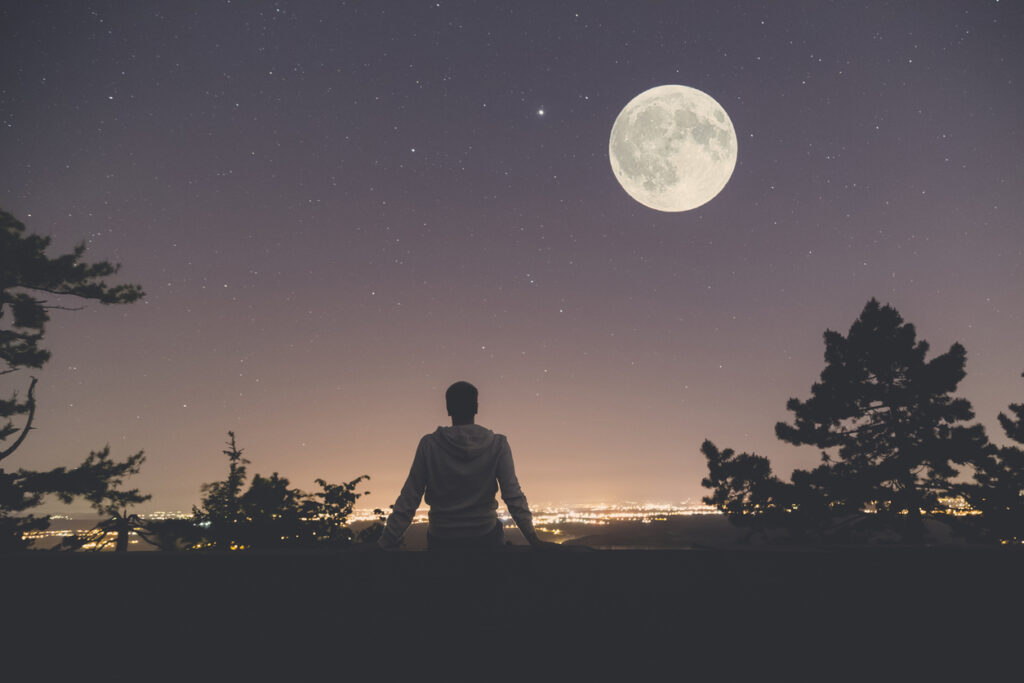
Full moons are often tied to celebrations, from harvest festivals to religious ceremonies. These events make people more aware of the moon’s presence, adding to the sense that behaviour feels heightened during these nights. Social gatherings also bring energy and unpredictability. When more people are active at night because of tradition, unusual behaviour is more likely, strengthening the impression that the moon itself caused it.
The placebo effect is powerful.
Believing the moon changes behaviour can be enough to make people act differently. If you expect restlessness, conflict, or energy surges during a full moon, you are more likely to notice them and behave accordingly. That expectation creates a feedback loop. People interpret normal events as lunar effects, strengthening the myth and making it harder to separate belief from fact.
Pop culture keeps it alive.
From werewolves to horror films, the full moon is a staple symbol of transformation. These cultural depictions remind us constantly that the moon is supposed to affect us, shaping how we interpret strange behaviour. The stories we consume often reinforce existing myths. Even without hard science, the constant presence of the moon in film and folklore makes the idea feel familiar and believable.
Farmers once relied on lunar light.
In the past, farmers used moonlight to work longer hours, harvesting or tending animals at night. These practices made communities more active under full moons, creating a real link between lunar phases and human behaviour. Although artificial lighting has replaced this need, the tradition lingers. Rural areas still celebrate the moon’s cycles, keeping the idea alive even when practical reasons have faded.
Extreme cases make headlines.

When strange crimes, accidents, or behaviours occur during full moons, the media often highlights the connection. These stories capture public imagination and reinforce the belief that the moon drives unusual activity. Because dramatic events are memorable, they overshadow quieter nights. This reporting bias means the moon gets credit for chaos while being ignored on calm nights, keeping the myth firmly in circulation.
The science says the effect is minimal.
Most researchers agree that the moon’s impact on human behaviour is limited. While light levels can affect sleep and animals respond to brightness, the evidence for people “going crazy” under a full moon is weak. Still, the myth persists because it feels true. For many, the moon is a symbol of change and unpredictability, and that cultural weight often matters more than the data when it comes to belief.