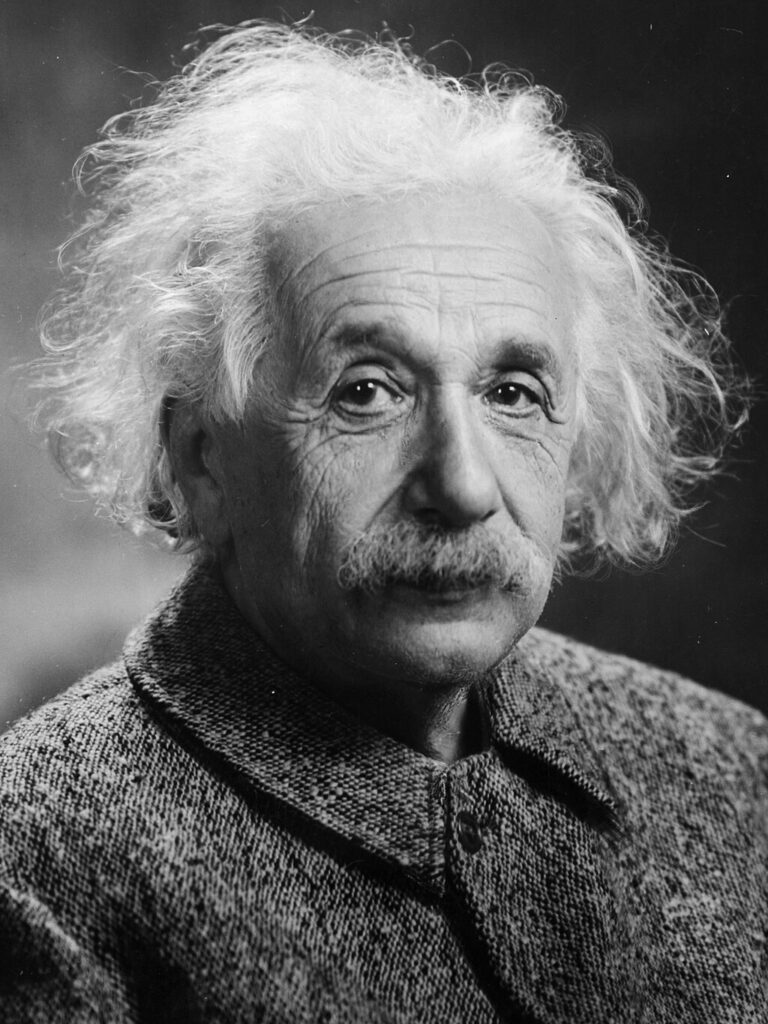
Einstein’s theory of general relativity has shaped our understanding of gravity for more than a century. Yet as science pushes further into black holes, dark matter, and quantum physics, questions remain. Here are 10 reasons why Einstein’s grip on gravity may not be final.
His theory redefined gravity itself.
Einstein showed that gravity isn’t a pulling force but the warping of space and time around mass. This elegant model explains everything from planetary orbits to the bending of light by stars, predictions that have been tested repeatedly.
However, this redefinition also opened the door to new puzzles. If space and time can bend, then scientists naturally ask whether there are limits to this description and whether it holds in the most extreme conditions.
Black holes push relativity to the edge.
Black holes are where gravity becomes almost unimaginably strong. Einstein’s equations predict them, yet inside their cores the maths breaks down into a “singularity,” a point where current theories can’t describe what happens.
This failure highlights a gap. If relativity can’t handle the inside of a black hole, then a deeper theory of gravity must be out there, waiting to explain what relativity can’t.
Gravity still resists quantum rules.
Every other fundamental force has been described using quantum mechanics, but gravity remains stubbornly outside that framework. Relativity and quantum theory each work brilliantly on their own, but they refuse to fit together.
Finding a way to unite them is one of physics’ biggest goals. Until we do, Einstein’s description will remain incomplete, however accurate it looks in everyday conditions.
Dark matter adds mystery.
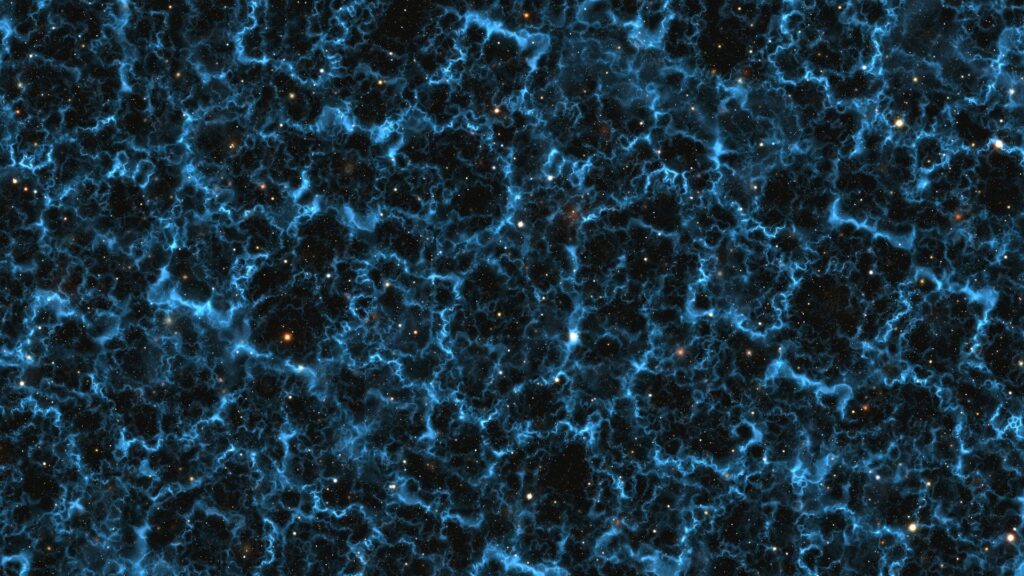
Galaxies spin faster than they should if only visible matter is present. Scientists call the missing mass “dark matter,” something Einstein’s theory doesn’t account for directly. Its existence challenges our understanding of how gravity actually behaves. Either new matter is out there, invisible to current tools, or our theories of gravity need a major update. In both cases, Einstein may not have the final answer.
Dark energy bends the rules further.
The discovery that the universe’s expansion is accelerating shocked scientists. This effect is attributed to “dark energy,” an unknown force that pushes space apart, competing with gravity’s pull. Einstein’s equations allow for this with a “cosmological constant,” but whether that explains dark energy fully is unclear. The mystery suggests we still lack a full picture of gravity’s role in the universe.
Gravitational waves prove relativity right, but they also raise new questions.
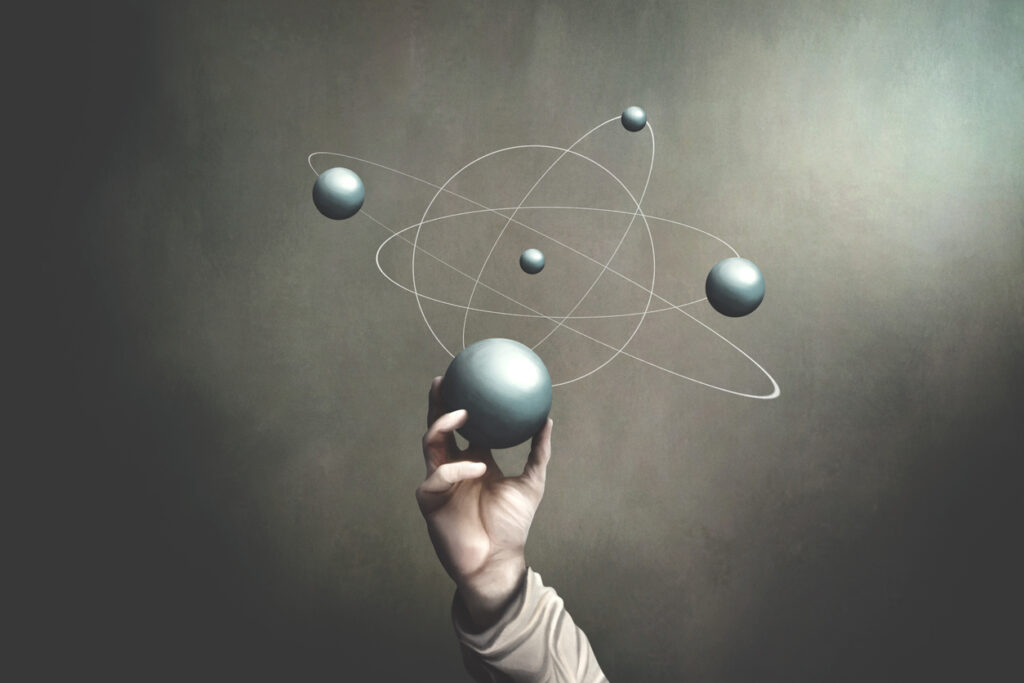
The detection of gravitational waves confirmed a key Einstein prediction. These ripples in space-time are created when massive objects like black holes collide, and scientists can now measure them directly.
However, this new ability opens a fresh field of questions. What else can gravitational waves reveal about space-time? Could they expose flaws in relativity when studied in more detail? Their discovery is both confirmation and a new challenge.
Alternative theories keep competing.
Physicists have proposed many other ways of describing gravity, from string theory to modified Newtonian dynamics. While none have replaced relativity yet, their existence shows how actively scientists are searching for cracks in Einstein’s model.
Each attempt reflects the sense that relativity is brilliant but unfinished. Until experiments rule out every alternative, the possibility remains that Einstein’s word isn’t the last.
Technology now tests relativity more deeply.
Satellites, atomic clocks, and space probes allow scientists to measure tiny deviations in gravity that were impossible to detect a generation ago. These precise tools keep pushing Einstein’s theory to its limits. So far, relativity continues to hold, but the closer we look, the more chance we have of spotting something new. If a flaw is found, it could transform physics as completely as Einstein once did.
Cosmic inflation raises questions relativity can’t answer.
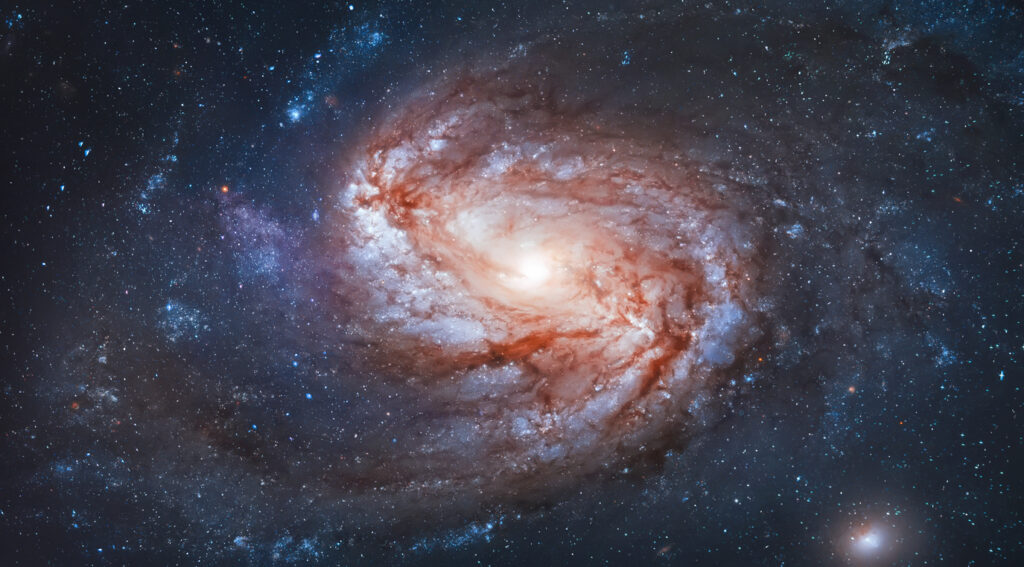
The early universe seems to have expanded at incredible speed in a fraction of a second after the Big Bang. This theory of inflation fits observations, but general relativity alone can’t explain why it happened or how it started.
This gap suggests that relativity is only part of the picture. To understand the earliest moments of time, scientists will need a theory that goes beyond Einstein’s framework.
Science is always unfinished.
Einstein himself admitted his work might one day be surpassed. He saw science as a constant search, not a finished story. Every new discovery either strengthens relativity or pushes us to find something beyond it. Whether or not Einstein has the last word, his ideas continue to shape the debate. The fact that we’re still testing them a century later is proof of both their power and their limits.