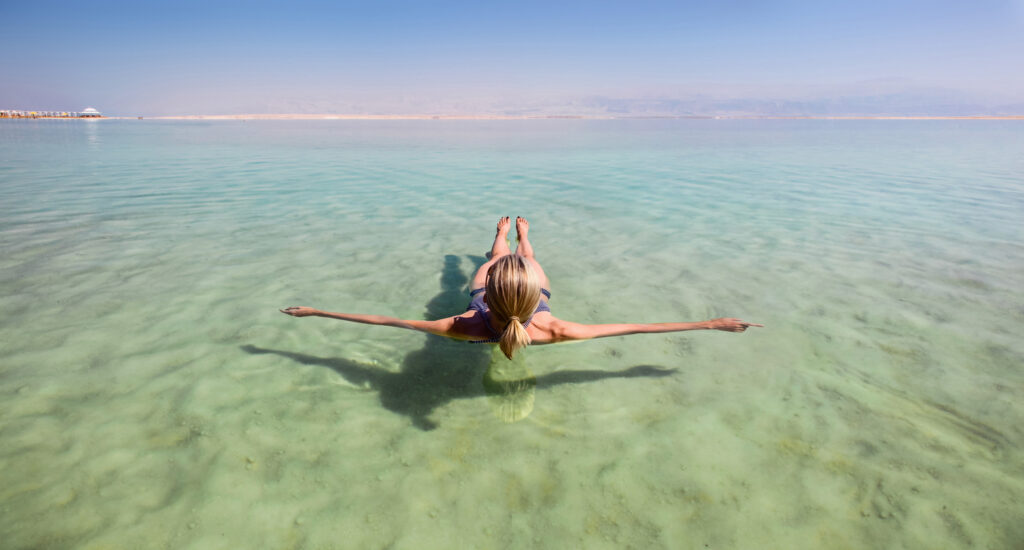
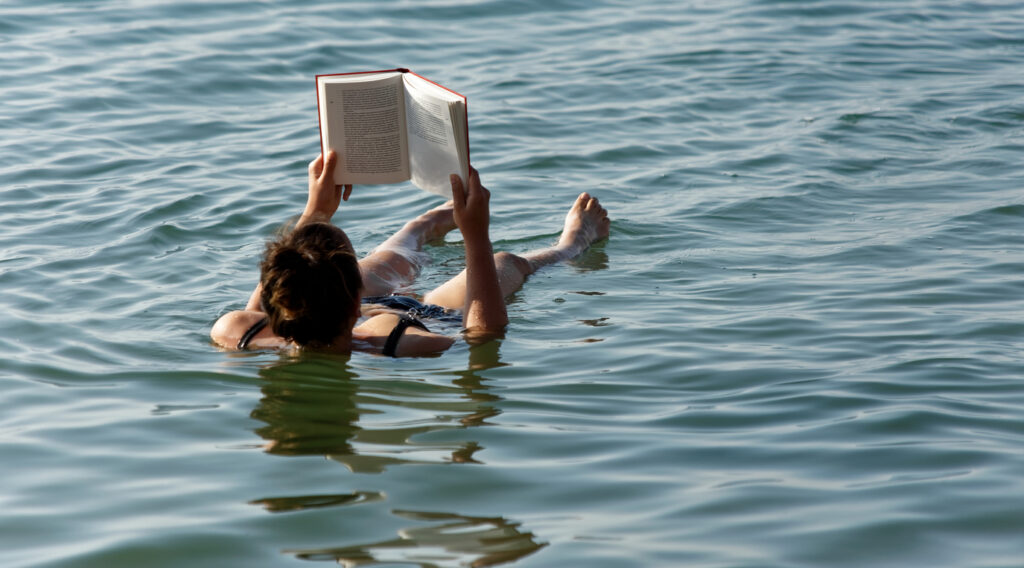
You’ve probably seen those crazy photos of people casually reading newspapers while floating in water like they’re lying on an invisible pool float. That’s the Dead Sea doing its thing, and it’s one of the weirdest natural phenomena on Earth, but this magical floating experience might not be around much longer.
The salt content is absolutely bonkers.
The Dead Sea is about 10 times saltier than regular ocean water, which is like comparing a normal pretzel to one that’s been rolled in pure salt crystals. The insane salt concentration makes the water so dense that your body just can’t sink through it.
Regular seawater is about 3.5% salt, but the Dead Sea clocks in at around 34% salt content. It’s basically liquid salt with some water mixed in, which explains why floating feels effortless and slightly supernatural.
Your body becomes an unsinkable cork.
Since the salty water is denser than your body, you pop up to the surface like a cork in champagne. Physics literally won’t let you sink because the water weighs more than you do, making drowning nearly impossible even if you can’t swim.
The buoyancy is so strong that it’s actually hard to stand up normally in the water. People often flip over unexpectedly because their legs want to float up to the surface, creating some pretty hilarious tourist fails.
It’s not actually a sea at all.
The Dead Sea is technically a massive salt lake that’s completely landlocked, with no connection to any ocean. It’s fed by the Jordan River and a few smaller streams, but water only goes in. Oddly, it never flows back out to the sea.
All that incoming water just sits there and evaporates under the desert sun, leaving behind concentrated salt and minerals that have been building up for thousands of years. It’s like nature’s most extreme evaporation experiment.
It’s the lowest point on Earth’s surface.

The Dead Sea sits about 1,400 feet below sea level, making it the lowest spot you can visit on dry land. Standing on its shores is literally the closest you can get to the centre of the Earth without digging a hole.
The extreme depth creates its own weird microclimate with higher atmospheric pressure, almost no rainfall, and year-round sunshine. It’s like being at the bottom of a giant, warm, salty bowl.
The water will burn any cuts or scratches you have.
That incredibly salty water acts like liquid fire on any open wounds, scratches, or recently shaved skin. Even tiny cuts you didn’t know you had will suddenly announce themselves with stinging pain the moment you touch the water.
People learn this the hard way when they try to shave before their Dead Sea trip or don’t notice small scrapes. The salt content is so intense that it’s basically like rubbing wounds with pickle brine, except way more concentrated.
You absolutely cannot drink the water.
Accidentally swallowing Dead Sea water is like chugging liquid salt, and even small amounts can make you violently sick. The mineral concentration is so extreme that it can cause serious stomach problems and dehydration.
Tourists sometimes learn this lesson when waves splash into their mouths, or they don’t keep their lips sealed tight while floating. The taste is reportedly beyond awful, and the side effects can ruin your entire holiday.
It’s shrinking at an alarming rate.
The Dead Sea is disappearing fast, losing about three feet of depth every year. It’s already shrunk to about one-third of its size from 50 years ago, and at this rate, it could completely dry up within decades.
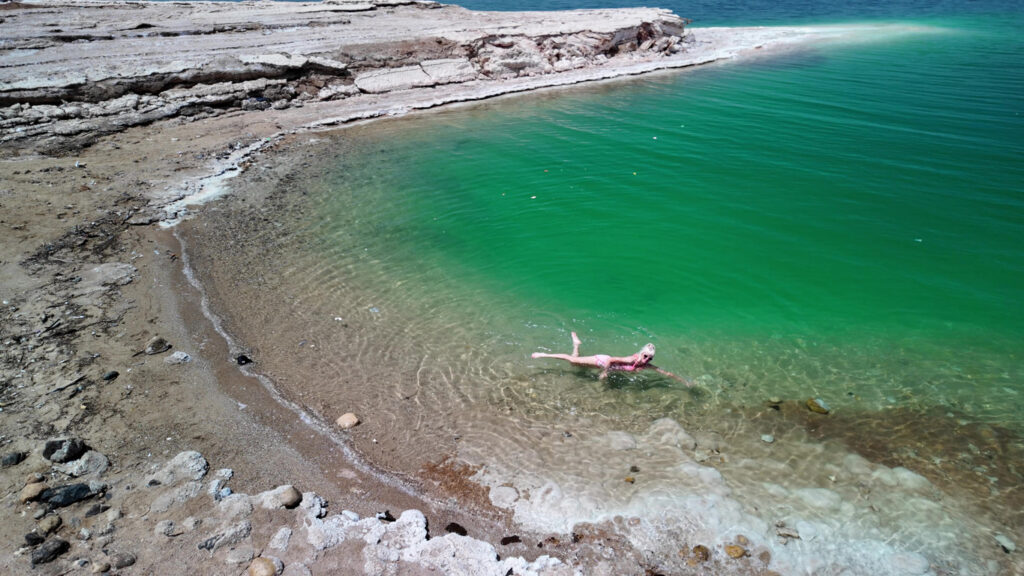
The shoreline keeps retreating so quickly that hotels and facilities built near the water are now stranded far from the actual sea. Some places that used to be underwater are now dry land covered in salt crystals.
Sinkholes are opening up everywhere around it.
As the water level drops, underground salt deposits dissolve and create massive sinkholes that can swallow cars, roads, and buildings without warning. There are now over 7,000 sinkholes around the Dead Sea, and new ones appear regularly.
These aren’t cute little holes in the ground, either. Some sinkholes are big enough to swallow entire buildings and can open up suddenly under people’s feet. It’s turned the area into a real-life minefield of unpredictable ground collapses.
The Jordan River barely reaches it anymore.
The Jordan River used to be the Dead Sea’s main water source, but upstream countries now divert most of that water for drinking and irrigation before it can reach the sea. What used to be a flowing river is now basically a trickle.
Jordan, Israel, and Syria all take water from the Jordan River system for their populations, leaving very little to flow into the Dead Sea. It’s like trying to fill a bathtub when someone upstream keeps turning off the tap.
The mud is supposedly miraculous for your skin.
Dead Sea mud is packed with minerals like magnesium, calcium, and potassium that people believe can heal skin conditions and make you look younger. Tourists cover themselves in the black, gooey mud like they’re at an expensive spa.
Whether or not the mud actually has magical healing properties is debatable, but it definitely makes for some entertaining photos of people looking like swamp monsters while convinced they’re getting the beauty treatment of a lifetime.
Nothing can live in the water except tiny microbes.
The Dead Sea got its name because the salt concentration is so extreme that fish, plants, and most living things simply can’t survive in it. The only life forms that can handle it are some specialized bacteria and algae.
Occasionally, algae blooms turn sections of the water red or pink, creating an even more alien landscape. However, don’t expect to see any fish swimming around because they’d be instantly pickled by the salt content.
Ancient people used it as a natural mummy preservation site.
The combination of salt, dry air, and minerals made the Dead Sea area perfect for preserving things, which is why archaeologists keep finding incredibly well-preserved ancient artifacts and manuscripts in nearby caves.
The famous Dead Sea Scrolls were preserved for over 2,000 years, partly because of the unique climate conditions around the sea. It’s like nature created its own time capsule preservation system.
Saving it would require massive international cooperation.
Fixing the Dead Sea’s disappearing act would need all the surrounding countries to completely change how they use water resources, plus potentially build expensive pipelines from the Red Sea. But with regional politics being what they are, that’s easier said than done.
Some proposed solutions include building a canal from the Red Sea or massively reducing water diversions from the Jordan River, but these projects would cost billions and require countries that don’t always get along to work together perfectly.