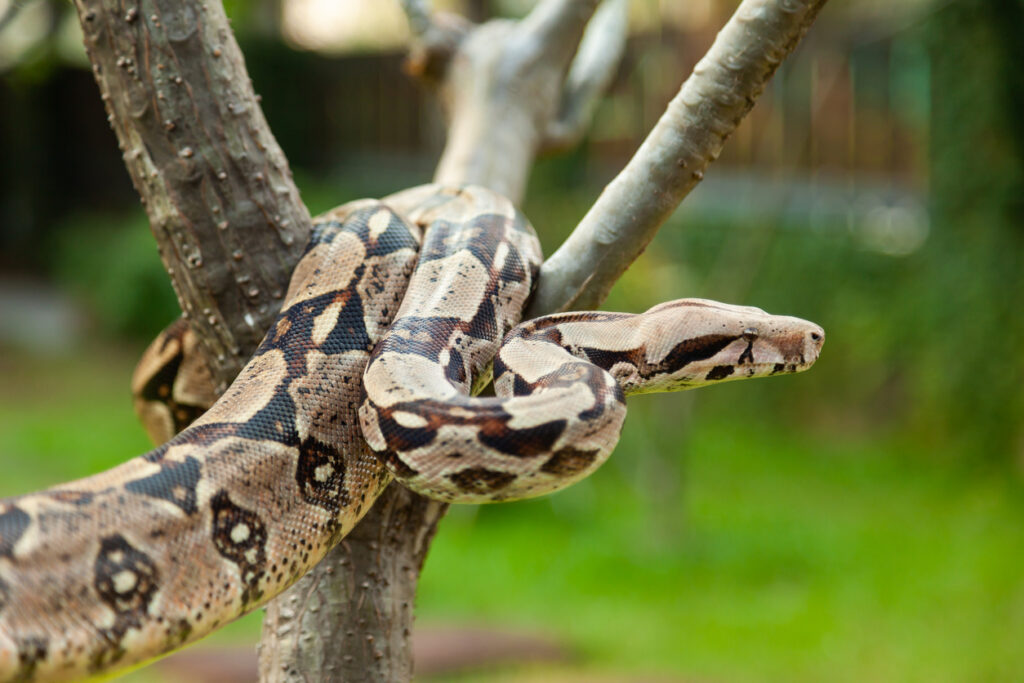
Boa constrictors are some of the most impressive snakes on the planet, combining incredible strength with surprisingly gentle temperaments that make them fascinating creatures to learn about. These powerful serpents have captivated people for centuries with their unique hunting methods, beautiful patterns, and remarkable ability to thrive in diverse environments across Central and South America. Here are some of the coolest things about them.
1. They don’t actually crush their prey like most people think.
The classic image of a boa constrictor squeezing its prey until bones break is actually a Hollywood myth that’s been around for ages. Many people imagine these snakes as bone-crushing monsters that pulverise their victims with brute force.
Boas are much more sophisticated hunters than that. They cut off blood circulation rather than breaking bones. Each time their prey exhales, the snake tightens its grip slightly, preventing the animal from taking another full breath until it eventually loses consciousness from lack of oxygen.
2. Baby boas are born ready to hunt and survive on their own.
Unlike many animals that need extensive parental care, baby boa constrictors come into the world as fully functional miniature versions of adults. Mother boas give birth to live babies rather than laying eggs, and these little ones are immediately capable of hunting and defending themselves.
Newborn boas are typically around 12–18 inches long and can catch small prey like mice and birds right from birth. They’re born with all the instincts they need to survive, including the ability to swim, climb trees, and use their heat-sensing abilities to locate warm-blooded prey.
3. They can sense heat signatures like living thermal cameras.
Boa constrictors have special heat-sensing organs called pit organs located along their lips that work like biological thermal imaging cameras. These incredible sensors can detect temperature differences as small as a few degrees, allowing them to hunt effectively even in complete darkness.
The heat-sensing ability is so precise that boas can track warm-blooded prey through dense vegetation or locate the warmest spots for basking. They can literally see the heat signature of a mouse hiding in tall grass or detect a bird roosting in the branches above them.
4. They’re excellent swimmers, despite being primarily land-dwelling snakes.

While boa constrictors spend most of their time on land or in trees, they’re surprisingly good swimmers when the situation calls for it. Many people don’t realise that these powerful snakes can cross rivers, swim between islands, and even hunt aquatic prey when necessary.
Boas use an undulating swimming motion similar to how they move on land, and their strong muscles make them quite efficient in the water. They can hold their breath for extended periods and have been observed swimming considerable distances between territories or to escape flooding.
5. They can go months without eating and barely slow down.
One of the most remarkable things about boa constrictors is their ability to survive on very few meals throughout the year. Adult boas might only eat 6–10 times per year in the wild, going months between meals without any apparent distress.
Their incredibly slow metabolism allows them to extract maximum nutrition from each meal while using minimal energy for daily activities. During cooler months or when prey is scarce, boas can essentially shut down non-essential body functions and live off stored energy for extended periods.
6. Female boas can reproduce without mating in rare circumstances.
In extremely rare cases, female boa constrictors can reproduce through a process called parthenogenesis, essentially creating genetic copies of themselves without any male involvement. This phenomenon is quite unusual in reptiles and has only been documented a few times in captive boas.
Scientists believe this ability might serve as an evolutionary backup plan for isolated populations where males aren’t available. The offspring from parthenogenesis are typically smaller and may have health issues, but it shows just how adaptable these remarkable snakes can be.
7. They’re incredibly strong but surprisingly gentle with humans.
Despite their fearsome reputation and incredible strength, boa constrictors are generally calm, docile animals that rarely show aggression toward humans. Wild boas typically prefer to flee rather than fight when encountered, and captive boas often become quite tolerant of handling.
A large adult boa can easily overpower a human if it wanted to, but attacks on people are extremely rare and usually occur only when the snake feels cornered or threatened. Most boas seem to recognise that humans aren’t prey and will simply try to hide or escape rather than becoming defensive.
8. They keep growing throughout their entire lives.
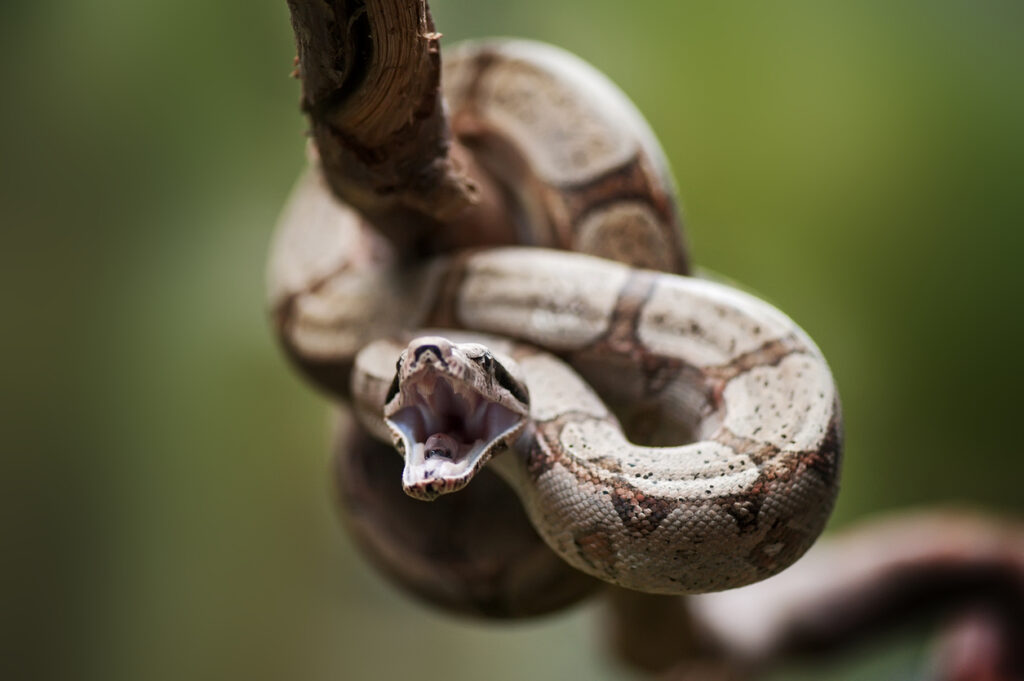
Unlike humans and many other animals that stop growing once they reach maturity, boa constrictors continue growing throughout their entire lives, though the rate slows dramatically as they age. This means that really old boas can reach impressive sizes if they live long enough.
The growth rate depends heavily on food availability, temperature, and overall health, but boas can potentially reach 10–13 feet in length under ideal conditions. In captivity, where food is consistent and temperatures are optimal, boas often grow larger than their wild counterparts.
9. They’re surprisingly good climbers despite their size.
Young boa constrictors are excellent climbers that spend much of their time in trees hunting birds and small mammals. Even adult boas retain impressive climbing abilities, using their strong bodies and prehensile tails to navigate through branches with surprising grace.
Their muscular bodies and rough-textured scales provide excellent grip on bark and branches, while their prehensile tail acts like a fifth limb for extra stability. Boas can even hang from branches using just their tail while reaching for prey or exploring new areas.
10. They shed their skin in one complete piece, like taking off a sock.
Boa constrictors shed their entire skin in one continuous piece, starting from the nose and peeling backward like removing a sock. The process can take several hours and leaves behind a perfect, inside-out replica of the snake’s body.
Before shedding, boas become less active and their colours become dull and milky-looking, especially around the eyes. They’ll often rub against rough surfaces to help start the shedding process, and the new skin underneath is typically more vibrant and colourful than before.
11. Each boa has unique patterns like fingerprints.
Every boa constrictor has a completely unique pattern of markings that’s as individual as human fingerprints. These patterns remain consistent throughout the snake’s life, making it possible to identify individual animals by their distinctive markings.
The patterns vary enormously between different populations and geographic regions, ranging from bold geometric shapes to subtle, complex designs. Some boas have striking contrasts between light and dark markings, while others display more muted, blended colourations that help them blend into their environments.
12. They can live for decades with proper care.

Boa constrictors are remarkably long-lived animals that can survive for 20-30 years or more under the right conditions. In captivity, where they’re protected from predators and have consistent food and medical care, some boas have lived well into their thirties.
Their longevity is partly due to their slow metabolism and low activity levels, which reduce wear and tear on their bodies over time. Wild boas face more challenges from predators, disease, and food scarcity, but those that survive to adulthood often live for many years.
13. They play important ecological roles in their native habitats.
Boa constrictors serve as important predators that help control populations of rodents, birds, and other small animals in their ecosystems. They’re particularly valuable for controlling agricultural pests in areas where their ranges overlap with human settlements.
Large boas also serve as prey for bigger predators like jaguars and large birds of prey, making them an important link in the food chain. Their presence indicates a healthy ecosystem with sufficient prey populations and suitable habitat for large reptiles to thrive.