The life cycles of stars are fascinating, and sometimes the line between stars and planets isn’t as clear as it seems. Astronomers have found that under certain conditions, stars can fade, shrink, or fail in ways that make them resemble planets. Here’s how that process works—it’s absolutely fascinating!
Stars and planets form from the same material.
Both stars and planets begin in vast clouds of gas and dust. Gravity pulls the material together, and depending on how much mass gathers, the object will either ignite into a star or remain a planet. It’s all about size and weight at the very beginning. If there’s not enough material to trigger nuclear fusion, the object never becomes a full star. Instead, it stays planet-like, which shows how fine the boundary can be between the two.
Failed stars are called brown dwarfs.
A brown dwarf forms when an object collects more mass than a giant planet, but not enough to ignite like a star. These are often described as “failed stars” because they sit in the middle ground between the two categories. They can glow faintly, but they never shine like true stars.
In many ways, brown dwarfs bridge the gap between planets and stars. They provide a clue to how a star might resemble a planet under the right conditions.
A dying star can shrink into a white dwarf.
When a star like our Sun runs out of fuel, it swells into a red giant before collapsing into a white dwarf. This is a hot, dense core that no longer produces energy through fusion. Over time, it cools and becomes dimmer.
Eventually, a white dwarf may cool so much that it resembles a giant planet in appearance. It no longer glows strongly and can blend into the background of space.
White dwarfs can become black dwarfs.
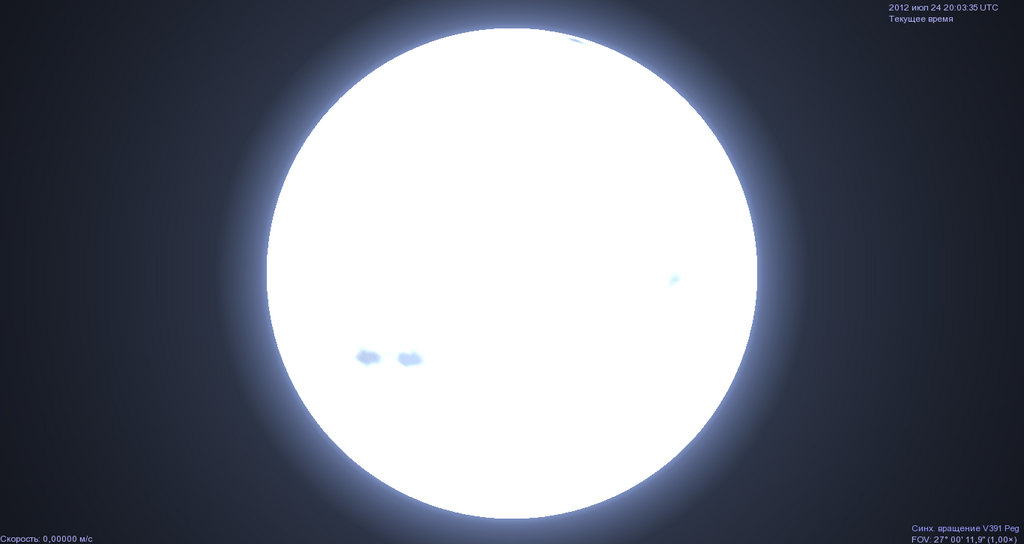
In theory, a white dwarf could cool so completely that it no longer emits heat or light, turning into a black dwarf. Scientists believe this would make it more planet-like, though the universe isn’t old enough for any to exist yet. When that happens, the object would be cold, dark, and rocky, behaving much more like a planet than a star. It shows how stellar remnants can gradually cross categories.
Massive stars leave behind neutron stars.
If a star is larger than the Sun, its collapse is even more dramatic. Instead of becoming a white dwarf, it can explode in a supernova and leave behind a neutron star, which is unimaginably dense and compact. Neutron stars don’t look like planets, but their small size makes them physically closer in scale to planets than to the stars they once were. They blur the picture of what counts as a planet-like object.
Gas giants can mimic failed stars.
Planets like Jupiter are sometimes called “failed stars” because they’re made of hydrogen and helium, the same material as stars. Jupiter would have needed around 80 times more mass to ignite fusion and become a star.
This shows that under slightly different conditions, giant planets and stars aren’t as separate as they first appear. The difference is mostly about how much mass they end up with.
Rogue planets may have stellar origins.
Some planets drift through space without orbiting a star, known as rogue planets. Astronomers believe some may have started out as stars or stellar fragments before being stripped of energy and ejected from systems. Because of this, rogue planets could be examples of stellar material reclassified as planets. They prove that the story of a star can take strange turns.
Collisions can change stellar fates.
In crowded star clusters, stars and planets can collide or interact in ways that change their paths. A star that collides and loses material might no longer sustain fusion and could cool into something closer to a planet. These events are rare, but they demonstrate how violent interactions in space can blur the line between categories. What begins as a star can be stripped back until it no longer acts like one.
Cooling makes remnants more planet-like.
Every stellar remnant cools over time. Whether it’s a white dwarf, neutron star, or brown dwarf, the longer it exists, the dimmer and more planet-like it becomes. The universe itself isn’t yet old enough for us to see the end of that process. This cooling trend shows how time gradually erases the differences between stars and planets. What begins with bright fusion ends in silence and cold.
Some exoplanets may actually be stellar cores.
When astronomers study planets orbiting other stars, some of the objects they find might be stellar cores mistaken for planets. These could be remnants of stars that failed or collapsed early in their lives. The confusion highlights how stars and planets can overlap in ways that challenge simple definitions. What looks like a planet may actually be a faded star in disguise.
Black holes are another extreme outcome.
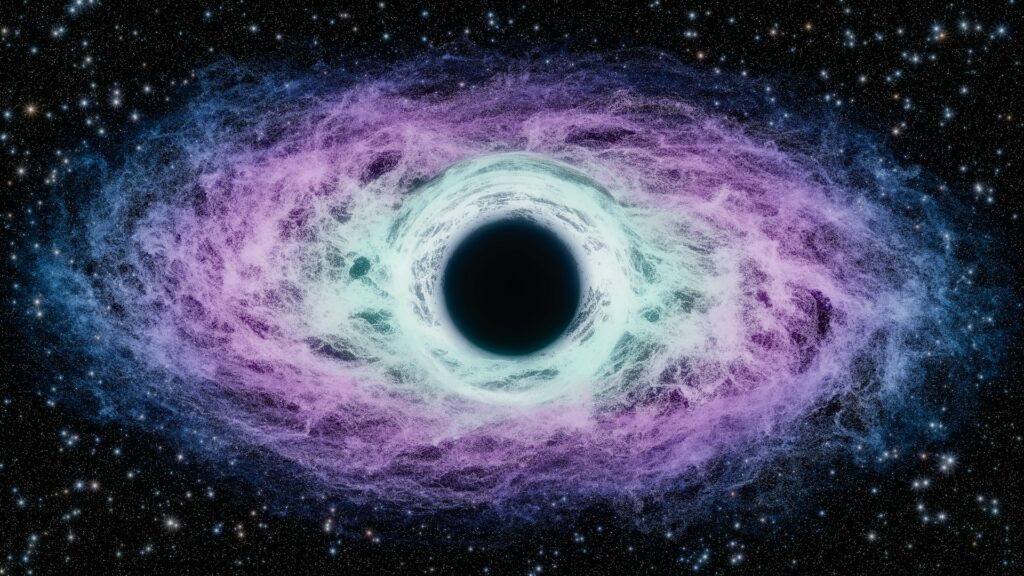
Stars that are even more massive than those that become neutron stars collapse into black holes. Although these aren’t planets, their compact scale and strange properties show how flexible the boundary between categories can be. Black holes remind us that stars don’t have one single ending. Depending on their size, they can take very different paths, some closer to planet-like states and others to cosmic monsters.
Failed nuclear ignition is the dividing line.
The crucial factor in whether an object is classed as a star or a planet is nuclear fusion. If fusion starts, it’s a star. If it never does, no matter how big or small, it belongs on the planetary side of the scale. That dividing line explains why some stars never make it to full stardom and instead cool down into planet-like bodies. It’s less about what they’re made of and more about what they can do.
Stars and planets are more connected than we think.
Although we like to keep them in separate boxes, stars and planets are really part of the same cosmic story. Both form from the same raw material, and both can end up looking very similar under certain conditions. This shows us that in the vast timescales of the universe, the boundary between stars and planets is flexible. A star can indeed fade into something closer to a planet, even if it never fully becomes one.