Everyone loves to hype up T. rex like it was the king of all dinosaurs, and sure, it was impressive, but we’ve seen better.
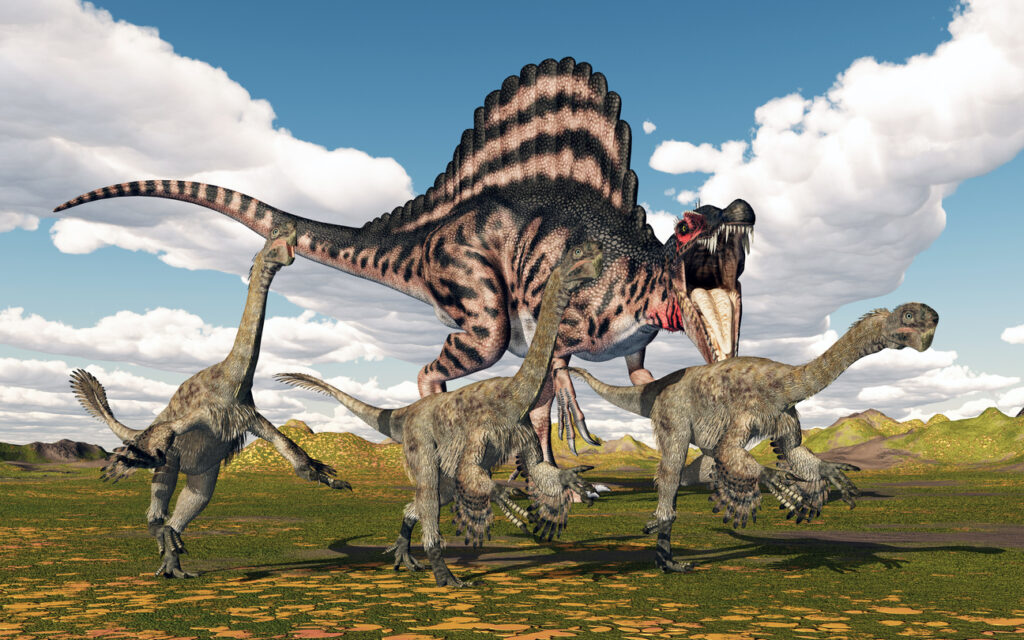
For example, Spinosaurus wasn’t just bigger, it was weirder, wilder, and built to rule a whole different kingdom: the water. With its crocodile-like snout, huge sail, and semiaquatic lifestyle, this prehistoric oddball makes T. rex look like it played it safe. Here are some cool facts about Spinosaurus that prove it wasn’t just a dinosaur. In fact, it was a full-on nightmare with fins.
1. It was longer than T. rex, and maybe heavier too.
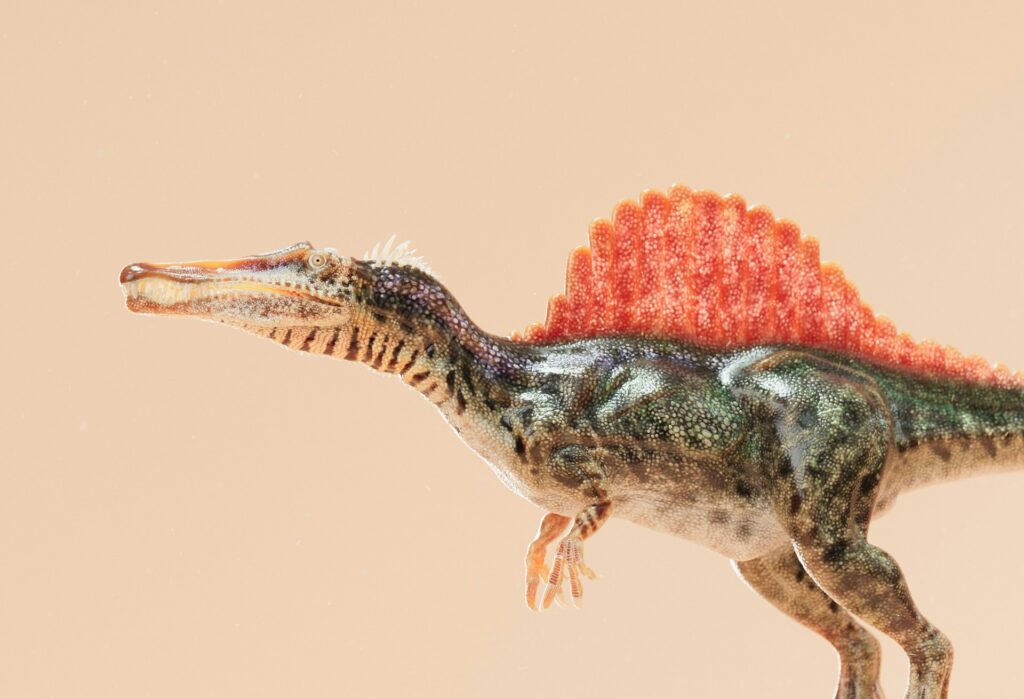
Spinosaurus wasn’t just tall, it was long. While T. rex topped out around 40 feet, estimates put Spinosaurus at over 50 feet from snout to tail. That makes it one of the longest known carnivorous dinosaurs to ever exist. Its build was different too: more stretched out, almost like a giant swimming monitor lizard with a sail on top. Some researchers even think it outweighed T. rex thanks to its dense bones and aquatic adaptations. Either way, it was an absolute unit.
2. It probably lived in the water.
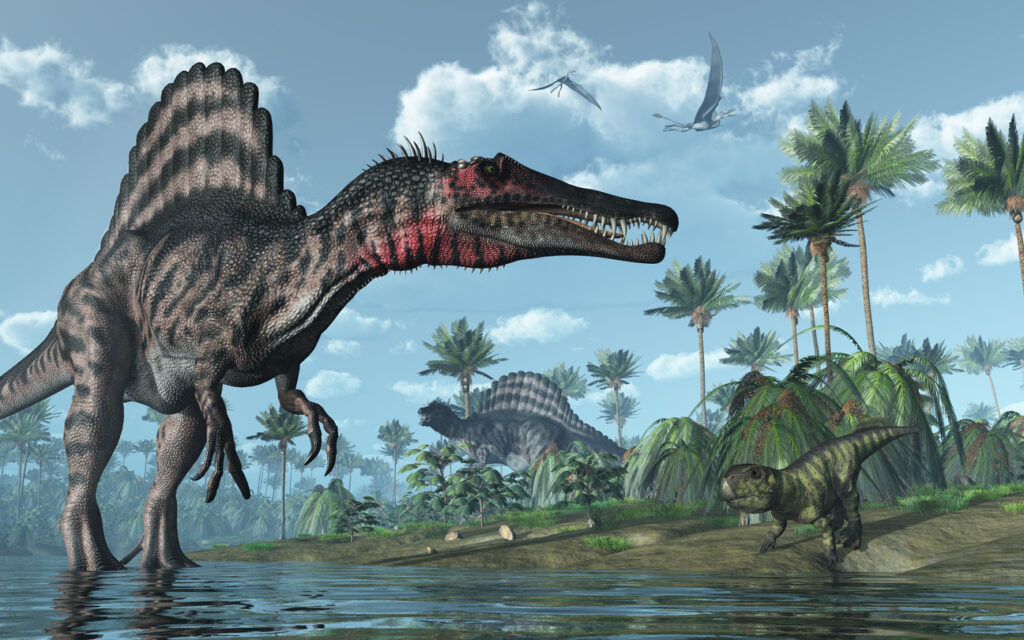
Unlike T. rex, which ruled the land, Spinosaurus was likely semiaquatic. Recent fossil finds suggest it spent a huge chunk of its time in rivers and swamps, hunting fish and paddling through the water like a reptilian hippo. Its long, paddle-like feet, high bone density (to help it sink), and crocodile-like tail all point to a water-based lifestyle. Basically, it traded speed for stealth and became a swimming ambush predator, and that’s something T. rex definitely didn’t pull off.
3. It had a sail taller than most humans.
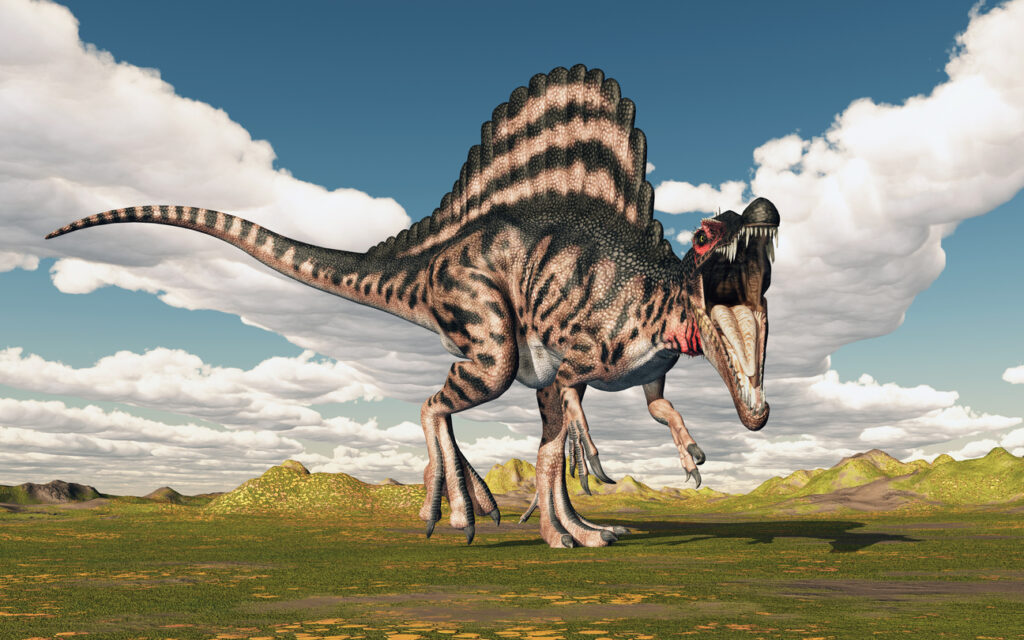
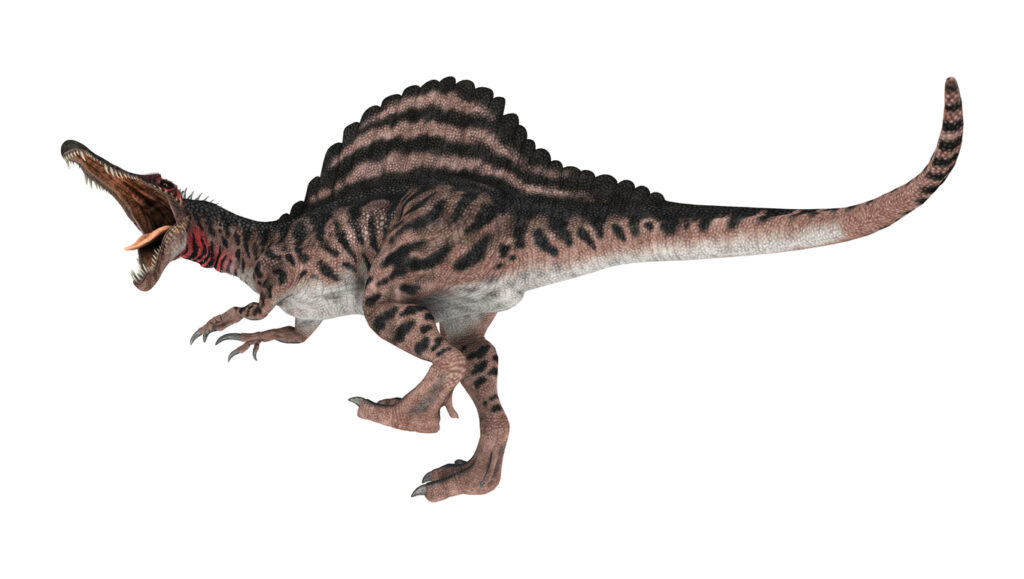
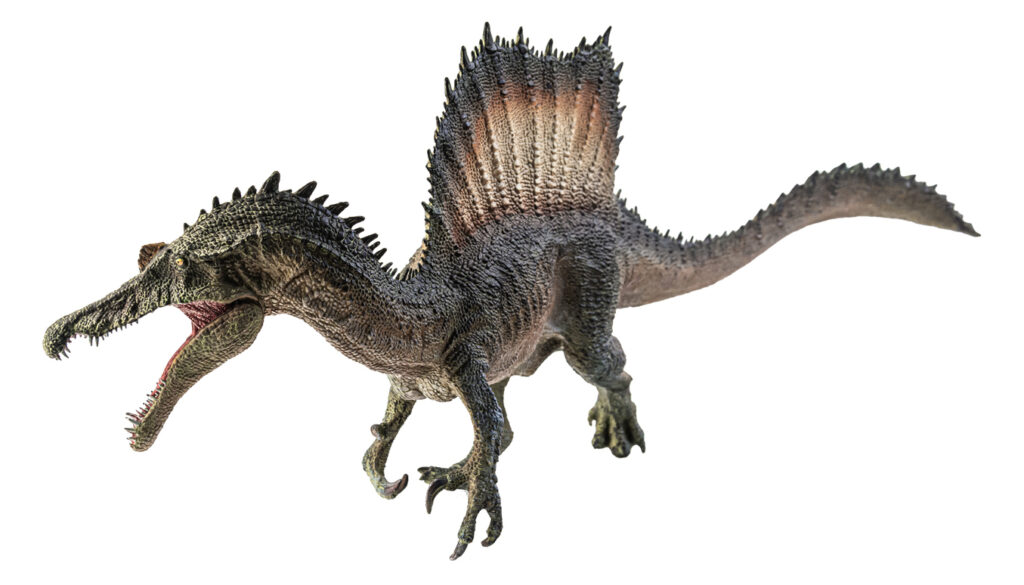
One of Spinosaurus’s most dramatic features is the sail on its back, formed by elongated spines that may have reached up to 7 feet high. No one’s totally sure what it was for, but theories range from temperature control to attracting mates or intimidating rivals. Whatever the reason, it made Spinosaurus instantly recognisable. And let’s be honest, if you saw that thing rising out of a river, you’d turn around and run, not stop to ask questions about display theory.
4. Its snout was built like a crocodile’s.
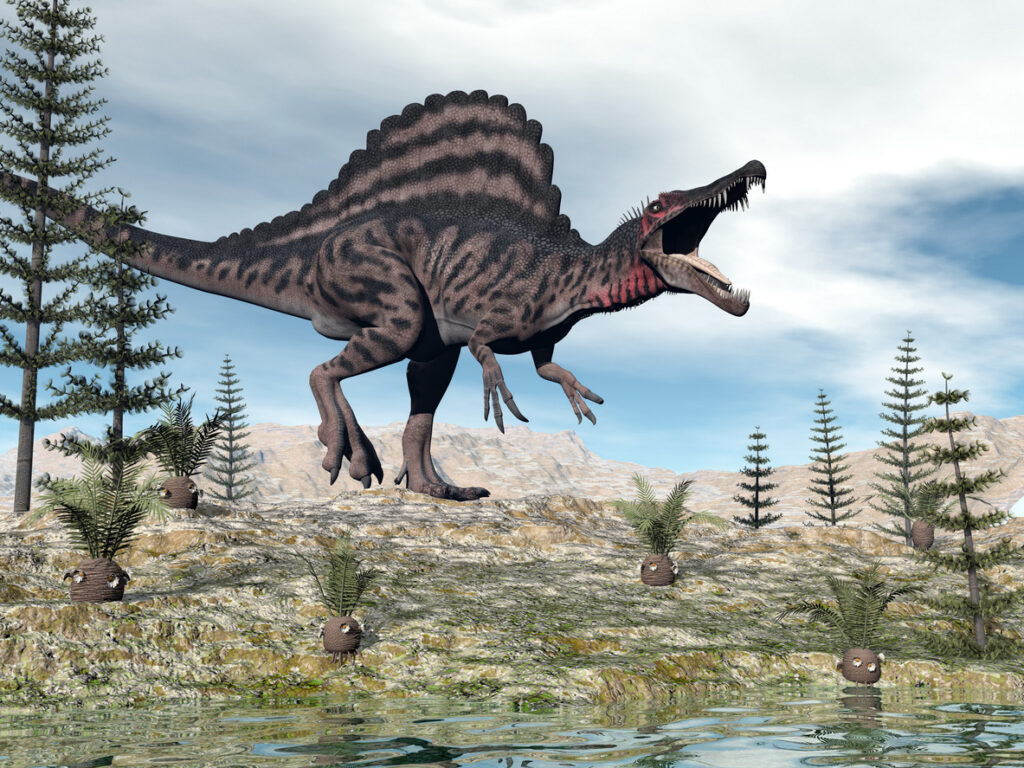
Spinosaurus had a long, narrow snout packed with conical teeth, which were perfect for grabbing slippery prey like fish. It even had pressure sensors in its jaws, similar to what modern crocodiles have, which would’ve helped it detect movement in the water. T. rex had crushing jaws made for bone and muscle. Spinosaurus? It had a fishing rod for a face. This wasn’t a bite-and-tear predator; it was built for precision, which is honestly just as terrifying in its own right.
5. It had flat, broad feet, possibly for paddling.
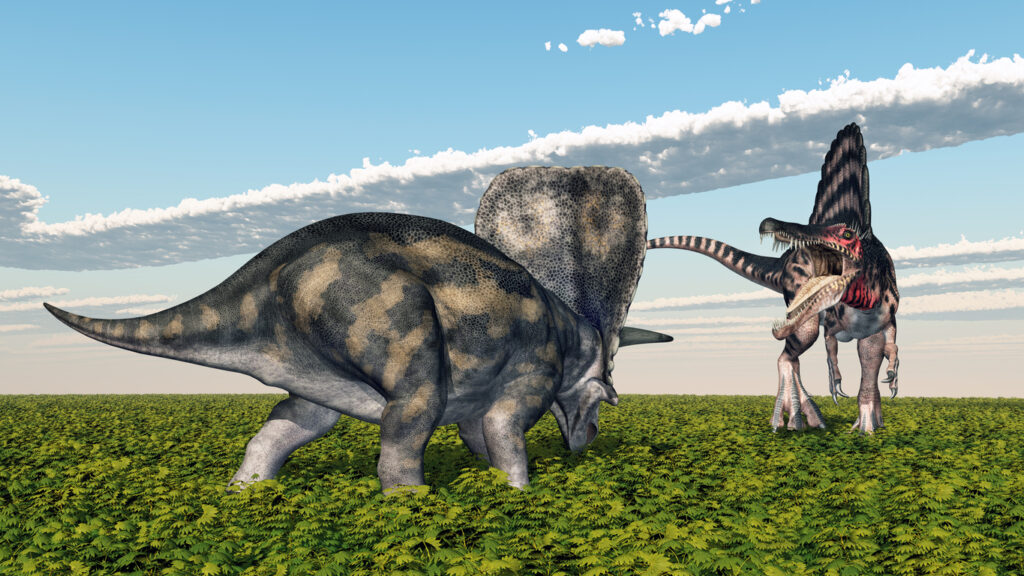
Its feet were wide and may have been webbed, suggesting Spinosaurus used them to paddle through water like a massive, scaly duck. That’s a huge departure from the narrow, strong feet of most land predators. Combined with its long tail and dense bones, Spinosaurus had a body made to cruise through rivers, stalking prey from below. T. rex had legs like tree trunks. Spinosaurus had ones that might’ve splashed.
6. Its tail worked like a paddle.
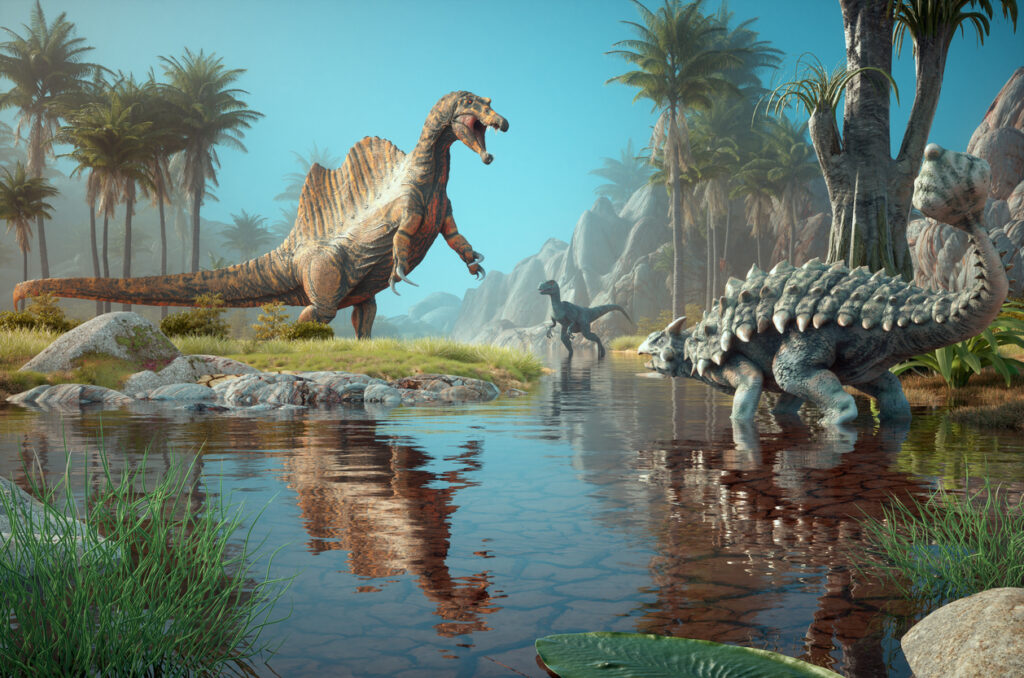
In 2020, researchers announced something wild: Spinosaurus had a giant, flat tail that worked like a rudder or paddle. It wasn’t just a stiff, balance-keeping tail like T. rex had. It could actually propel itself forward in the water. This made it one of the few dinosaurs truly adapted for swimming. Its whole back end acted like a massive aquatic engine, letting it move with power and precision underwater. Basically, it had a built-in canoe oar.
7. It had tiny back legs for its size.
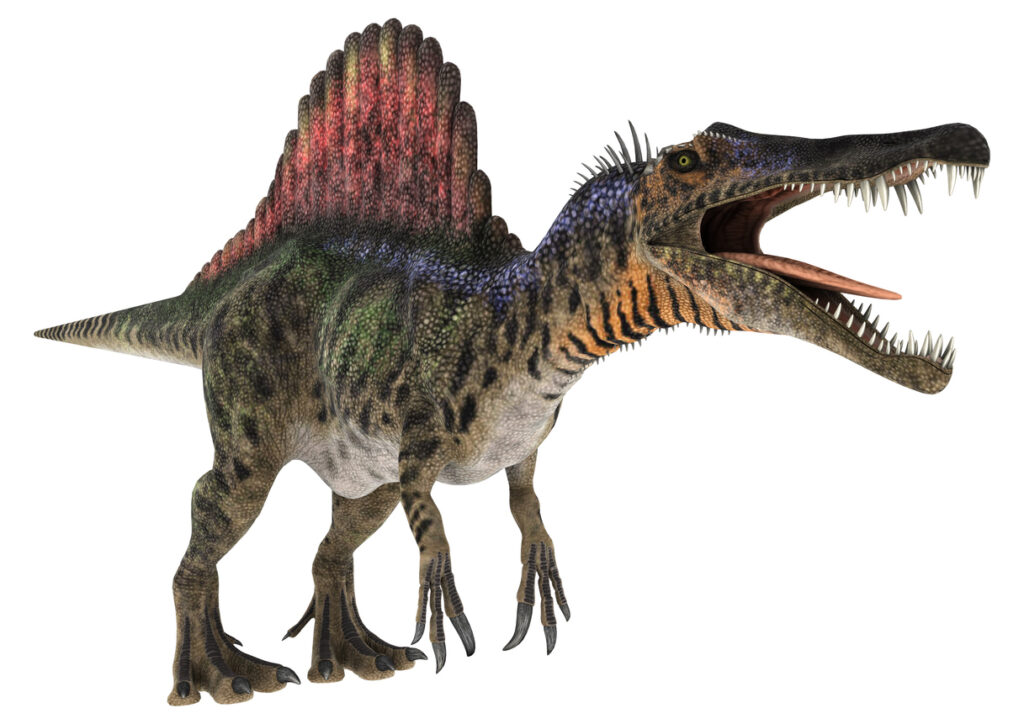
Most giant theropods like T. rex had powerful, well-proportioned back legs. Spinosaurus? Not so much. Its hind limbs were surprisingly short, which only makes sense if it didn’t rely on them much for walking on land. This led to some wild reconstructions in the early 2000s, but new evidence backs up the idea: Spinosaurus probably didn’t strut around like a land-based predator. It was more of a slow, awkward walker on land, but sleek and dangerous in the water.
8. It lived millions of years before T. rex.
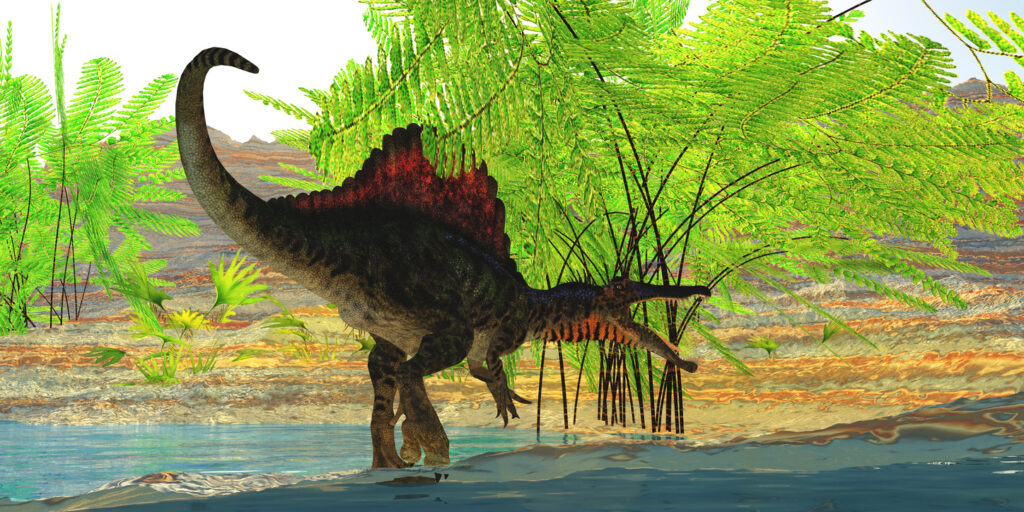
People love to imagine a Spinosaurus vs T. rex battle, but they never would’ve met in real life. Spinosaurus lived around 95–100 million years ago. T. rex didn’t show up until about 66 million years ago. That means Spinosaurus was already long extinct by the time T. rex was stomping around. They ruled different eras, in different parts of the world, but if they had met? Let’s just say it wouldn’t have been a fair fight in the river.
9. It had massive claws on its hands.
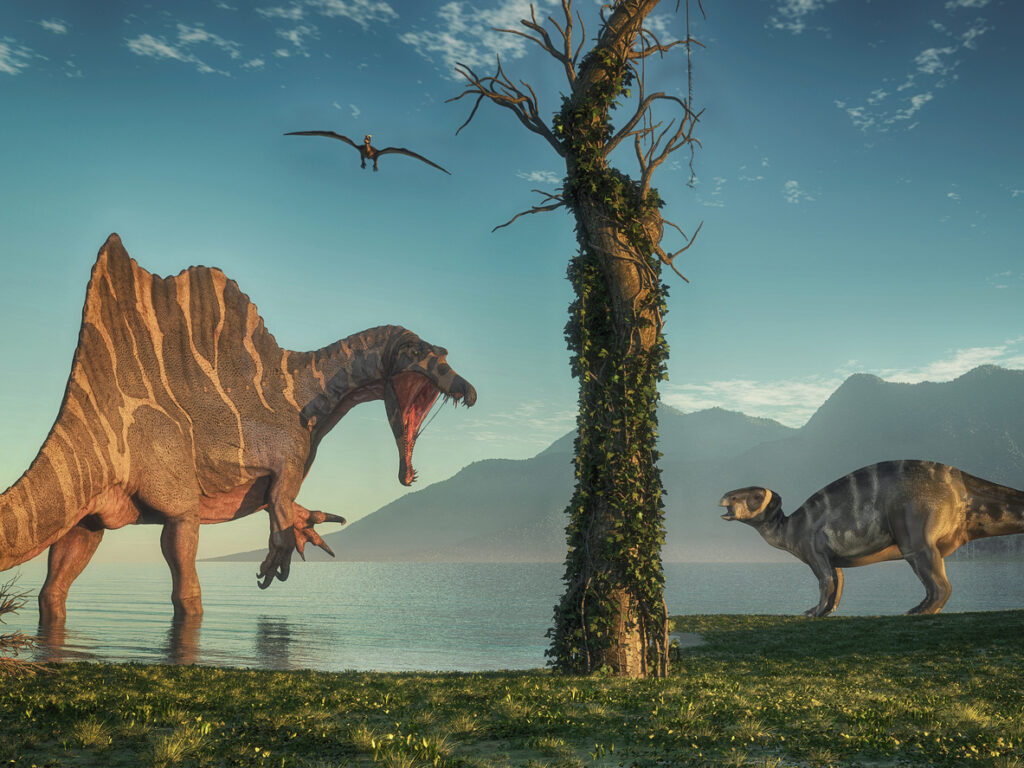
Spinosaurus wasn’t just about jaws and sails; it had some serious claws, too. Each hand had three large, curved claws, and its forearms were strong and muscular. It likely used them to grab fish or maybe even slash at prey when needed. While T. rex gets teased for its tiny arms, Spinosaurus had limbs that could actually do some damage. They weren’t just leftovers. They were tools, and it knew how to use them.
10. It hunted giant fish.
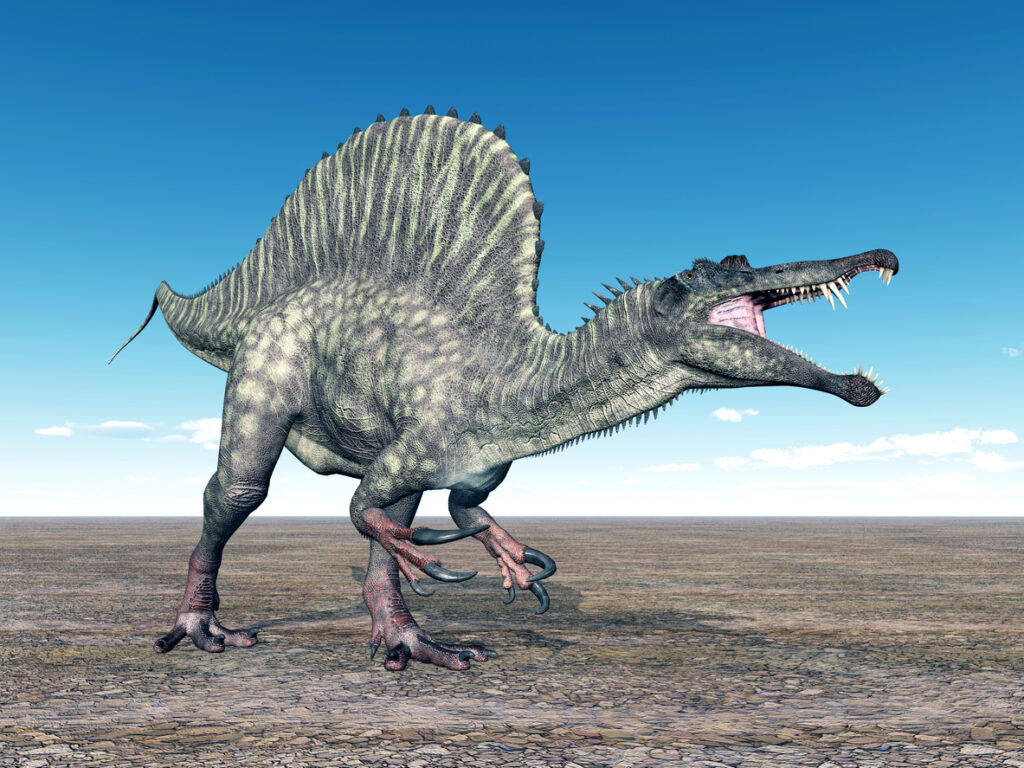
Spinosaurus wasn’t chasing down little minnows. In fact, it likely fed on huge prehistoric fish like coelacanths and sawfish. These weren’t delicate snacks. They were armoured, aggressive, and just as wild as the predator chasing them. Its hunting style was more ambush than chase. It lurked, waited, then snapped with pinpoint accuracy. It may not have had the crunching power of a T. rex, but it was still a serious predator in its own element.
11. It had unusual nostrils set far back on its snout.
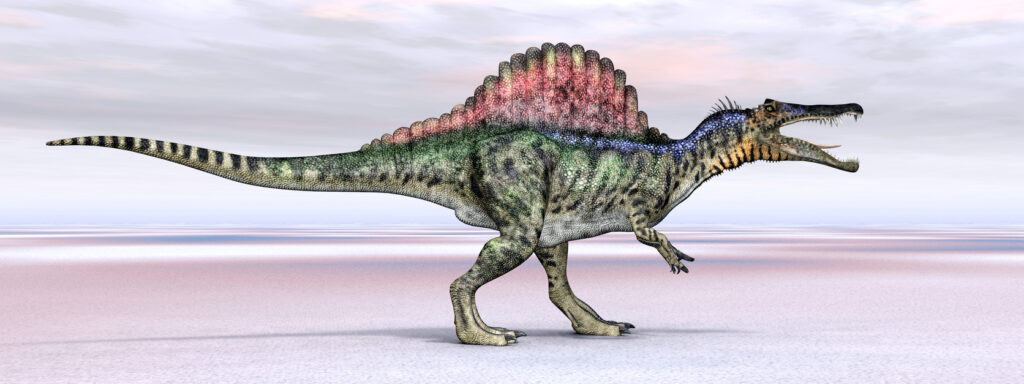
Instead of having nostrils right at the tip of its nose like most dinosaurs, Spinosaurus had them farther back, almost halfway up its snout. That’s a strong clue that it didn’t need to keep its whole head above water to breathe. It’s another feature that supports its semiaquatic life. It could rest its jaws in the water, waiting for movement, while keeping just enough of its head up to take a breath. A stealthy little feature that made it even better at ambushing prey.
12. Its fossil history is messy, but fascinating.
The first known Spinosaurus fossils were discovered in Egypt in 1912, but they were destroyed during WWII in a bombing raid on Munich. For decades, all we had were sketches and guesses. That’s part of why the dinosaur remained so mysterious for so long.
Only in the last couple of decades have new fossils been found that completely reshaped our understanding of what Spinosaurus looked like and how it lived. Every new find keeps changing the picture, which is rare for a dinosaur this famous.
13. It completely rewrote what we thought a “predator dinosaur” could be.
Before Spinosaurus, the idea of a giant swimming, fish-hunting theropod wasn’t really on the table. Big predators were thought to be land-based, roaring and stomping. Spinosaurus flipped that on its head, literally into the water.
It forced scientists to rethink what was possible. Predatory dinosaurs weren’t just land-bound bone-crushers. Some of them ruled the rivers. Some of them fished. And some of them, like Spinosaurus, were too weird to ignore.