Your cat’s midnight antics aren’t just annoying behaviour—they’re natural hunting instincts kicking in when you’re trying to sleep.
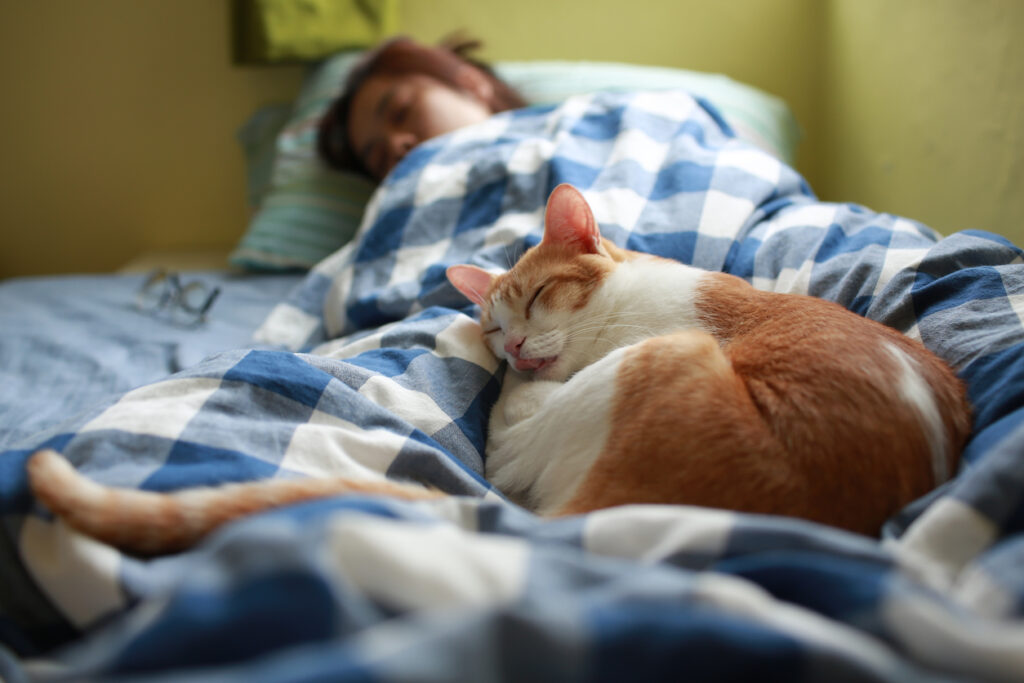
Most cats wake their owners because they’re bored, hungry, or following their evolutionary programming that says 3 a.m. is prime hunting time. Of course, this doesn’t really work for humans, most of whom need our rest because we’ve got to get up for work in the morning. If you want to get a more peaceful night’s rest without your feline friend causing too much trouble, put these habits into practice ASAP.
1. Change their feeding schedule to evening meals.
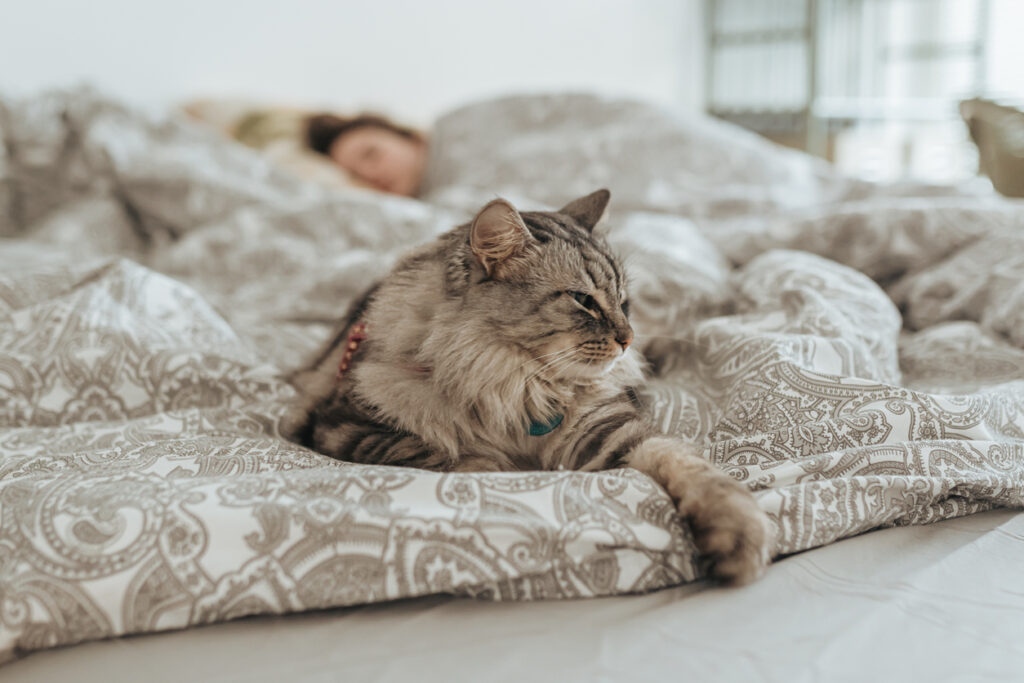
Cats naturally hunt, eat, groom, then sleep, but most owners feed them in the morning. This creates a cycle where your cat’s most active period coincides with your sleep time. Feed your cat their largest meal one to two hours before bedtime, then offer a small snack before you sleep. It triggers their natural post-meal routine and syncs their rest cycle with yours.
2. Create an intense evening play session.

A bored cat with pent-up energy will find ways to entertain themselves at night, usually involving your face or favourite breakables. Most cat toys don’t actually tire them out properly. Spend 10–15 minutes each evening with a feather wand or laser pointer until they’re properly knackered. End by letting them “catch” something tangible like a treat to satisfy their hunting sequence.
3. Install blackout measures in your bedroom.
Cats are crepuscular, meaning they’re most active during dawn and dusk, when natural light changes trigger their hunting instincts. Even small amounts of street light can activate their internal clock. Use blackout curtains to keep your bedroom completely dark, and cover LED lights from electronics. It prevents those 5am wake-up calls when the sun starts creeping through your windows.
4. Establish a consistent bedtime routine.
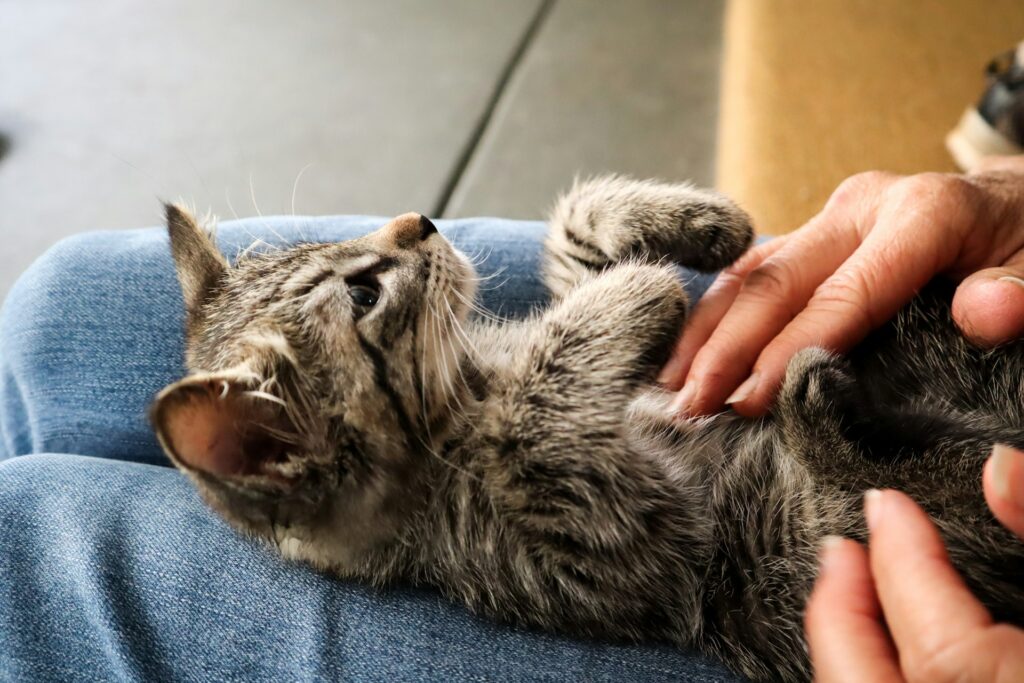
Cats thrive on routine, but inconsistent schedules confuse their internal clock. Going to bed at different times means your cat never knows when “quiet time” begins. Start your bedtime routine at the same time each night with feeding, playing, then settling down. Your cat will learn to anticipate sleep time rather than treating every hour as potential play time.
5. Make your bedroom less appealing for nighttime visits.

Your bedroom likely contains all your cat’s favourite things: your scent, comfortable surfaces, and guaranteed attention when they make noise. It creates a perfect storm where your sleep space becomes their preferred entertainment venue during boring nighttime hours.
Remove tempting items like charging cables, hair ties, or anything that crinkles, and consider using a white noise machine to mask small sounds that might trigger their curiosity. You can also place double-sided tape on surfaces they like to explore, since cats hate sticky textures on their paws.
6. Provide alternative nighttime entertainment.

Cats need mental stimulation during their natural active periods, and if you don’t provide it, they’ll create their own fun using whatever’s available. It usually involves knocking things off surfaces, scratching furniture, or treating your sleeping body as a climbing frame.
Set up puzzle feeders, interactive toys, or even a bird feeder outside a window they can access safely. These provide mental stimulation during their active hours while keeping them occupied away from your bedroom door.
7. Use strategic ignore tactics when they do wake you.
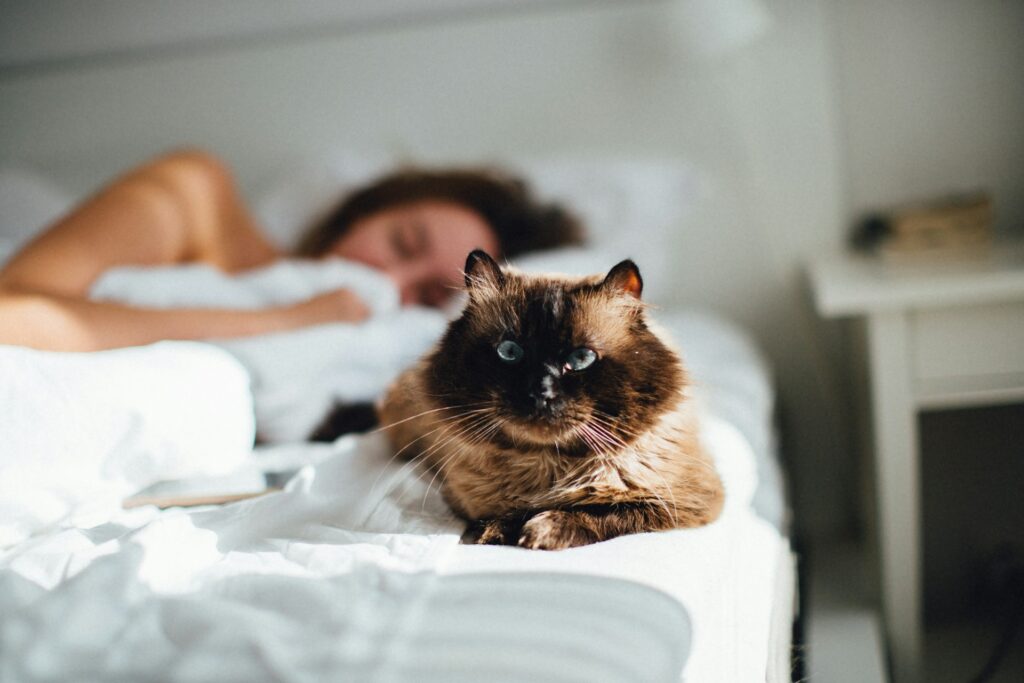
Many cat owners accidentally train their pets to wake them up by responding to nighttime demands with attention, food, or even just movement. Your cat learns that making noise equals getting what they want, reinforcing the exact behaviour you’re trying to stop.
Completely ignore nighttime wake-up attempts—no talking, no getting up, no acknowledging them whatsoever. It breaks the reward cycle, though expect an initial increase in persistence before they give up. Consistency is crucial; giving in even once resets their expectations.
8. Address underlying anxiety or health issues.
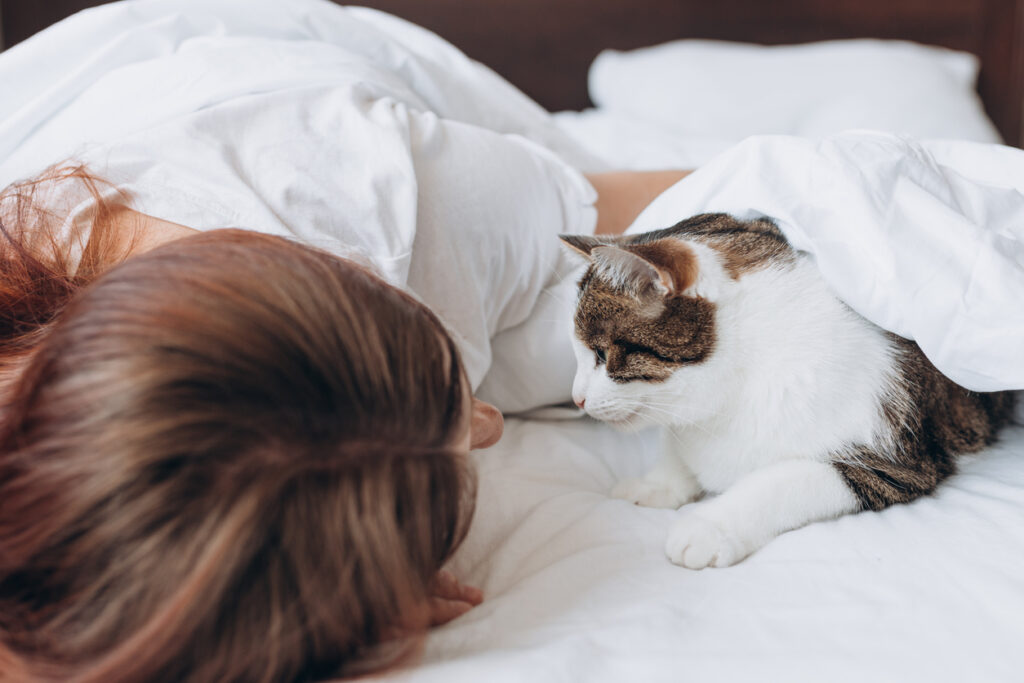
Sometimes nighttime restlessness stems from medical problems like hyperthyroidism, arthritis pain, or cognitive dysfunction in older cats. Anxiety from environmental changes, new pets, or disrupted routines can also manifest as sleep disturbances and attention-seeking behaviour.
Schedule a vet check-up if the behaviour is sudden or accompanied by other changes like appetite loss or litter box issues. Consider whether recent changes in your household might be causing stress, and provide extra security through familiar scents and consistent routines.
9. Create physical barriers without punishment.

Keeping your cat out of the bedroom might seem harsh, but it’s often the most effective solution for persistent night wanderers. Many cats will simply find other activities once they can’t access their favourite human entertainment centre during sleep hours.
Install a baby gate or simply close your bedroom door, but ensure they have access to food, water, and their litter tray. Provide a comfortable sleeping area in another room with familiar blankets or clothing that carries your scent for comfort.
10. Adjust their daytime sleep environment.

Cats sleep 12–16 hours daily, and where they nap affects their nighttime activity levels. If they’re sleeping in bright, noisy areas during the day, they might not get quality rest, leading to increased nighttime energy and restlessness.
Provide quiet, dim sleeping spots during daylight hours using cat beds in low-traffic areas or even cardboard boxes with soft blankets. This encourages deeper daytime sleep, making them more likely to rest peacefully through the night alongside you.
11. Consider getting a second cat for companionship.
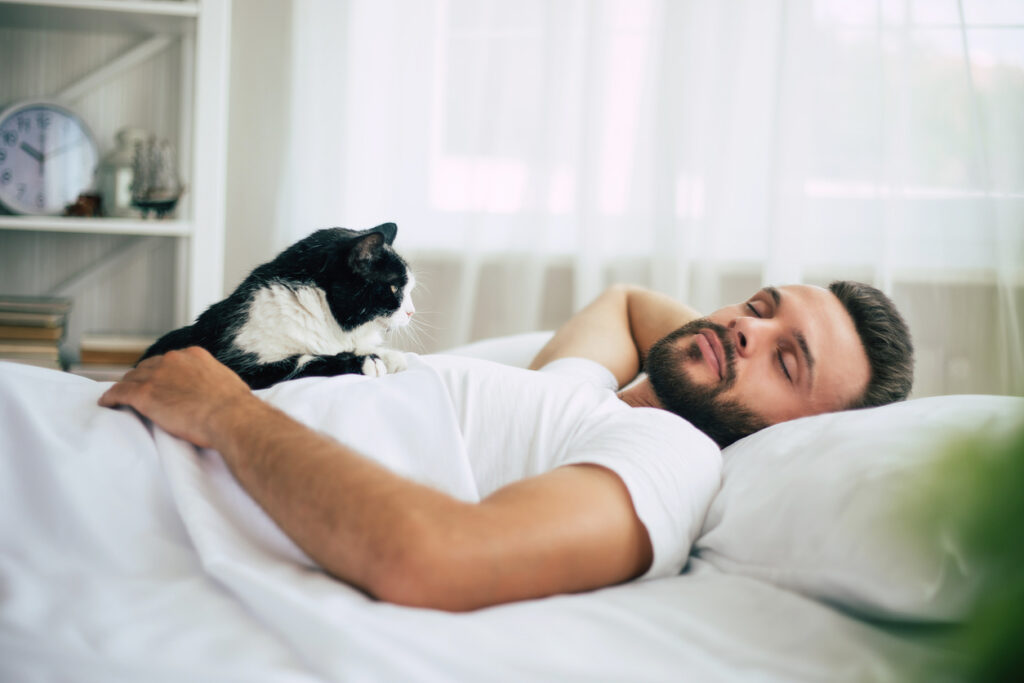
Single cats often wake their owners because they’re genuinely lonely and seeking social interaction during their naturally active periods. Your sleeping form is the only available companion, making you an unwilling participant in their midnight social hour.
Two cats can entertain each other during active periods, reducing their dependence on human interaction for stimulation. However, this only works if they’re properly introduced and compatible—mismatched cats can create twice the nighttime chaos instead of solving the problem.
12. Use scent-based calming techniques.

Cats rely heavily on scent for emotional regulation, and stress or overstimulation can contribute to nighttime restlessness. Unfamiliar smells, cleaned areas that no longer carry their scent, or even seasonal changes can disrupt their sense of security and normal sleep patterns.
Try Feliway diffusers or sprays in areas where your cat spends time, especially near their sleeping areas. You can also place worn clothing or used pillowcases in their favourite spots to provide comforting familiar scents that promote relaxation.
13. Monitor and adjust based on age-specific needs.

Kittens have different sleep needs than adult cats, and senior cats often experience cognitive changes that affect their sleep-wake cycles. Young cats might have excess energy that needs more intensive management, while older cats might be confused or experiencing age-related anxiety.
Adjust your approach based on your cat’s life stage—kittens need more play and stimulation, adult cats respond well to routine, and senior cats might benefit from night lights, easier access to resources, or veterinary support for age-related conditions affecting their sleep quality.