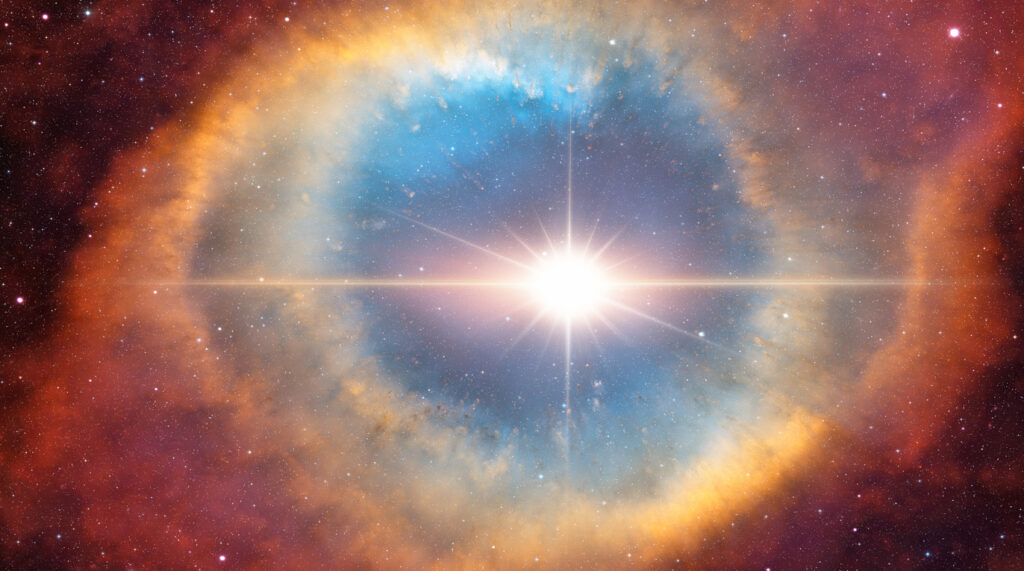
The shape of the universe has been puzzling scientists for decades, and some new theories suggest it might not be the flat or spherical shape we’ve assumed, but something far more egg-like. While ultimately, it doesn’t particularly matter to most of us in a meaningful way, researchers are fascinated by the implications, and for good reason.
1. Traditional models assumed the universe was flat or curved.
For years, cosmologists have debated whether the universe is flat like a sheet of paper, curved like a sphere, or saddle-shaped like a horse’s back. These models were based on Einstein’s general relativity and observations of cosmic microwave background radiation, but they might not tell the whole story.
Recent data suggests that none of these simple geometric shapes fully explain what we’re observing, and scientists are now considering more complex three-dimensional forms. The universe might be far weirder and more asymmetrical than we ever imagined, which opens up entirely new possibilities for understanding cosmic structure.
2. Cosmic microwave background shows unexpected patterns.
The afterglow of the Big Bang, called cosmic microwave background radiation, contains temperature variations that don’t match perfectly with a flat or spherical universe model. These patterns suggest the universe might have a preferred direction or asymmetrical structure that looks suspiciously egg-like.
Some regions of this background radiation are slightly warmer or cooler than they should be if the universe were perfectly symmetrical, and these anomalies could indicate that we’re living inside an elongated cosmic structure. The data hints at something more complex than the simple models we’ve been using to understand cosmic geometry.
3. Dark energy distribution might create egg-shaped expansion.
Dark energy, the mysterious force causing the universe to expand faster and faster, might not be distributed evenly throughout space. If dark energy is stronger in some directions than others, it could stretch the universe into an elongated shape rather than expanding it uniformly in all directions.
This uneven expansion would create an egg-like structure where the universe is longer in one dimension than the others, similar to how a balloon becomes oval when you squeeze it while inflating. The implications for cosmic evolution and the ultimate fate of the universe would be dramatically different from current predictions.
4. Galaxy distribution hints at large-scale asymmetry.
When astronomers map the locations of galaxies across vast distances, they’re finding patterns that suggest the universe has a preferred orientation or axis, much like an egg has a long and short axis. These large-scale structures don’t appear random but seem to align in ways that point to an underlying asymmetrical shape.
The cosmic web of galaxies and dark matter filaments shows signs of being stretched more in one direction than others, creating a structure that resembles the internal pattern you’d find inside an egg. This organisation on the largest possible scales suggests fundamental asymmetry in cosmic architecture.
5. Quantum fluctuations in the early universe weren’t perfectly random.
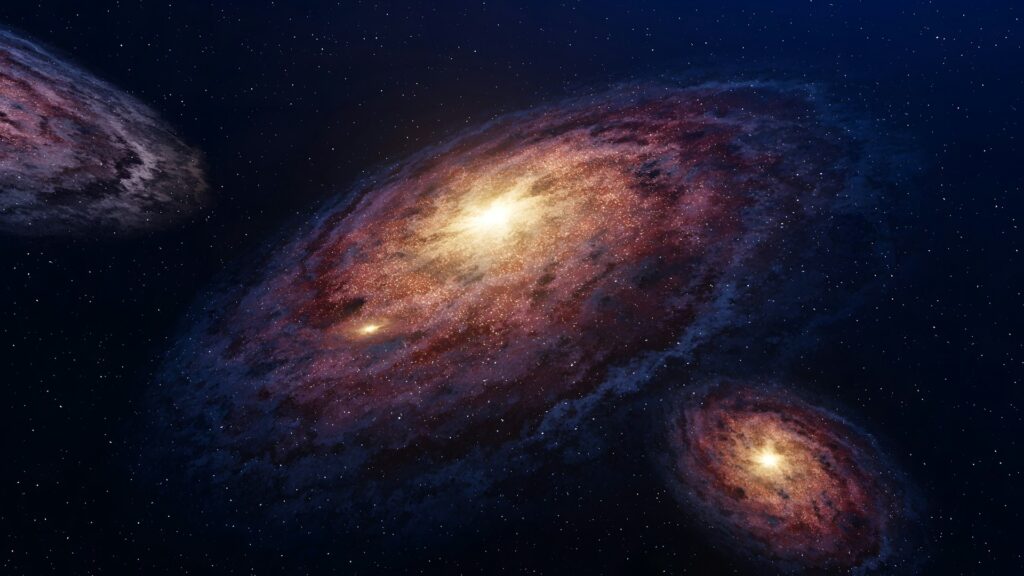
The tiny quantum fluctuations that seeded galaxy formation in the early universe might not have been completely random as previously thought. If these initial variations had a preferred direction or pattern, they could have set up the conditions for an egg-shaped universe to develop over billions of years.
Computer simulations of early cosmic evolution show that even small asymmetries in initial conditions can grow into large-scale structural differences as the universe expands and evolves. What started as subtle variations could have transformed into the cosmic equivalent of an eggshell surrounding us.
6. Gravitational wave data supports asymmetrical models.
Recent gravitational wave detections from colliding black holes and neutron stars are providing new ways to measure cosmic geometry, and some of this data suggests the universe might be asymmetrical. These ripples in spacetime carry information about the overall structure of the cosmos that we’re only just beginning to understand.
The way gravitational waves propagate through space depends on the underlying geometry of the universe, and measurements indicate possible deviations from the flat or spherical models. This independent line of evidence supports the idea that we might be living inside something more complex and egg-like than previously imagined.
7. The observable universe might be just part of a larger egg.
What we can see of the universe is limited by how far light has travelled since the Big Bang, but the actual universe could extend far beyond our observable horizon. If the true shape is egg-like, we might only be seeing a small section of the middle part, missing the curved ends that would reveal the overall structure.
This limitation means we’re trying to determine the shape of something enormous by looking at what might be a tiny portion of it, like trying to figure out an egg’s shape by examining only a small patch of the shell. The full geometry might only become apparent when we develop better ways to probe beyond our current observational limits.
8. String theory predicts non-spherical universe shapes.
Some versions of string theory, which attempts to unify all the fundamental forces of physics, predict that the universe could have complex geometries including egg-like or ellipsoidal shapes. These theories suggest that extra dimensions might be compactified in ways that create asymmetrical three-dimensional structures.
The mathematics of string theory allows for universes with preferred directions and non-uniform expansion rates, which could naturally produce egg-shaped cosmologies. While string theory remains unproven, its predictions about possible universe geometries are becoming increasingly relevant as observational data reveals cosmic asymmetries.
9. Computer simulations show egg-like possibilities.
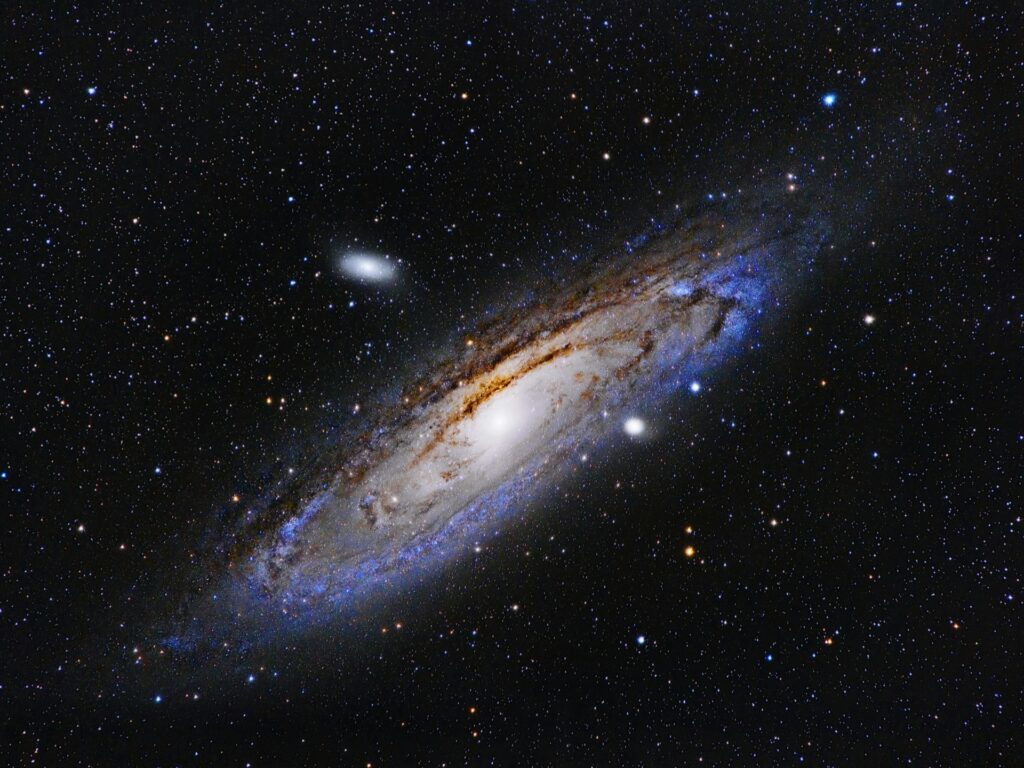
Advanced computer models of cosmic evolution are revealing that egg-shaped universes are not only possible, but might be more stable and long-lived than perfectly symmetrical ones. These simulations suggest that slight asymmetries in the early universe naturally evolve into pronounced egg-like structures over cosmic time.
The models show how gravitational effects and dark energy could work together to stretch the universe more in some directions than others, creating the elongated geometry that observations seem to support. These computational results provide theoretical backing for what the observational data appears to be telling us.
10. Implications for the multiverse theory.
If our universe is egg-shaped, it could have profound implications for theories about multiple universes or the multiverse. Egg-shaped universes might be more likely to bud off or connect with other cosmic structures, creating a cosmic landscape that resembles a carton of eggs rather than isolated bubbles.
This geometry could explain how different universes might interact or influence each other through their curved boundaries, potentially solving some puzzles about fine-tuning and the apparent specialness of our cosmic conditions. The egg shape might be a common feature of universes that can support complex structures and life.
11. Testing the egg hypothesis.
Scientists are developing new observational techniques to test whether the universe really is egg-shaped, including more precise measurements of cosmic microwave background radiation and better mapping of large-scale structure. Future space telescopes and gravitational wave detectors should provide the data needed to confirm or rule out this possibility.
The James Webb Space Telescope and next-generation gravitational wave observatories will peer deeper into space and time than ever before, potentially revealing the true geometry of our cosmic home. Within the next decade, we should have enough data to determine whether we’re living inside a cosmic egg or something else entirely.
12. What an egg-shaped universe means for humanity.
Living in an egg-shaped universe wouldn’t change our daily lives, but it would fundamentally alter our understanding of our place in the cosmos and the ultimate fate of everything we know. It would mean that direction matters on the largest scales and that the universe has an inherent asymmetry that affects its evolution.
This discovery would also raise new questions about why the universe has this particular shape, and whether it tells us something important about the laws of physics or the conditions that gave birth to our cosmos. An egg-shaped universe might be trying to tell us something profound about the nature of reality itself.