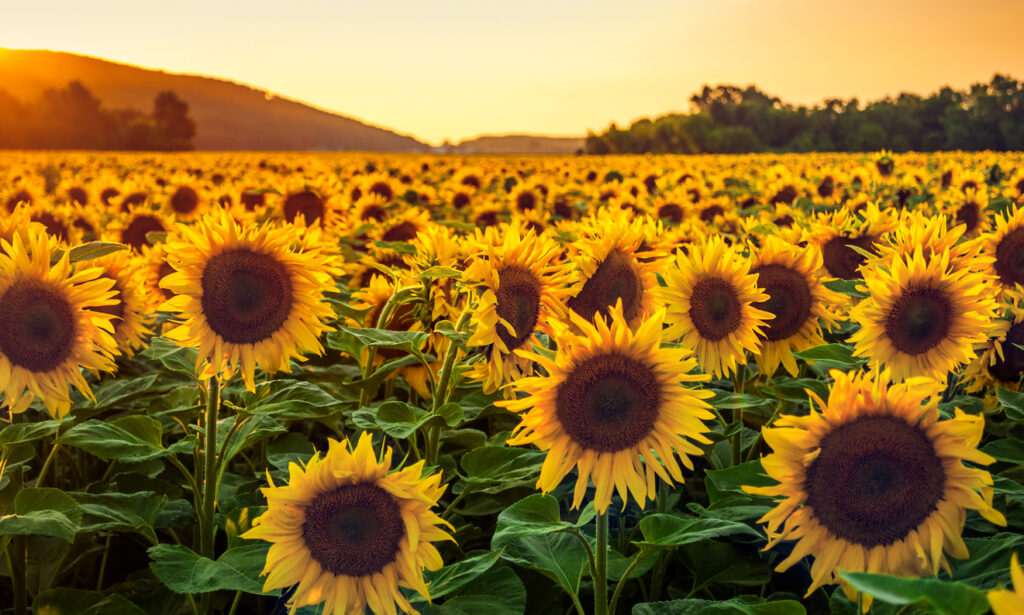
Sunflowers are more than just cheerful faces in the garden. Behind their bright petals are surprising traits and hidden quirks that most people never hear about. There’s lots to love about this uplifting plant, but here are some facts about sunflowers that might change the way you see them.
1. They’re made of hundreds of tiny flowers.
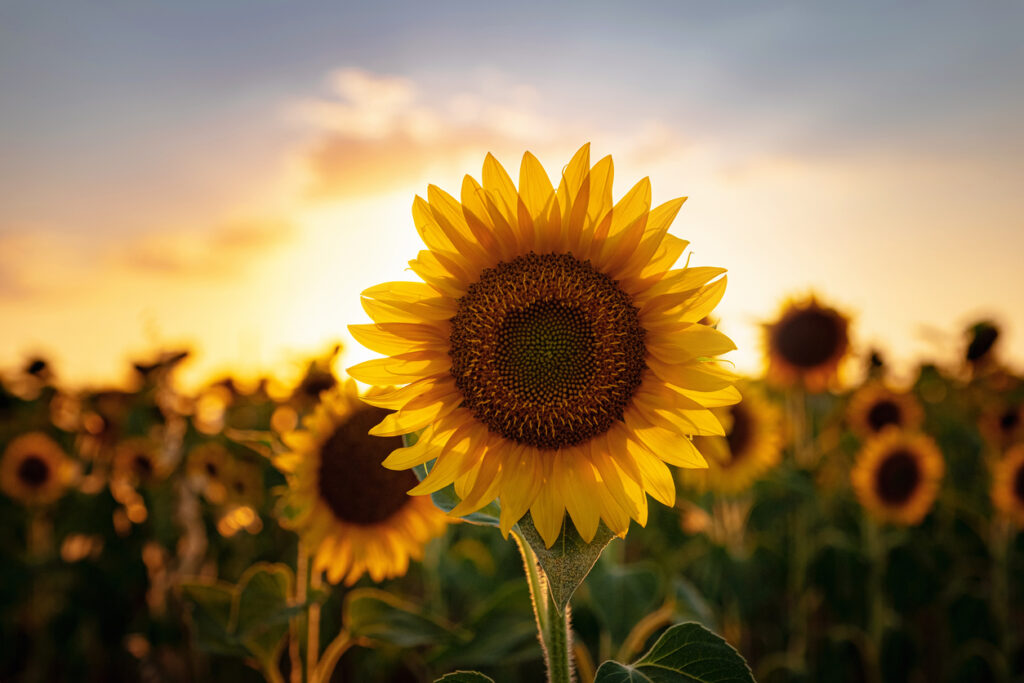
What looks like one single sunflower is actually a whole cluster. The centre is made up of hundreds of small, individual flowers, each capable of producing a seed. The outer petals are simply there to attract pollinators. This design makes them incredibly efficient. By packing so many flowers into one head, sunflowers maximise their chances of reproduction and ensure a steady supply of seeds.
2. They follow the sun when young.
Young sunflowers exhibit heliotropism, meaning they move to track the sun across the sky. They face east in the morning and gradually turn west by evening, resetting overnight to repeat the process. That movement helps them grow stronger by capturing as much sunlight as possible. Once mature, though, they stop turning and settle permanently facing east.
3. Facing east has a purpose.
Researchers have found that east-facing sunflowers warm up faster in the morning. This warmth attracts more pollinators like bees, which are most active earlier in the day. It’s a clever adaptation that improves their chances of being pollinated. The faster they heat up, the sooner they start drawing in visitors.
4. They can grow to extraordinary heights.
Sunflowers are renowned for their size, but the tallest on record reached over nine metres. Garden varieties usually stay smaller, but given the right conditions, they can soar well above two metres with ease. These towering plants aren’t just impressive to look at. Their fast growth and sheer size show how adaptable and resilient they are compared to many garden flowers.
5. Their seeds contain spirals based on maths.
Look closely at the pattern of sunflower seeds and you will see spirals flowing outwards. These spirals often follow the Fibonacci sequence, a mathematical pattern that appears in shells, pinecones, and galaxies too. That arrangement helps them pack the maximum number of seeds into one head. Nature uses maths as a tool for efficiency, and sunflowers are a striking example.
6. They can clean polluted soil.
Sunflowers are used in a process called phytoremediation, where plants absorb harmful substances from soil. After nuclear disasters like Chernobyl and Fukushima, sunflowers were planted to draw out radioactive particles and heavy metals. This makes them more than ornamental. Their ability to clean up the environment highlights how powerful and practical plants can be when harnessed in the right way.
7. They produce edible oil.
Sunflower seeds are pressed to make sunflower oil, one of the most widely used cooking oils in the world. It’s popular for its light flavour and high levels of vitamin E. Beyond cooking, sunflower oil appears in cosmetics, skincare, and even industrial products. This versatility has made the sunflower an important agricultural crop as well as a garden favourite.
8. They come in more colours than yellow.
Although the classic golden sunflower is most common, breeders have developed varieties in shades of red, orange, burgundy, and even cream. These variations are especially popular with gardeners looking for striking displays. The wide palette shows how flexible sunflowers can be. Their bold colours make them just as appealing in floral arrangements as they are in fields.
9. They symbolise positivity and loyalty.
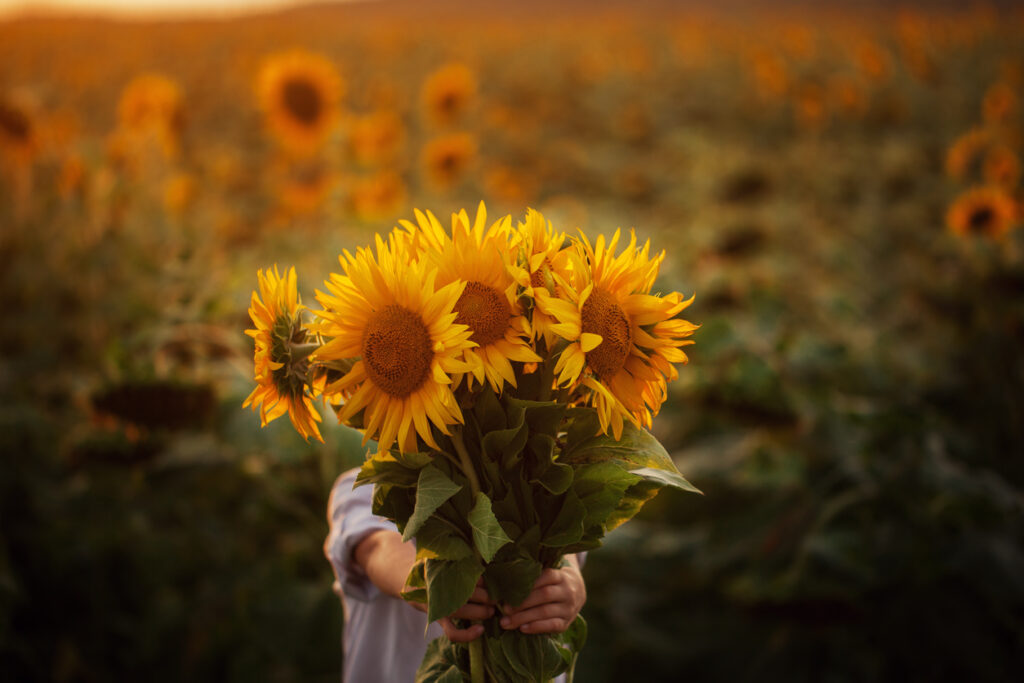
Across cultures, sunflowers have long been associated with happiness, loyalty, and adoration. Their bright appearance and tendency to face the sun make them natural symbols of positivity and light. In some traditions, gifting sunflowers is seen as a gesture of long-lasting friendship. Their meaning has made them as significant in human culture as in the natural world.
10. They’re one of the fastest-growing plants.
Sunflowers can grow several inches in a single week under the right conditions. From seed to towering bloom, many varieties complete their entire cycle in just a few months. Their rapid growth is why they are often used in school science projects. Watching them sprout and stretch skyward is a quick and satisfying way to learn about plant life.