British roses face a proper gauntlet of pests that can turn your prize blooms into a right mess.
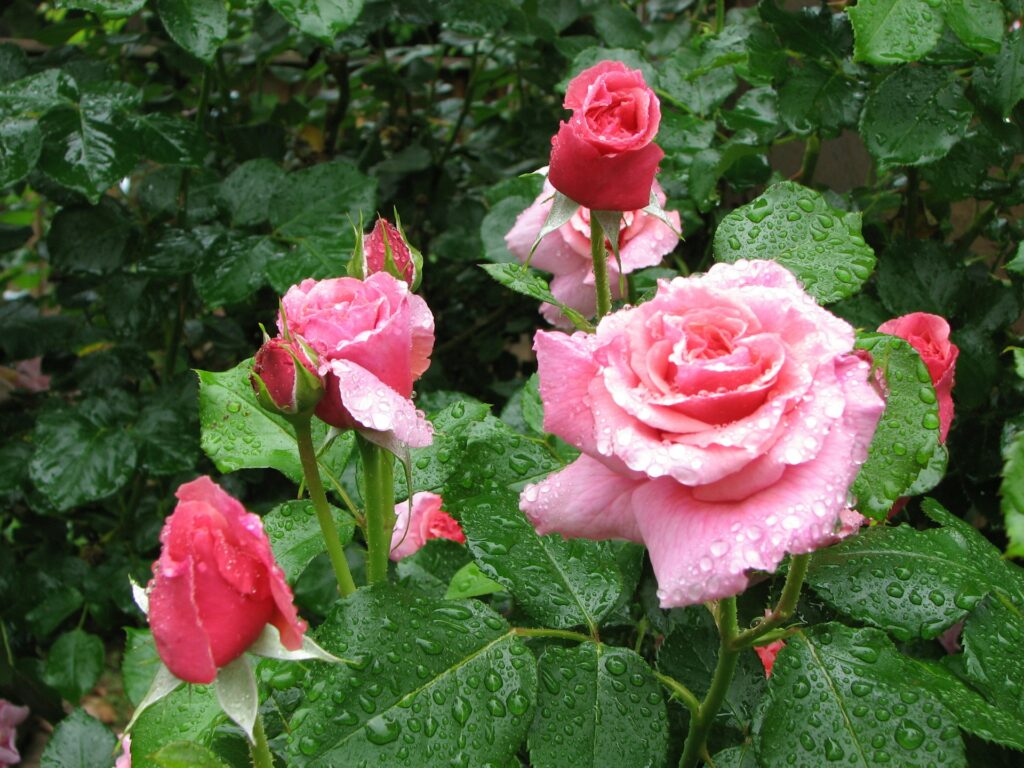
From tiny insects that suck the life out of leaves to larger grubs that munch through roots, these garden villains know exactly how to ruin your rose display. Knowing what to look for means you can catch problems early and save your roses before they get completely trashed.
1. Aphids

These tiny green insects cluster on new shoots and buds, sucking sap and leaving behind sticky honeydew that attracts black sooty mould. They multiply ridiculously quickly, so a few aphids can become hundreds within days.
Look for curled or distorted leaves and stems covered in small green bugs. The honeydew they produce makes everything sticky and often turns black with mould. A strong blast of water from the hose usually sorts them out, or ladybirds will happily munch through them.
2. Thrips
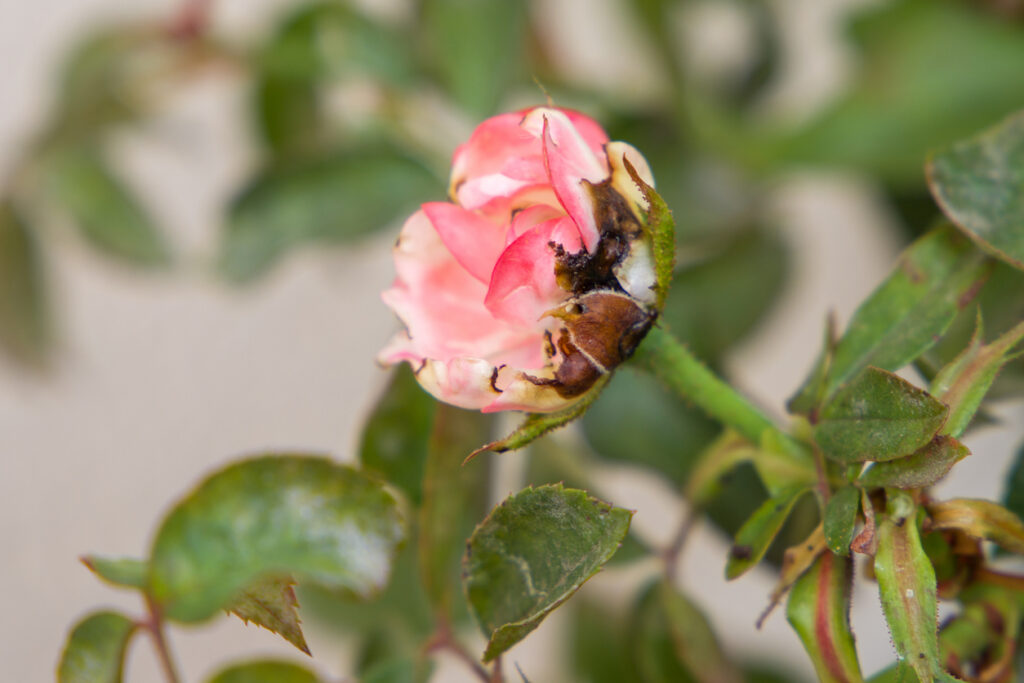
These microscopic pests are almost impossible to see but leave distinctive silvery streaks and black spots on leaves and petals. They rasp away at plant surfaces, creating a stippled, damaged appearance that looks like someone’s attacked your roses with sandpaper.
You’ll notice the damage before you spot the actual thrips. Flowers look bleached or silvery, and leaves develop a bronze tinge. They’re particularly active in hot, dry weather and can seriously reduce flowering if left unchecked.
3. Rose chafer beetles
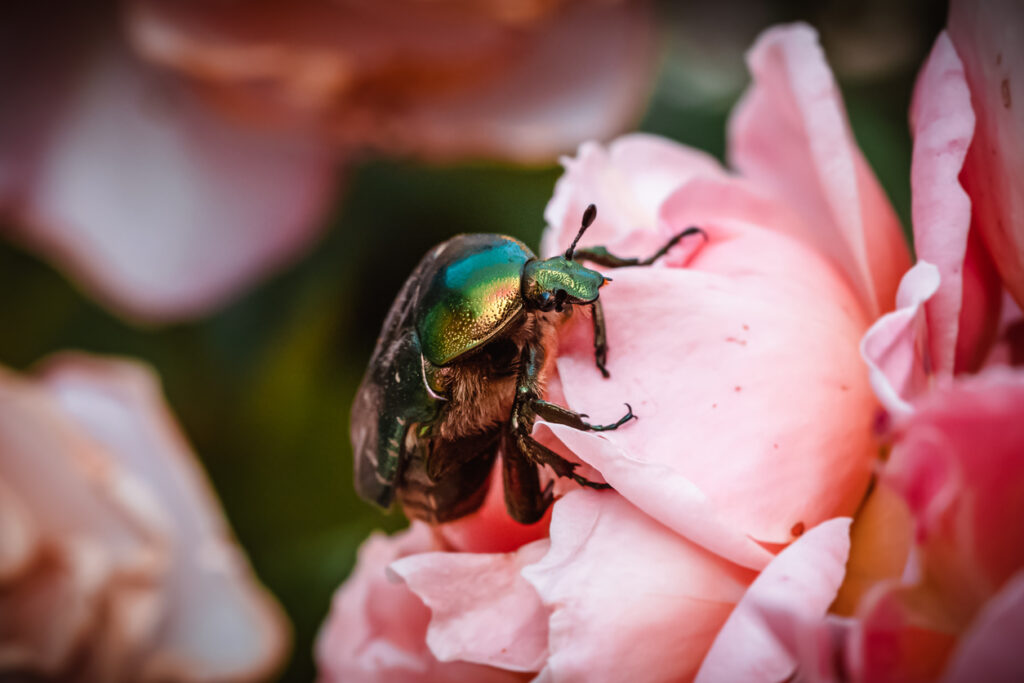
These chunky, golden-brown beetles appear in late spring and early summer, making absolute pigs of themselves on rose petals and leaves. They’re about the size of your thumbnail and can strip flowers bare in surprisingly quick time.
You’ll see them sitting boldly on flowers during the day, chomping away without any shame. The damage is obvious: ragged holes in petals and leaves, sometimes entire flowers reduced to stalks. Hand-picking them off is the most effective control method.
4. Red spider mites
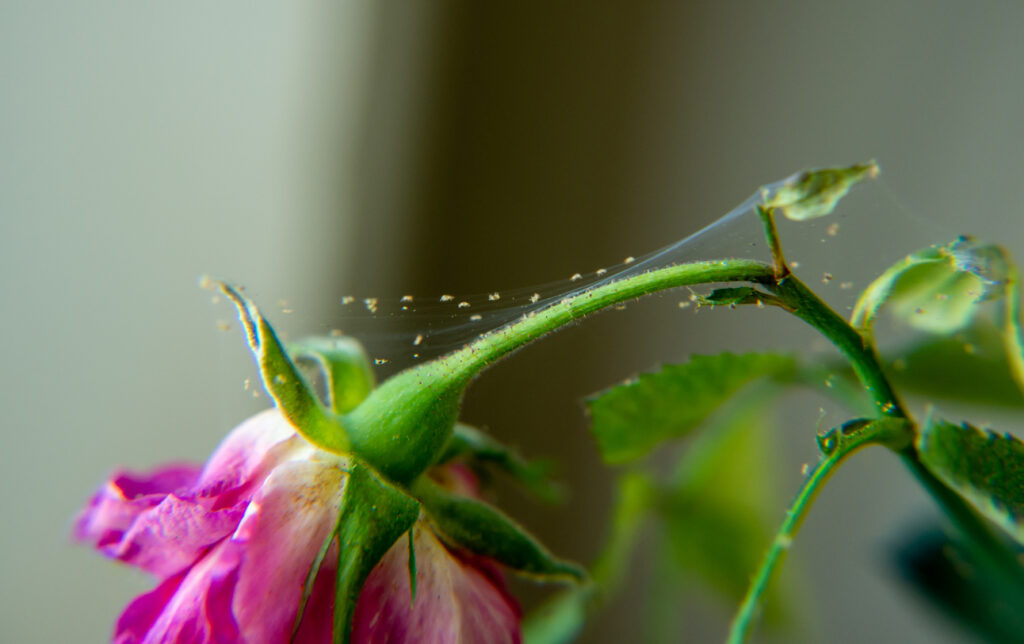
These microscopic mites thrive in hot, dry conditions and create fine webbing on the undersides of leaves. They suck plant juices, causing leaves to turn yellow, bronze, or even fall off completely in severe infestations.
Look for tiny webs on leaf undersides and stippled, discoloured foliage that eventually turns crispy. The mites themselves are barely visible, but sometimes appear as moving red dots. Increasing humidity around plants and ensuring good watering helps prevent them.
5. Scale insects
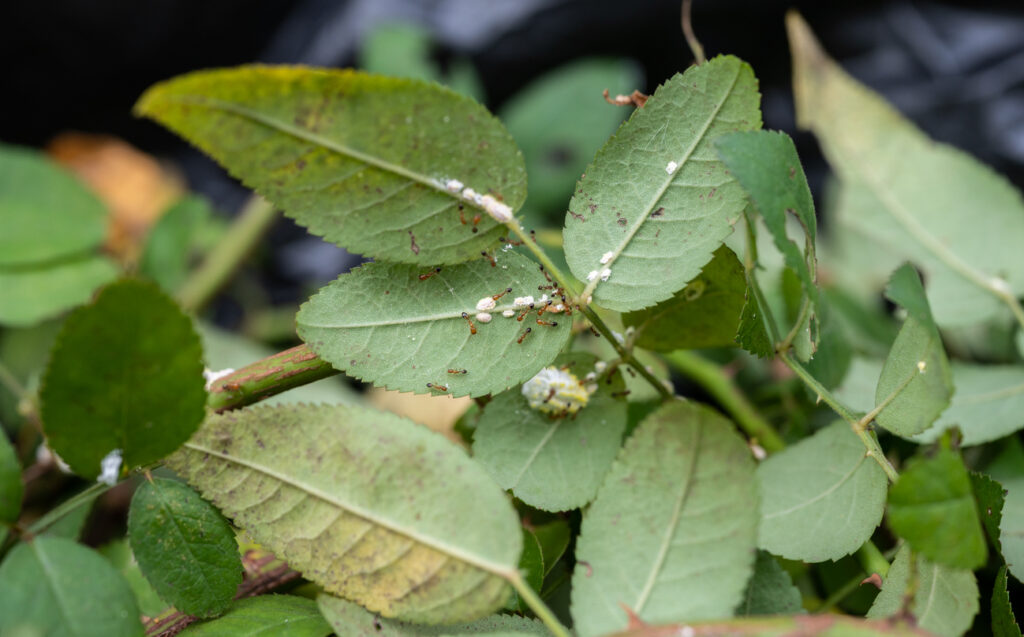
These look like tiny brown or white bumps stuck to stems and leaves, but they’re actually insects with protective shells. They suck sap and weaken plants, while producing sticky honeydew that attracts ants and sooty mould.
The bumps don’t move and can be mistaken for part of the plant until you try to scrape them off. Heavy infestations cause yellowing leaves and reduced vigour. Rubbing them off with a cloth soaked in soapy water usually does the trick.
6. Leaf-cutter bees
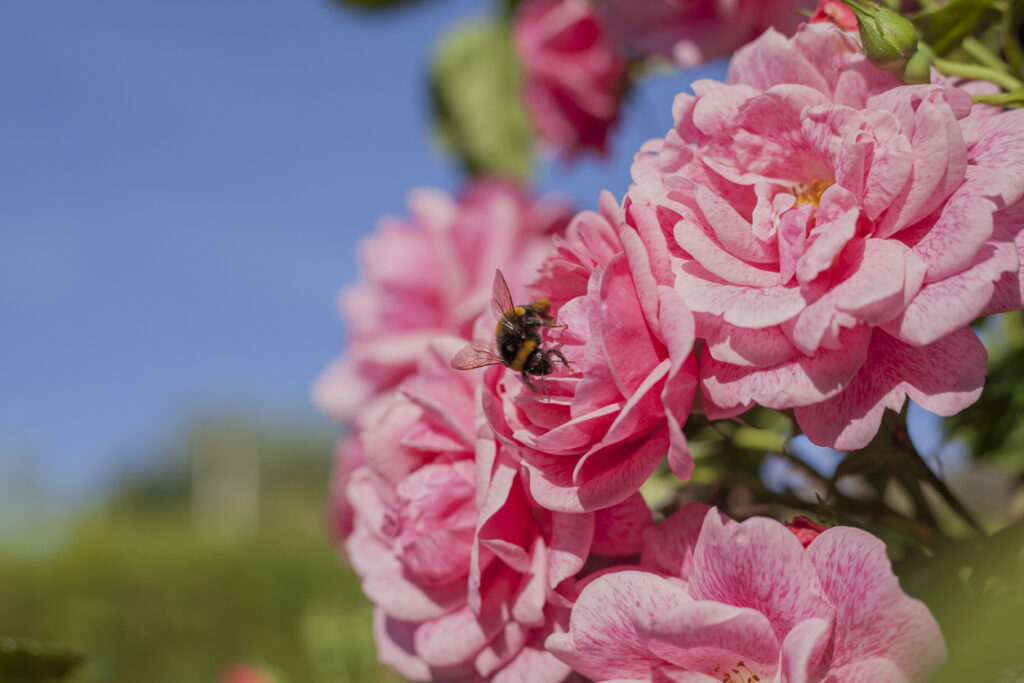
These solitary bees cut perfect semicircular pieces from rose leaves to line their nests. While they’re beneficial pollinators, their leaf-cutting can make roses look like someone’s gone mad with a hole punch.
The damage is instantly recognisable, thanks to the neat circular or oval holes along leaf edges. Unlike pest damage, these cuts are perfectly smooth and geometric. The bees don’t usually cause serious harm to established roses, so many gardeners tolerate them for their pollination benefits.
7. Rose sawfly larvae

These pale green caterpillars strip leaves down to just the veins, creating a skeletal appearance. They work from the underside of leaves, so damage often goes unnoticed until leaves look completely lacy.
Look for leaves that have been reduced to just their framework of veins, usually starting from the bottom of the plant. The larvae themselves are small and green, often curled up on leaf undersides. Hand-picking or spraying with soapy water controls them effectively.
8. Rose gall wasps
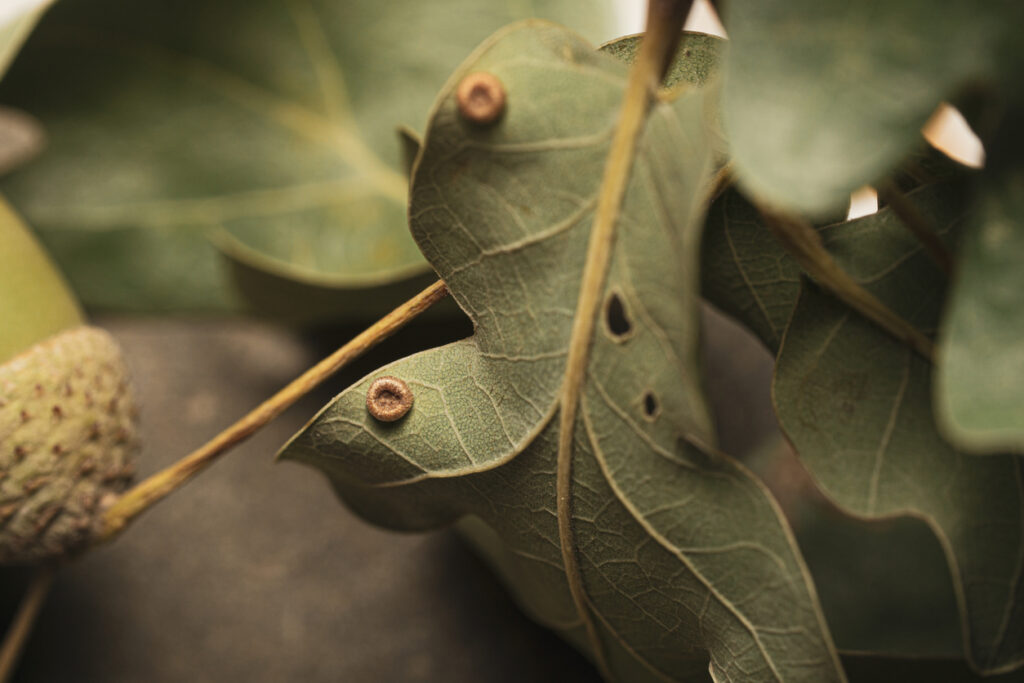
These tiny wasps lay eggs in rose stems, causing distinctive swellings called galls. The most common type creates the ‘robin’s pincushion,’ a red, mossy-looking growth that appears on wild roses and some garden varieties.
The galls themselves don’t usually harm the plant seriously, but heavy infestations can weaken growth. They look like red or green lumps on stems or unusual mossy growths. Cutting off affected stems below the gall usually prevents spread.
9. Capsid bugs
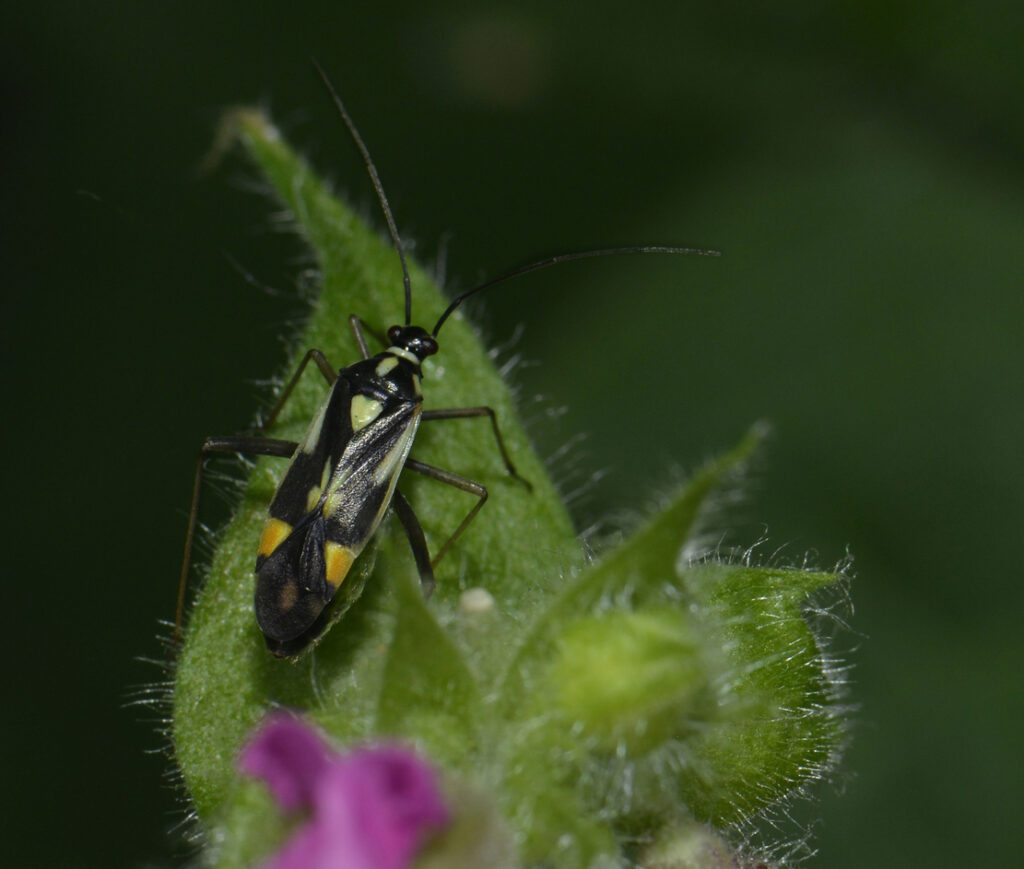
These fast-moving green bugs pierce plant tissues and inject toxic saliva that kills surrounding cells. This creates distinctive tattered holes in leaves and can cause shoot tips to become distorted and blackened.
Damage appears as irregular holes with brown edges, often accompanied by distorted growth. The bugs themselves are quick and hard to spot, but their feeding damage is unmistakable. They’re most active in late spring and early summer.
10. Vine weevil
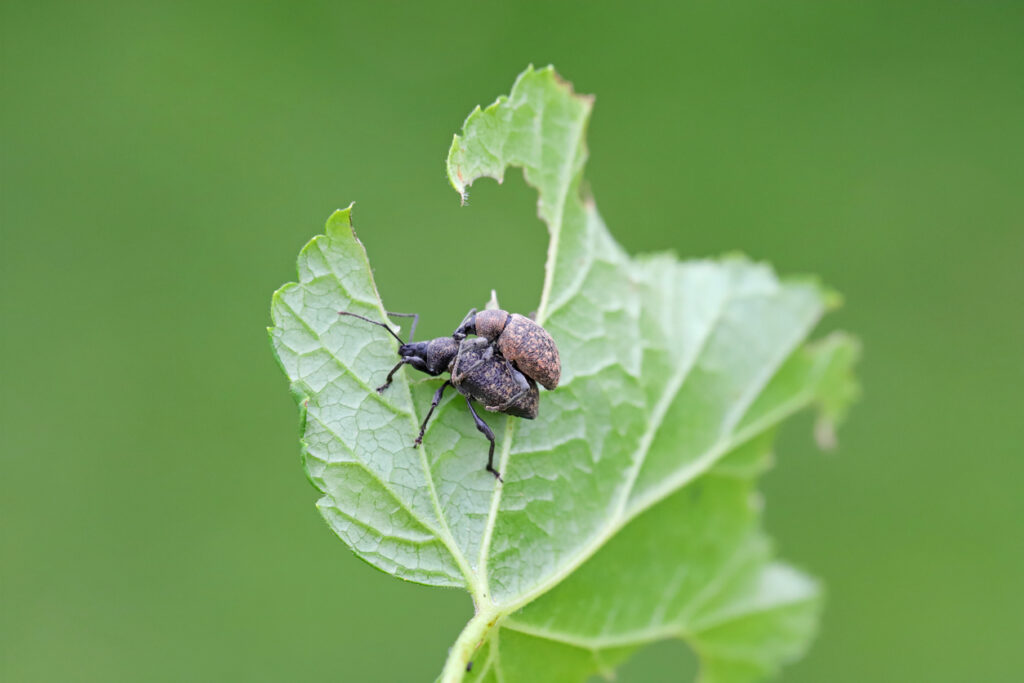
Adult vine weevils are black beetles that chew distinctive notches in leaf edges at night, but it’s their grubs that cause the real damage. The white, C-shaped larvae live in soil and eat rose roots, potentially killing plants.
Look for semicircular notches cut from leaf edges and plants that suddenly start looking unhealthy despite good care. The grubs are found in soil around struggling plants and look like fat white maggots. Container-grown roses are particularly vulnerable since the grubs can’t spread as easily.