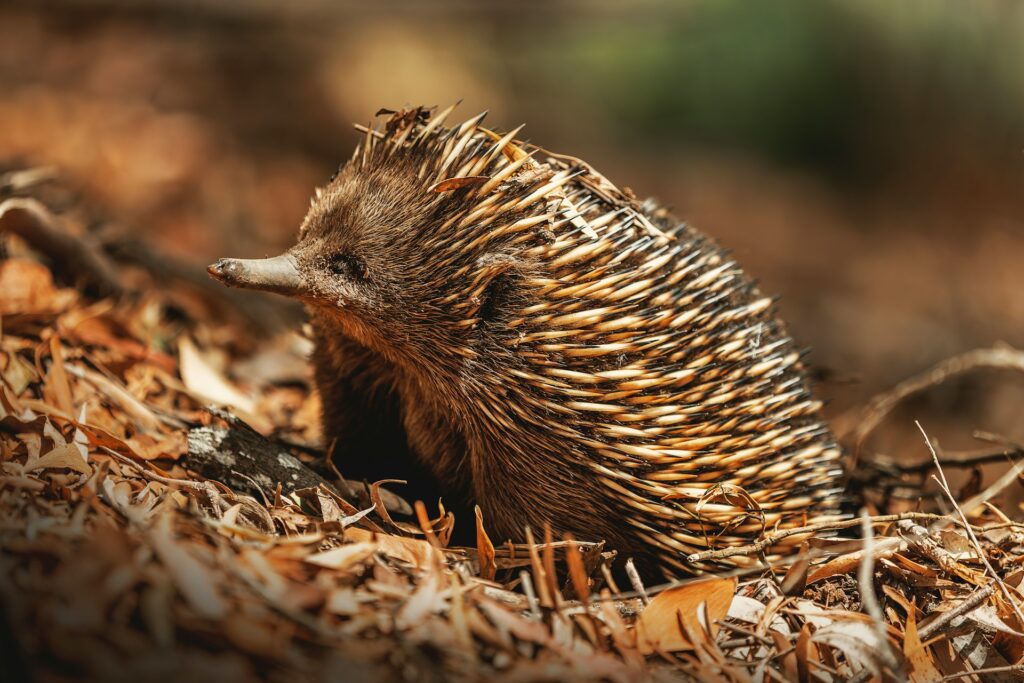
Hedgehogs are basically walking pin cushions, but those spikes aren’t just for show. They’re actually an incredibly clever evolutionary solution to being small, slow, and tasty-looking in a world full of things that want to eat you. However, they’re also not just for self-protection, or at least not in such a simplistic way. In fact, the more you know about these little creatures, the more impressive they become.
They’re the ultimate “don’t touch me” warning system.
Those spikes are like a built-in billboard that says, “I’m not worth the hassle” to potential predators. Most animals take one look at a spiky hedgehog and decide there are probably easier meals available that won’t turn their mouth into a porcupine situation. The spikes work as a visual deterrent before any actual contact happens, which is way more efficient than having to fight off every predator that gets curious.
Rolling into a ball turns them into a living caltrop.
When hedgehogs feel threatened, they can roll into a tight ball with all their spikes pointing outward, basically turning themselves into a medieval weapon that no predator wants to deal with. This defensive position protects all their soft, vulnerable parts while presenting attackers with nothing but sharp pointy bits. The ball formation is so effective that most predators just give up and walk away rather than trying to figure out how to safely unroll a spiky sphere.
The spikes are actually modified hairs, not quills.
Hedgehog spikes are technically specialised hairs that have evolved to be thick, sharp, and hollow, making them lighter than solid spikes would be while still being effective deterrents. This means hedgehogs can have thousands of spikes without carrying around too much extra weight.
Each spike is basically a super-powered version of the hair on your head, except instead of looking pretty, it’s designed to make predators think twice about trying to take a bite. It’s like evolution took regular hair and said, “What if we made this actually useful for self-defence?”
They provide insulation and temperature regulation.
Those spikes aren’t just armour; they also help hedgehogs regulate their body temperature by creating air pockets that trap warm air close to their skin in cold weather and allow air circulation to keep them cool when it’s hot.
The hollow structure of the spikes makes them excellent insulators, kind of like having thousands of tiny sleeping bags covering your body. This dual-purpose design means hedgehogs get protection and climate control from the same evolutionary adaptation.
Different spike zones serve different purposes.
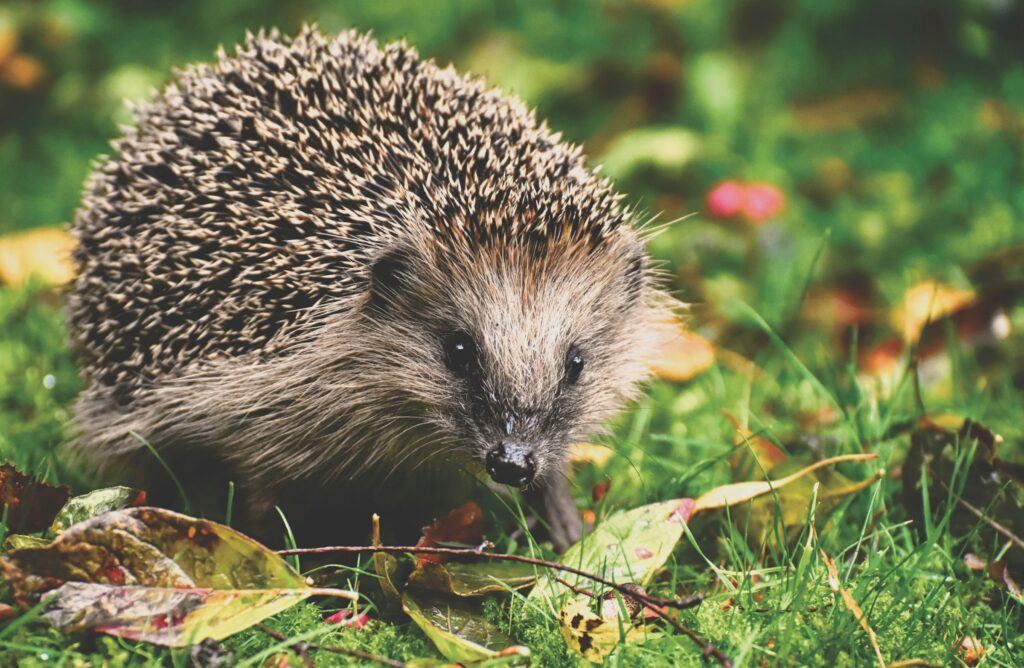
Not all hedgehog spikes are the same. The ones on their back are longer and sharper for maximum protection, while the ones on their sides are shorter and more flexible to allow for movement. The spikes around their face and belly are even smaller and softer.
This graduated spike system means hedgehogs can have serious protection where they need it most while still being able to move around comfortably and interact with their environment. It’s a custom armour of sorts that’s heavy-duty in some places and flexible in others.
They can partially control their spike position.
Hedgehogs can raise and lower their spikes using tiny muscles at the base of each one, kind of like how cats can make their fur stand up when they’re scared or angry. This lets them go from “I’m just minding my own business” mode to “back off right now” mode pretty quickly. When they’re relaxed, the spikes lie relatively flat, but when they sense danger, they can make themselves look bigger and more threatening by raising all their spikes at once.
The spikes help with camouflage.
The mottled brown and tan colours of hedgehog spikes help them blend in with dead leaves, fallen branches, and forest floor debris when they’re foraging or trying to hide. The irregular pattern breaks up their outline and makes them harder for predators to spot.
When a hedgehog curls up in a pile of leaves or under some brush, those earth-toned spikes make them look like just another piece of natural debris rather than a potential meal. It’s camouflage that works even better because the spikes add texture that mimics the spiky, irregular shapes found in nature.
They’re designed to come out if grabbed.
Unlike porcupine quills, hedgehog spikes don’t have barbs and will come out relatively easily if a predator does manage to grab them. This might seem counterproductive, but it actually allows hedgehogs to escape while leaving the attacker with a mouth full of spikes to deal with.
The spikes that come out will regrow over time, so losing a few during an escape is worth it if it means avoiding becoming someone’s dinner. It’s like having a lizard’s tail that can detach, except instead of just distracting the predator, it also punishes them for the attempt.
Baby hedgehogs are born with soft spikes that harden quickly.
Hedgehog babies are born with their first set of spikes already in place, but they’re soft and flexible so they don’t hurt the mother during birth. These baby spikes harden within a few hours and are replaced by adult spikes as the hoglet grows. This means baby hedgehogs get protection almost immediately after birth, which is crucial since they’re born in exposed nests and are vulnerable to all kinds of predators.
The spikes help them navigate in the dark.
Hedgehogs are primarily nocturnal, and their spikes actually help them sense their environment when they’re moving through dense vegetation or tight spaces in the dark. The spikes can detect when they’re brushing against obstacles, giving them spatial information about their surroundings. That tactile feedback system lets hedgehogs move confidently through their territory at night without constantly bumping into things or getting stuck.
They’re surprisingly hydrodynamic for swimming.
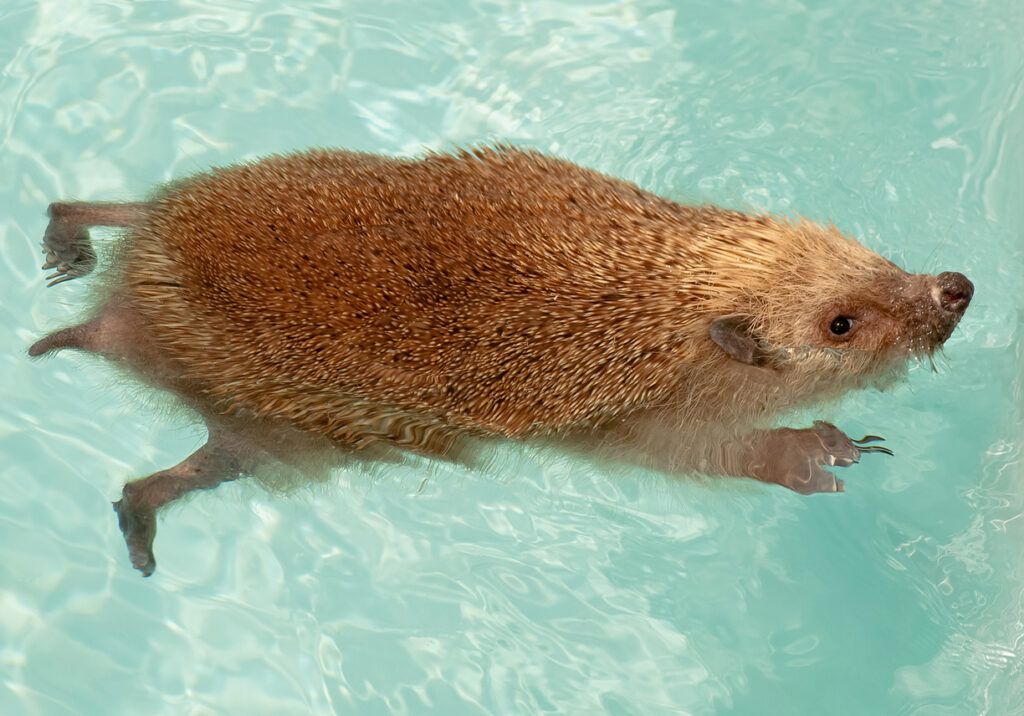
When hedgehogs swim (yes, they can swim!), their spikes actually help reduce drag and make them more efficient in the water. The spikes create tiny vortices that help water flow smoothly over their body, kind of like the dimples on a golf ball.
This unexpected benefit means hedgehogs can cross streams and ponds when they need to, even though they look like they’d sink like rocks. Their spikes work like built-in swim fins that help them move through water more easily than you’d expect from a spiky ball.
Each hedgehog has thousands of individually replaceable spikes.
A single hedgehog can have anywhere from 5,000 to 7,000 spikes covering their body, and each one can be shed and regrown independently throughout their lifetime. This means they always have a full defensive system, even if they lose some spikes to wear and tear or predator encounters. The constant renewal system ensures that their protection never gets permanently compromised, and older, worn spikes get replaced by fresh, sharp ones regularly.