
So, you’re thinking about using manure in your garden because you’ve heard it can be beneficial, but you haven’t got a clue when to actually spread the stuff. You’re right to hesitate, especially since timing’s everything with manure. Get it wrong, and you’ll either burn your plants or waste all those lovely nutrients. Here’s when you should be getting your hands dirty.
Autumn is your best bet.
Honestly, autumn’s the perfect time to add manure to your garden, especially if you’re using fresh stuff. You want to get it on your beds between October and November, when you’ve cleared out your summer crops and the ground’s still workable. This gives the manure months to break down over winter, so by spring it’s not too hot for your new plants.
The weather’s doing half the work for you during these months. All that rain and frost helps break the manure down naturally, and the nutrients have time to properly integrate into your soil. Plus, you’re not dealing with the awful smell during summer when you’re actually trying to enjoy your garden.
Fresh versus well-rotted timing is important.
Fresh manure needs to go on in autumn, no exceptions really. It’s way too nitrogen rich and will literally burn your plants if you use it during the growing season. You need at least three to six months between application and planting, which is why autumn to spring works so well.
Well-rotted manure is a different story, though. You can use this pretty much whenever you like during the growing season. If it looks like soil and doesn’t smell like a farmyard anymore, you’re good to go. Spring application of well-rotted stuff is brilliant for giving your plants a boost right when they need it most.
Application rules apply in the spring.
If you’re adding manure in spring, it needs to be well-rotted, and you should ideally get it on about two to four weeks before planting. March is usually perfect for most of the UK, once the worst of the winter weather’s passed, but before you start sowing seeds.
Don’t just chuck it on and plant straight away, though. Even well-rotted manure needs a bit of time to settle into the soil. Work it into the top few inches and let the soil organisms do their thing for a couple of weeks. Your plants will thank you for the patience.
Different crops understandably have different timing.

Hungry feeders like potatoes, courgettes, and sweetcorn love soil that’s had manure added the previous autumn. These crops can handle richer soil and will absolutely thrive on all those nutrients that have been breaking down over winter.
Root vegetables like carrots and parsnips are fussier, though. They actually prefer soil that hasn’t had manure for at least a year because fresh organic matter makes their roots fork and go all weird. If you’re planning a root veg bed, add manure the autumn before the previous year, if that makes sense.
Weather considerations shouldn’t be ignored.
Never spread manure when the ground’s frozen solid or waterlogged. It’s pointless because it’ll either sit on top doing nothing or wash away with the first heavy rain. Wait for a dry spell when the soil’s workable but not dust dry either.
You also want to avoid spreading it just before heavy rain’s forecast. All those nutrients you’re trying to add to your soil will just wash away, probably into the local waterways, where they’ll cause problems. Check the weather forecast and pick a settled period for application.
There’s always the mulching option.
Using manure as mulch around established plants is a great way to add nutrients slowly throughout the growing season. You can do this from late spring through summer with well-rotted manure, just keep it away from the stems to avoid rot problems.
This works particularly well for hungry plants like roses, fruit bushes, and anything in the squash family. Just spread a couple of inches around the plants in May or June, and it’ll feed them while suppressing weeds. The worms will gradually work it into the soil for you.
Container gardens and raised beds make things easier.
If you’re working with containers or raised beds, you can be a bit more flexible with timing. Mix well-rotted manure into your compost when you’re filling containers in spring, using about one part manure to three parts compost.
For raised beds, you can add a layer of manure whenever you’re topping them up, usually in spring or autumn. Because drainage is better in raised beds, you don’t have to worry as much about the manure getting waterlogged over winter.
No-dig garden timing differs as well.
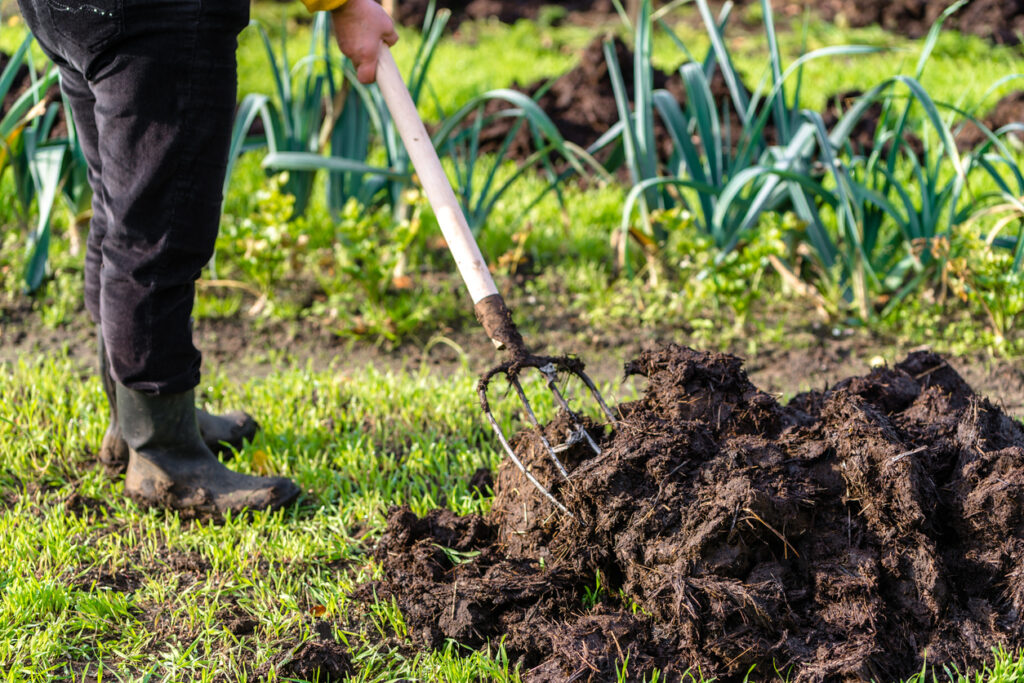
If you’re doing the no-dig thing, timing’s actually super simple. Just spread your manure on top of the beds in autumn, preferably November or December, and leave it. Don’t work it in, just let nature do its thing over winter. By spring, the worms will have pulled most of it down into the soil, and you can plant straight through what’s left. It’s probably the easiest method and the timing’s really forgiving since you’re not disturbing the soil structure at all.
Greenhouse and polytunnel schedules are a whole other story.
Greenhouses and polytunnels have their own timeline since they’re cropped more intensively. Add your manure in late winter, around January or February, when you’re between winter and summer crops. You can also do a second application in midsummer if you’re clearing spring crops and planting autumn ones. Just make sure it’s really well-rotted, since the warm conditions in covered spaces can make fresh manure smell absolutely rank.
There are signs you’ve got the timing wrong
If your plants are all leaves and no fruit, you’ve probably added manure too close to planting time. Too much available nitrogen makes plants go mad with green growth but forget about flowering and fruiting. This is especially common with tomatoes and beans.
Yellow leaves on young plants or seeds that won’t germinate properly usually means the manure’s too fresh. If you notice plants looking burnt around the edges or just failing to thrive after manure application, you’ve gone in too early with the fresh stuff. Next time, give it longer to rot down or switch to well-composted manure instead.