While we’re quite proud of our 20/20 vision, we’re actually navigating the world through a very narrow window compared to some of our neighbours.

We might think we’ve got the full picture, but for many animals, our eyesight is basically like trying to watch a 4K film through a muddy letterbox. There are creatures out there that can see colours we haven’t even got names for, or track movement in total darkness with the kind of precision that’d make a fighter pilot jealous.
From birds that can spot a mouse from a mile up to sea dwellers with eyes so complex they put our best cameras to shame, these 8 animals prove that what we see is only a tiny fraction of what’s actually going on. It’s a reminder that just because we can’t see something, it doesn’t mean it isn’t right in front of our noses.
1. Mantis shrimp can see colours we don’t have names for.
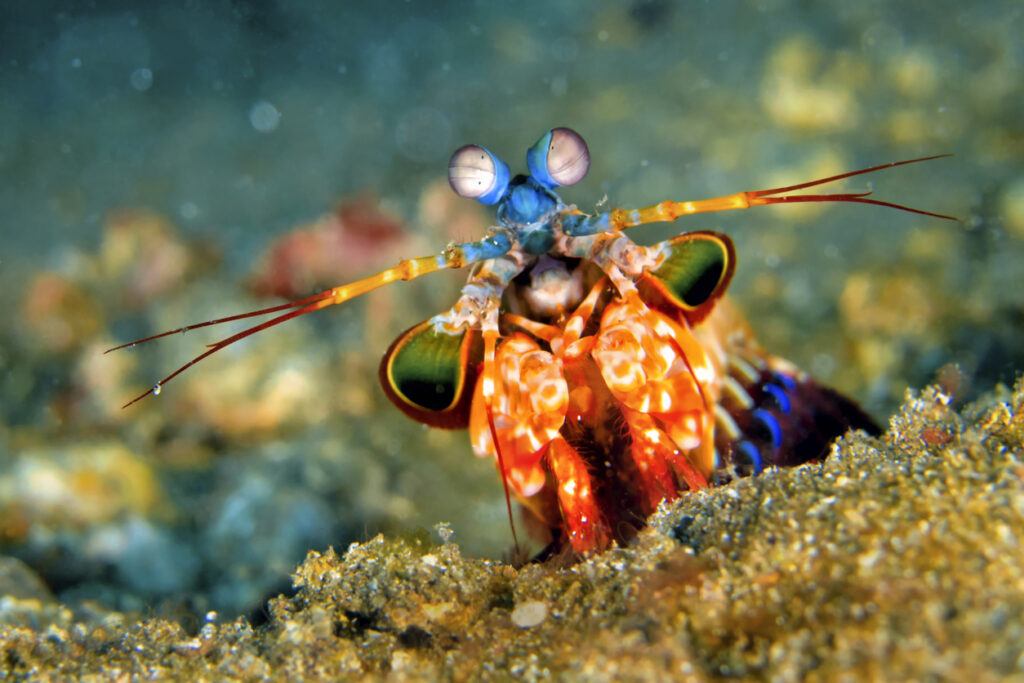
Humans have three types of colour receptors in our eyes, which lets us see millions of colour combinations across the visible spectrum. Mantis shrimp have sixteen types of colour receptors, giving them access to a visual range that’s genuinely incomprehensible to us. They can see ultraviolet light, infrared light, and polarised light in ways that would require equipment for us to detect.
Their eyes move independently, and each one has trinocular vision, meaning each eye alone can judge depth and distance without needing the other. The complexity doesn’t stop there, each eye is divided into three regions that all process visual information separately before sending it to the brain. Scientists initially thought this would give them incredible colour discrimination, but research suggests they might actually process colour differently, trading precision for speed by recognising colour patterns instantly without needing to compare wavelengths the way we do.
2. Eagles can spot a rabbit from over three kilometres away.
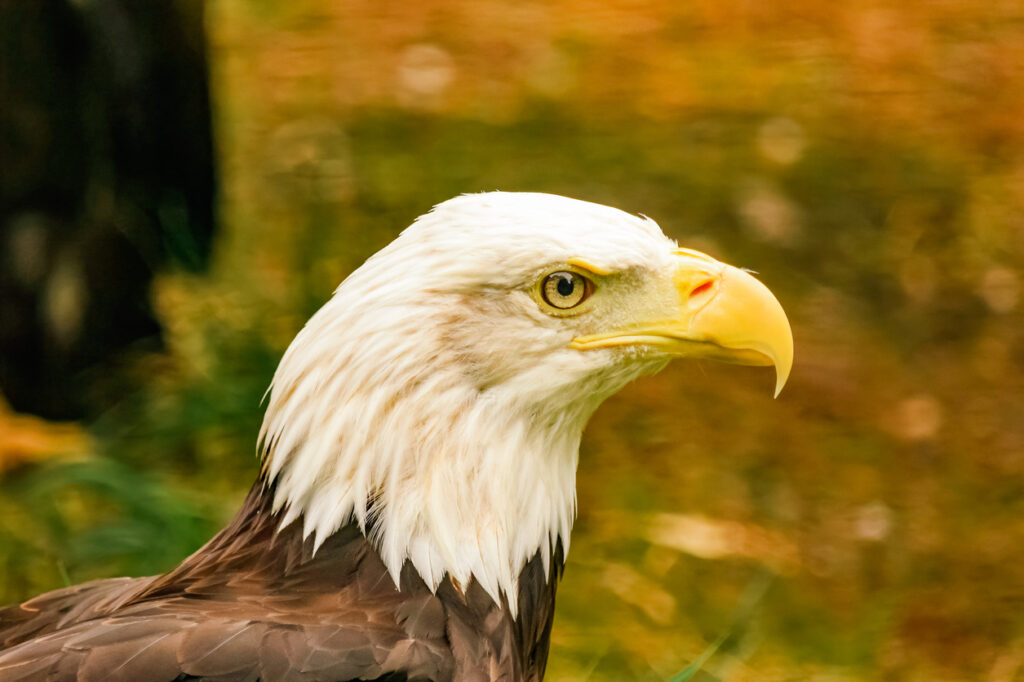
Their visual acuity is roughly four to eight times sharper than human vision, which means they can see details at twenty feet that we’d need to be at five feet to perceive clearly. Eagles have around a million photoreceptors per square millimetre in the most sensitive part of their retina, compared to our 200,000. The concentration of receptors, combined with larger eyes relative to their head size, gives them resolution that puts our eyesight to shame.
They can also see ultraviolet light, which helps them track prey because rodent urine reflects UV and creates visible trails across the ground. Eagles have two focal points in each eye rather than our single one, letting them focus on multiple things simultaneously and judge distances with remarkable precision even while diving at high speed.
3. Dragonflies have nearly 360-degree vision with no blind spots.

Their enormous compound eyes wrap almost completely around their head, giving them visual coverage in virtually every direction at once without moving anything. Each eye contains up to 30,000 individual lenses, each capturing its own tiny portion of the scene and combining to create a mosaic image. This setup makes them phenomenal at detecting movement, they can perceive changes happening in just milliseconds that would look like a blur to us.
Dragonflies can see some colour wavelengths we can’t, and they process visual information so quickly that they essentially see the world in slow motion compared to us. When a dragonfly hunts, it’s calculating the trajectory of its prey whilst simultaneously monitoring escape routes and watching for predators, all using visual data our brains couldn’t handle.
4. Chameleons can look in two completely different directions simultaneously.

Each eye rotates independently through a nearly 180-degree arc, giving them a total field of view of about 342 degrees without turning their head. One eye can be watching behind them for predators, while the other scans ahead for insects to eat. When they spot prey, both eyes can swivel forward to focus together, creating binocular vision that helps them judge the distance for their tongue strike with incredible accuracy.
Their eyes can zoom in on distant objects rather like a camera lens, adjusting focus without moving closer. This independent eye movement also means they can process two entirely separate visual streams at once, which would completely overwhelm a human brain trying to make sense of two unrelated scenes simultaneously.
5. Cats can see clearly in light levels six times dimmer than what humans need.

Their pupils can dilate far more than ours, letting in maximum light when it’s dark, and they have a reflective layer behind their retina called the tapetum lucidum that bounces light back through their photoreceptors for a second chance at detection. That’s why cat eyes glow in photos or car headlights, that reflection is basically their night vision system at work.
They have far more rod cells than humans, which are the receptors that work in low light, giving them excellent motion detection in near darkness. The trade-off is that they see fewer colours than we do, and their daytime vision isn’t quite as sharp, but in the environments where cats evolved to hunt, being able to see a mouse moving in moonlight matters more than distinguishing between shades of red.
6. Bees can navigate using patterns of polarised light invisible to humans.
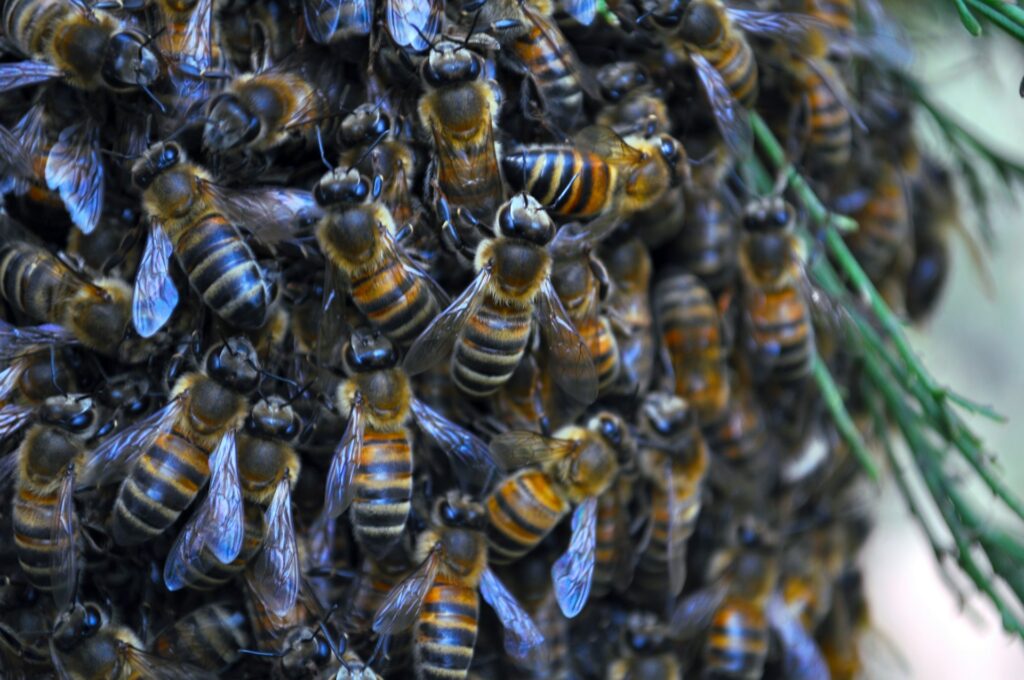
They see ultraviolet light as a distinct colour, which reveals patterns on flowers that are completely hidden to our eyes, essentially secret landing strips directing them to nectar. Bees can also detect the polarisation of sunlight, which means they can determine the sun’s position even on cloudy days when we’d have no idea where it is.
Their polarisation sense works like an internal compass, letting them navigate with precision and communicate directions to other bees through their waggle dance. The combination of UV vision and polarisation detection means bees are seeing a version of the world that’s fundamentally different from what we perceive, with information layered into light that we simply cannot access without specialised equipment.
7. Tarsiers have the largest eyes relative to body size of any mammal.
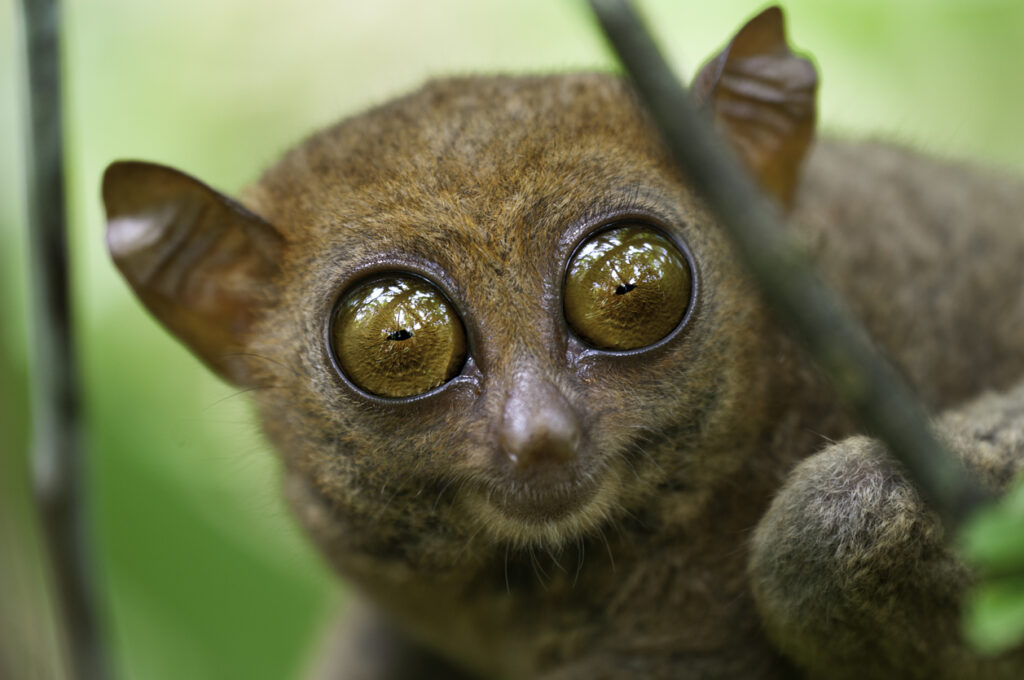
Each eye is actually larger than their brain, and if humans had eyes in the same proportion, they’d be the size of grapefruits. These enormous eyes give tarsiers exceptional night vision for hunting insects in the dark forests of Southeast Asia. Their eyes are so big they can’t move them in their sockets at all, which is why tarsiers can rotate their heads 180 degrees in each direction to look around.
The massive size allows for a huge number of rod cells that capture even tiny amounts of light, letting them see clearly in conditions that would leave us effectively blind. They can judge distances precisely enough to leap between branches in near darkness, using visual information we’d never be able to gather in those light levels.
8. Jumping spiders have vision sharp enough to see details on human faces.
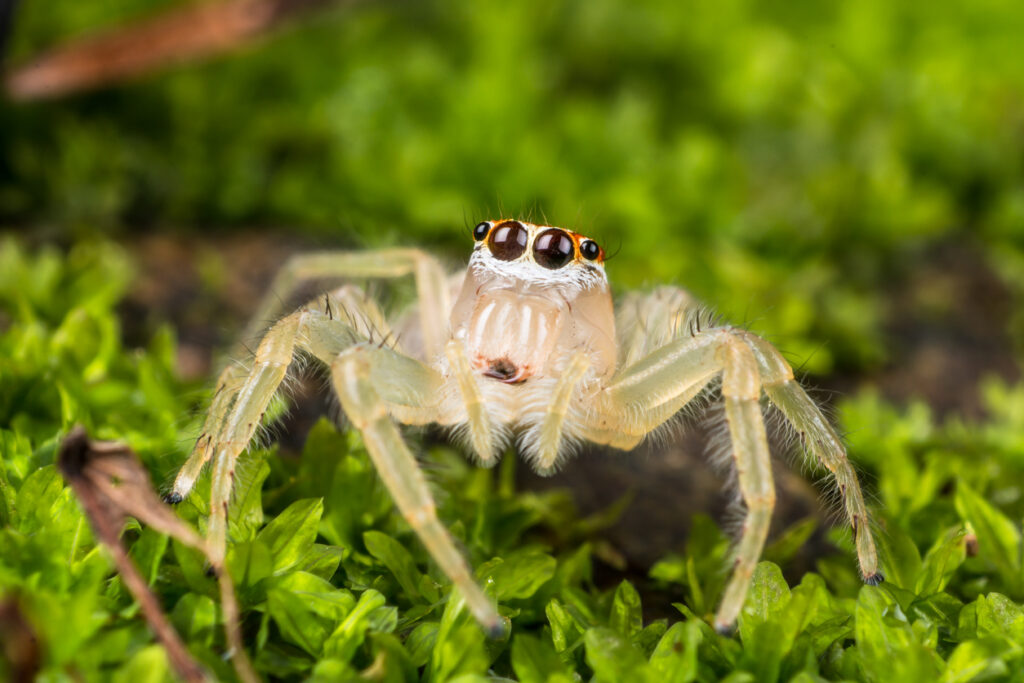
Despite having eyes smaller than pinheads, jumping spiders have visual acuity that approaches human levels for the size of their primary pair of eyes. They have four pairs of eyes total, with the large front-facing pair providing detailed colour vision and the side pairs detecting motion across a wide field. The front eyes can move internally to scan across scenes, rather like how we move our gaze without turning our heads.
They can see in colour and distinguish between different hues with precision that most other spiders can’t match. Their sharp vision is essential for their hunting strategy, which involves stalking prey carefully and planning complex approach routes before pouncing from several body lengths away with remarkable accuracy.