
Every so often, the universe puts on a show that reminds us how rare and unpredictable space can be. Planets line up in perfect order, stars appear where they haven’t been seen in centuries, and eclipses cast shadows that won’t fall the same way again for generations. These moments are fleeting, but they leave a lasting sense of awe for anyone lucky enough to witness them.
Astronomers can predict when these alignments will occur, but that doesn’t make them any less special. Some are centuries apart, others won’t return until long after we’re gone. They’re reminders that even in a constantly moving universe, timing can create moments that will never be repeated in our lifetime.
The 2004 Venus transit
Venus passing directly between Earth and the Sun happened in 2004 and again in 2012. The next one won’t occur until 2117, meaning nobody alive today will see another Venus transit. These events come in pairs separated by eight years, then nothing for over a century.
This predictable but incredibly rare alignment happens because of how Venus’s orbit is tilted relative to Earth’s. The 2004 and 2012 transits were the last chances for anyone currently living to witness this phenomenon directly.
Halley’s Comet in 1986
If you saw Halley’s Comet during its 1986 appearance, you won’t see it again. It returns every 75 to 76 years, meaning its next visit in 2061 will be too late for most people who saw it last time. The comet’s predictable orbit means we know exactly when it’ll return, but that doesn’t help anyone who was old enough to remember it in 1986. For them, that was their only chance to see the most famous comet in history.
The Great American Eclipse of 2017
The total solar eclipse that crossed the entire United States in 2017 won’t happen again in the same way for decades. While there’ll be other eclipses, that specific path of totality crossing the country from coast to coast is a once-in-multiple-lifetimes event. Total solar eclipses are rare for any given location. The next total solar eclipse visible across large parts of the US isn’t until 2024, but it follows a different path. The 2017 event’s specific track won’t repeat for centuries.
The Jupiter Saturn conjunction of 2020
In December 2020, Jupiter and Saturn appeared closer together in the sky than they had since 1623. This great conjunction happens roughly every 20 years, but that close an approach won’t occur again until 2080. While the planets align regularly, the 2020 conjunction was special because of how extremely close they appeared. They were separated by just 0.1 degrees, closer than they’d been in nearly 400 years and closer than they’ll be for another 60.
Comet Hale Bopp in 1997
This incredibly bright comet was visible to the naked eye for 18 months in 1996 and 1997. It won’t return for approximately 2,380 years, meaning it was genuinely a once in recorded civilisation event, let alone once in a lifetime. Hale Bopp was one of the brightest comets of the 20th century and visible for an unusually long time. Anyone who saw it witnessed something that won’t be seen by humans again for over two millennia.
The 1989 Neptune fly by
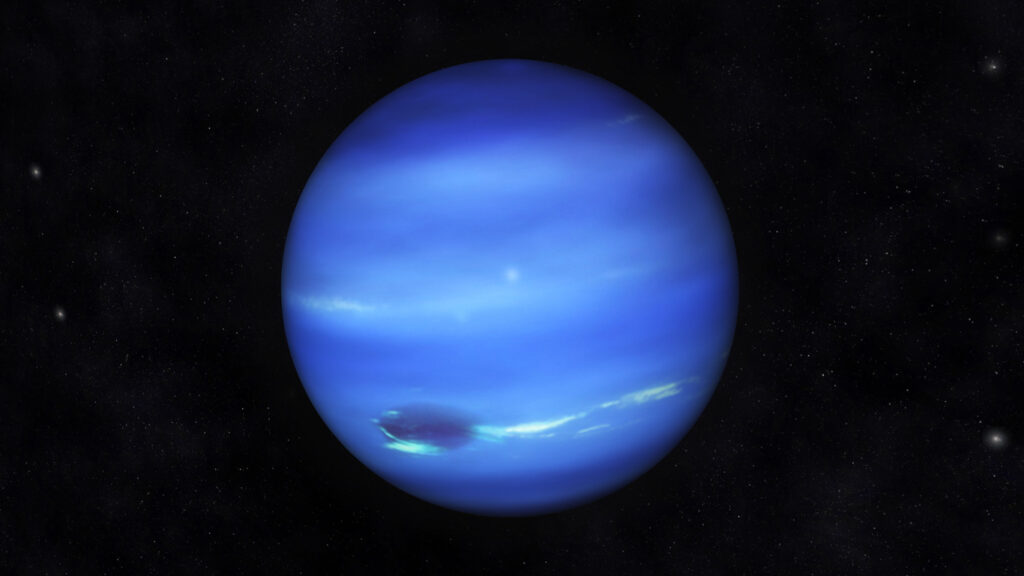
Voyager 2’s close encounter with Neptune in 1989 gave us our only detailed look at the planet. No other spacecraft has visited Neptune since, and none are planned for the foreseeable future, meaning those 1989 images represent a unique moment in exploration.
While technically not a natural cosmic alignment, this was humanity’s only opportunity to see Neptune up close. The alignment of funding, technology, and planetary positions that allowed the mission won’t repeat in any living person’s lifetime.
The 1994 Shoemaker Levy 9 impact
When Comet Shoemaker Levy 9 broke apart and slammed into Jupiter in 1994, it was the first time humans had directly observed a cosmic collision. The probability of seeing another comet impact a planet in our solar system during any human lifetime is incredibly low.
This wasn’t just rare, it was unprecedented in recorded history. The comet had been captured by Jupiter’s gravity and torn apart, creating a string of fragments that hit the planet over several days while astronomers watched.
The 2012 solar maximum
The Sun’s 11-year activity cycle peaked in 2012 and 2013, but that particular solar maximum was unique. Each maximum is different, and the specific activity patterns, solar flares, and space weather of that cycle won’t repeat exactly.
While the Sun goes through regular cycles, each one has unique characteristics. The 2012 maximum was weaker than expected, but still produced significant solar storms. That specific pattern of solar activity is gone forever.
Pluto’s closest approach in 1989
Pluto reached its closest point to the Sun in 1989 during its 248-year orbit. It’s now moving away and won’t be that close again until 2237. Anyone alive in 1989 experienced Pluto at its closest possible distance for their entire lifetime. This is important because Pluto’s atmosphere freezes and collapses as it moves away from the Sun. The 1989 to 2020 period was a unique window to study Pluto with an atmosphere, and that window is now closing for centuries.
The 1987 Supernova
Supernova 1987A was the closest supernova visible to the naked eye since 1604. Seeing a star explode that clearly without a telescope is incredibly rare. The next similarly bright supernova could happen tomorrow, or not for thousands of years. The explosion in the Large Magellanic Cloud was close enough to study in unprecedented detail, but far enough not to harm Earth. The combination of proximity and safety makes it a genuinely once-in-many-lifetimes event.
The 2003 Mars opposition

In August 2003, Mars came closer to Earth than it had in nearly 60,000 years. While Mars has close approaches every couple of years, that 2003 distance was exceptional and won’t be matched again until 2287. Mars appeared incredibly bright and large in the sky during that opposition. Anyone who saw it experienced Mars at its absolute closest in modern human history, and closer than it will be again for centuries.
The Maunder Minimum ending
The Sun went through a period of very low activity from 1645 to 1715 called the Maunder Minimum. We’re now in a normal active phase, and whether another similar minimum occurs in the next century is uncertain but unlikely within current lifetimes.
These grand minima in solar activity happen irregularly and last for decades. The specific transition out of the Maunder Minimum represented a unique change in solar behaviour that humans alive then experienced once and won’t repeat predictably.
The 1982 planetary alignment
In 1982, all nine planets were loosely aligned on the same side of the Sun, an arrangement that enabled the Voyager missions to visit multiple planets using gravity assists. That specific configuration won’t repeat for over 100 years. While not a perfect straight line alignment, the 1982 configuration was rare enough that NASA designed entire missions around it. The next time the outer planets align favourably for similar missions is far beyond any current lifetime.
Betelgeuse’s recent dimming
In 2019 and 2020, the star Betelgeuse dimmed dramatically, leading to speculation it might explode as a supernova. While it recovered, that specific dimming event was unique. Betelgeuse will eventually explode, but predicting when is impossible, it could be tomorrow or 100,000 years from now.
The 2020 dimming was the most dramatic change in Betelgeuse’s brightness in modern records. Whether you’ll see it explode as a supernova in your lifetime is completely unpredictable, but that particular dimming event was a one-time observation.
The cosmic microwave background measurements
Satellites like WMAP and Planck measured the cosmic microwave background radiation with unprecedented precision in the 2000s and 2010s. While technology improves, that specific snapshot of the universe’s earliest light represents a unique moment in cosmology.
These measurements revealed details about the universe’s structure and age that refined our understanding dramatically. The specific discoveries made during that era were once-in-a-civilisation events, fundamentally changing cosmology in ways that won’t repeat.