When we talk about South African wildlife, it’s usually about the Big Five and the thrill of a safari, but there’s a much grimmer side to the country’s biodiversity.

South Africa is home to some of the most unique creatures on the planet, yet a huge chunk of them are currently staring down the barrel of extinction. It’s not just the high-profile animals like rhinos that are in trouble; there’s a whole list of birds, reptiles, and even tiny mammals that are slowly but surely vanishing because their habitats are being ploughed over or poisoned.
Protecting these species isn’t just being nice to nature; it’s about stopping the entire ecosystem from collapsing. From a rabbit that only lives in one specific desert to a penguin that might be gone in a decade, these 14 animals are the ones currently fighting for a spot in the future. Understanding why they’re struggling is the only way to figure out how to keep them around.
1. African penguin

These charming birds breed along the South African coast, but they’re critically endangered with only 19,800 mature individuals left in 2025. They’ve declined dramatically due to overfishing depleting their food sources, oil spills, and habitat disturbance. Climate change is also affecting the availability of sardines and anchovies they depend on. You can still see them at places like Boulders Beach near Cape Town, but without serious intervention, they could disappear within decades.
2. Black rhinoceros
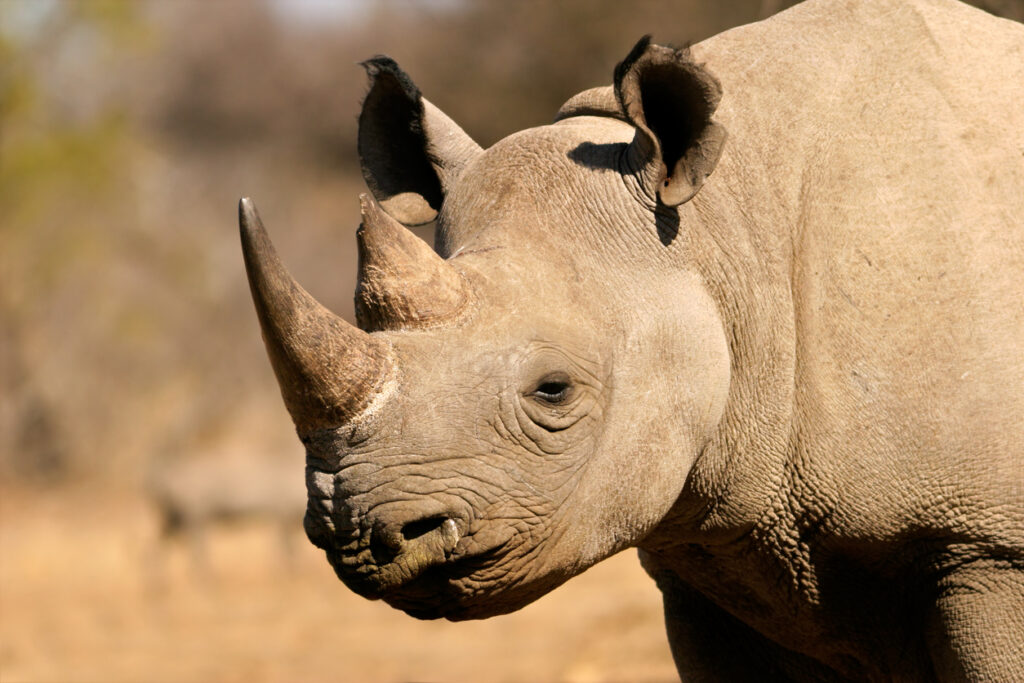
Only 6,788 black rhinos remain worldwide, with small populations monitored on protected land across South Africa. Poaching for their horns remains the primary threat, driven by demand in Southeast Asia where horn is used in traditional medicine despite having no medicinal properties. Around 95% of rhino horn traded comes from black rhinos. Although poaching peaked in 2015 and has declined since, three rhinos are still killed every day in South Africa, making their future uncertain.
3. Riverine rabbit

This is South Africa’s most endangered mammal, with only 157 to 207 mature individuals remaining. Found in limited areas of the Karoo, these rabbits have lost 40% to 60% of their floodplain habitat to wheat cultivation over the past century. They’re also hunted for bushmeat and sport, and often become accidental victims of traps set for pest species. Their specialised habitat requirements make them incredibly vulnerable to any further agricultural expansion.
4. African wild dog

Fewer than 450 wild dogs remain in South Africa, and less than 7,000 across the entire African continent. These painted wolves are extremely sensitive to habitat fragmentation because of their wide-ranging behaviour, and they face conflict with livestock and game farmers who view them as threats. Accidental deaths from snares, road accidents, and infectious diseases like rabies and distemper have decimated their population. They’re one of Africa’s most endangered carnivores despite being highly social and efficient hunters.
5. Cheetah

South Africa’s cheetah population is vulnerable and declining due to habitat loss, human encroachment, and competition with larger predators like lions and hyenas. Since 1980, the cheetah population has fallen by about 90% across Africa. Farmers often kill them to protect livestock, viewing them as pests rather than the threatened species they are. They’re also caught to supply the illicit pet trade, particularly driven by demand in the Middle East.
6. Blue crane

South Africa’s national bird is classified as vulnerable with a sharply declining population. These striking birds face both intentional and unintentional poisoning, the former historically done to protect crops and the latter continuing as they ingest chemicals farmers use to kill pests. They also collide with powerlines, become entangled in fences, and face illegal capture of fledglings. Climate change is affecting agricultural practices in ways that create further threats to their grassland habitats.
7. Pickersgill’s reed frog

This critically endangered amphibian is only 3 cm long, but its situation is dire. Endemic to the KwaZulu-Natal coastline, their numbers are shockingly low and widely scattered. Coastal development, habitat fragmentation, and draining of wetlands for agricultural and urban use have destroyed much of their habitat. South Africa’s first captive breeding project for a threatened amphibian species includes this frog, and it’s the flagship species for the Endangered Wildlife Trust’s amphibian conservation programme.
8. Geometric tortoise

Only about 800 mature geometric tortoises remain in South Africa. These beautiful creatures have distinctive yellow and black geometric patterns on their shells, but their habitat in the Western Cape is being altered, degraded, and destroyed by human activity. Urban expansion and agricultural development have fragmented their remaining habitat into small, isolated patches. They’re slow-moving and slow to reproduce, making population recovery extremely difficult even when habitat is protected.
9. Golden moles

Five different golden mole species rank in the top ten most endangered mammals in South Africa. These tiny diggers are disappearing due to development of the country’s grasslands through mining and agriculture. You rarely see them because they live underground, but their populations are collapsing as their habitat vanishes. The Juliana’s golden mole is protected in small areas like southwestern Kruger National Park and Nylsvley Nature Reserve, but most species have inadequate protection.
10. Cape vulture

These large vultures are endangered and facing multiple threats including poisoning, electrocution from powerlines, and habitat loss. In May 2025, a single poisoned elephant carcass in Kruger National Park killed 116 vultures, demonstrating how vulnerable they are to accidental poisoning. Farmers sometimes poison carcasses to kill predators, but vultures are unintended victims. They’re also deliberately targeted in some areas because traditional beliefs attribute magical properties to their body parts.
11. Knysna seahorse

This endangered seahorse is found along a short stretch of South Africa’s coast, primarily in the Knysna estuary. Living at depths of just 0.5 to 20 metres, they’re extremely vulnerable to human activities in one of South Africa’s most heavily used bodies of water. Urban expansion, stormwater run-off, and wastewater disposal are polluting their habitat. Researchers believe they’re also vulnerable to water temperature changes, making climate change a looming additional threat.
12. Oribi

This is South Africa’s most endangered antelope despite not being particularly threatened globally. As a specialist grazer that only eats specific types of grass, it’s incredibly vulnerable to habitat loss. Agricultural development of grasslands has destroyed much of its range, and illegal hunting further reduces their numbers. They’re small and shy, making them difficult to spot even in areas where they still exist, and their specialised dietary needs mean they can’t adapt to degraded habitats.
13. Yellow-breasted pipit

These cheerful-looking birds are endangered and endemic to South Africa’s highland grasslands, particularly in the Drakensberg region. The problem is that South Africa’s grassland biome is the country’s most threatened habitat type. Commercial livestock farming has destroyed and degraded their nesting and feeding areas. They occur in a small range from Dullstroom in Mpumalanga to the northern Eastern Cape and parts of Lesotho, making them vulnerable to any changes in these limited areas.
14. White-winged flufftail

Fewer than 250 mature white-winged flufftails remain in the wild, making them critically endangered. These small birds live in marsh habitats that are threatened by drainage, flooding by dams, catchment erosion, and water abstraction. Disturbance from burning and livestock grazing further degrades their wetland homes. They’re extremely elusive and difficult to study, which makes conservation efforts challenging when researchers can barely find the birds they’re trying to protect.