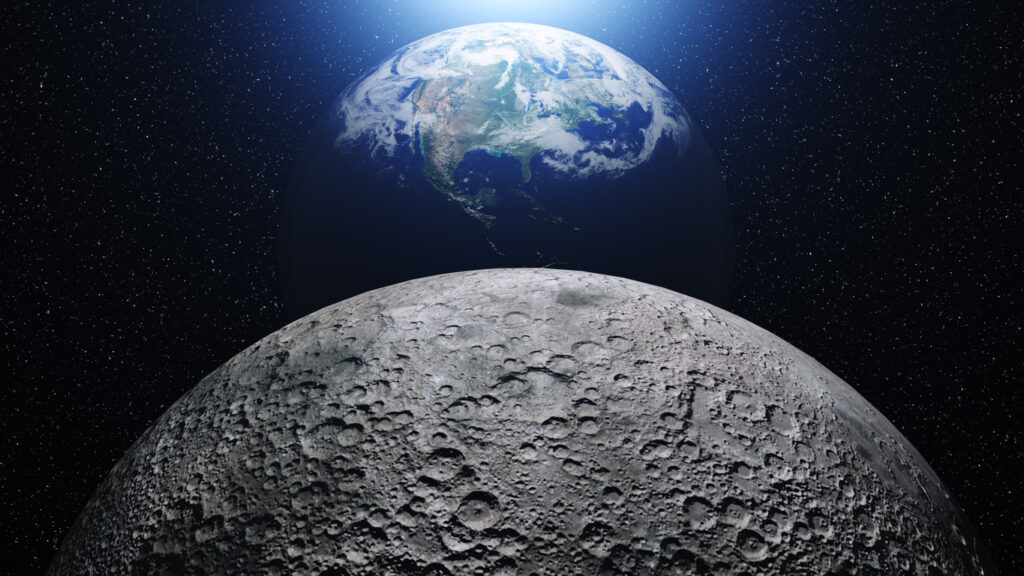
The Moon might look like it’s just hanging around up there, but it’s actually on a constant loop around Earth, completing one full orbit roughly every 27.3 days. And in that short time, quite a lot happens, not just to the Moon, but also to us down here. From changing tides to changing light, its journey has all sorts of knock-on effects we’ve come to rely on (or barely notice). Here are 10 things that quietly unfold every time the Moon does a full lap around our planet.
1. We cycle through every moon phase.
As the Moon makes its way around Earth, the angle between it, us, and the Sun keeps changing, and that’s what gives us moon phases. Over the course of one orbit, we go from new moon to full moon and back again, seeing crescents, quarters, and gibbous shapes in between.
This isn’t just a visual quirk. For thousands of years, people used the lunar cycle to track time, plant crops, and plan rituals. Even today, the phases of the Moon are still used in calendars, farming traditions, and cultural events across the world.
2. Tides rise and fall like clockwork.
The Moon’s gravity is strong enough to tug on Earth’s oceans, which is why we get regular high and low tides. As it orbits, its pull changes across different parts of the planet, causing water to bulge and recede depending on where you are.
These tidal patterns repeat in a predictable rhythm during the lunar orbit, with two high tides and two low tides every day in most places. It’s one of the Moon’s most direct effects on our lives, even if most of us don’t think about it much unless we live near the sea.
3. Earth’s rotation subtly slows down.
The Moon’s gravitational pull doesn’t just mess with the oceans; it’s also slowing Earth’s spin. As the tides move, friction between the ocean and the planet’s surface pulls back slightly, stealing a bit of momentum from Earth’s rotation.
It’s not something we notice day to day, but over time, it adds up. Our days are getting ever so slightly longer, all thanks to the Moon. In fact, ancient Earth days were much shorter, and without the Moon’s influence, we’d still be spinning faster.
4. The Moon shows us the same face the whole time.
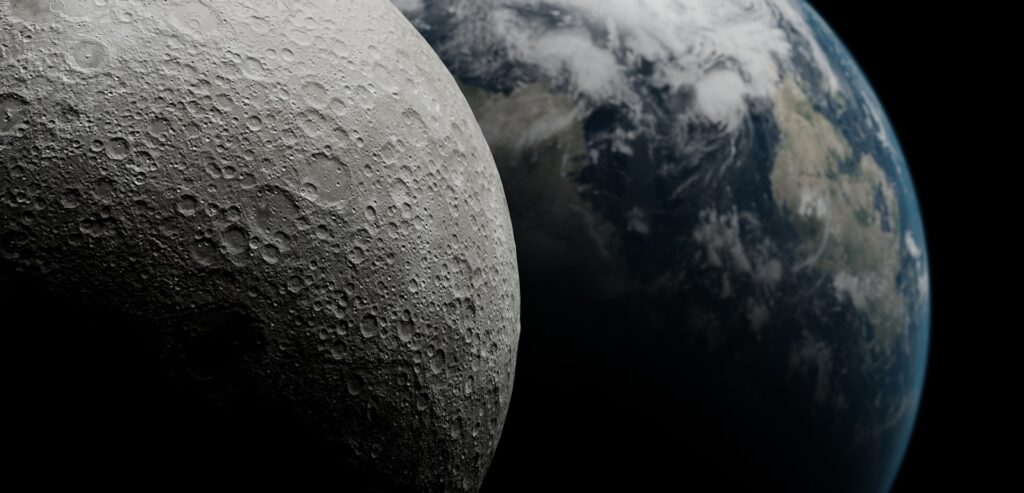
Even though it’s moving, we always see the same side of the Moon from Earth. That’s because the Moon is tidally locked; it rotates once on its axis in the same time it takes to orbit Earth. So its “far side” never faces us, no matter how many laps it completes.
This leads to the common misconception that the Moon doesn’t spin at all, but it does. It’s just in sync with its orbit. It also adds to the Moon’s mystery, as the far side remained completely hidden until spacecraft gave us a peek.
5. It affects animal behaviour.
Lots of animals track their routines by the Moon, especially in places where it lights up the night sky. Some sea creatures, like corals, time their spawning events with specific phases of the lunar cycle to increase their odds of success.
Even land animals like birds, insects, and predators can change their behaviour depending on the brightness of the Moon. More light can mean better hunting conditions, or more exposure to predators. It’s a reminder that natural cycles still shape life in quiet, powerful ways.
6. It slightly changes Earth’s shape.
The Moon doesn’t just pull at the oceans, it actually tugs on Earth’s crust too, causing what’s known as solid Earth tides. These are tiny, but measurable, bulges in the planet’s surface as the Moon moves around us. You won’t feel it happening, but GPS satellites and geologists can detect it. It’s part of the subtle influence the Moon has on our planet’s physical structure, shifting the ground just a bit every orbit.

7. The Moon gets brighter and dimmer.
As the angle between the Sun, Earth, and Moon changes, the amount of sunlight hitting the Moon that we can see changes too. That’s why it looks bright and full one week, and like a slim crescent the next. However, it’s not just the shape—it’s the brightness too.
A full moon reflects far more light back to us than a thin sliver. That increase in brightness can impact wildlife, sleep patterns, and even mood. Some studies have shown people sleep a little worse around the full moon, not because of magic, but likely because of the extra light.
8. Its orbit isn’t perfectly circular.
The Moon’s orbit is slightly elliptical, meaning it gets closer and farther from Earth during each lap. At its closest point (perigee), it looks a little bigger and brighter in the sky. That’s when we get those so-called “supermoons.”
At its farthest point (apogee), it appears smaller and dimmer, though most people don’t notice unless they’re paying attention. These changes aren’t drastic, but they’re enough to cause minor variations in tides and how dramatic the Moon appears at night.
9. It can trigger an eclipse, but only sometimes.
Lunar and solar eclipses can only happen during certain points in the Moon’s orbit. A solar eclipse occurs when the Moon lines up perfectly between Earth and the Sun. A lunar eclipse happens when Earth sits between the Sun and the Moon, casting a shadow over it. However, these don’t happen every orbit because the Moon’s orbit is tilted slightly compared to Earth’s. That tilt means the necessary alignment is rare, and when it does happen, the spectacle is worth the wait.
10. It subtly changes Earth’s axis.
The Moon helps stabilise Earth’s axial tilt, which plays a major role in keeping our climate relatively steady. During each orbit, tiny gravitational nudges help dampen the wobble in our planet’s rotation, stopping it from tilting wildly over time. Without the Moon, Earth’s tilt could swing more erratically, leading to chaotic changes in weather and seasons. So as the Moon completes its orbit, it’s also helping to keep our planet on track, both literally and figuratively.