When we look up at the night sky, most of us see the same patterns of stars that the ancient Greeks named thousands of years ago.
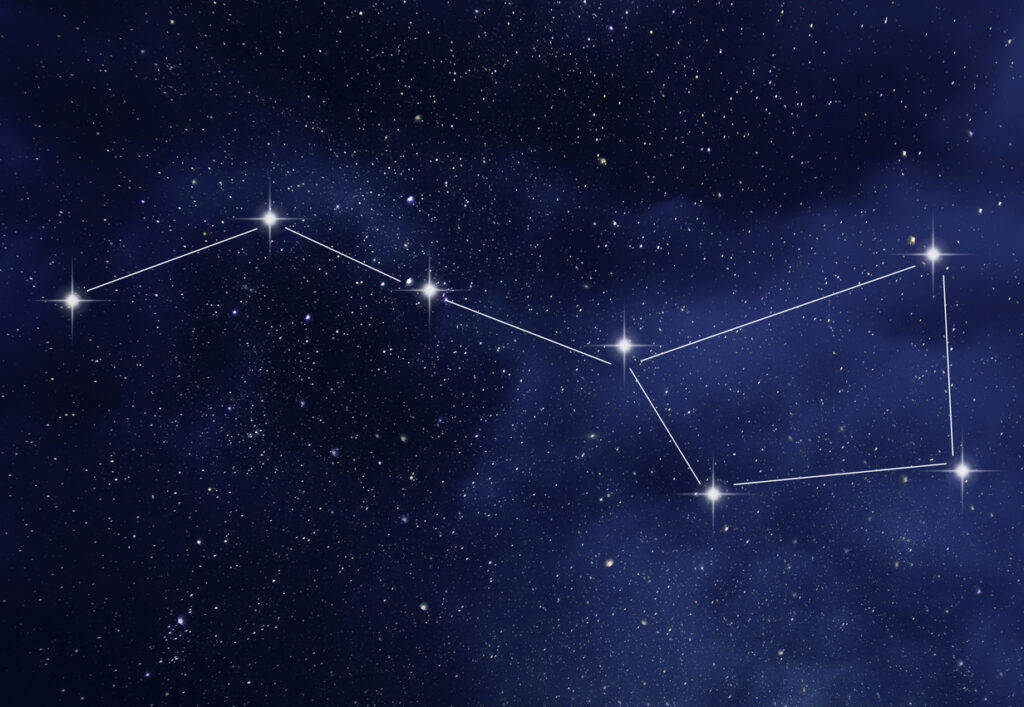
We’re used to hearing about Orion the Hunter or the Great Bear, but these names aren’t the only way to map the heavens. For centuries, different cultures across the globe have looked at those exact same pinpricks of light and seen something entirely different, shaped by their own legends, landscapes, and histories.
It’s funny how a cluster of stars that one group sees as a fierce warrior, another might see as a canoe, a celestial animal, or even a simple kitchen utensil. These alternative names aren’t just quirks of language; they’re a window into how people have navigated the world and explained their place in the universe for generations. From the Indigenous peoples of Australia to the master navigators of Polynesia and the astronomers of ancient China, the sky has been a canvas for countless stories that have nothing to do with the zodiac signs we know today.
1. Orion isn’t a hunter everywhere.
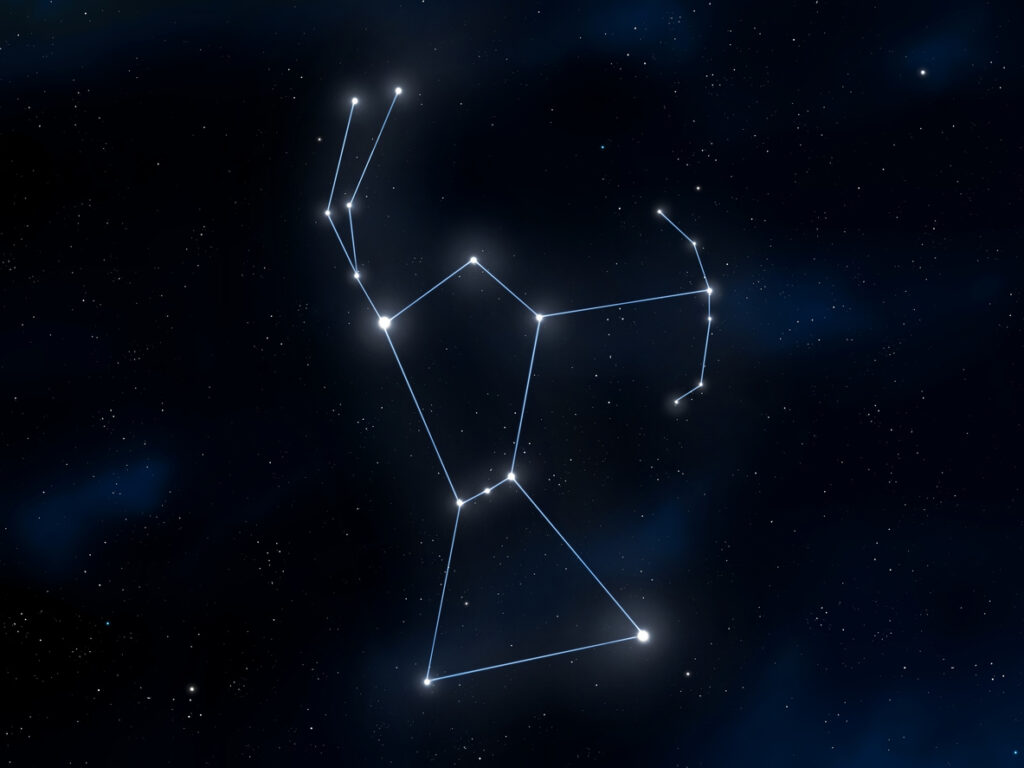
In ancient Egypt, the three stars of Orion’s belt represented Osiris, the god of the dead and the afterlife, and the whole constellation was tied directly to their beliefs about resurrection and the soul’s journey. The Lakota people of North America saw the same stars as a hand, part of a larger story about a young man who lost his arm. Meanwhile in Finland, the belt stars were known as the scythe of Väinämöinen, a mythological figure central to Finnish folklore, so the same three points of light have carried completely different meanings across dozens of separate traditions.
2. The Big Dipper is a bear, a plough, and a coffin.
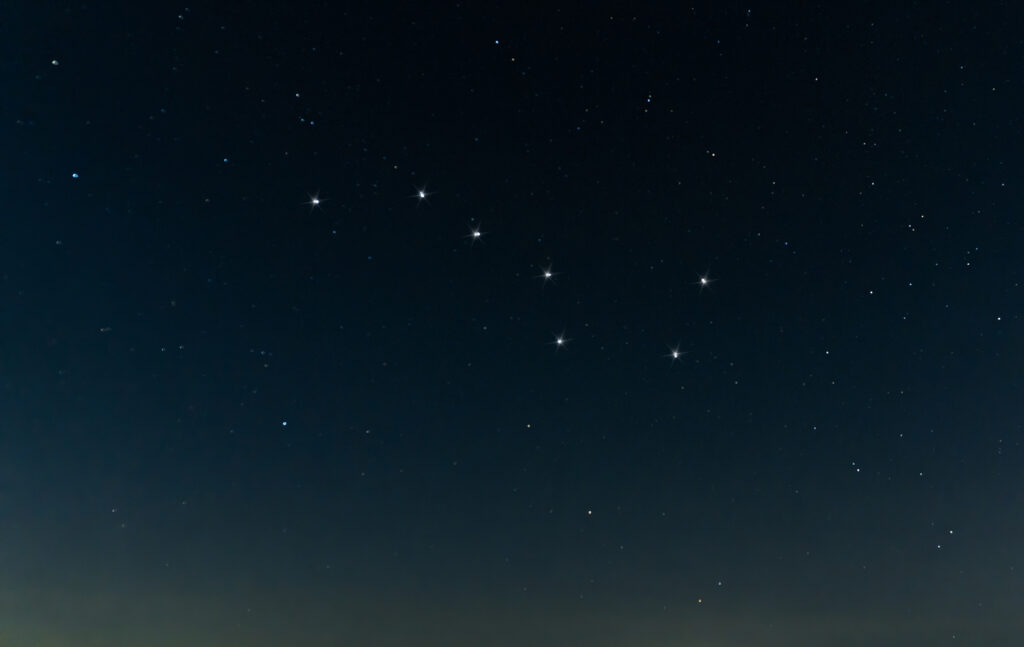
In Western tradition it’s usually described as either a plough or part of Ursa Major, the great bear, but Arab astronomers historically divided the same stars into a completely separate picture, seeing the bowl as a coffin being followed by three mourning daughters. In Hindu astronomy the seven stars represent the Saptarishi, the seven great sages of ancient India, each one named after a revered figure in Vedic tradition. It’s one of the most recognisable patterns in the sky, and somehow every culture that looked at it saw something entirely different.
3. The Southern Cross meant something else long before Europeans named it.
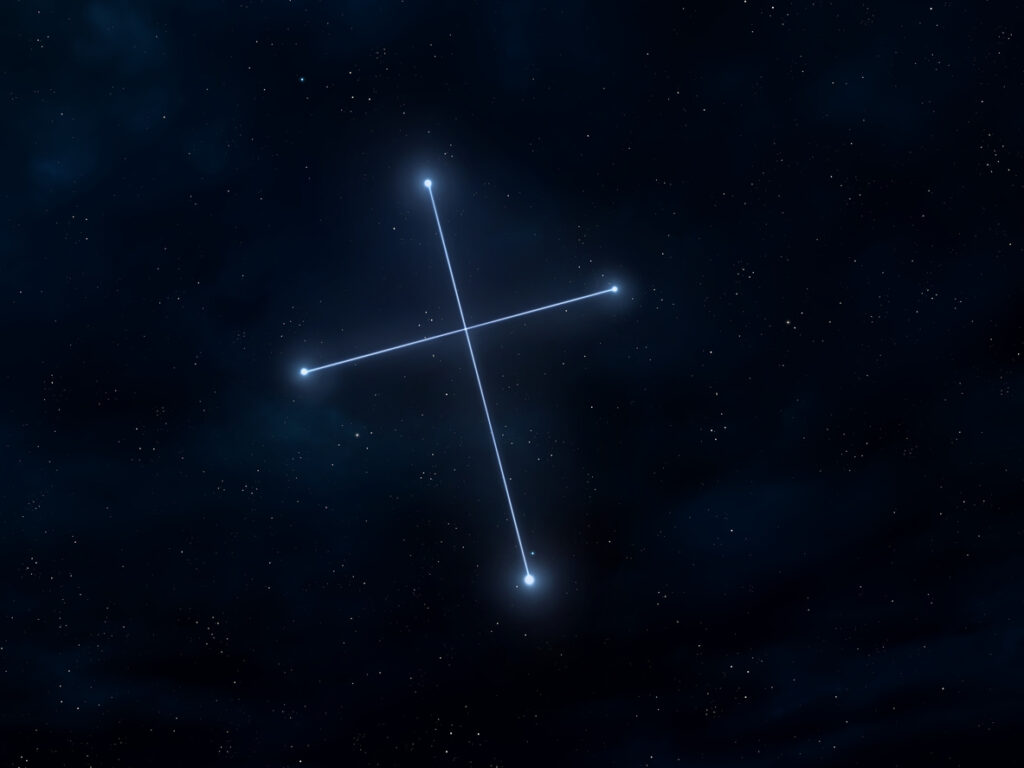
Aboriginal Australians have one of the oldest continuous astronomical traditions on Earth, and their relationship with the Southern Cross is far more layered than the name Europeans gave it in the 16th century. Some groups saw it as the footprint of a giant emu, while others used it as a practical navigation and seasonal calendar. The Maori of New Zealand called it Te Punga, meaning the anchor because it holds position in the southern sky in a way that made it genuinely useful for navigation across the Pacific.
4. What we call Scorpius, Polynesians turned into a fishhook.
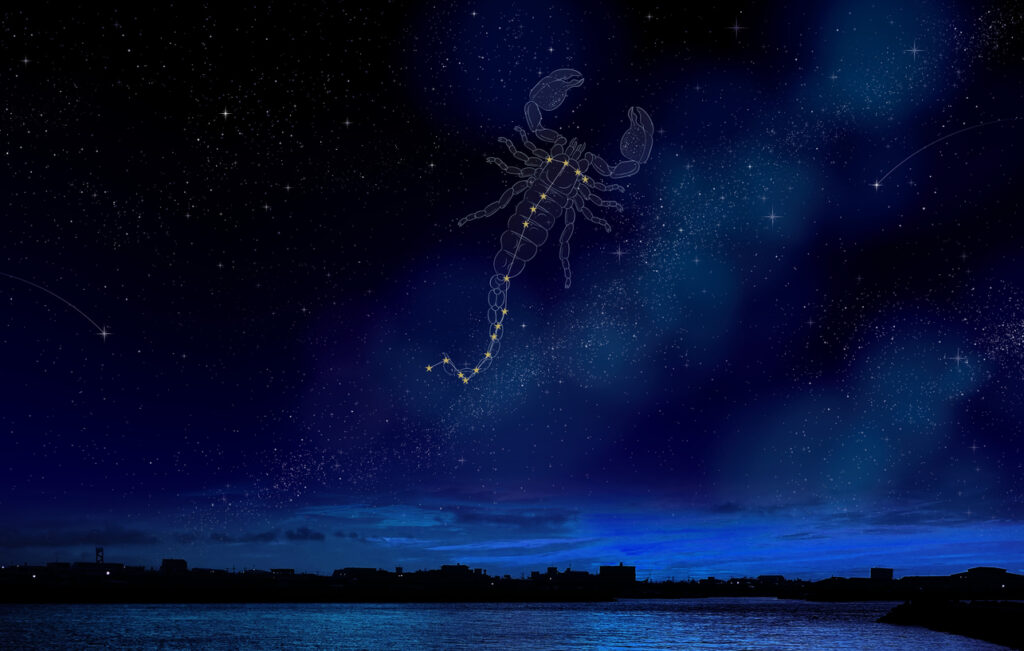
The long curving tail of Scorpius was seen by many Polynesian cultures as the great fishhook of Maui, the demigod who according to legend used it to pull the islands of Hawaii and New Zealand up from the ocean floor. The shape genuinely does look like a hook, and the story attached to it made the stars meaningful in a very immediate, geographic way. The Western name and mythology attached to a scorpion from Greek legend would have been completely foreign to anyone navigating the Pacific by those same stars.
5. Leo the lion was a lion in Mesopotamia too, but for different reasons.
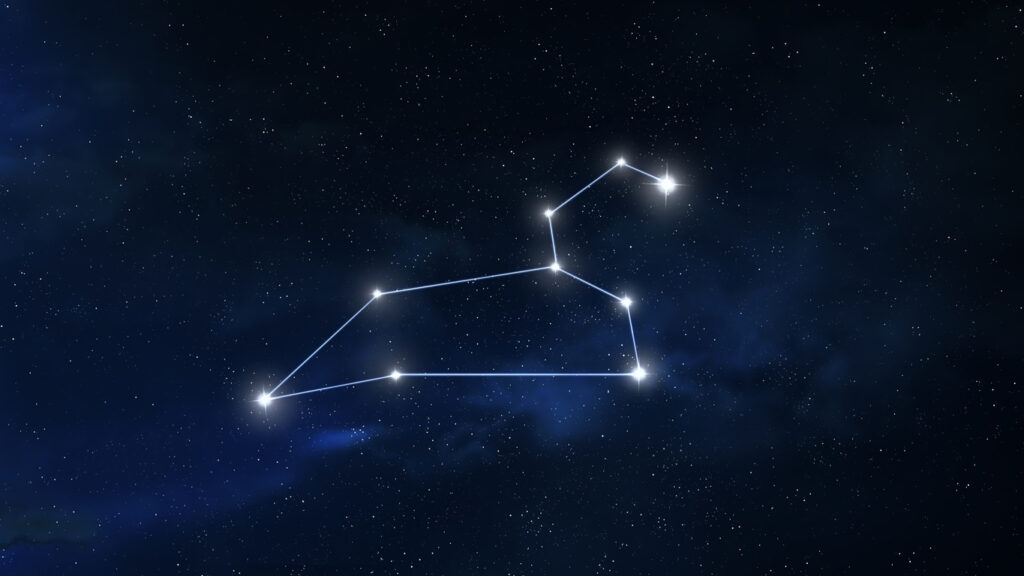
The Babylonians also saw a lion in roughly the same part of the sky, which makes Leo one of the rare cases where separate cultures landed on similar imagery, but the reasoning was different. For Babylonians, the lion represented the fierce heat of summer and was tied to the sun’s position during the hottest months of the year rather than any mythological figure. The Persian tradition connected the same stars to a royal symbol of power, so while the animal was consistent the meaning shifted considerably depending on who was looking.
6. Gemini’s twins are something else entirely in Chinese astronomy.
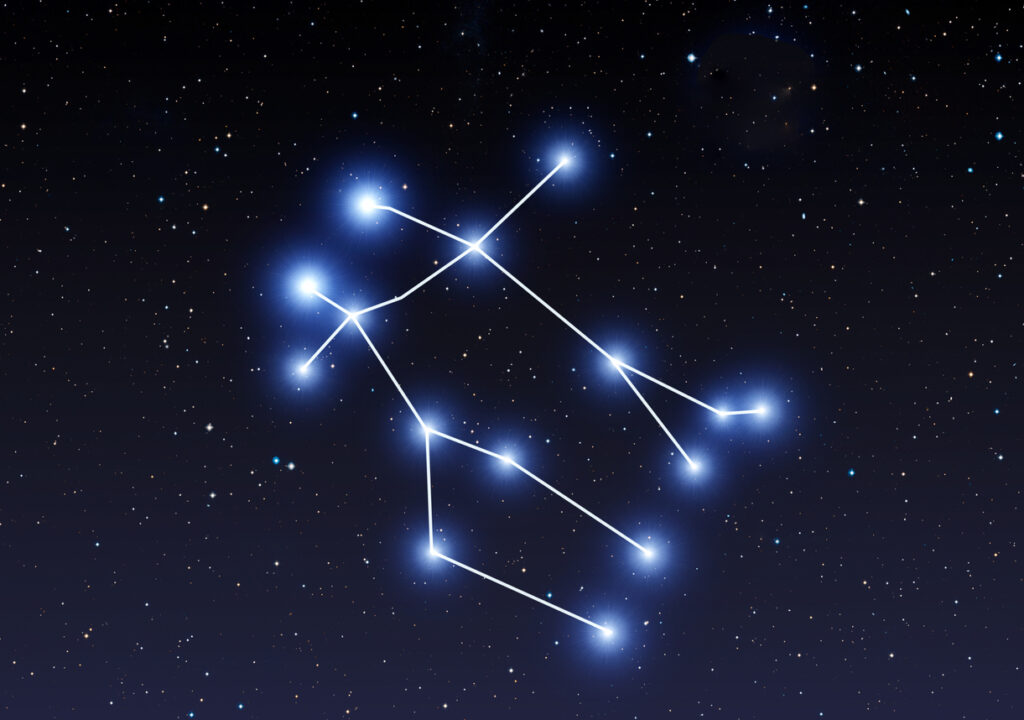
Chinese star mapping divided the sky into a completely different system of smaller asterisms called lunar mansions, so the stars of Gemini don’t correspond to twins at all in that tradition. The bright stars Castor and Pollux were part of a grouping called Jǐng, associated with the Well, one of the 28 lunar mansions used to track the moon’s movement through the sky. The practical function of the system was very different from the Greek mythological approach, and most of the familiar Western shapes simply don’t exist in Chinese astronomical tradition.
7. Cassiopeia was a seated woman to the Greeks but a moose to the Cree.
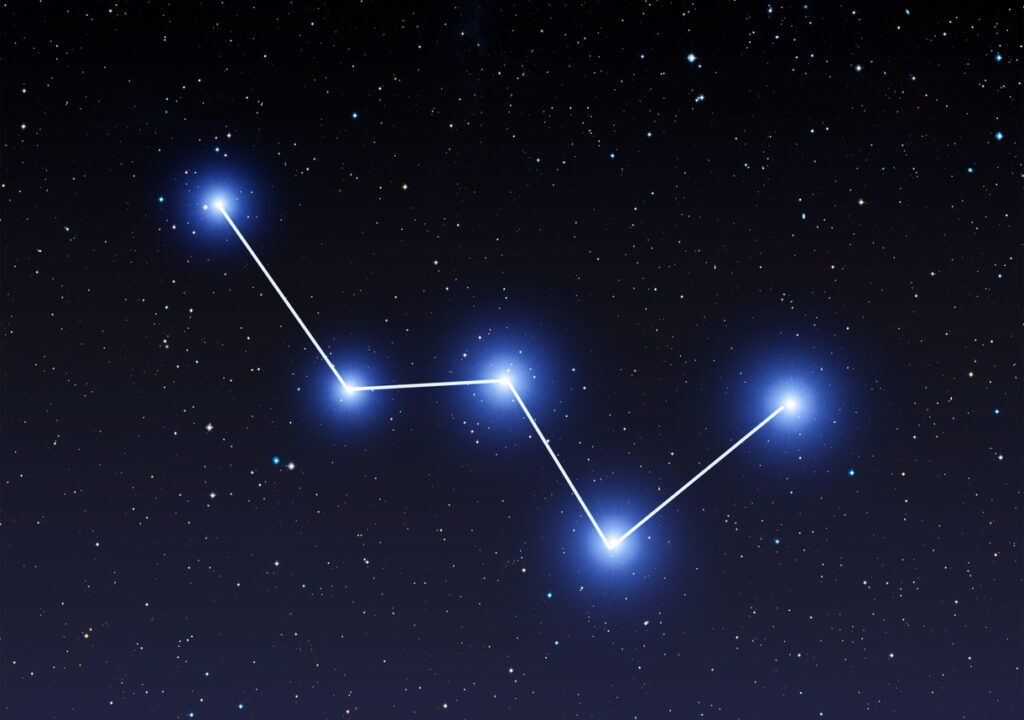
The W-shape of Cassiopeia is one of the easiest patterns to spot in the northern sky, and Greek mythology attached it to a vain queen seated on her throne as a punishment by the gods. The Cree people of North America saw the same stars as part of a much larger picture of a moose, with the W forming part of the animal’s body within a wider constellation that the Western tradition simply doesn’t recognise. It’s a good example of how the scale of constellation-making varied enormously, with some cultures drawing small, precise pictures and others connecting stars across huge stretches of sky.
8. The Pleiades star cluster carries hundreds of different names and stories.
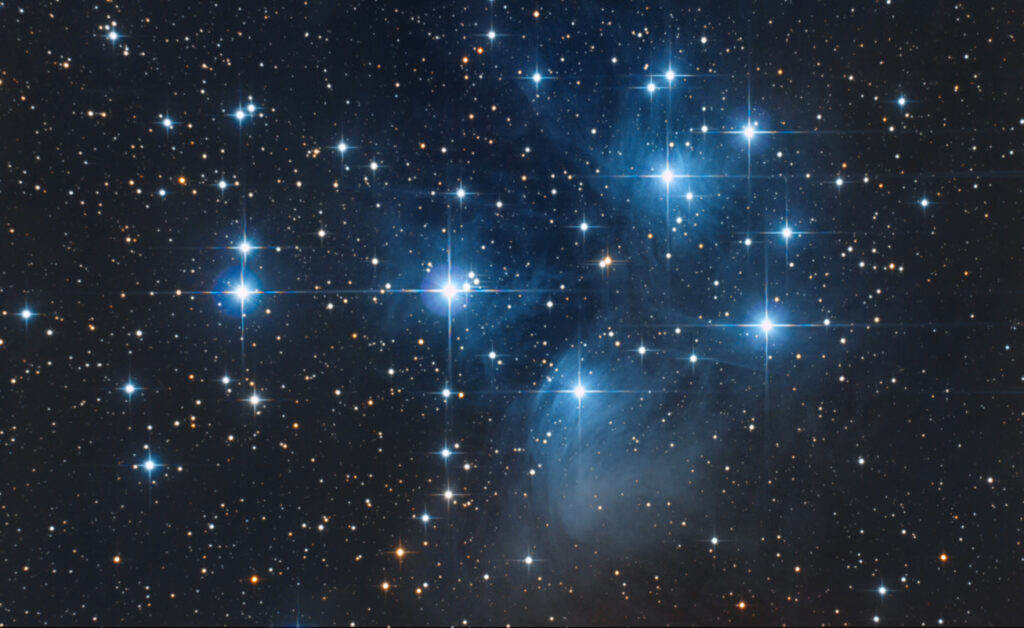
Technically a star cluster rather than a constellation, the Pleiades appear in the mythology of cultures on virtually every continent, which suggests people were noticing and naming them independently for tens of thousands of years. The Greeks called them the seven sisters, the Japanese know them as Subaru, Aboriginal Australians tell stories of the women being chased across the sky by the stars of Orion, and the Māori used their rising to mark the new year. No other group of stars has accumulated quite as many separate identities, and the fact that so many cultures noticed them says something about how consistently visible and striking they are.
9. Aquarius the water-bearer was a flood god in Babylonian tradition.
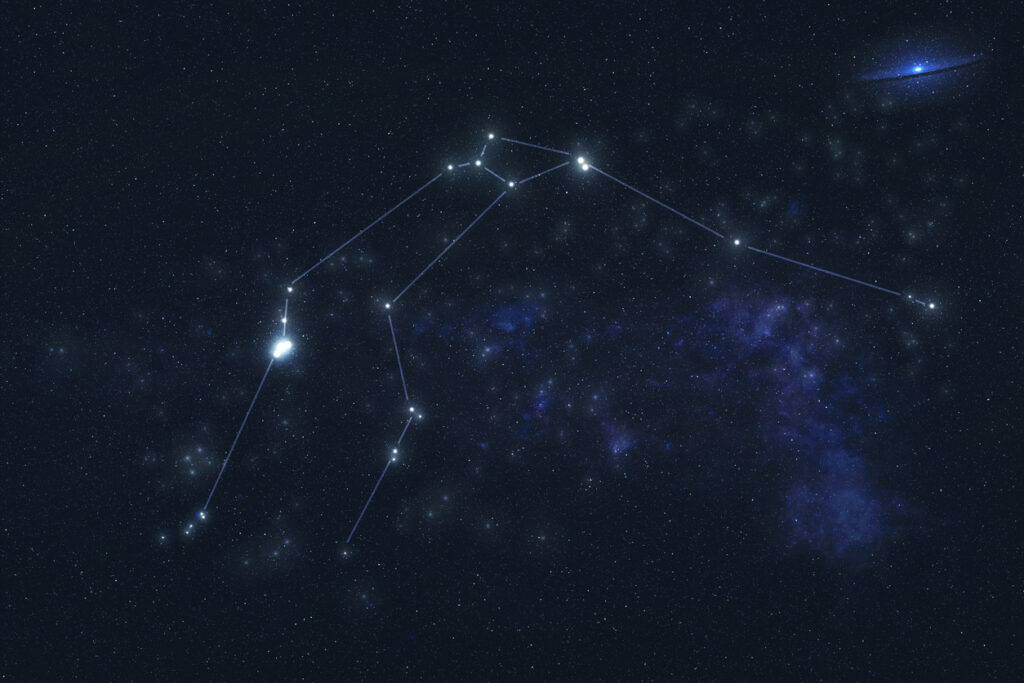
The Babylonians associated this part of the sky with their god Ea, who was specifically connected to water, wisdom, and the great flood that appears in their mythology long before similar stories showed up in other traditions. The image of a figure pouring water wasn’t arbitrary, as this section of the sky was known to Babylonian astronomers as the Sea, a broad region they associated with water across multiple constellations. The Greek version kept the water imagery but shifted it onto a specific human figure, changing the meaning considerably in the process.
10. Ursa Minor, the little bear, was a jackal in ancient Egypt.
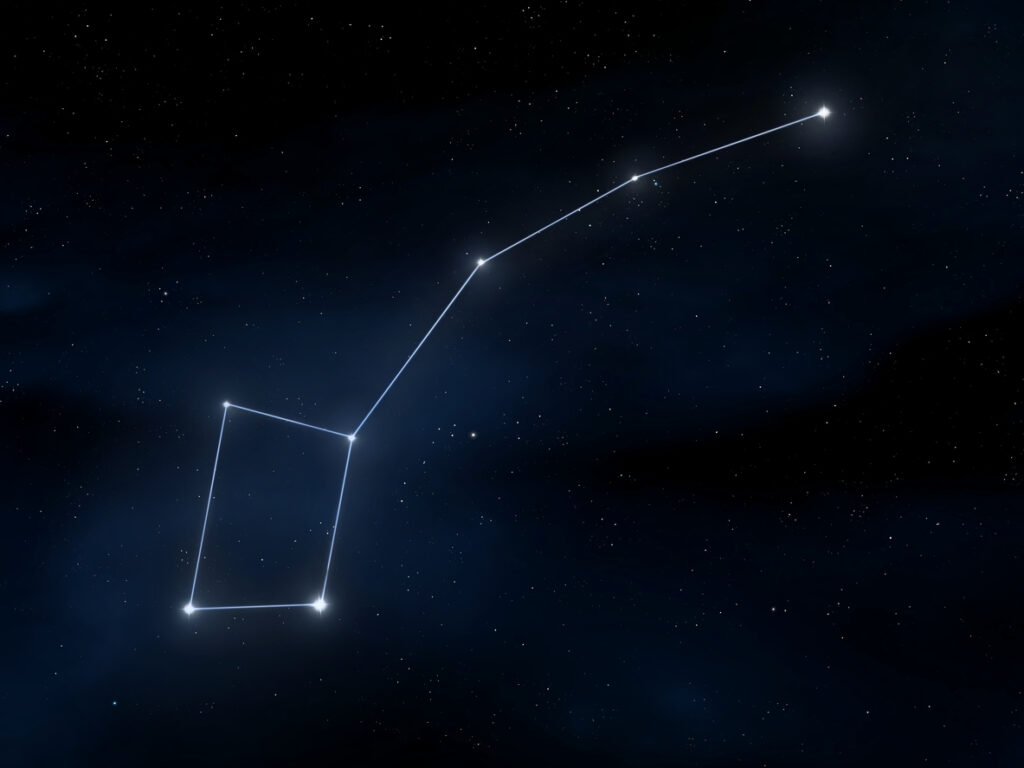
The stars that Western tradition groups as a small bear, with Polaris at the tip of its tail, were associated in some Egyptian astronomical traditions with a jackal connected to the god Set. The position of Polaris near the celestial pole made the whole area significant across many cultures, but what they imagined occupying that important spot varied widely.
For navigators and astronomers who understood that these stars barely moved across the night sky, the symbolism attached to them tended to reflect ideas about stability, guardianship, or divine authority, just expressed through completely different cultural frameworks.