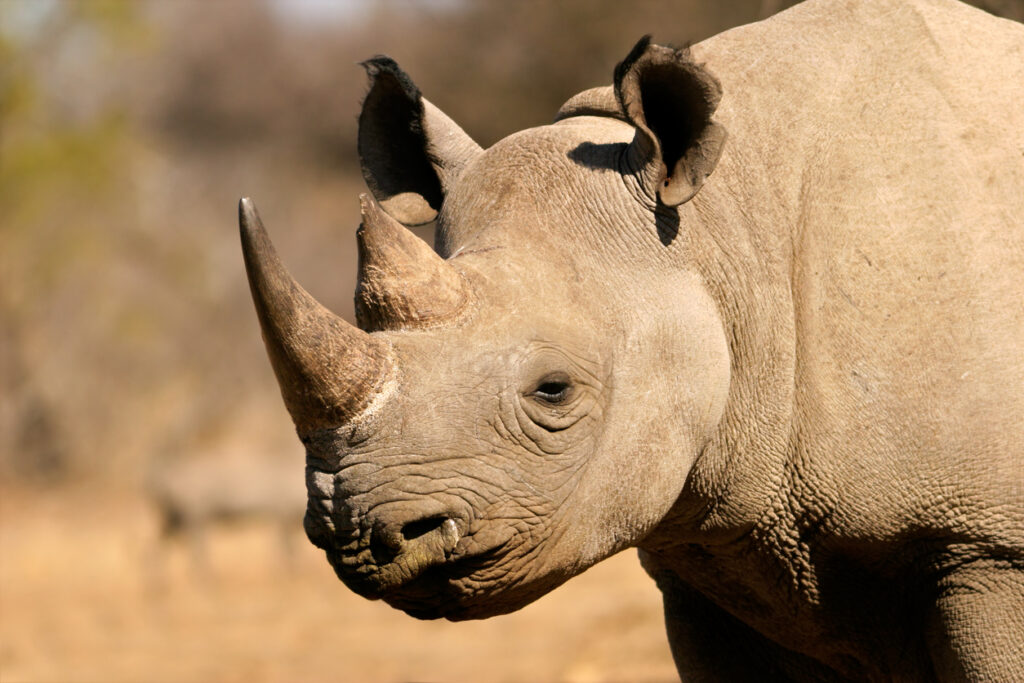
A rhino standing perfectly still in the grass might look like a peaceful, prehistoric relic, but that stillness is often just a front for a massive amount of hair-trigger tension. You’ve likely seen footage of them looking almost bored, but the reality is that they’re essentially a three-tonne tank with the temperament of a disturbed hornet.
Because their eyesight is famously rubbish, they don’t wait to see if you’re a threat; they operate on a “charge first, ask questions later” policy that can turn a quiet moment into a life-or-death situation in about two seconds. Thinking that a rhino is relaxed just because it isn’t moving is a dangerous mistake, as they’re one of the few animals that’ll take a perceived slight personally and have the physical power to do something about it.
A rhino can go from still to charging in seconds.
Rhinos often stand completely motionless, like they’re half-asleep, but that doesn’t mean they’re relaxed. They can switch from calm to explosive movement very fast, especially if something feels wrong to them. You won’t always get a long warning first, which is why that calm look can be misleading. This is part of how they survive in the wild. They save energy when they can, then move hard and fast when they need to. If you’re close enough to think you can read their mood, you’re already too close for comfort.
@huntingclipss When a 2-ton tank decides it doesn’t like your jeep 😳🦏 #Rhino #Wildlife #Safari #NatureIsMetal #RhinoCharge #WildlifeFacts #AfricaSafari #Conservation #Animals #NatureVideo ♬ original sound – huntingclipss
They don’t need to look angry to be on edge.
People expect danger to look dramatic, like teeth bared or loud noises. Rhinos don’t always do that. They can look quiet and “normal” while they’re actually tense and ready to defend themselves. A rhino doesn’t think like a person, where calm face means calm feelings. It’s reading the world in a simple way, like safe or not safe, threat or no threat. If it decides you’re a threat, the calm look disappears instantly.
Their eyesight isn’t great, so they make snap decisions.
Rhinos aren’t known for having brilliant eyesight. That means if they spot movement or hear something odd, they might not be able to see exactly what it is. They may react first and figure it out later. This is where trouble starts for humans. If a rhino isn’t sure what you are, it may choose the safest option in its mind, which is to drive you away fast. That’s not “bad behaviour”, it’s survival logic.
Their hearing and smell are strong, and they notice more than you think.
Even if a rhino looks like it’s ignoring you, it probably isn’t. Rhinos can pick up sounds and scents that people don’t notice. They can tell something is there long before you think you’ve been spotted. That’s important because people sometimes act like they can sneak closer if the animal isn’t looking right at them. With rhinos, that’s a mistake. They may already be tracking you, just not in a way you can easily see.
A “warning charge” can still break you.
Rhinos sometimes do short charges meant to scare something off. People hear that and think, oh, it’s only a warning. The problem is a warning charge from a rhino is still a massive animal running at you. Even if it stops short, you can fall, get trampled, or hit something while trying to escape. It doesn’t need to “mean it” to be deadly. At that size, any charge is serious.
Mothers are protective, and calves are easy to miss.
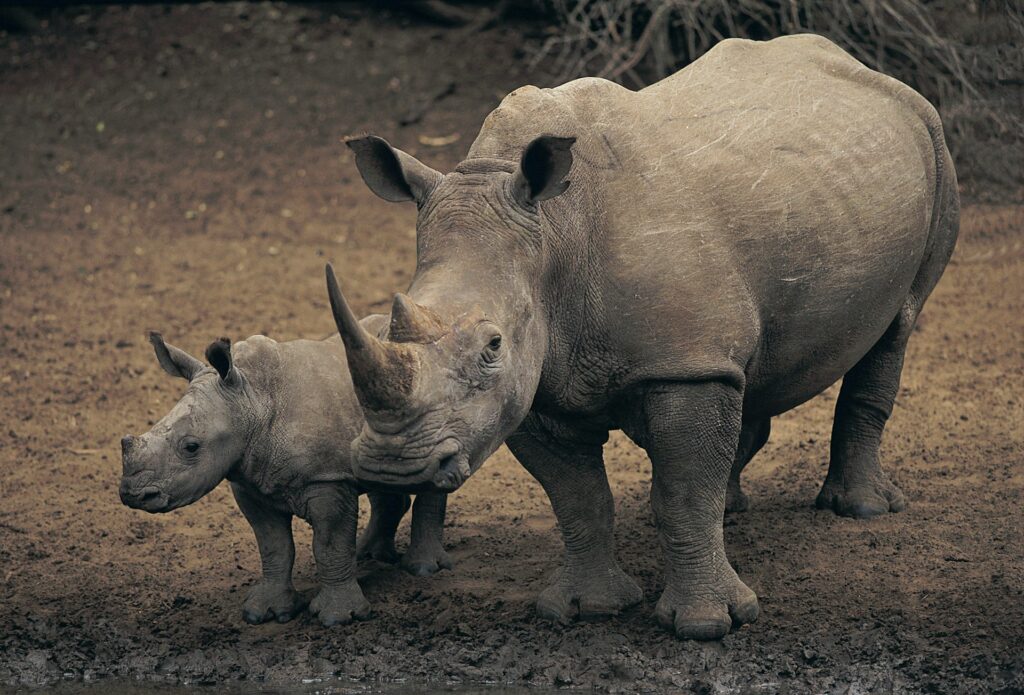
A rhino with a calf nearby can look calm, but the calm can be hiding a lot of tension. Calves can be tucked close, hidden by grass, or simply hard to notice if you’re not trained to look for them. If you get too close, the mother may react fast. In her mind, you’re not a tourist or a nice person with a camera. You’re a possible danger to her baby. That’s a situation where animals don’t take chances, and you shouldn’t either.
Rhinos defend space, not just themselves.
Some rhinos can be territorial, which means they defend areas they think belong to them. You can wander into that space without realising and suddenly become a problem in the rhino’s mind. It’s not personal, it’s instinct. This is another reason the calm look can be false comfort. A rhino can seem fine until you cross an invisible line, then it reacts. Humans don’t naturally read those boundaries, but rhinos live by them.
They’re tougher and faster than people assume.
Rhinos look heavy and slow, so people assume they can just jog away if needed. That’s not how it works. Rhinos can move surprisingly fast over short distances, and they can change direction better than you’d expect. You also can’t out-muscle them, out-stare them, or “stand your ground” like it’s some film scene. If a rhino decides to charge, your only smart move is distance and safety, not bravery.
@super_celebrity ##tiktok #fyp #animals #amazinganimals #animalworld ♬ original sound – Super_Celebrity
They can react badly to sudden movement and noise.
Fast movement, shouting, clapping, or running can set off a rhino’s threat response. People sometimes get excited, try to get a better view, or move quickly for a photo. That can look like danger to the animal. Even cameras can cause issues if people crowd, block paths, or flash lights. The rhino doesn’t know you’re trying to capture a memory. It just knows something weird and unpredictable is happening near it.
Calm doesn’t mean safe, it means unpredictable.
With wild animals, calm often just means they’re not reacting right now. It’s not a promise. Rhinos aren’t pets and they aren’t part of a show, so you can’t trust them to stay in the same mood for long. The safest way to think about a rhino is simple. Respect the distance, follow local rules, and assume it can hurt you even when it looks relaxed. That mindset keeps you alive, and it keeps the animal from being forced into a defensive situation.