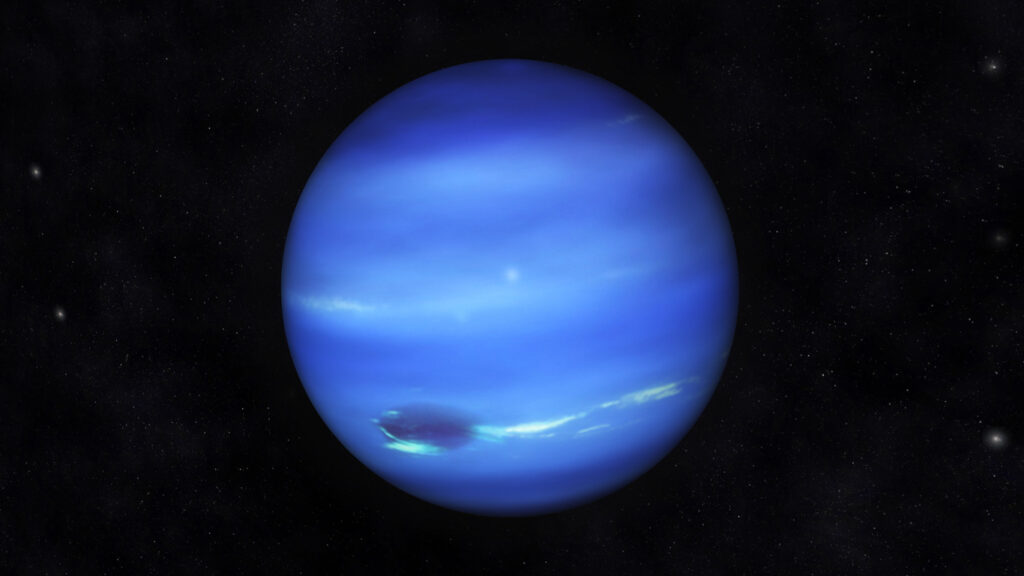
It sounds like something straight out of a big-budget sci-fi film, but the idea of diamonds falling from the sky is actually a very real phenomenon on some of our neighbouring planets. While we’re used to water cycle basics here on Earth, the extreme environments on massive gas giants like Jupiter and Saturn turn ordinary carbon into something much more valuable.
It’s a process driven by pure, crushing force and temperatures that would melt almost anything we’ve built. Scientists have spent years trying to figure out the exact physics of how a lightning strike in the upper atmosphere can eventually lead to a literal hailstorm of gems thousands of miles below. It’s a brilliant example of how the laws of nature can take the same basic elements we have here and turn them into something completely alien when the pressure is turned up.
Methane in the atmosphere breaks apart under extreme pressure.
Neptune and Uranus have atmospheres packed with methane, which is just carbon and hydrogen atoms bonded together. When you get about 8,000 kilometres below the surface, the pressure becomes absolutely immense, millions of times greater than what we experience on Earth.
At these crushing pressures and temperatures reaching thousands of degrees, the methane molecules can’t hold together anymore. The hydrogen and carbon atoms separate, and the carbon gets compressed so hard that it crystallises into diamond. It’s the same basic process that creates diamonds on Earth, just happening constantly in the middle layers of giant planets.
@astrokobi It rains diamonds on Uranus! #space #uranus #astronomy #physics #astrokobi ♬ Cornfield Chase – Hans Zimmer
The diamonds literally fall through the atmosphere like rain.
Once these diamonds form, they’re heavier than the surrounding gases, so gravity pulls them downwards through the planet’s interior. This creates what scientists genuinely call diamond rain, which is both accurate and sounds completely made up. The diamonds sink deeper and deeper, potentially accumulating in massive deposits around the planets’ cores. It’s not rain like we know it because the conditions are so extreme that nothing could survive there to witness it, but the process is essentially precipitation made of diamonds rather than water.
Scientists recreated this in laboratories using lasers and plastic.
Obviously, we can’t actually visit Neptune or Uranus to confirm this is happening, so researchers had to get creative. They used powerful lasers at facilities like SLAC National Accelerator Laboratory to create shock waves in plastic materials, briefly replicating the temperatures and pressures found inside ice giant planets.
In these experiments, they watched carbon atoms from the plastic form into tiny nanometre-sized diamonds. The plastic they used was polystyrene, basically fancy Styrofoam because it’s easier to work with in a lab than actual methane but behaves similarly under pressure.
Real diamond rain would create million-carat gems.
The laboratory experiments only lasted fractions of a second and produced minuscule diamonds, but inside Neptune and Uranus, this process continues for millions of years. Scientists estimate that diamonds could grow slowly over these timescales, potentially becoming metres wide and weighing millions of carats.
These wouldn’t be gem-quality diamonds you’d want in a ring, they’re just compressed carbon, but the sheer scale is staggering. The planets’ cores might be surrounded by thick layers of accumulated diamonds that have been raining down for the entire history of those worlds.
@everydaysteminist It RAINS DIAMONDS on other planets—really. 💎🤯 Deep in Neptune, extreme pressure breaks methane apart so carbon crystalises into diamond… then falls like rain. Want the science of diamond rain in just over a minute? Watch to the end. Why do you think it happens on ice giants and not here on Earth? 👇 #SpaceTok #Science #Astrophysics #Neptune #DidYouKnow ♬ original sound – Chloe | The Everyday Steminist
Adding oxygen makes diamond formation easier and more common.
Later experiments included oxygen in the mix, which more accurately reflects the actual chemical makeup of Neptune and Uranus. Turns out oxygen accelerates the whole process, making it easier for carbon atoms to split away from hydrogen and bond together into diamonds.
This discovery is important because it means diamond rain could happen at lower pressures and shallower depths than originally thought. It also suggests that diamond rain might occur on many more planets than just our local ice giants, particularly smaller exoplanets called mini-Neptunes that are common throughout the galaxy.
The diamond rain might explain Neptune’s weird magnetic field.
Neptune and Uranus have bizarrely complex magnetic fields that don’t behave like Earth’s neat north-south pole arrangement. Scientists think the falling diamonds could be dragging conductive ice and gas with them as they sink, creating currents of electrically conductive material.
These moving currents act like a dynamo, generating magnetic fields in the process. The diamond rain happening at relatively shallow depths could explain why these planets’ magnetic fields seem to originate from thin layers near the surface rather than deep in the core like Earth’s field does.
It might also explain why Neptune produces more heat than it receives.
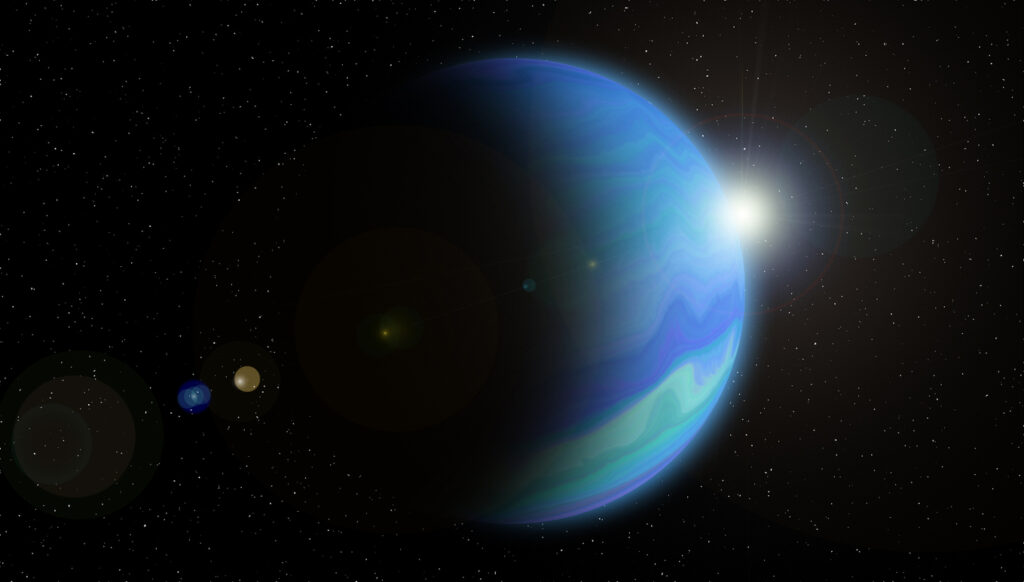
Neptune gives off more than twice the energy it absorbs from the Sun, which has puzzled scientists for decades. One theory is that these sheets of diamonds sinking through the planet generate gravitational energy as they fall, which converts into heat. It’s like dropping something heavy, the potential energy becomes kinetic energy and eventually heat through friction. If diamonds are constantly raining through Neptune’s interior, that’s a lot of energy being generated continuously, which could account for the excess heat the planet produces without needing another explanation.
You’ll never actually be able to collect these diamonds.
Before you start planning your diamond mining expedition to Neptune, the conditions where this happens are so extreme that no human or spacecraft we can currently build would survive. The temperatures exceed 2,000 degrees Celsius, the pressures are millions of times stronger than Earth’s atmosphere, and you’d need to be thousands of kilometres deep inside a gas giant with no solid surface to stand on.
Even if we could somehow reach these diamonds, they’d immediately vaporise once you brought them back to normal conditions. The diamond rain is real, it’s happening right now on planets in our solar system, but it’ll remain one of those cosmic wonders we can only study from a distance and recreate in tiny fragments in laboratories.