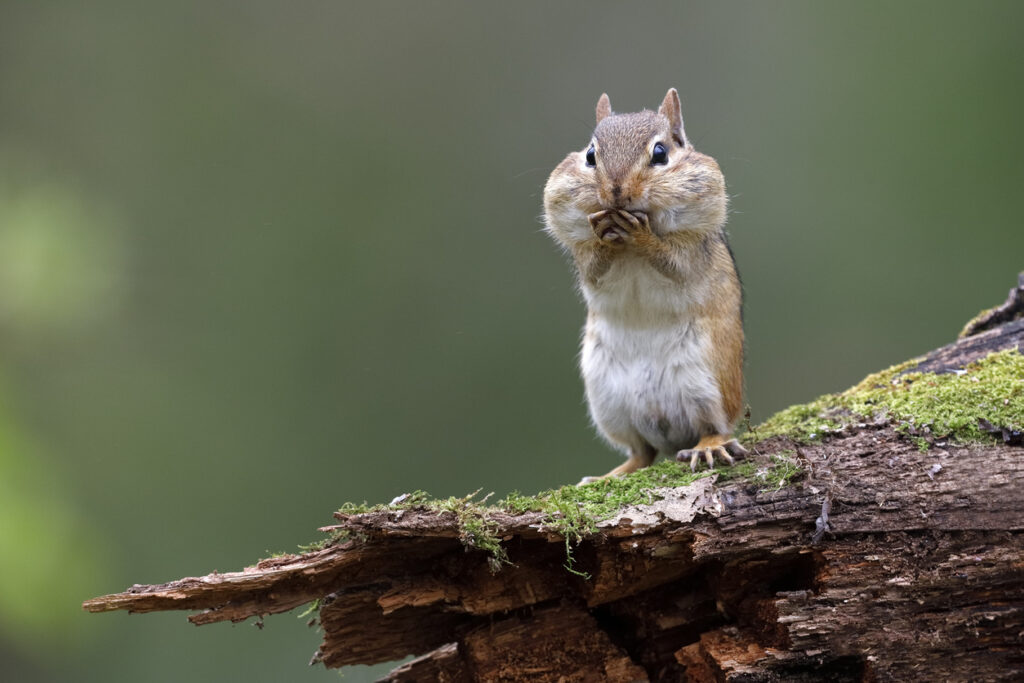
Chipmunks might look like tiny, twitchy woodland extras, but these little fluff-balls are absolute pros when it comes to speed, survival, and shameless food hoarding. They’re like nature’s cutest over-planners, darting around the forest with cheeks stuffed to the brim and a schedule only they understand. Don’t let their size fool you, though. Chipmunks are fast, feisty, and surprisingly strategic. Here’s why they’ve earned the title of the forest’s most adorable hoarders.
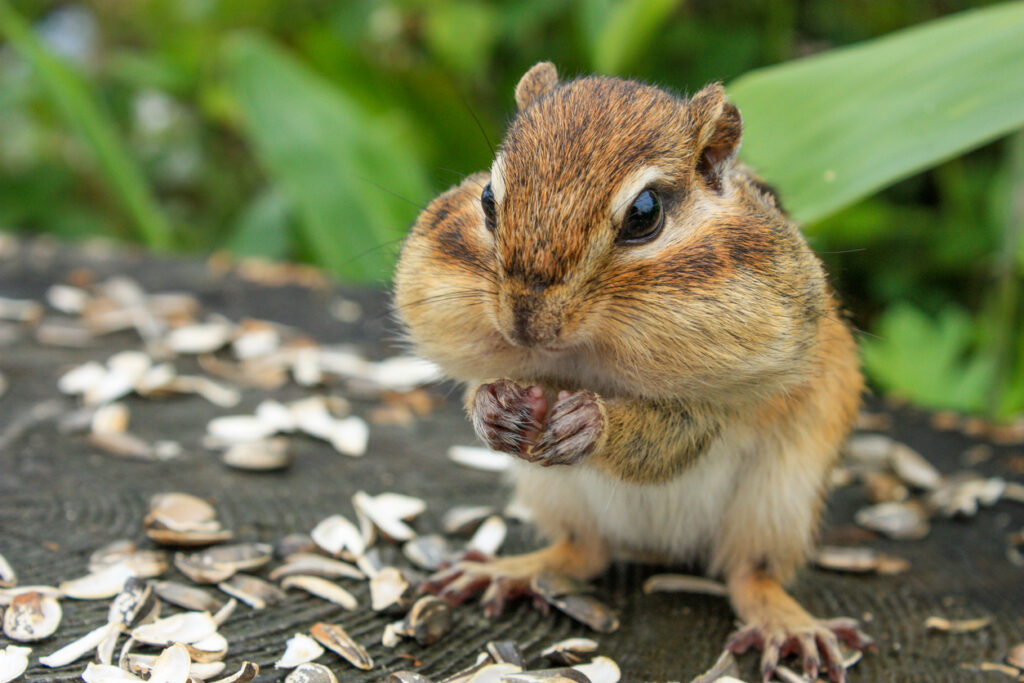
Those cheek pouches are basically nature’s shopping bags.
Chipmunks can stretch their cheek pouches to fit food that’s nearly the size of their entire head. They don’t just nibble a bit and move on, either. Instead, they load up like they’re prepping for winter every single day. Once full, they scurry back to their burrows to drop it off, then dash out for round two (or three, or six). These cheeks aren’t for show; they’re part of a finely tuned survival system.
They move like they’ve got espresso in their veins.
If you’ve ever seen a chipmunk in motion, you know how ridiculously fast they are. They dart, zigzag, and vanish into the underbrush before you can even point and say, “Hey, look!” This speed isn’t just for fun. It’s how they dodge predators and stash food without getting caught. They’re always moving like the stakes are high, which… in chipmunk world, they kind of are.
They’re solo hoarders with big underground kingdoms.
Unlike squirrels, chipmunks don’t share trees or have loud social circles. They’re solitary and private, digging intricate burrow systems with food chambers, nesting areas, and escape routes. These burrows can stretch up to 30 feet long, with hidden entrances and no real scent trail. It’s the chipmunk version of a panic room: stocked, quiet, and totally secret.
They hoard with wild dedication.
Come autumn, chipmunks turn into full-on food hoarding machines. They can collect and store thousands of nuts and seeds for the winter, and they remember exactly where they put them. Unlike squirrels who bury stashes all over, chipmunks usually keep their haul in one huge hoard at home. It’s a bit obsessive, but it works, and it’s their key to surviving the cold months.
They’re constantly multitasking.
Watch a chipmunk for five minutes, and it’s like seeing someone with 37 tabs open in their brain. They’re eating, scanning for danger, stuffing their face, dodging leaves, and mapping routes, all at once. This hyper-aware energy isn’t just charming, it’s essential. Chipmunks only live a few years, and in that time, they’ve got a whole survival plan to execute at warp speed.
That tail’s not just there to be cute.
While it does add to their fluff factor, a chipmunk’s tail is actually pretty useful. It helps with balance while climbing, acts as a signal flag when they’re startled, and provides warmth when they sleep. They might not be using it to fly or fight, but for a creature so close to the ground, that tail is multitasking just as much as they are.
They make alarm calls like tiny sentries.
Chipmunks have a surprisingly loud and complex alarm call system. If they spot a predator, whether it’s a hawk, snake, or neighbourhood cat, they’ll chirp out a warning that can alert nearby animals too. It’s one of the few moments they “share” their awareness, and it shows how finely tuned they are to survival. Cute, yes, but also strategic little forest guards.
They clean their burrows obsessively.
Chipmunks don’t just hoard, they clean. They’re known to remove shells, bones, and waste from their tunnels to keep things tidy and safe from attracting predators. That kind of housekeeping is rare in the wild. These little guys basically run their burrows like a no-nonsense woodland Airbnb. Clean, secure, and food-stocked.
They’re more common than you think.
Despite their stealth, chipmunks are widespread across North America and parts of Asia. If you’ve got trees, shrubs, and a few hiding spots, there’s a good chance one’s living nearby. You just haven’t caught them mid-dash yet. They blend in so well and move so quickly, you’ll often hear them before you see them. But once you do spot one, it’s like watching a nature documentary on fast-forward.
They make chaos look oddly lovable.
There’s something about the way chipmunks dart around, stuff their faces, and disappear again that’s just irresistibly charming. They’re little bundles of forest chaos, and it totally works for them. Behind every chipmunk is a well-oiled, slightly frantic survival plan. They’re tiny woodland hustlers who’ve figured out how to thrive by staying sharp, moving fast, and hoarding like pros, with cheeks that just won’t quit.