“Look at that bug!” is something most of us have said without a second thought, whether we’re pointing at a beetle, a fly, or a suspicious-looking speck on the windowsill. However, if you’re being scientifically accurate, not all bugs are bugs, and not all bugs are beetles. Confused? You’re not alone. There’s actually a pretty solid difference between true bugs and beetles, even though they often get lumped together in everyday conversation. Here’s how to tell them apart without needing a biology degree.
‘Bug’ means something specific in science.
In casual speech, “bug” can mean any small creepy-crawly. But in the science world, “true bugs” belong to a specific group called Hemiptera. That includes things like aphids, shield bugs, and water boatmen, but not beetles. So, while you might call a ladybird a bug, it’s technically not one. It’s a beetle. The word “bug” gets thrown around a lot, but in entomology, it has a very narrow meaning tied to certain shared features.
Beetles belong to their own group entirely.
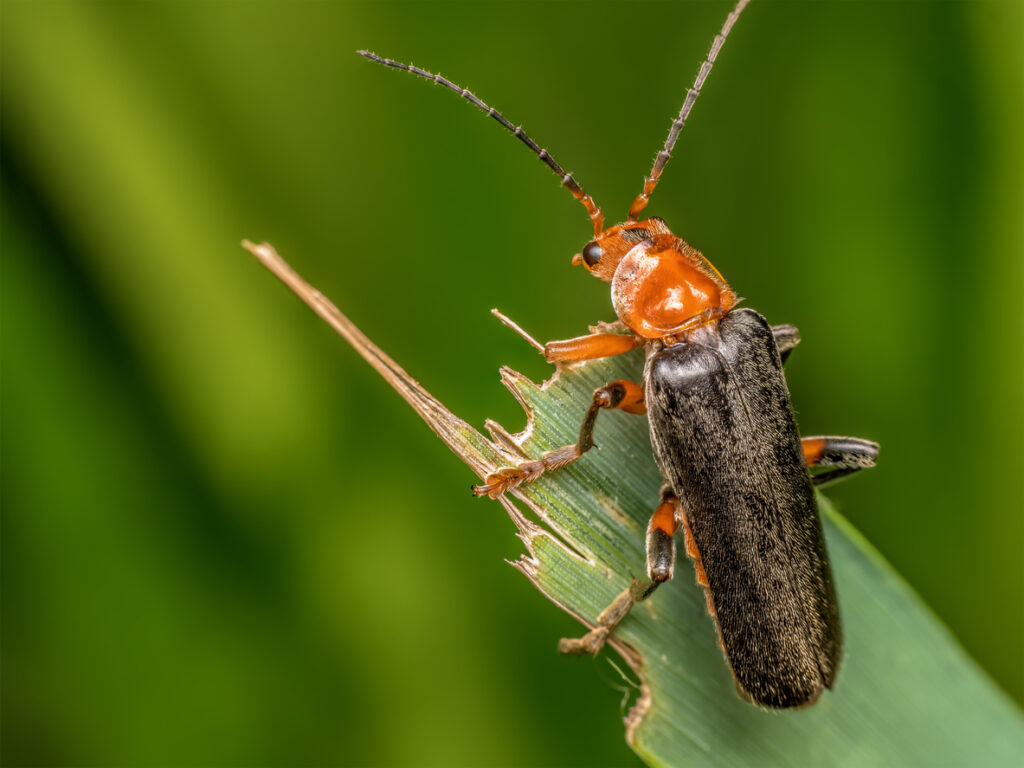
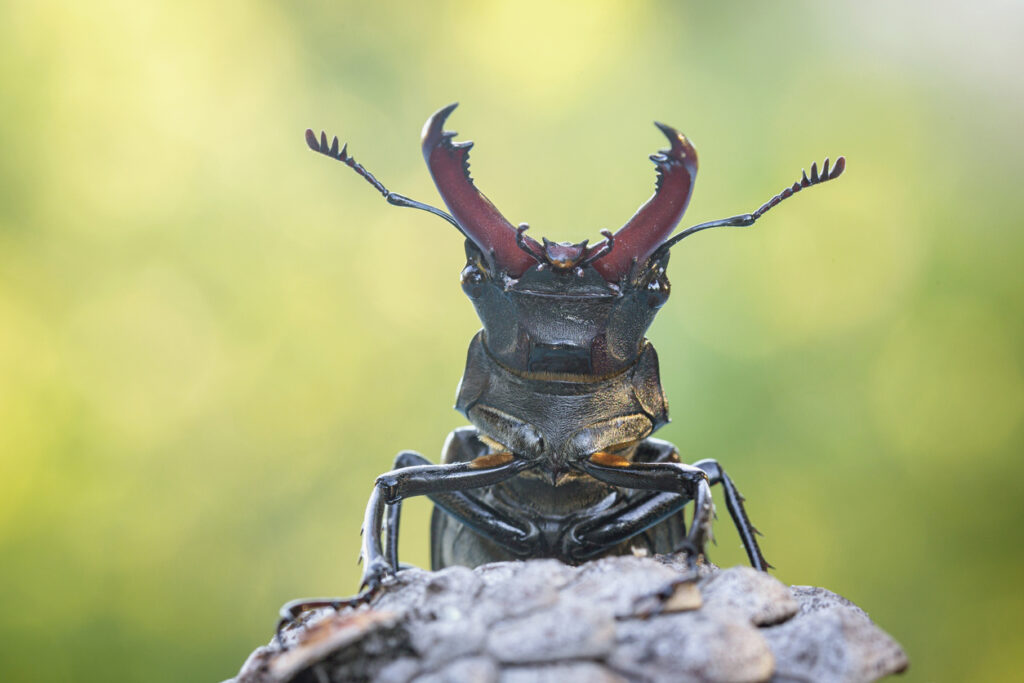
Beetles are classified under Coleoptera, which is the largest group of insects in the world. This group includes everything from dung beetles to stag beetles to weevils. They’re incredibly diverse, but still share some clear traits. So when you spot a shiny-bodied insect with hard wing covers and chunky legs, you’re probably looking at a beetle, not a bug—even if it seems “bug-like” to you at first glance.
True bugs have specialised mouthparts.
One of the key differences is in the mouth. True bugs have piercing-sucking mouthparts, almost like a little straw or needle, designed to suck sap or fluids from plants, other insects, or animals. Beetles, on the other hand, usually have chewing mouthparts more suited for munching leaves, wood, or other insects. So if it’s drinking its meal, bug. If it’s chomping it, probably a beetle.

Beetles have hard wing covers.
The classic beetle look includes a pair of tough outer wings called elytra. These protect the delicate flying wings underneath and often give beetles their shiny or shell-like appearance. True bugs don’t have this. Instead, they have wings that are half tough and half membranous, or sometimes fully soft. It’s a subtle detail, but once you know to look for it, it’s a big giveaway.
Bugs often have a flat or shield-like shape.
True bugs tend to be more flattened in appearance, especially when viewed from above. Think of bed bugs or shield bugs—there’s a kind of broad, plate-like look to them. Beetles come in a wider range of shapes, but many are domed or oval, and they look more like tiny tanks than flattened creatures. Shape alone isn’t always a guarantee, but it’s one more clue.
Bugs often produce a distinct smell.
Some true bugs, especially shield bugs, release a very noticeable odour when they’re disturbed. It’s a defence mechanism that lets predators know they’re not a tasty snack. While some beetles do also emit smells, it’s much more common (and pungent) in true bugs. If you’ve ever accidentally squashed a green shield bug, you’ll know exactly what we’re talking about.
Beetles undergo complete metamorphosis.
Beetles go through four stages: egg, larva, pupa, and adult. Their larvae often look like little worms or grubs and can be totally different appearance from the adults. True bugs skip the pupa stage. They go from egg to nymph to adult, and the nymphs already look like mini versions of the grown-up, just smaller and wingless. It’s a very different life cycle.
Bugs can walk on water—literally.
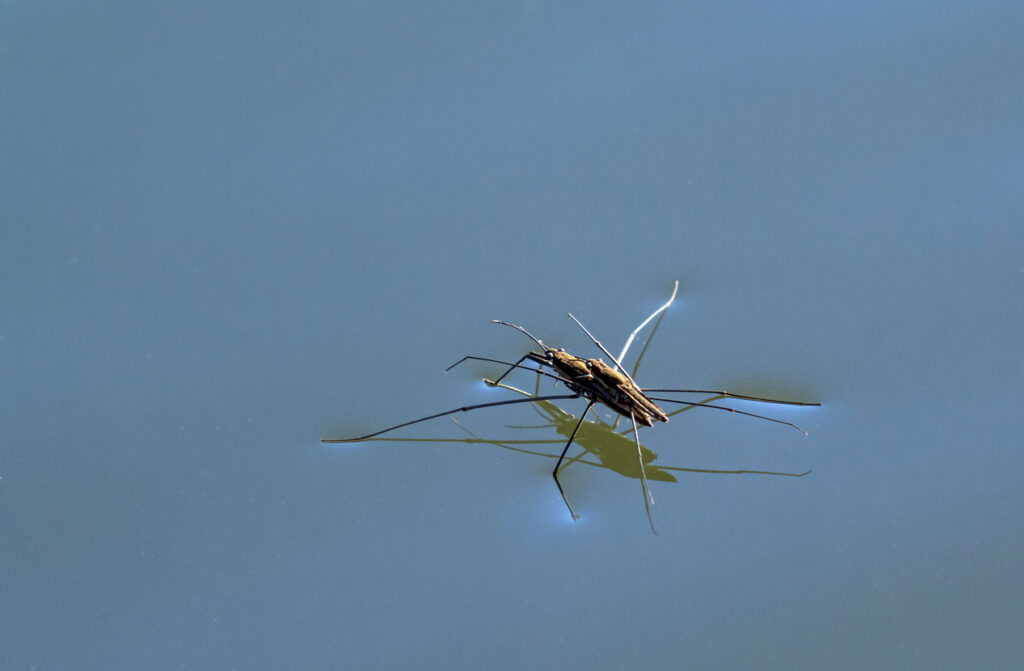
Some true bugs, like water striders and pond skaters, are known for walking on the surface of water. They’ve got specialised legs that distribute their weight and repel water. Beetles don’t usually have this trick. Some beetles can swim underwater (like diving beetles), but they don’t have the same ability to balance on the surface like true water bugs do.
Beetles are more armoured.
Beetles have tough exoskeletons and hard wing covers that give them a protective shield-like feel. You can often hear a little “click” when they land or try to scuttle away. Bugs, in contrast, are a bit more delicate. They’re often softer-bodied, especially in the wings, and can be squashed a lot more easily. So beetles might bounce—bugs tend to squish.
True bugs tend to live on plants.
Many true bugs are plant feeders, sucking sap from leaves, stems, or roots. They’re often found clinging to the underside of leaves or crawling across soft growth. Beetles have a more varied diet and can be found anywhere—on plants, under bark, in dung, in stored food, or even swimming in ponds. They’re generalists, while bugs are more niche.
Beetles include some garden heroes.
Ladies and gents, the ladybird is not a bug—it’s a beetle, and it’s one of your best mates in the garden. It eats aphids like nobody’s business and looks adorable doing it. Many beetles, like ground beetles and rove beetles, help control pests naturally. While some bugs also help, beetles generally pull more weight when it comes to beneficial insect status.
Some bugs bite, and it’s not always friendly.
Certain true bugs, such as assassin bugs or bed bugs, can deliver a proper bite. Some even feed on blood or other insects using their needle-like mouthparts. Beetles can bite too, especially big ones with strong jaws, but it’s less common. If something’s left a sharp, stingy little poke on your arm, and it wasn’t a wasp, there’s a good chance it was a bug, not a beetle.
Not all beetles are helpful.
As handy as ladybirds and ground beetles are, others can be a nightmare. Vine weevils, carpet beetles, and biscuit beetles are all beetles that cause damage either in the garden or the home. It just goes to show that “beetle” doesn’t automatically mean beneficial. You still have to know what you’re dealing with, and not all beetles deserve a free pass.
In short: all beetles are insects, but not all insects are bugs.
This is the key point. Beetles are a massive and distinct group of insects. “Bugs,” in the scientific sense, only cover a very specific subset. So while every bug is an insect, and every beetle is an insect, bugs and beetles are not the same thing. So next time someone yells, “Look at that bug!” you’ll be able to smile and (gently) ask, “Do you mean a true bug, or is that actually a beetle?” You might just spark a fun conversation instead of a squish.