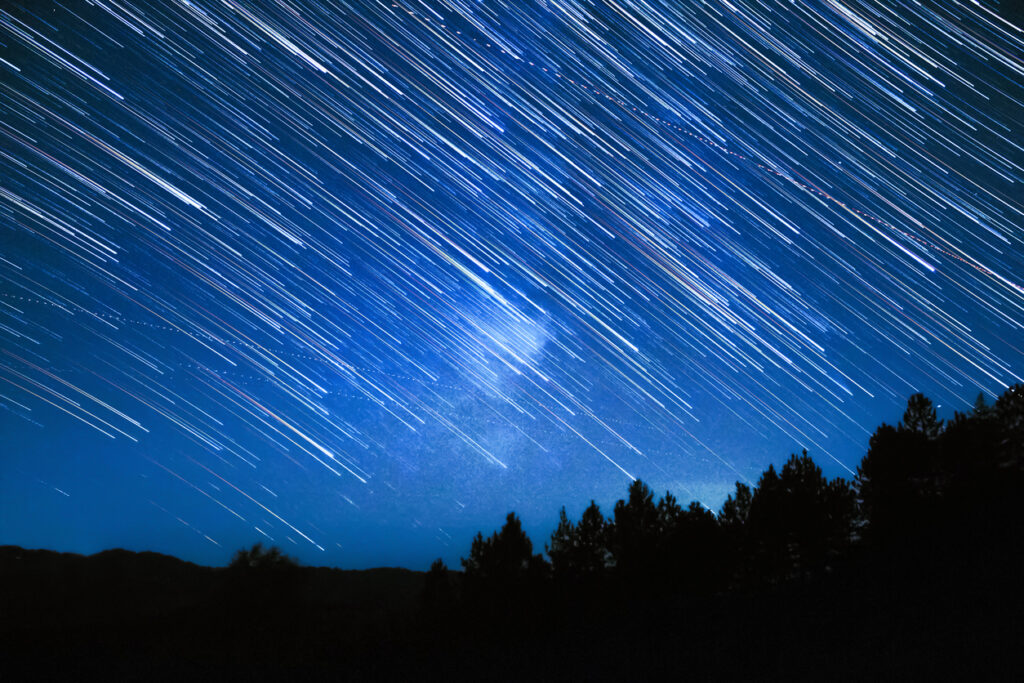
The Leonids are back, and if you’ve never bothered looking up at a meteor shower before, this is a decent one to start with. It peaks in the early hours of November 17th, which means you’ll need to be outside between midnight and dawn to catch the best of it. You’re looking at around 10 to 15 meteors per hour, which isn’t loads, but enough to make it worth wrapping up warm and having a look. These aren’t just any old shooting stars, either. The Leonids are fast, bright, and sometimes produce proper fireballs that light up the whole sky.
It peaks on the night of November 16th into 17th.
The best time to see the Leonids is in the early hours of Sunday 17th November, specifically between midnight and dawn. That’s when the most meteors will be visible because that’s when the radiant point in the constellation Leo is highest in the sky. Yes, that means staying up late or getting up stupidly early.
You can see meteors on the nights either side of the peak too, just fewer of them. If the 17th is cloudy, or you can’t manage it, try the night before or after. The shower’s active for a few days around the peak, so you’ve got options if the weather’s rubbish on the main night.
You need to be somewhere properly dark.
City lights absolutely ruin meteor watching because they wash out the fainter streaks. You need to get somewhere properly dark, away from streetlights and buildings. In the UK, that usually means heading out to the countryside, a dark sky reserve, or at least a local park away from main roads.
The darker your location, the more meteors you’ll see. What looks like a disappointing five meteors an hour in town could be 15 in a properly dark spot. It’s worth the effort to drive somewhere darker if you can; otherwise you’re missing most of the show.
Face east and lie flat on your back.
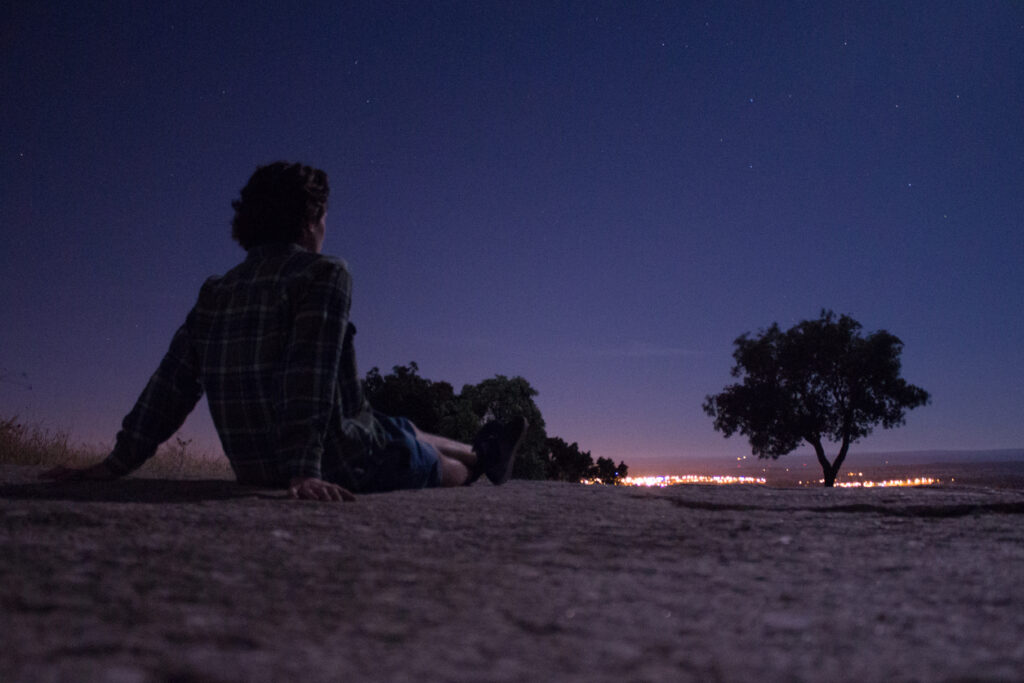
The best position for watching is lying flat on your back with your feet pointing east. You don’t need to stare directly at the constellation Leo, where the meteors radiate from. Actually, you’ll see brighter, longer trails if you look slightly away from the radiant point.
Bring a camping mat, sleeping bag, or at least a thick blanket because lying on cold November ground gets uncomfortable fast. A reclining chair works too. The point is, you want to see as much sky as possible without craning your neck, so lying down is definitely the way to go.
Give your eyes 30 minutes to adjust.
When you first get outside, you won’t see much. Your eyes need proper time to adjust to the darkness, and that takes about half an hour. Don’t check your phone during this time because the bright screen resets your night vision and you have to start over.
This waiting period puts people off, but it’s a must. After 30 minutes in the dark, you’ll suddenly start seeing way more meteors. What looked like an empty sky becomes busy with shooting stars. Patience pays off massively with meteor watching.
The moon might be a problem.
The moon’s brightness can wash out fainter meteors, just like light pollution does. Check what phase the moon’s in on the 17th and whether it’ll be up during prime viewing hours. If it is, try to position yourself so something blocks it, like a building, tree, or your car.
Even a partial moon can affect viewing, so shielding yourself from it helps. You’re not trying to block out the whole sky, just reduce the moon’s glare, so your eyes can adjust properly to the darkness and catch those fainter streaks.
These meteors are ridiculously fast.
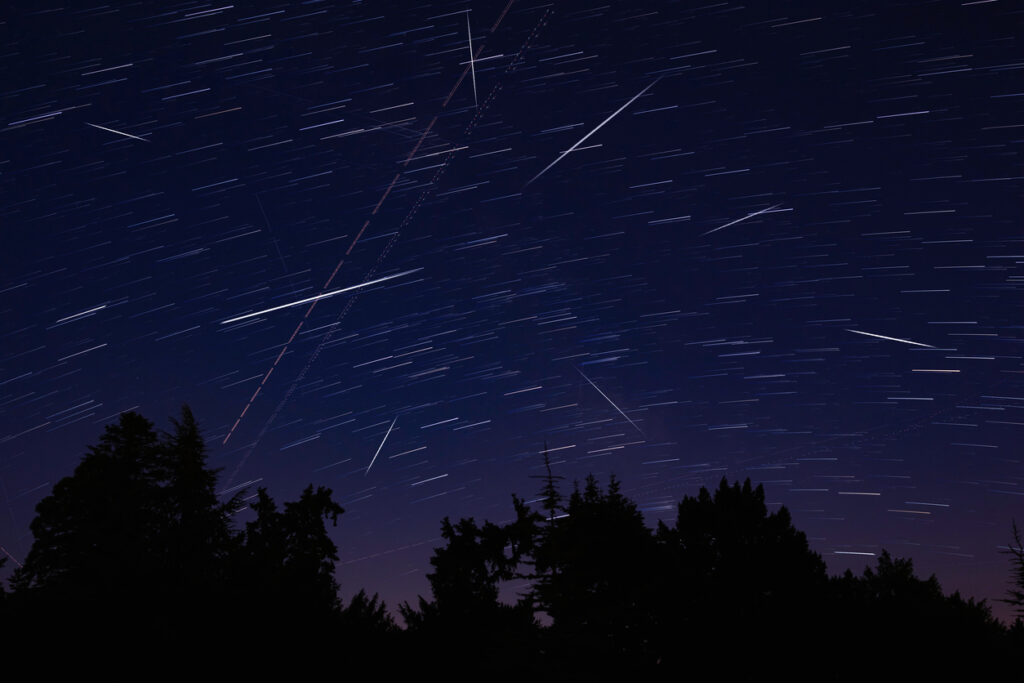
Leonid meteors hit our atmosphere at about 44 miles per second, which makes them some of the fastest meteors you can see. That speed is what makes them so bright and spectacular. They’re not lazy streaks drifting across the sky, they’re quick flashes that are over in a second.
Because they’re so fast, they often leave persistent trails that glow for a few seconds after the meteor’s gone. Some produce fireballs, which are exceptionally bright meteors that can briefly light up the landscape. These are the ones people remember and talk about for years.
They come from an old comet.
The Leonids are debris from Comet Tempel-Tuttle, which orbits the Sun every 33 years. Each time it swings past, it sheds bits of ice and rock. When Earth passes through that trail of debris in November, those tiny fragments burn up in our atmosphere and create the light show we see.
Most of the bits burning up are only the size of a grain of sand or a pea. It’s mad that something so small creates such a bright flash, but that’s down to the incredible speed they’re travelling. The friction with our atmosphere heats them up to thousands of degrees instantly.
The Leonids have produced incredible storms in the past.
In 1833 and 1966, the Leonids produced meteor storms where thousands of meteors per hour filled the sky. The 1966 storm was so intense that people described it as looking like rain made of fire. Meteors were falling so fast you couldn’t count them, just watch in amazement.
We won’t see anything like that this year because those storms only happen when Earth passes through a really dense part of the comet’s debris trail, which happens roughly every 33 years. But knowing the Leonids have that potential makes them feel special even in quieter years.
You don’t need any equipment.
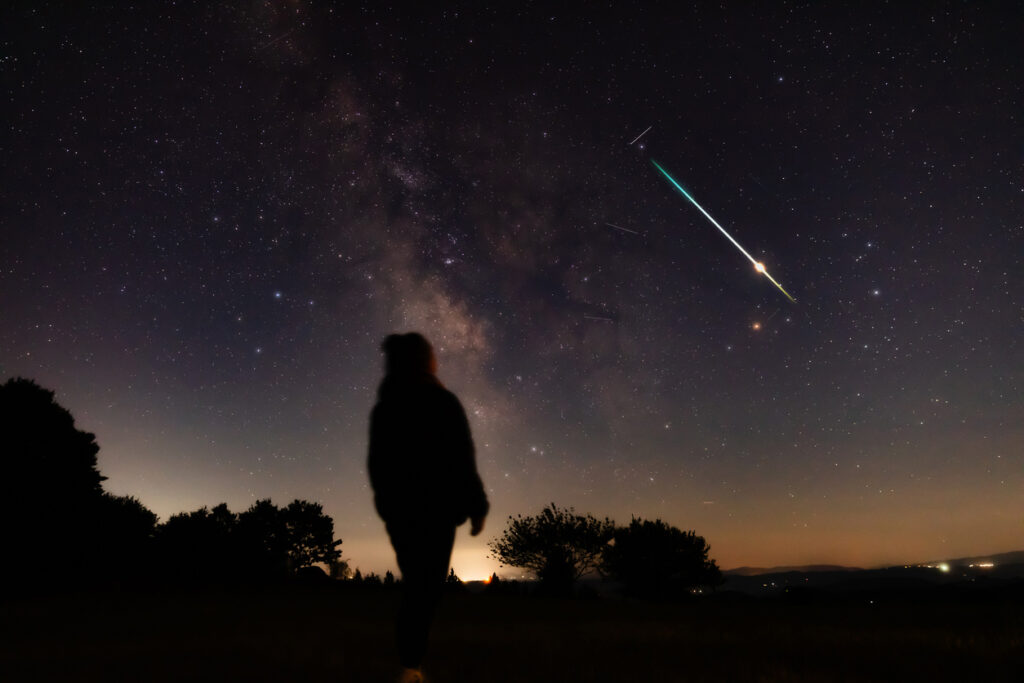
Meteor watching is brilliantly simple because you don’t need telescopes, binoculars, or any special gear. Your naked eyes are actually better than any equipment because you need to see a wide area of sky. Telescopes and binoculars give you a tiny field of view, which means you’ll miss most meteors.
All you need is warm clothes, something to lie on, maybe a flask of tea or hot chocolate, and patience. That’s it. It’s one of the most accessible types of astronomy because there’s zero barrier to entry. Just go outside and look up.
Weather will make or break it.
Cloud cover is the meteor watcher’s enemy. Even thin cloud can block meteors completely, so check the forecast before you commit to staying up or driving somewhere. Look for forecasts specifically mentioning cloud cover at night, not just whether it’ll rain.
November weather in the UK is pretty hit and miss, so don’t get your hopes up too much. If it’s cloudy on the peak night, check the nights either side. The shower’s active for a few days, so you might get lucky with a clear gap. And if this year’s a washout, the Leonids come back every November, so there’s always next year. The beauty of annual meteor showers is they’re reliable. The weather, unfortunately, isn’t. But when you do get a clear night, and you’re lying there watching bright streaks of ancient comet debris burning up above you, it’s genuinely worth the effort of staying up past your bedtime in the cold.