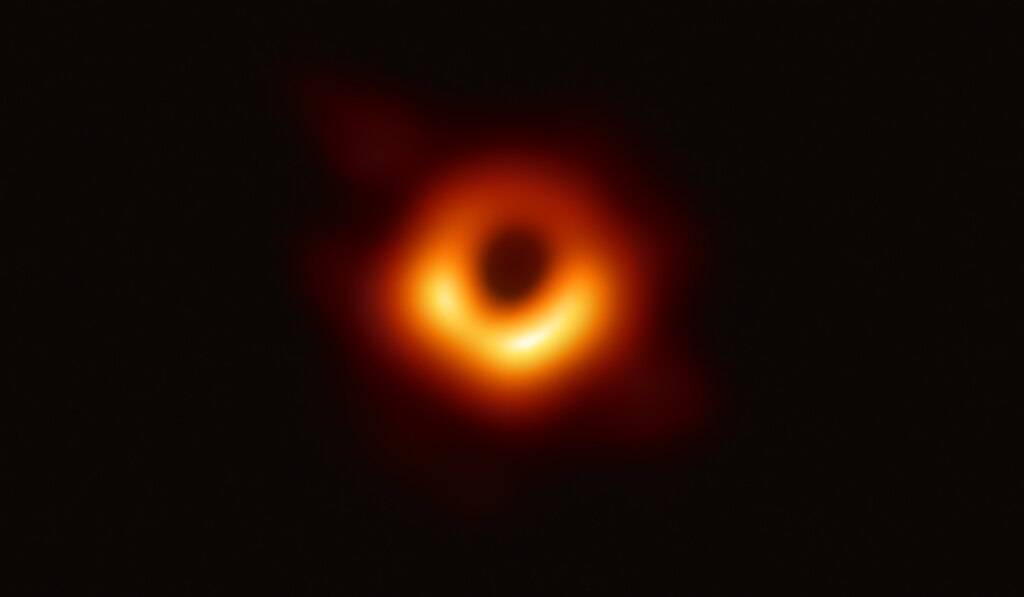
Black holes usually get described as cosmic shut-ins. They form, they sit at the centre of a galaxy, and they mind their own terrifying business for billions of years. That mental picture has stuck around for a long time because, until recently, nothing had seriously challenged it.
Now there’s solid evidence that one of them has broken the mould. It’s not drifting or wobbling slightly; it’s properly on the move, ploughing through space and leaving a trail behind it. The idea alone messes with how most people imagine black holes behaving. Something that massive is not supposed to be going anywhere fast, let alone tearing through the universe like it has somewhere urgent to be.
This black hole is moving faster than almost anything in the universe.
The supermassive black hole is racing through space at about 1,000 kilometres per second, which works out to roughly 2.2 million miles per hour. That’s 3,000 times faster than the speed of sound here on Earth, making it one of the fastest-moving objects ever detected. It’s already travelled 230,000 light-years from where it started, and it’s not slowing down. The sheer velocity required to escape the gravitational pull of its home galaxy is almost impossible to comprehend.
It’s 10 million times more massive than our sun.
Supermassive black holes are already enormous by any measure, but this one weighs in at 10 million times the mass of the sun. Most black holes this size sit at the centre of galaxies, where their immense gravity keeps everything in orbit around them. The fact that something this massive could be ejected from its galaxy at all shows just how violent the forces involved must have been. This isn’t a small object drifting through space, it’s a cosmic giant that’s been flung out like a stone from a sling.
The James Webb Space Telescope provided the final proof.
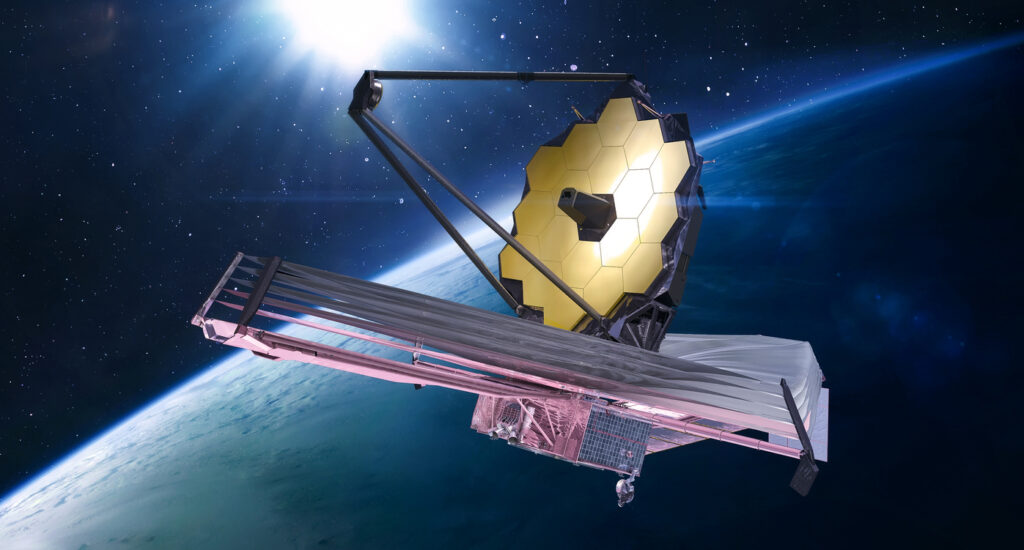
Hubble spotted this object back in 2023 when astronomers noticed a strange streak that didn’t fit any normal explanation. The problem was confirming what exactly was causing it because black holes are invisible and incredibly difficult to detect directly. The James Webb Space Telescope changed that by identifying the displaced gas at the tip of the wake where the black hole is pushing through space. The shock signatures were crystal clear and left no doubt about what was happening.
It’s pushing a galaxy-sized shockwave ahead of it.
As the black hole tears through space, it’s shoving gas and matter out of its way and creating a massive bow-shock in front of it. This isn’t a small ripple, it’s a galaxy-sized wave of compressed material being forced ahead of the black hole. The gas is being pushed sideways at hundreds of thousands of miles per hour, which is how astronomers calculated the black hole’s actual speed. When this shockwave encounters dense gas from another galaxy, it would compress and shock that gas and likely trigger massive star formation.
There’s a 200,000 light-year trail of stars behind it.
Behind the black hole stretches a wake that’s 200,000 light-years long, and within this trail, gas is accumulating and forming new stars. About 100 million times the mass of the sun worth of stars have formed in this wake, which represents a completely new mode of star formation that nobody predicted. These stars are being created far away from any galaxy, apparently forming in what looks like empty space. The trail exists because the black hole’s passage through space shocks the gas it encounters, and that shocked gas then collapses to form stars.
@deepspacetok JWST Confirms Runaway Blackhole Space Astronomy Universe Science Planet Galaxy #AstroFacts #CosmicMystery #LearnOnTikTok #ScienceSimplified ♬ Sci-fi ambient with a desolate and lonely atmosphere(1418505) – harryfaoki
It was ejected when two galaxies collided.
The most likely explanation for this runaway black hole involves two galaxies merging together, each bringing its own supermassive black hole to the collision. When the two black holes eventually merged at the centre of the newly formed galaxy, the gravitational waves released in that merger delivered a powerful kick to the combined black hole. That kick was strong enough to accelerate it to 1,000 kilometres per second, which exceeded the escape velocity of the galaxy and sent it flying into intergalactic space.
Another possibility involves three black holes instead of two.
There’s a second scenario where one of the merging galaxies had a pair of binary black holes at its centre rather than just one. When a third black hole from the other galaxy entered this binary system, the whole arrangement became unstable. In this three-body interaction, one of the three black holes gets kicked out of the system with enormous force. Either mechanism could account for what astronomers are seeing, though the team believes the two-black-hole merger is more likely in this case.
This is the first confirmed runaway supermassive black hole ever found.
Scientists have theorised about runaway supermassive black holes for years because the physics predicted they should exist. The problem was actually finding one because they’re invisible and only detectable through their effects on surrounding material. This discovery moves these objects from pure theory into confirmed reality. It’s the only supermassive black hole that’s been found far away from its original home galaxy, which made it the best candidate but required the James Webb Space Telescope to provide definitive confirmation.
@gnarlybygnature sleep tight! #science #sciencetok #stem #scientist #learnscience #sciencefacts ♬ original sound – Leah Elson
It’s located in a pair of galaxies called the Cosmic Owl.
The runaway black hole originated from two ring-shaped galaxies collectively known as the Cosmic Owl, which are located about 9 billion light-years from Earth. That enormous distance means we’re seeing these galaxies as they were 9 billion years ago, long before our own solar system even existed. The good news is that even if this runaway black hole were somehow headed towards us, the distance is so vast that it would never reach our galaxy. We’re completely safe from this particular cosmic juggernaut.
More runaway black holes are probably out there waiting to be found.
Galaxy mergers happen multiple times during a galaxy’s lifetime, so binary supermassive black holes should form pretty regularly. The Milky Way has experienced several mergers during its existence, and each merger creates the potential for a black hole ejection. What astronomers don’t know yet is how often these binaries actually merge and how frequently the resulting kick removes a black hole from its galaxy. Now that they know how to spot them, the search is on for more examples using upcoming telescopes like the Roman Space Telescope and machine learning algorithms designed to find thin streaks in imaging data.