Fungi have a habit of turning up in shapes and colours that look like they belong in a different world entirely.

Most people only ever see the common garden varieties or a supermarket mushroom, so the stranger species slip under the radar. Out in forests, wetlands and old woodlands, there are fungi that ooze, glow, twist into bizarre structures or pop up in colours you’d never expect to find on the forest floor. They’re some of nature’s most surprising creations, hiding in plain sight.
Once you start learning about them, you realise just how inventive the fungal world can be. These species survive in odd places, rely on clever tricks, and leave behind forms that don’t look like they should exist at all. They’re rare, unusual and sometimes a bit unsettling, but that’s what makes them fascinating. Getting to know them gives you a whole new appreciation for how strange and imaginative the natural world really is.
1. Dead man’s fingers look exactly like corpse hands.
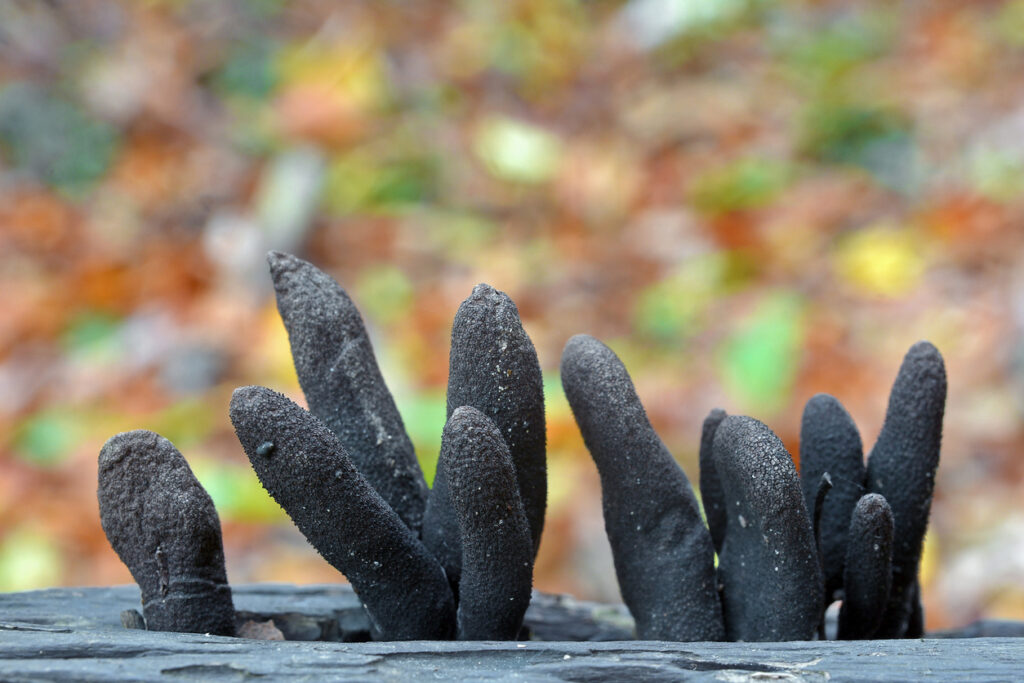
Xylaria polymorpha genuinely looks like decomposing fingers reaching out of the ground. These black, finger-like fungi grow on dead wood and rotting tree stumps. They’re often mistaken for something sinister by people who stumble across them in woods. The resemblance to human fingers is uncanny, especially when they’re clustered together like a hand clawing up through soil. They’re completely harmless, but deeply unsettling to find unexpectedly.
2. Bleeding tooth fungus oozes red liquid.
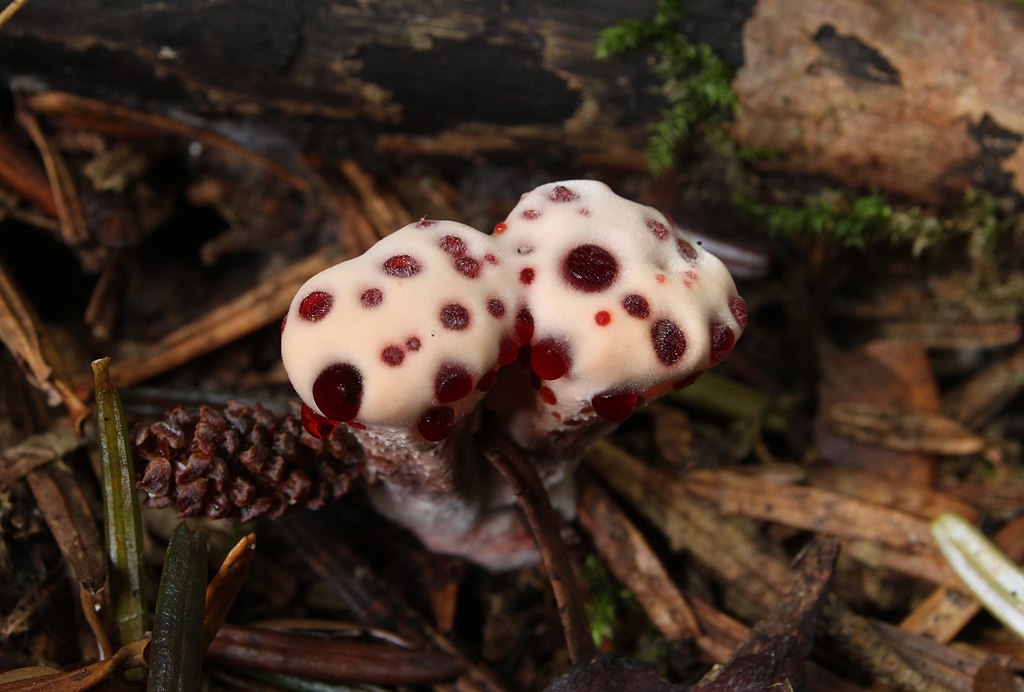
Hydnellum peckii looks like it’s bleeding. This white fungus with a toothed underside secretes bright red droplets that look disturbingly like blood. It’s sometimes called strawberries and cream because of the contrast between white and red. The red liquid is actually just excess sap being forced out through the surface. It’s not toxic, but it’s not edible either. It just sits there, looking like something from a horror film.
3. Bird’s nest fungi contain tiny eggs.

Nidulariaceae species look exactly like miniature bird’s nests, complete with eggs. These cup-shaped fungi contain round structures called peridioles that resemble eggs sitting in a nest. When raindrops hit them, the “eggs” splash out to disperse spores. The resemblance is so perfect it’s hard to believe it’s accidental. The nest shape and egg-like structures evolved specifically for splash-cup dispersal, where rain acts as the catapult for spreading spores.
4. Octopus stinkhorn smells like rotting flesh.
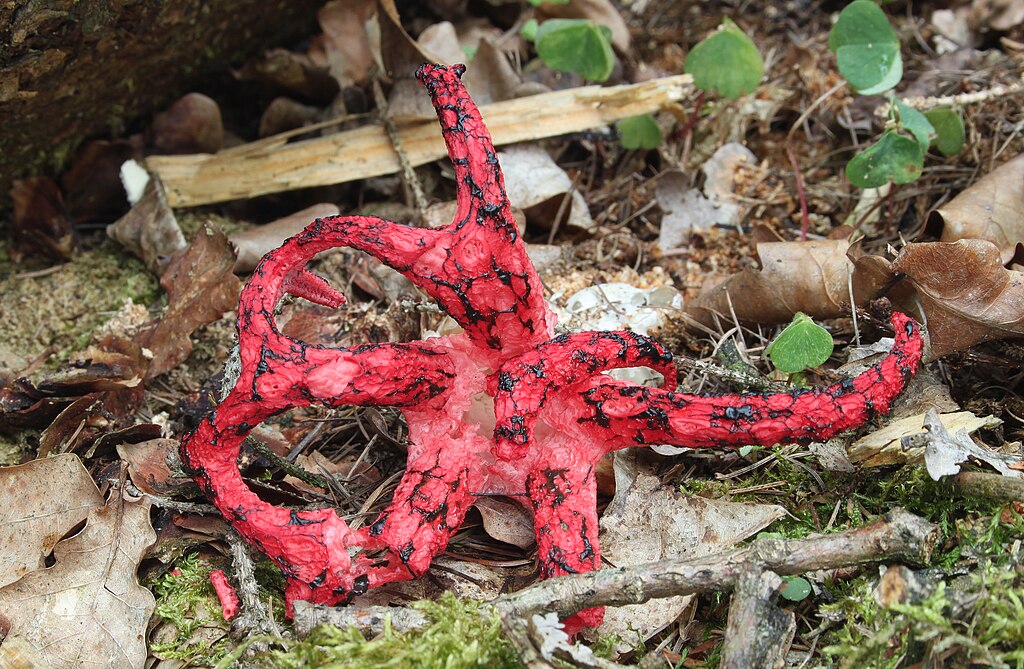
Clathrus archeri has bright red tentacle-like arms that emerge from an egg-like structure. It looks exactly like an alien creature bursting from the ground. Worse, it smells absolutely disgusting, like rotting meat, to attract flies for spore dispersal. The smell is so bad you can detect it from metres away. Flies are drawn to the stench, land on the fungus thinking it’s carrion, and carry spores away on their bodies. It’s brilliant biology, but deeply unpleasant to encounter.
5. Cordyceps turns insects into zombies.
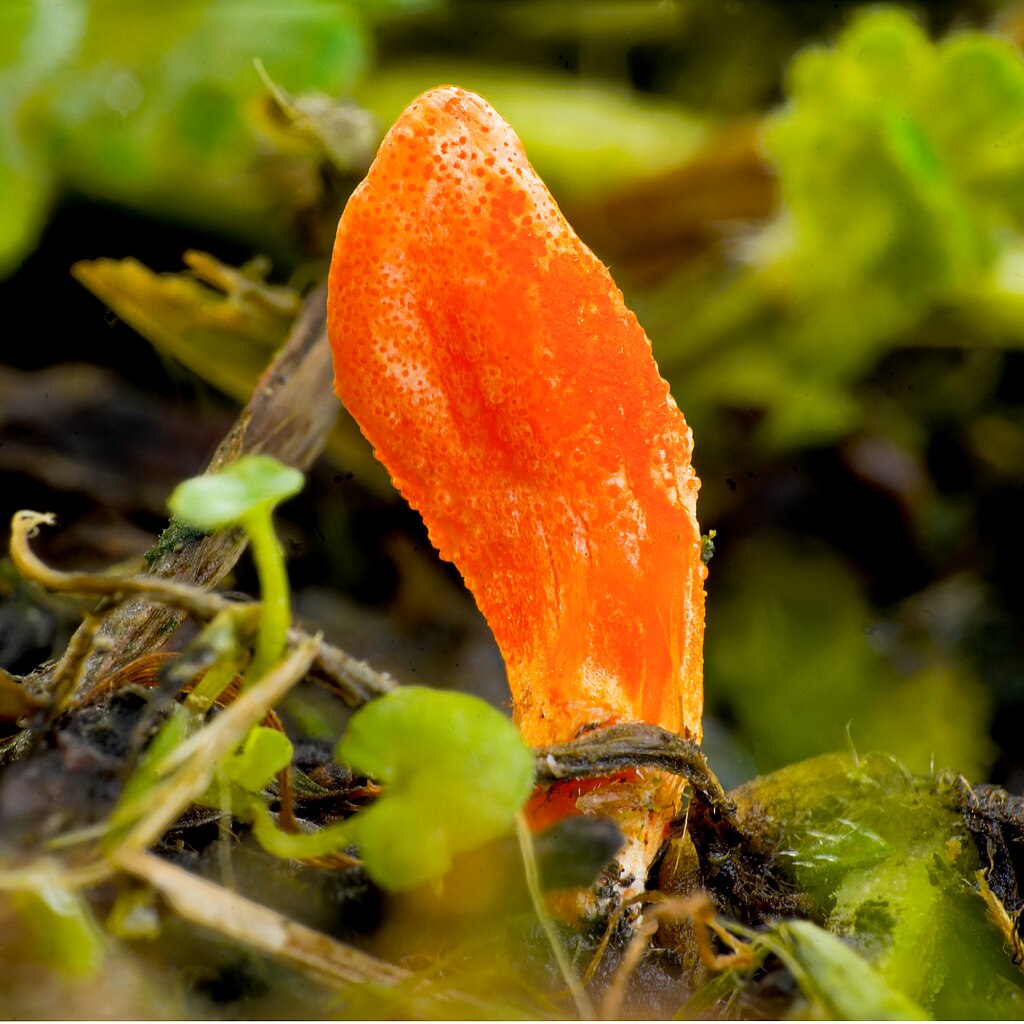
Cordyceps fungi infect insects, take over their nervous systems, and control their behaviour. The infected insect climbs to an elevated position, clamps down, and dies. Then the fungus fruits out of the insect’s body, releasing spores to infect more victims. There are hundreds of Cordyceps species, each targeting specific insects. The mind control is real and documented. It’s genuinely horrifying and inspired zombie fiction because it’s actual parasitic mind control happening in nature.
6. Devil’s cigar is found in only two places on Earth.
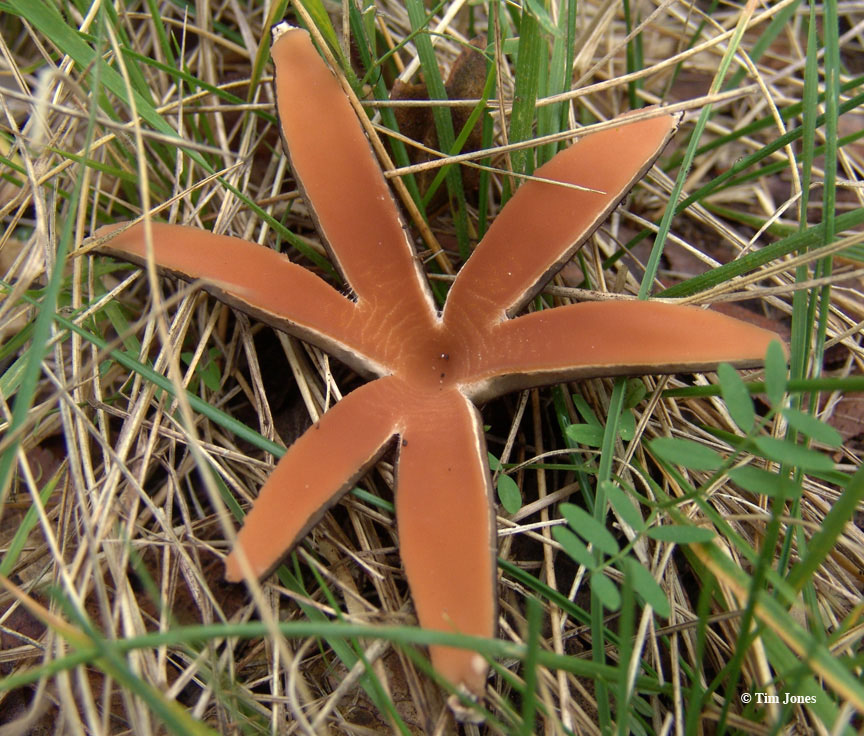
Chorioactis geaster exists only in Texas and Japan, nowhere else on the planet. This incredibly rare fungus looks like a dark brown cigar that splits open into a star shape. Nobody knows why it has this bizarre isolated distribution. Scientists are baffled by how this fungus ended up in only these two locations thousands of miles apart. It’s one of the rarest fungi in the world, and its evolutionary history is a complete mystery.
7. Hairy mycena looks like tiny fuzzy matchsticks.
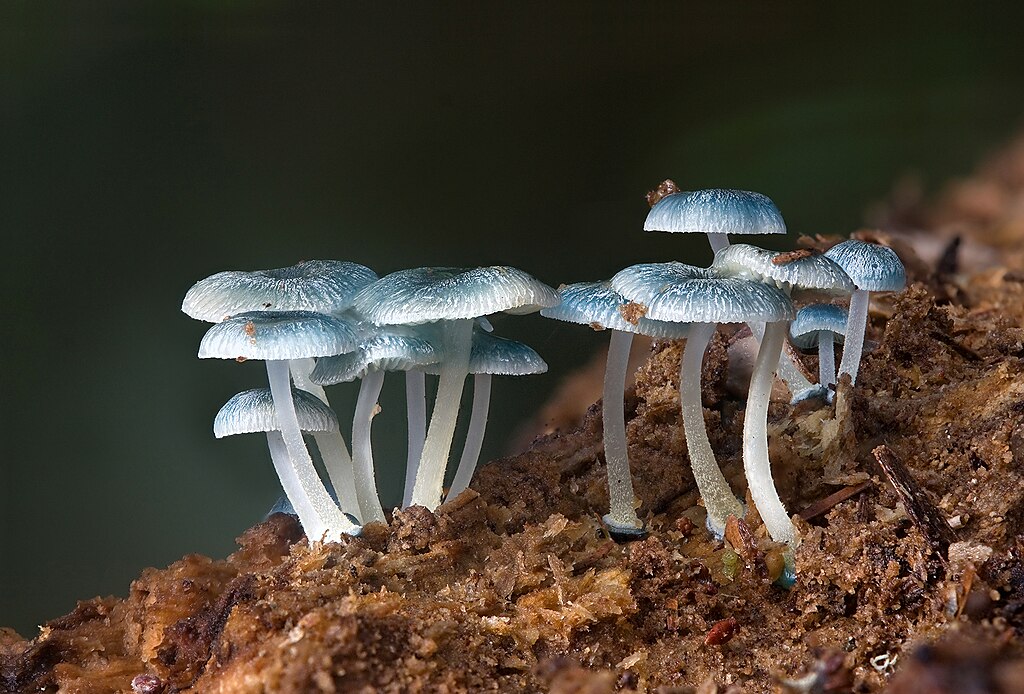
Mycena interrupta is covered in fine white hairs that make it look like microscopic fuzzy lollipops. These tiny fungi grow on debris in Australian rainforests and look more like something from a Dr. Seuss book than real organisms. The hairs serve a purpose, helping to disperse spores and potentially deterring small invertebrates from eating them. But the effect is utterly bizarre, like the forest floor has sprouted miniature hairy heads.
8. Veiled lady fungus wears a lace skirt.
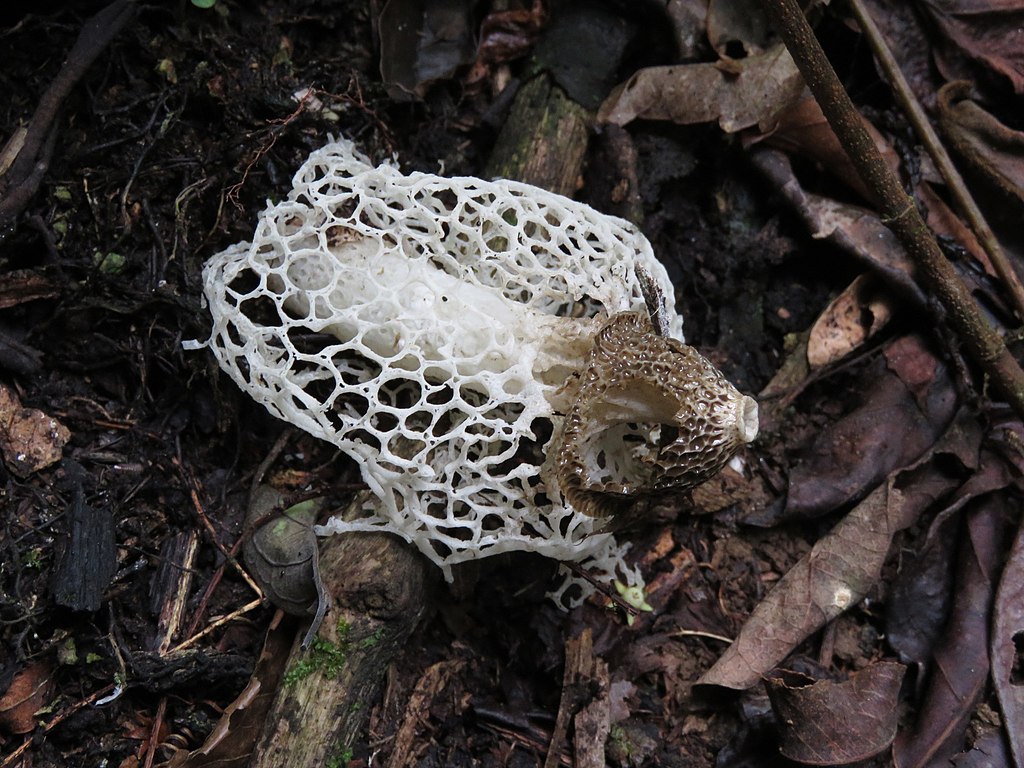
Phallus indusiatus has a delicate net-like skirt that hangs from its cap. This tropical fungus emerges from an egg and unfurls a stunning white lace veil. It’s beautiful but also smells terrible because it’s another stinkhorn attracting flies. The veil is thought to help disperse spores by increasing surface area and creating air currents. It’s one of the most elegant-looking fungi despite its foul smell. The contrast between beauty and stench is jarring.
9. Earthstar fungi explode their spores.

Geastraceae species look like stars lying on the ground. They start as round balls that split open into pointed rays that curl back, revealing a central spore sac. When raindrops hit the sac, it puffs out clouds of spores. The star shape helps position the spore sac for optimal dispersal. The rays also respond to moisture, curling up when dry and opening when wet. They’re living moisture sensors with built-in spore cannons.
10. Toothed jelly fungus looks gelatinous and spiky.

Pseudohydnum gelatinosum is simultaneously jiggly like jelly and covered in small teeth-like spines underneath. It’s translucent, wobbly, and completely bizarre. The texture and appearance don’t match anything else in nature. The teeth produce spores, while the jelly texture helps it survive dry periods by retaining moisture. It’s edible but flavourless and weirdly textured. People describe eating it as like chewing on rubber with spikes.
11. Bioluminescent fungi glow in the dark.
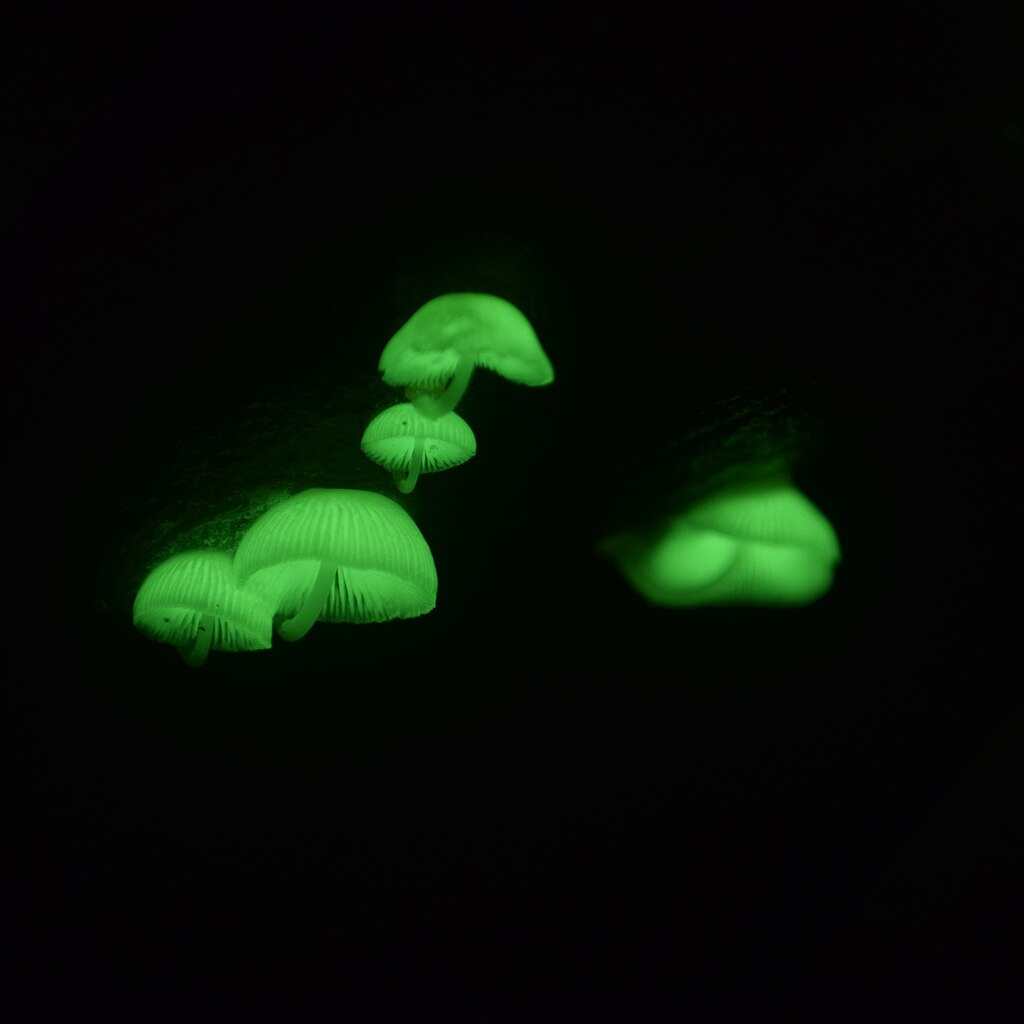
Several fungi species produce their own light, glowing green in the darkness. Mycena species and Panellus stipticus emit bioluminescence that makes forests look magical at night. The glow is caused by a chemical reaction similar to fireflies. Scientists think the glow attracts insects that help disperse spores. Walking through a forest with glowing fungi is surreal, like something from a fantasy film. The light is real bioluminescence, not reflection.
12. Lion’s mane looks like a white waterfall.
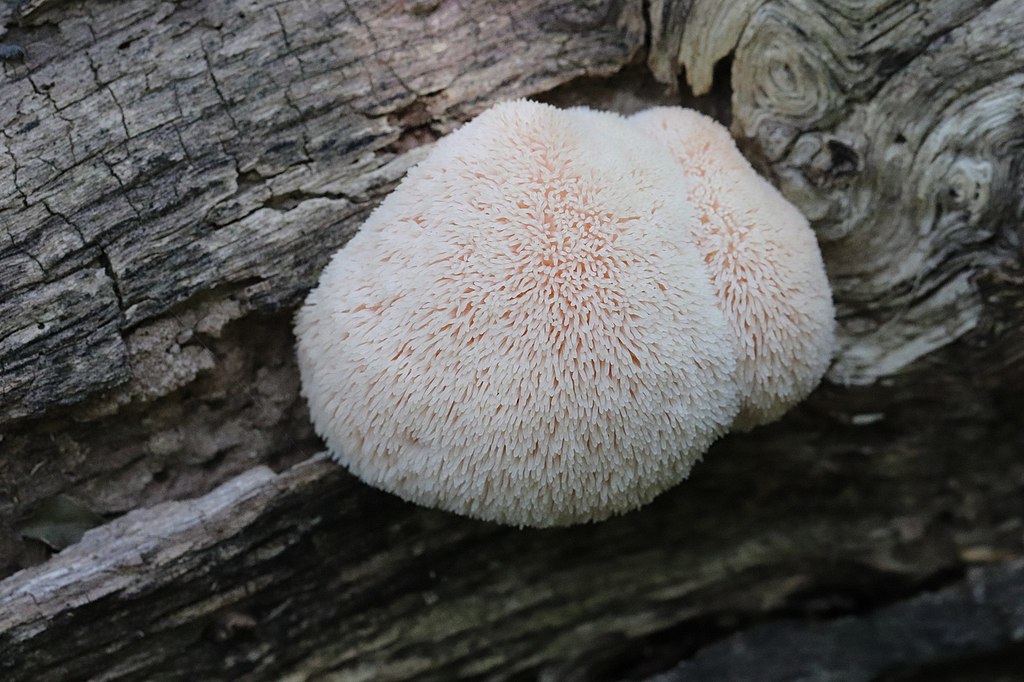
Hericium erinaceus has long white spines that cascade down like a frozen waterfall or a lion’s mane. It grows on dead hardwood and looks completely unlike typical mushrooms. The texture and appearance are otherworldly. This fungus is edible and supposedly tastes like seafood. It’s also being studied for potential cognitive benefits. But mainly it’s just spectacularly weird-looking, like something that belongs underwater not on a tree.
13. Stemonitis slime mould isn’t even a fungus.

Slime moulds like Stemonitis look like tiny hairbrushes or feathers growing on wood. They were classified as fungi for years, but they’re actually something else entirely, more closely related to amoebas. They can move and hunt for food. These organisms blur the line between kingdoms. They spend part of their life as single cells that can move, then come together to form fruiting bodies. They’re neither plant, animal, nor fungus, but something unique.
14. Latticed stinkhorn looks like a red cage.
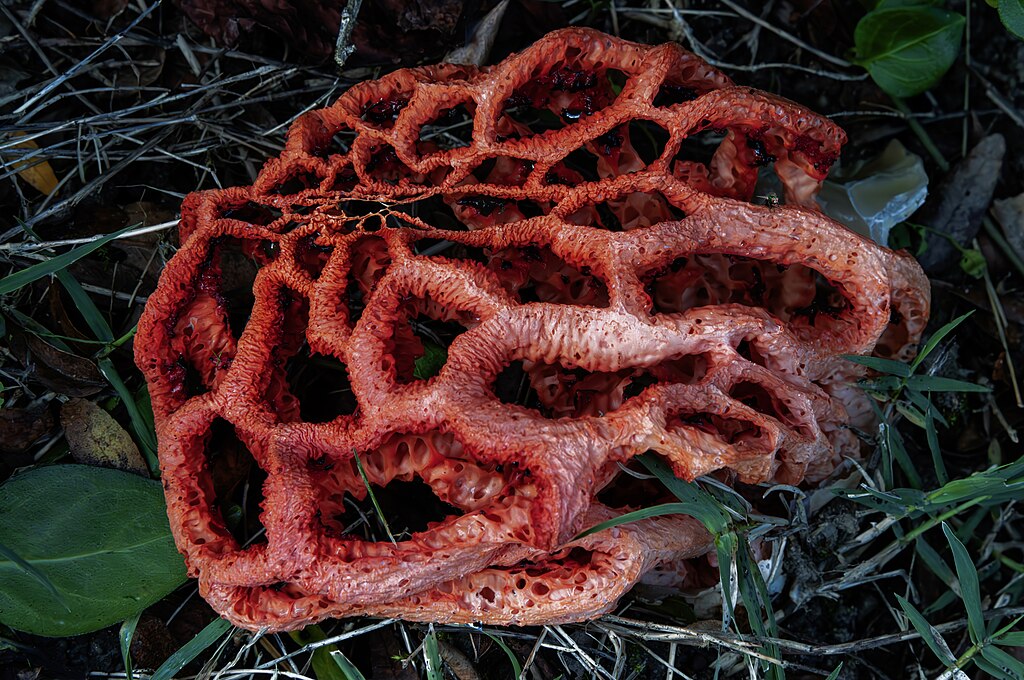
Clathrus ruber forms a hollow red lattice sphere that emerges from an egg. It looks like an alien structure or elaborate cage made of red geometric patterns. Inside the lattice is brown slime that stinks of rotting meat to attract flies.
The lattice structure is both beautiful and repulsive. It’s architectural and organic simultaneously. The red colour and geometric precision make it look artificial, but it’s entirely natural. Finding one is like discovering alien architecture in your garden.