The elephant hawk moth looks like someone took a hummingbird and crossed it with a piece of living art.
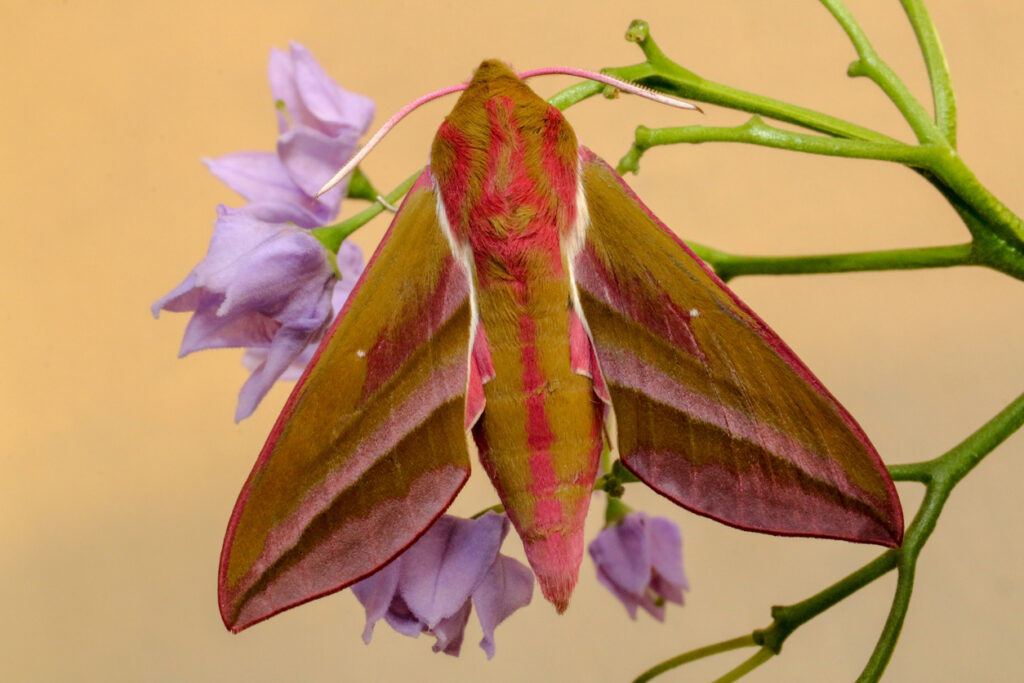
The result is one of the UK’s most stunning insect that most people have never actually seen. This pink and olive beauty transforms our boring perception of moths into something that belongs in a tropical paradise rather than a British garden.
1. It’s got colours that make butterflies look boring.
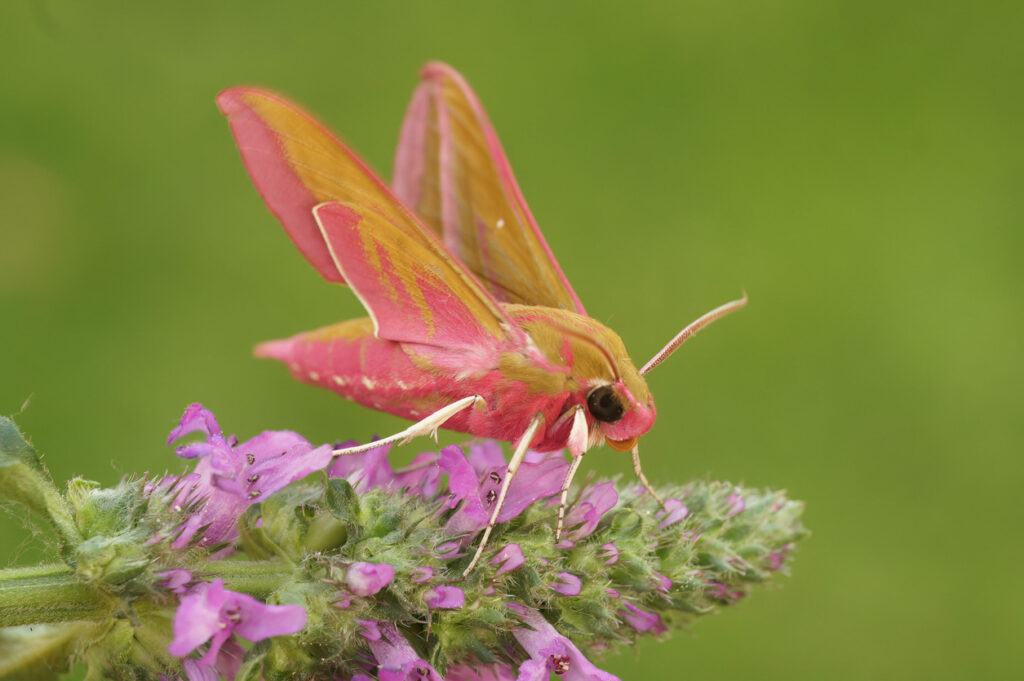
While butterflies get all the credit for being pretty, the elephant hawk moth rocks a stunning combo of rose pink and olive green that looks like expensive silk fabric. Most British insects are brown or grey, but this one looks like it escaped from a designer’s colour palette.
The wings shimmer with an almost metallic quality that changes depending on the light, making each sighting feel like discovering a living jewel. No butterfly in Britain comes close to this level of sophisticated colour coordination.
2. The name comes from its bizarre alien-looking caterpillar.
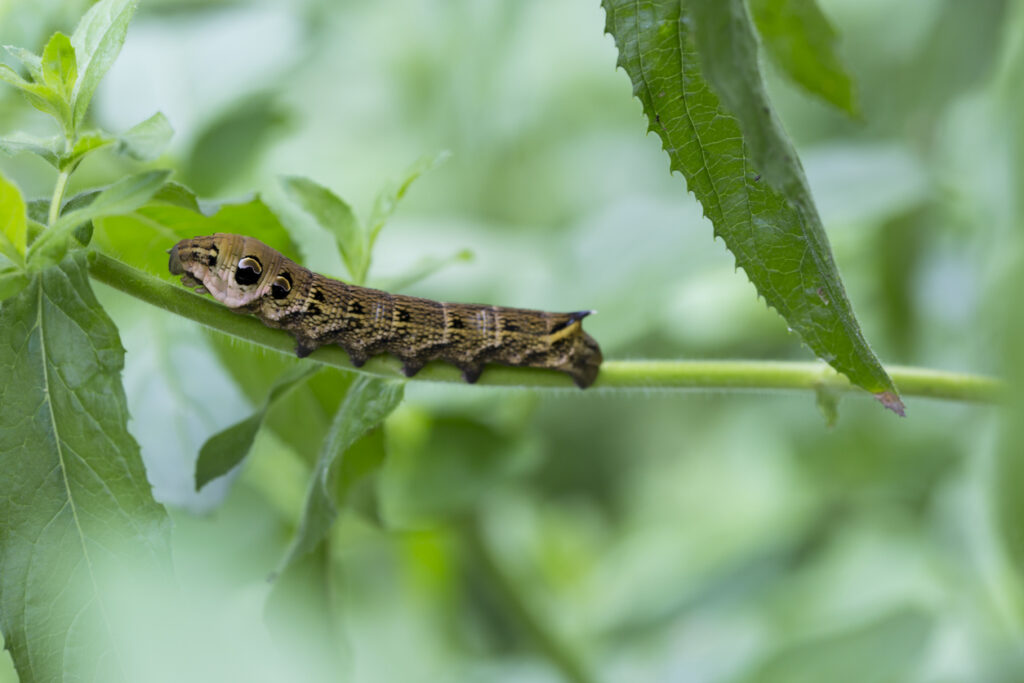
The caterpillar has this weird trunk-like appendage that it can inflate to look like an elephant’s head when threatened, complete with fake eye spots that make predators think twice. It’s nature’s version of a Halloween costume that actually works.
This chunky green larva grows massive compared to other British caterpillars and has the strangest habit of retracting its head into its body segments. Watching one transform from this weird elephant-snake hybrid into a gorgeous moth feels like witnessing actual magic.
3. It flies like a tiny hummingbird during the day.

Unlike most moths that bumble around lights at night, elephant hawk moths hover at flowers during daylight hours, moving exactly like hummingbirds that somehow ended up in the wrong country. Their flight pattern is so unusual for a British insect that people often mistake them for small birds.
They can hover perfectly still while feeding, then dart away at incredible speed when disturbed. This precision flying makes them mesmerising to watch and completely different from any other British moth species.
4. It’s obsessed with garden flowers that smell amazing at night.
These moths have excellent taste in plants, gravitating toward honeysuckle, jasmine, and other flowers that pump out intoxicating scents after dark. They’re basically the sophisticated wine connoisseurs of the insect world, only visiting the best-smelling blooms.
Following their feeding patterns leads you to discover which plants in your garden smell incredible at night. They’re like living guides to Britain’s most fragrant flowers, showing you a whole sensory world you might otherwise miss.
5. The wingspan is surprisingly impressive for something so delicate.
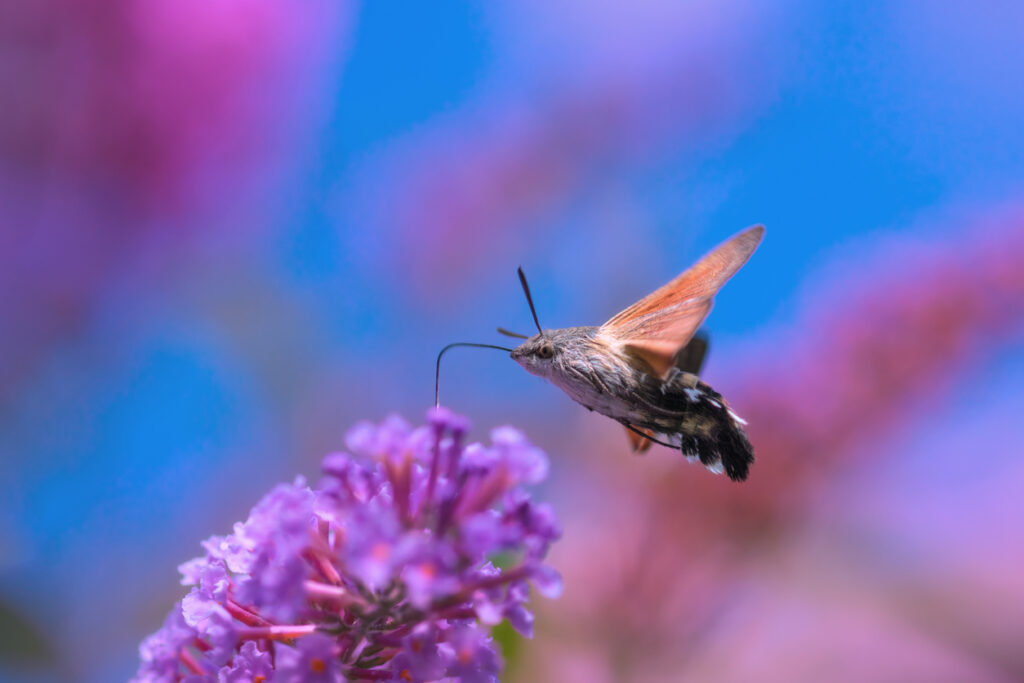
With wings spanning nearly three inches, these moths have serious presence when they show up at your garden flowers. They’re not tiny, delicate creatures, either. They’re substantial enough to create real visual impact while still looking graceful.
That size combined with their hovering flight makes them impossible to ignore when they appear. You can actually hear the wingbeats as they work to stay airborne, adding an audio element to the visual spectacle.
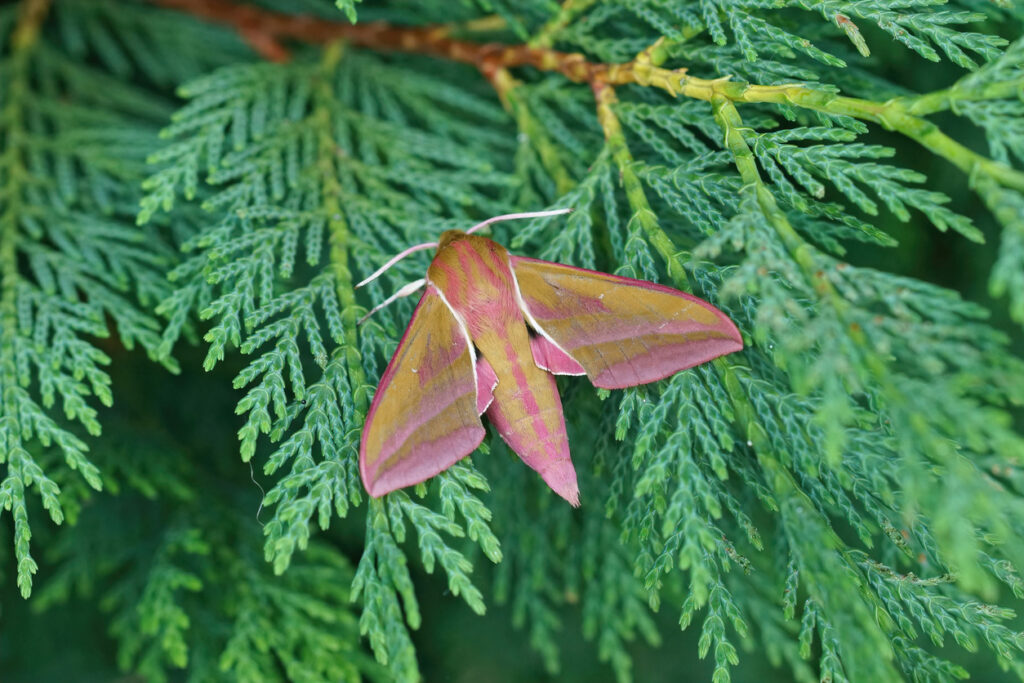
6. They’re master camouflage artists when resting.
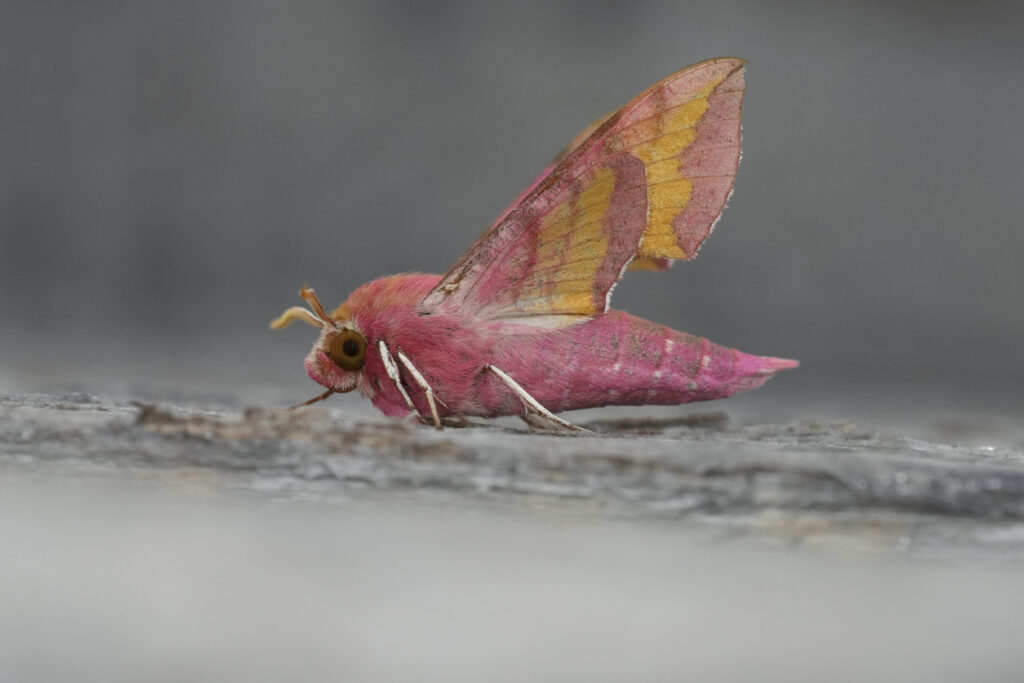
During the day, elephant hawk moths transform from flying jewels into perfect tree bark mimics, folding their bright wings to reveal brown underwings that make them virtually invisible against wood surfaces. It’s like watching a magic trick in reverse.
Finding one at rest requires serious detective skills because they’re so perfectly camouflaged. When you do spot one, the revelation of those hidden pink wings feels like discovering a secret that nature was trying to keep.
7. The fuzzy body looks like it’s wearing a tiny fur coat.
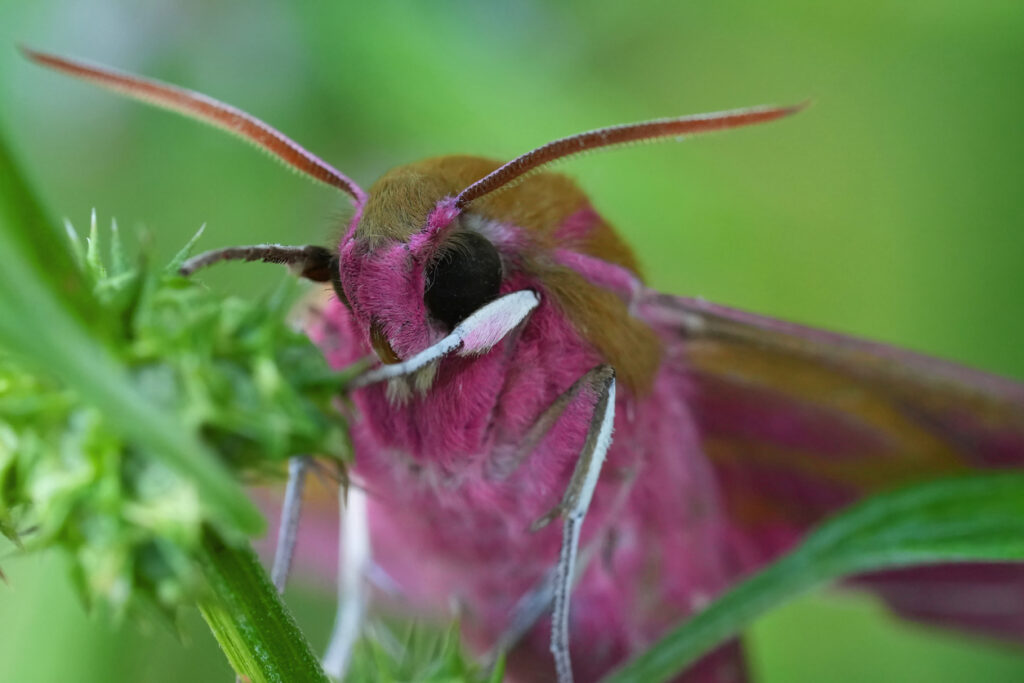
Their thorax is covered in dense, soft-looking fur that gives them an almost mammalian appearance rather than the typical insect look. This fuzzy coating makes them seem approachable and cuddly in a way that most moths definitely aren’t.
The fur serves practical purposes for temperature regulation, but it also adds to their overall charm factor. They look like flying teddy bears with gorgeous wings, which is an unusual combination in the insect world.
8. They’re surprisingly common, but hardly anyone notices them.
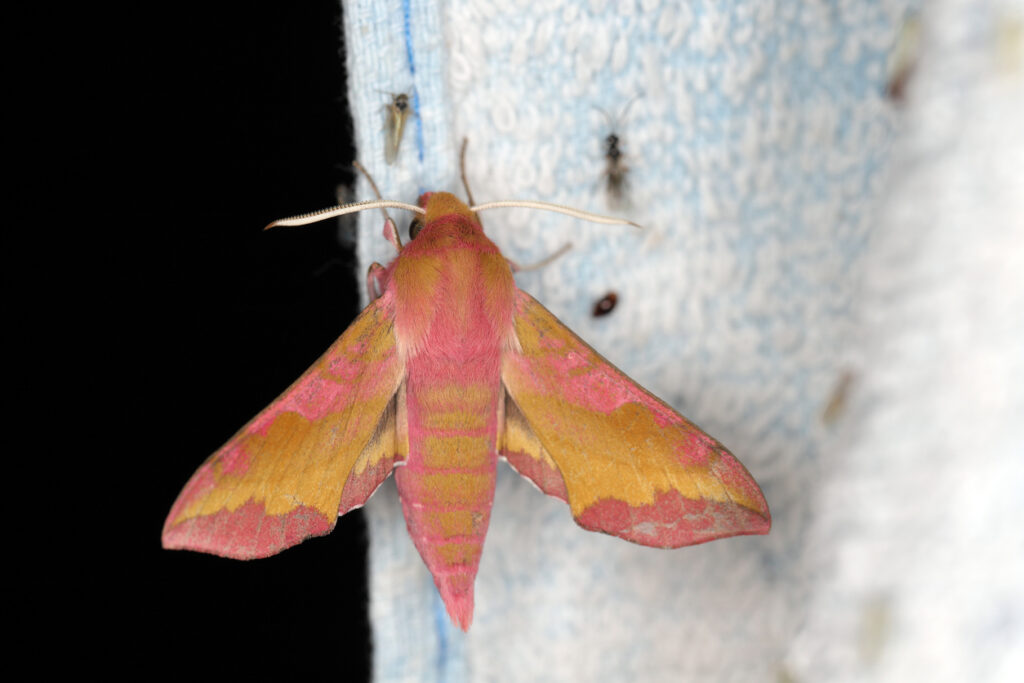
Despite being widespread across Britain, most people go their entire lives without knowingly seeing an elephant hawk moth because they’re active during twilight hours when fewer people are outside. They’re hiding in plain sight in suburban gardens everywhere.
Once you know what to look for and when to look, you realise they’re probably visiting your garden regularly. It’s basically like discovering there’s been a secret air show happening in your backyard that you never knew about.
9. The caterpillars eat plants that gardeners usually hate.
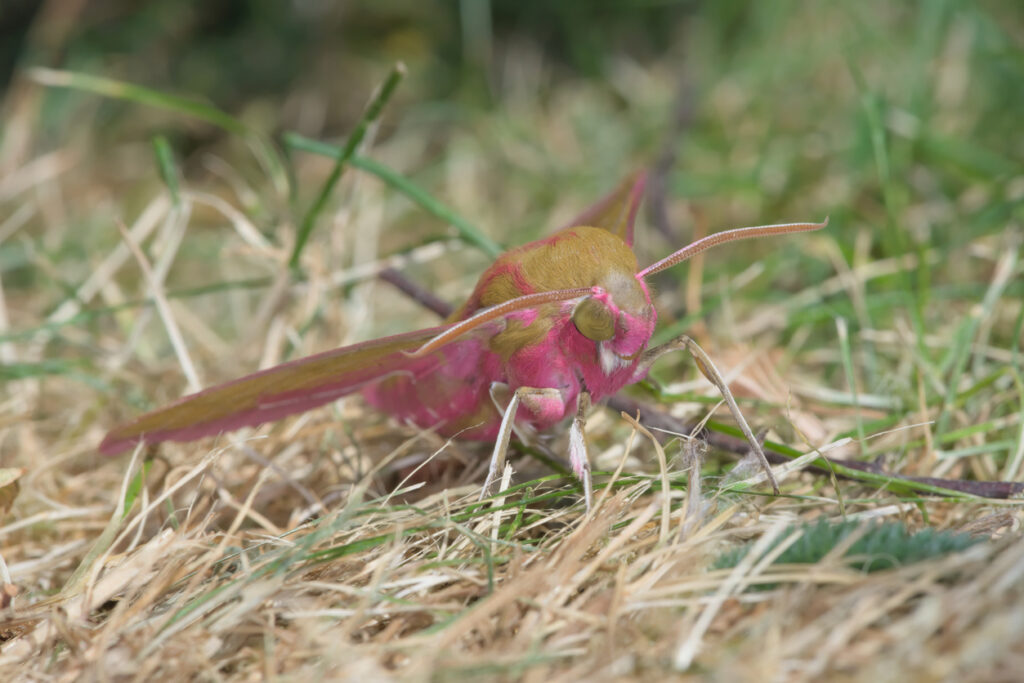
Elephant hawk moth larvae feast on willowherb and bedstraw—those weedy plants that most gardeners spend time removing from their borders. These “pest” plants are actually supporting one of Britain’s most beautiful insects.
Leaving wild corners with these native plants creates habitat for the moths while requiring zero gardening effort. It’s the perfect excuse to let part of your garden go wild and call it wildlife conservation.
10. They’re living proof that British wildlife can be exotic.

In a country where most native species are fairly subdued in appearance, elephant hawk moths look like they should be living in a rainforest rather than a British suburb. They challenge the assumption that you need to travel abroad to see spectacular wildlife.
Their tropical appearance makes every sighting feel special and unexpected. Finding one in your garden creates the same excitement as spotting exotic wildlife on holiday, except it’s right outside your back door.
11. The moth emerges from underground like a resurrection.
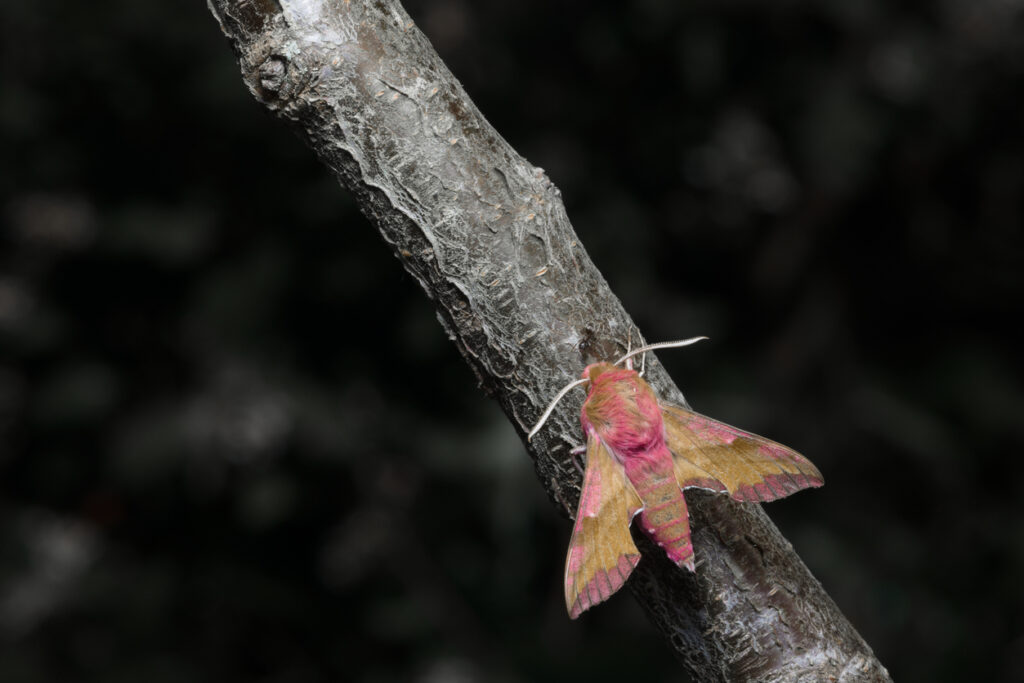
After pupating in the soil through winter, the adult moth digs its way to the surface in late spring, emerging fully formed and ready to fly. This underground transformation and emergence adds an element of mystery to their life cycle.
You never know when or where one might suddenly appear, having spent months developing in secret beneath your feet. You suddenly realise you’ve got buried treasure in your garden that randomly reveals itself as a flying work of art.
12. They represent the magic hiding in ordinary British gardens.
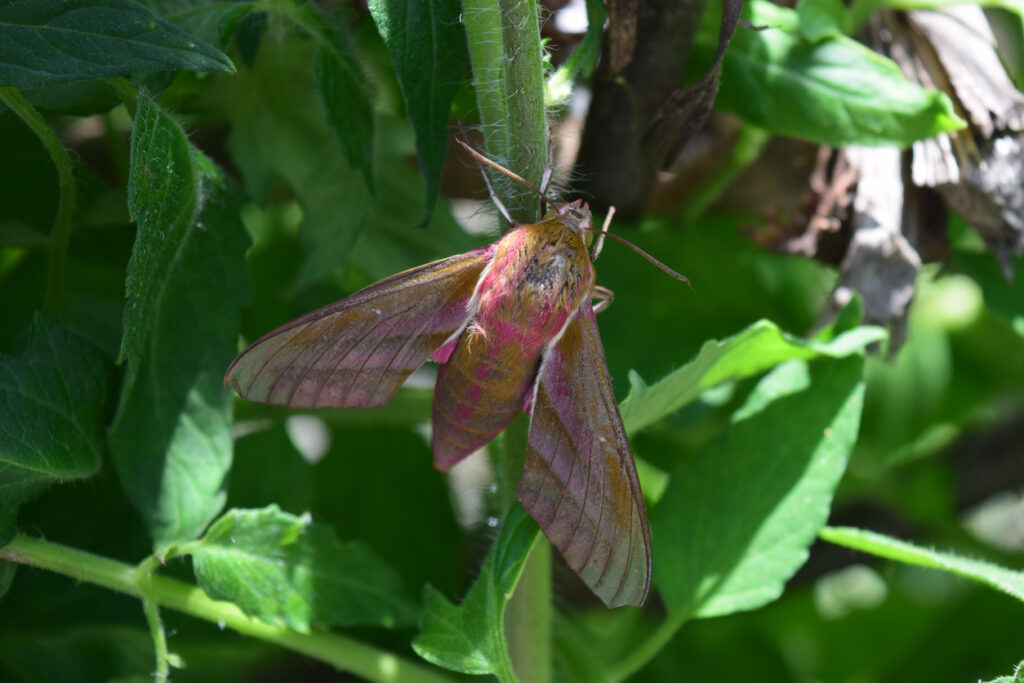
Elephant hawk moths prove that incredible wildlife experiences don’t require exotic locations or expensive equipment. You just need to know when and where to look in everyday spaces. They turn suburban gardens into wildlife theatres.
Their presence transforms how you see common British plants and flowers, revealing the complex ecosystem operating right under your nose. One sighting changes your entire perception of what British nature has to offer.