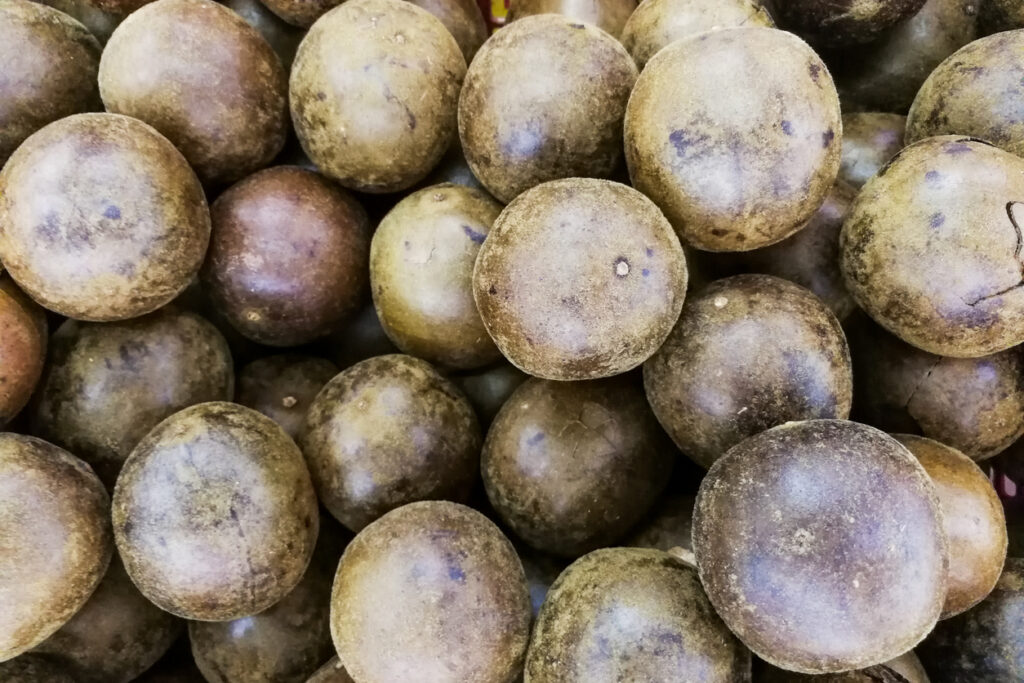
Monkfruit has been used as a traditional remedy for hundreds of years, but modern science is finally starting to look past its reputation as just another sugar substitute. While most people only know it as the weirdly sweet powder in the health food aisle, researchers are finding that the compounds responsible for that sweetness do a lot more than just mimic sugar.
These molecules seem to have a unique way of interacting with the body’s inflammatory responses and metabolic pathways that we didn’t fully understand until very recently. It turns out this small, green melon might be holding onto biological secrets that could change how we approach everything from gut health to how our cells age. We’re moving away from seeing it as a diet aid and starting to treat it as a serious piece of the puzzle in longevity and disease prevention.
It’s sweet because of mogrosides, not sugar.
Monk fruit tastes sweet mainly because of natural compounds called mogrosides. They’re not the same as table sugar, and they don’t behave the same way in the body. That’s why monk fruit sweeteners are often marketed as a way to cut down sugar without giving up sweetness.
The powerful side is that these compounds are more than just flavour. Researchers don’t only study monk fruit as a sweetener, they also look at what mogrosides might do in cells and tissues. The sweetness is the headline, but the chemistry is why scientists keep looking.
@addictivewellness🪀 Benefits of Monkfruit (Luo Han Guo) – More Than Just a Sweetener Monkfruit has become quite popular in recent years as a healthy sugar-free sweetener, but almost nobody knows the real history of this fruit! Far from being some new discovery or invention, it has been used as a part of the traditional Chinese herbal system for at least 800 years as an effective lung tonic. Let’s take a look at it’s history, traditional uses, and the modern research so you can have a full understanding of what this little round fruit is all about! #monkfruit #sugarfree #lowglycemic #keto #paleo #vegan #nutrition #functionalmedicine #adaptogens #herbalism♬ original sound – Addictive Wellness
It’s being studied for anti-inflammatory effects.
Inflammation is one of those words that gets thrown around online, but in science it has a very specific meaning. It’s part of how the body reacts to stress, injury, or infection, and when it stays switched on for too long it can be linked to a lot of health problems.
In lab studies, monk fruit compounds have shown signs they might influence inflammation pathways. That doesn’t mean eating monk fruit will fix inflammation in humans, but it does explain why researchers keep running experiments. It’s a possible direction, not a proven benefit.
There’s interest in antioxidant activity.
Antioxidants are basically compounds that can help deal with oxidative stress, which is a normal part of life but can get worse with poor sleep, illness, smoking, and ageing. People hear antioxidants and think miracle cure, but the real story is more boring and more realistic.
Monk fruit extracts have shown antioxidant activity in research settings, especially when tested in lab models. The gap is that what happens in a petri dish isn’t always what happens in a human body after digestion. Still, it’s one of the reasons the fruit gets studied beyond sweetness.
Scientists are looking at blood sugar and insulin responses.
One practical reason people like monk fruit is that it can replace sugar in drinks and food, which can lower sugar intake overall. Cutting sugar can help many people feel steadier, especially if they’re used to big spikes and crashes.
Some research looks at whether monk fruit compounds might affect glucose handling in the body, but the stronger evidence is usually the simple replacement effect. Swap sugar out, and you reduce sugar load, which often changes blood sugar patterns. The extra possible biological effects are still being explored.
@insulinresistant1 Monk Fruit sweetener and my blood sugar. How does it affect my glucose levels? #bloodsugar #glucoselevels #insulinresistant1 #monkfruit ♬ original sound – Justin / Stop Spiking Sugar
Gut health is part of the conversation.
The gut gets blamed for everything these days, but it does matter, and sweeteners can affect it in different ways depending on the type and the dose. People also react differently, which is why one sweetener can feel fine for one person and awful for another.
Monk fruit is being studied alongside other sweeteners for how it might interact with gut bacteria and digestion. The tricky bit is that products vary, and monk fruit is often blended with other sweeteners like erythritol. If someone feels off after a monk fruit product, it might not be the monk fruit doing it.
It may help people reduce sugar without feeling deprived.
This is less flashy but honestly, one of the biggest real-world benefits. Lots of people struggle to cut sugar because they feel like life becomes miserable and beige. Monk fruit can help some people keep sweet tastes in their routine while lowering sugar overall.
That can have a knock-on effect because behaviour change sticks better when it doesn’t feel like punishment. If a swap makes it easier to drink less sugary tea or stop daily fizzy drinks, that’s a meaningful shift. It’s not magic, it’s just making a healthier choice less annoying.
It’s being looked at in the context of weight management.
Weight is complicated and not just about sweeteners, but sugar-heavy diets can add a lot of calories fast. Replacing sugar with a low-calorie sweetener can reduce total intake for some people, especially in drinks, which are an easy place for calories to sneak in.
Scientists still debate how much sweeteners help long term because appetite, cravings, and habits matter. Monk fruit may be useful as a tool for some people, not a solution for everyone. The powerful part is the practical one, it can make change feel doable.
@robertwblove Three Sweeteners that do NOT Spike Your Blood Sugar OR Hurt Your Brain. #sugar #brain #diabetes #sweeteners #allulose #type3diabetes #alzheimers #dementia #brainfood #monkfruit #stevia #robertlove #robertwblove ♬ original sound – Robert Love
People are studying how it might affect taste and cravings.
Some sweeteners can keep your sweet tooth raging because your brain keeps wanting more sweetness. Others help people wean down gradually. Monk fruit has a particular taste profile, and some people find it easier to live with than other sweeteners.
Researchers are interested in how sweeteners impact reward and eating behaviour. It’s not just about the chemistry, it’s about the brain’s learned habits too. If a sweetener helps you cut sugar without making cravings worse, that’s a big deal for day-to-day life.
The dose and the product matter more than people think.
One tiny amount of monk fruit extract in a product is different from a concentrated supplement, and both are different again from the whole fruit. A lot of research uses extracts, not the little sprinkle you put in coffee. That can confuse people when they read headlines.
Also, many monk fruit products are blends. So if you’re trying to judge how monk fruit affects you, check the label for what else is in there. Your body might be reacting to the other ingredients, especially sugar alcohols, which can be rough on some stomachs.
The big theme is promise, but not proof yet.
When scientists study monk fruit, a lot of the work is early stage, like lab studies, animal studies, or small human research. Those studies are still useful because they show where to dig next, but they’re not the same as strong, settled evidence.
So the powerful side is real in the sense that there’s interesting chemistry and a growing research trail. The sensible way to see it is this. Monk fruit can be a handy sugar swap, and it might have extra benefits, but it’s not a medicine, and it’s not a shortcut to perfect health.