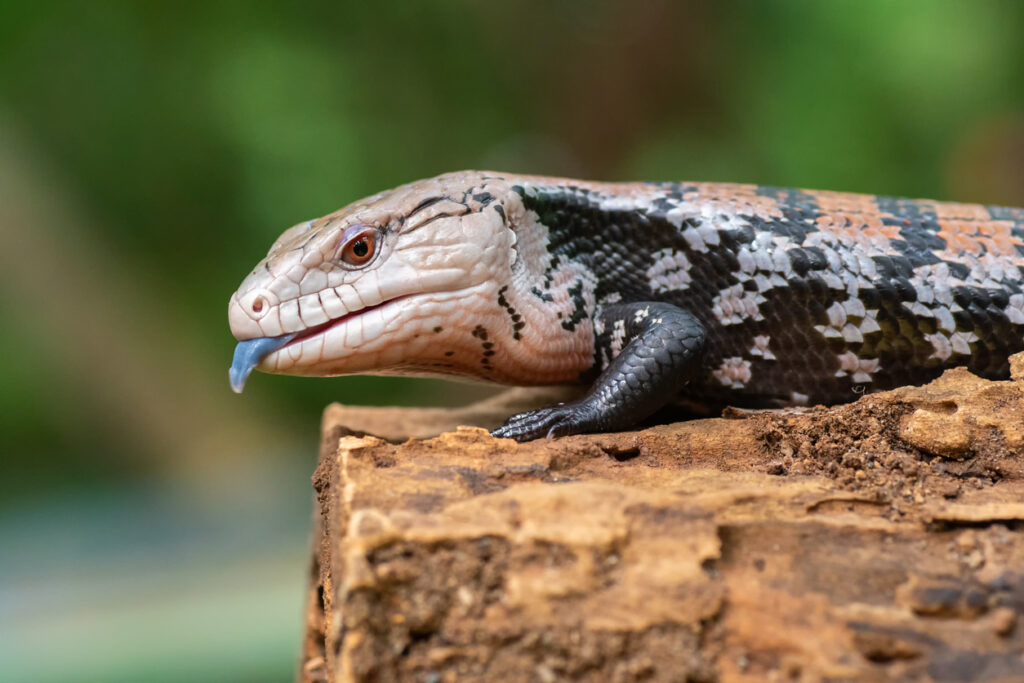
If you’ve ever spotted a blue-tongued skink, you’ll know they don’t exactly look like your average garden lizard. They’re chunky, low to the ground, and have a habit of puffing themselves up to look far more menacing than they actually are. But the real showstopper is that bright, ultraviolet-reflecting tongue they keep hidden away until they feel threatened.
It’s a clever bit of natural misdirection; while most animals use camouflage to blend in, this lizard uses a sudden flash of neon blue to startle predators just long enough to make a getaway. It’s a weirdly effective survival strategy that makes them stand out in the reptile world, especially since they’re actually quite docile and spend most of their time plodding through the undergrowth looking for snails.
From its distinctive sapphire mouth to its surprisingly long lifespan, these skinks are a reminder that nature has some very colourful ways of saying back off.
Its tongue is an intense, almost neon blue.
The blue-tongued skink’s most famous feature is exactly what you think. When threatened, it opens its mouth wide and sticks out a thick, vivid blue tongue. The colour isn’t subtle. It is bright enough to make a predator hesitate for a split second. That split second is important. In the wild, hesitation can be the difference between escape and becoming lunch. The shock factor alone makes many animals think twice before attacking.
@lyssaslizards♬ original sound – Lyssa | Reptile Keeper
The blue colour is a warning signal.
Bright colours in nature often mean one thing. Stay away. While blue-tongued skinks aren’t highly venomous, the flash of colour can mimic the warning displays of more dangerous species. Predators don’t always know the difference. If something looks bold and unusual, it can trigger caution. The tongue works as a bluff that often pays off.
It only shows the tongue when it feels threatened.
You won’t see that blue display constantly. The skink keeps it hidden most of the time. The tongue flash is part of a defensive routine that also includes puffing up its body and hissing. This sequence makes the lizard appear bigger and more intimidating. The sudden colour burst is the final dramatic move in that performance.
It’s not actually a snake, even though it looks a bit like one.
At a glance, blue-tongued skinks can resemble chunky snakes with legs. They have long, smooth bodies and short limbs that aren’t very noticeable when they move through grass. However, they’re true lizards. They blink, they have visible ear openings, and they move with a different rhythm. The stocky build gives them a sturdy, grounded presence.
They’re found mainly in Australia and nearby regions.
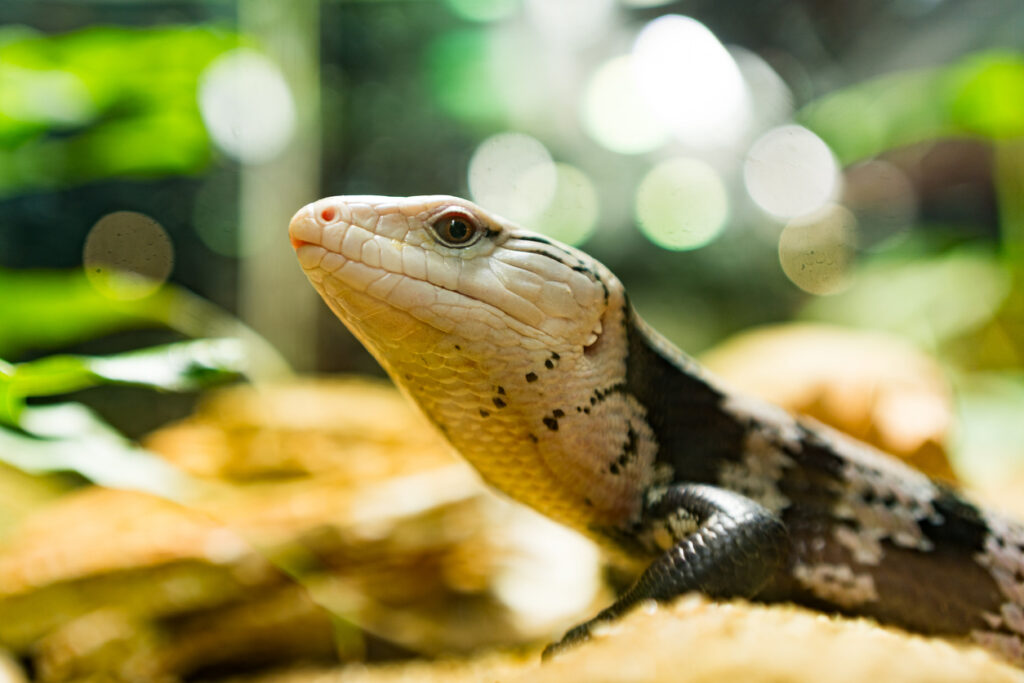
Blue-tongued skinks are most closely associated with Australia, though some species live in parts of Indonesia and Papua New Guinea. They tend to favour open woodland, scrubland, and suburban gardens. Their ability to adapt to different environments has helped them survive in both wild habitats and areas near people.
They’re surprisingly calm around humans.
Despite the dramatic defence display, many blue-tongued skinks are known for being relatively tolerant of human presence. In areas where they’re common, they may wander through gardens without much fuss. Some people even keep them as pets because they’re generally slow moving and not aggressive unless provoked.
They’re omnivores with a varied diet.
Blue-tongued skinks eat a mix of plants and animals. Their diet can include berries, flowers, leaves, insects, and small invertebrates. Having that dietary flexibility helps them survive in changing environments. Being able to eat what is available reduces competition and increases their chances of making it through tough seasons.
They have strong jaws for their size.
Although they’re not large reptiles, they have powerful jaws. If cornered and handled roughly, they can deliver a firm bite. That bite isn’t typically dangerous to humans, but it is enough to discourage predators. Combined with the tongue display, it makes them less vulnerable than they look.
@za_reptiles♬ Darling – Trees and Lucy
Their thick bodies help protect them.
The blue-tongued skink has a solid, muscular build. Its scales are smooth and tough, offering some protection against minor injuries. That sturdiness, along with the defensive behaviour, gives it multiple layers of protection rather than relying on speed alone.
They give birth to live young.
Unlike many reptiles that lay eggs, several species of blue-tongued skink give birth to live young. The babies are fully formed and ready to move shortly after birth. This strategy can offer an advantage in certain climates, where protecting eggs in the ground might be risky.
Their bright tongue may reflect light in unusual ways.
Research suggests the tongue’s colour may reflect ultraviolet light, which many animals can see even though humans can’t. That means the display could appear even more intense to predators. What looks bright to us may look almost glowing to other species. That extra visual punch strengthens the warning effect.
They rely on bluff more than speed.
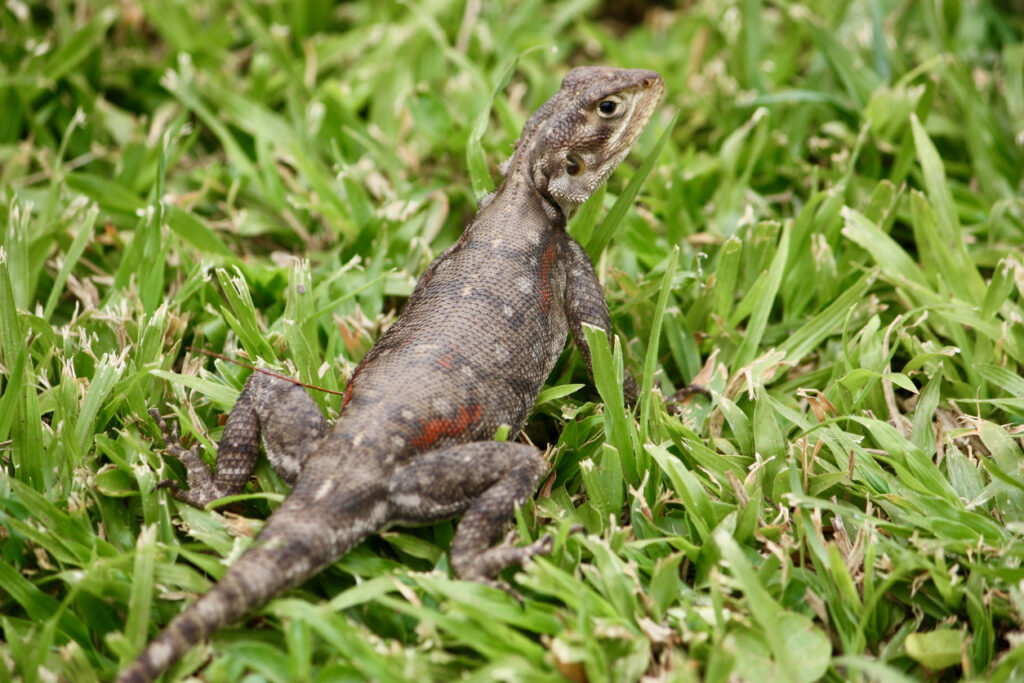
Blue-tongued skinks aren’t especially fast runners compared to some other lizards. Instead of sprinting away immediately, they often stand their ground and put on a show. The dramatic display can stop a predator from advancing. If it works, the skink avoids the need to escape at full speed.
Their strange feature makes them unforgettable.
There are many lizards in the world, but few have such a bold visual trick. That flash of blue sets them apart instantly. It’s a reminder that evolution doesn’t always favour subtlety. Sometimes, survival depends on doing something so unexpected that it leaves an impression long enough for you to get away.