The planet is full of fascinating animals, and this has to be one of the strangest you’ll ever lay eyes on.

The babirusa looks like someone crossed a pig with a walrus and then added tusks that grow so absurdly long they can pierce the animal’s own skull if not worn down properly. This bizarre Indonesian pig has been confusing zoologists and terrifying local villagers for centuries with its prehistoric appearance and habits that seem more suited to the Pleistocene era than modern Southeast Asia.
1. Their tusks grow continuously and can kill them if they get too long.

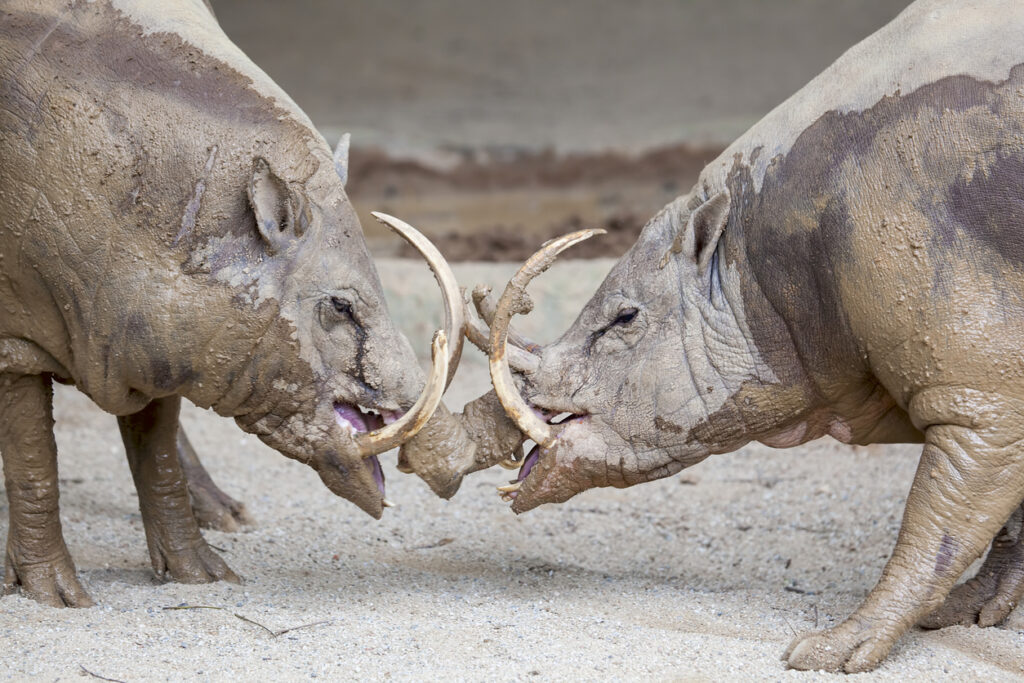
Male babirusas have upper canine teeth that grow straight up through their snouts and curve backward toward their skulls in massive spirals. If these tusks aren’t worn down through fighting or foraging, they’ll eventually grow so long they pierce the animal’s own skull, essentially allowing it to accidentally kill itself with its own teeth.
That strange evolutionary quirk makes babirusas one of the few animals that can literally grow themselves to death. The tusks never stop growing throughout their lives, requiring constant maintenance through use, or they become deadly weapons pointed at their own heads.
2. They’re the only pigs that regularly climb trees.
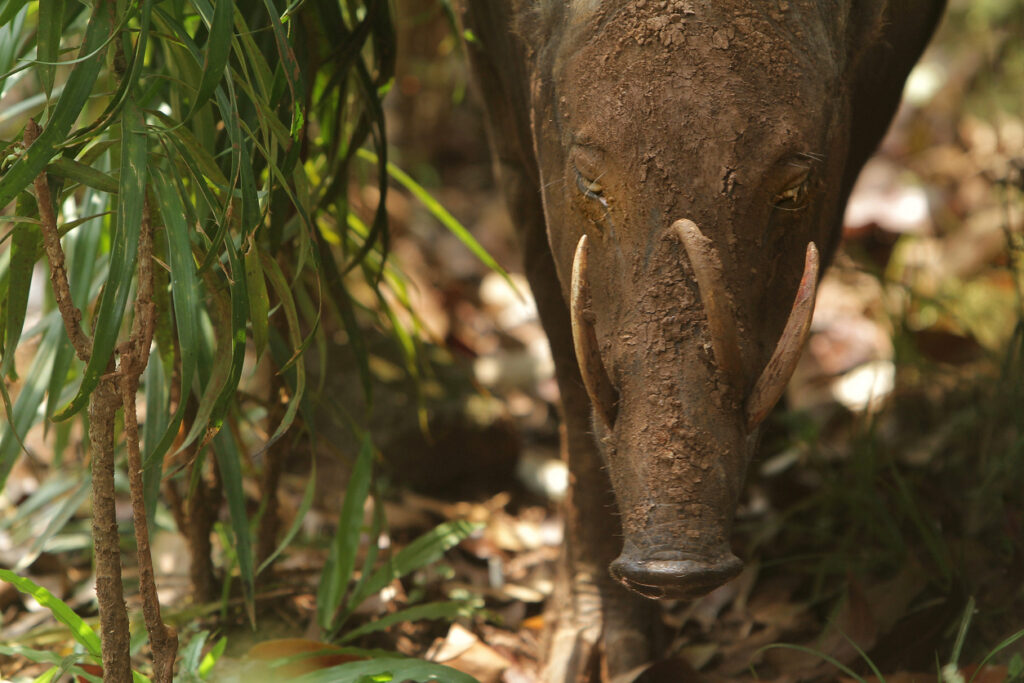
Despite weighing up to 220 lbs (around 100 kg), babirusas are surprisingly agile climbers who regularly scale trees to reach fruit, escape predators, or find comfortable sleeping spots. Their climbing ability is so unusual for pigs that early observers thought they were seeing a completely different type of animal.
Watching a full-grown babirusa climb a tree is like seeing a bear ride a bicycle – technically possible but completely unexpected. Their climbing skills help them access food sources that ground-dwelling pigs can’t reach and escape from terrestrial predators.
3. The name literally means “pig-deer” because people couldn’t figure out what they were.
Local Indonesian languages gave babirusas the name “babirusa,” which translates to “pig-deer,” because early observers couldn’t decide if they were looking at a weird pig with antlers or a strange deer with pig features. The name stuck because it perfectly captures how confusing these animals are to classify at first glance.
The confusion is understandable since babirusas have the body of a pig, the tusks of a walrus, and the climbing ability of a monkey. Even modern zoo visitors often can’t figure out what they’re looking at without reading the information plaques.
4. They’re surprisingly good swimmers for such chunky animals.

Babirusas are excellent swimmers who regularly cross rivers and even small stretches of ocean between Indonesian islands. Their swimming ability has helped them colonize different islands naturally, though it also makes them look even weirder when you see a pig-like creature paddling through the water.
Their swimming skills are so good that they’ve been observed crossing bodies of water that would challenge much more athletic-looking animals. Their aquatic ability adds another layer to their already confusing list of unexpected capabilities.
5. Baby babirusas are born without the signature tusks.

Young babirusas look like relatively normal piglets and don’t develop their distinctive facial tusks until they’re several months old. That means baby babirusas are actually quite cute and pig-like before they transform into the odd-looking adults that made the species famous.
The tusk development process is gradual, so you can watch young babirusas slowly transform from normal-looking piglets into the prehistoric-looking creatures that adults become. It’s like watching evolution happen in fast-forward on an individual animal.
6. They have almost no body fat despite being pigs.

Unlike their domestic pig relatives, babirusas are surprisingly lean and muscular animals with very little body fat. It makes them look less like the rounded pigs we’re familiar with and more like athletic wild boars that have been stretched and given absurd tusks.
Their lean build is necessary for their active lifestyle of climbing, swimming, and foraging in challenging tropical environments. The lack of fat also makes them less appealing to human hunters compared to meatier pig species.
7. They’re one of the most endangered pig species on Earth.
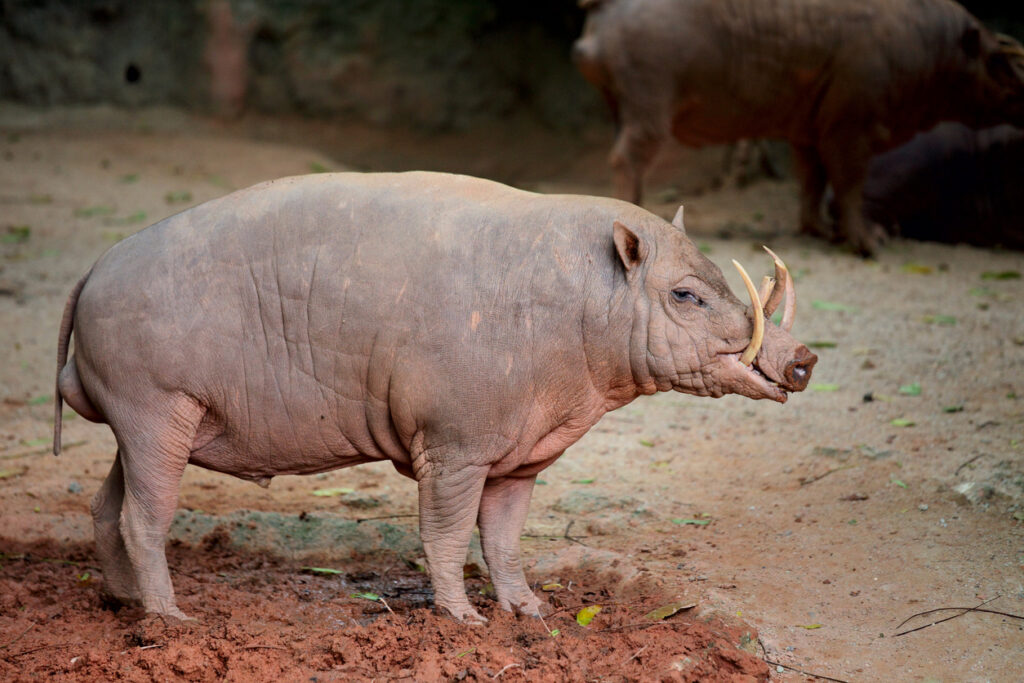
Babirusas are critically endangered with only about 4,000 individuals remaining in the wild, making them rarer than giant pandas. Habitat destruction, hunting pressure, and their naturally slow reproduction rate have pushed them to the brink of extinction.
Their small population size and limited range make babirusas extremely vulnerable to environmental changes or disease outbreaks. Losing this species would eliminate one of the most unique and prehistoric-looking animals still alive today.
8. They make sounds like something from a horror movie.

Babirusas communicate through an array of odd vocalisations including grunts, roars, chattering sounds, and tooth-clacking that sounds more like a monster from a scary movie than a pig-related animal. Their calls carry through dense forest and can be quite startling to hear unexpectedly.
The unusual sounds match their unusual appearance perfectly – if you heard a babirusa without seeing it, you’d probably think you were listening to some kind of prehistoric creature rather than a modern pig species.
9. Males fight by standing on their hind legs like boxing kangaroos.

When male babirusas fight over territory or mates, they rear up on their hind legs and box with their front hooves while trying to use their tusks strategically. This creates a spectacle that looks like two prehistoric creatures engaged in an elaborate martial arts demonstration.
The boxing behaviour is both practical and ridiculous-looking, allowing them to use their tusks effectively while protecting their vulnerable areas. Watching babirusas fight is like seeing a nature documentary directed by someone with a very strange sense of humour.
10. They’re surprisingly intelligent and social.

Despite their freaky appearance, babirusas are highly intelligent animals with complex social structures and problem-solving abilities that rival those of domestic pigs. They form family groups, communicate through various signals, and demonstrate remarkable learning capacity.
Their intelligence makes their strange appearance even more endearing – they’re not just weird-looking animals but actually quite clever weird-looking animals with distinct personalities and social relationships.
11. They prefer fruits and leaves over the omnivorous diet of most pigs.

While most pig species are opportunistic omnivores that will eat almost anything, babirusas are primarily herbivorous, preferring fruits, leaves, and other plant materials. This vegetarian tendency makes them less destructive to their environment than many pig species.
Their specialized diet contributes to their lean physique and requires them to spend more time foraging and climbing to find preferred food sources. This dietary difference is another way babirusas defy expectations about how pigs should behave.
12. They’ve inspired local folklore about mythical creatures.
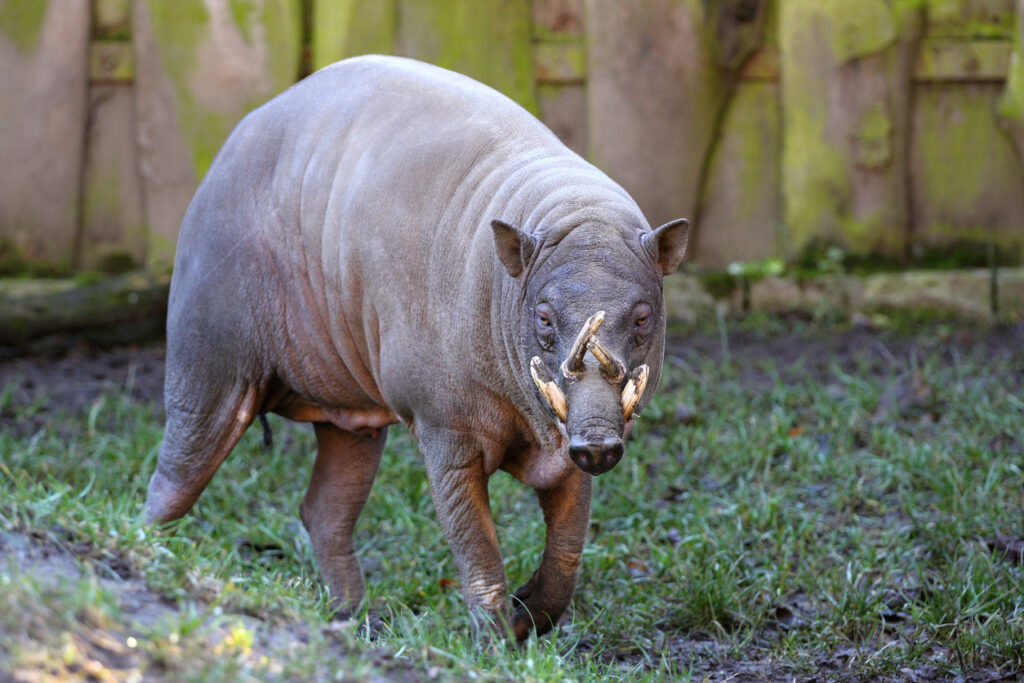
Babirusas have been incorporated into Indonesian folklore and mythology for centuries, often portrayed as magical or supernatural creatures due to their unconventional appearance and unexpected abilities. Local stories sometimes describe them as shape-shifting spirits or guardian animals.
The folklore surrounding babirusas reflects how strange and otherworldly these animals appear even to people who live near them. When an animal looks like it belongs in a fantasy novel, it’s natural for it to become part of local mythology and storytelling traditions.