The aardwolf is one of Africa’s most unusual carnivores.

You’ve probably never heard of it, but it’s an incredibly unique and beautiful creature. Unlike its fearsome hyena relatives, it feeds almost entirely on insects, living a life that’s both secretive and fascinating. Here are some of the quirks that make this shy animal so extraordinary.
1. It belongs to the hyena family.

At first glance, the aardwolf looks like a small hyena, and that’s no coincidence. It’s part of the same family, Hyaenidae, though its behaviour and diet set it apart from its bone-crushing cousins.
While spotted and striped hyenas scavenge or hunt, the aardwolf evolved to specialise in eating insects. This unique adaptation means it avoids direct competition with its relatives while thriving in the same savanna environments.
2. Its diet is almost entirely termites.

The aardwolf’s favourite meal is termites, particularly species that don’t build large mounds but instead move in underground colonies. Using its long, sticky tongue, the aardwolf can lap up thousands of termites in a single night.
Unlike anteaters, it doesn’t destroy termite nests but feeds gently, leaving colonies able to regenerate. This approach ensures a constant food supply and makes the aardwolf more of a grazer than a predator.
3. It has a tongue built for the job.

To eat so many termites efficiently, the aardwolf relies on an unusually long and sticky tongue covered in toughened papillae. This allows it to scoop up insects rapidly without suffering damage from termite bites.
Researchers estimate an aardwolf can consume over 200,000 termites in a single night. Its tongue is so specialised that it’s of little use for chewing meat, one reason why the species never shifted back to a carnivorous diet.
4. It avoids confrontation with bigger predators.

Although related to aggressive scavengers, the aardwolf is timid and non-confrontational. When threatened, it raises its mane of stiff hairs to appear larger, hisses, and emits a musky odour to deter attackers rather than fighting.
This strategy helps it avoid clashes with lions, hyenas, or leopards, which could easily overpower it. Survival depends on keeping out of trouble, making the aardwolf one of the more peace-loving carnivores in Africa.
5. It has unusual teeth for a carnivore.

Most carnivores are equipped with strong, sharp teeth, but the aardwolf has reduced molars that aren’t designed for chewing flesh. Instead, its teeth are suited to its insect diet and are surprisingly delicate.
This dental structure makes it impossible for the aardwolf to handle bones or large prey. It’s one of the clearest examples of how evolution has locked the animal into its unusual termite-eating lifestyle.
6. It prefers to be active at night.

Aardwolves are nocturnal, emerging after sunset to search for termites across the grasslands. This keeps them safe from many predators and ensures they can feed when termites are most active on the surface.
During the day, they rest in burrows, often dug by other animals such as aardvarks. Their shy, secretive behaviour makes them hard to spot in the wild, adding to their mysterious reputation.
7. It plays an important ecological role.
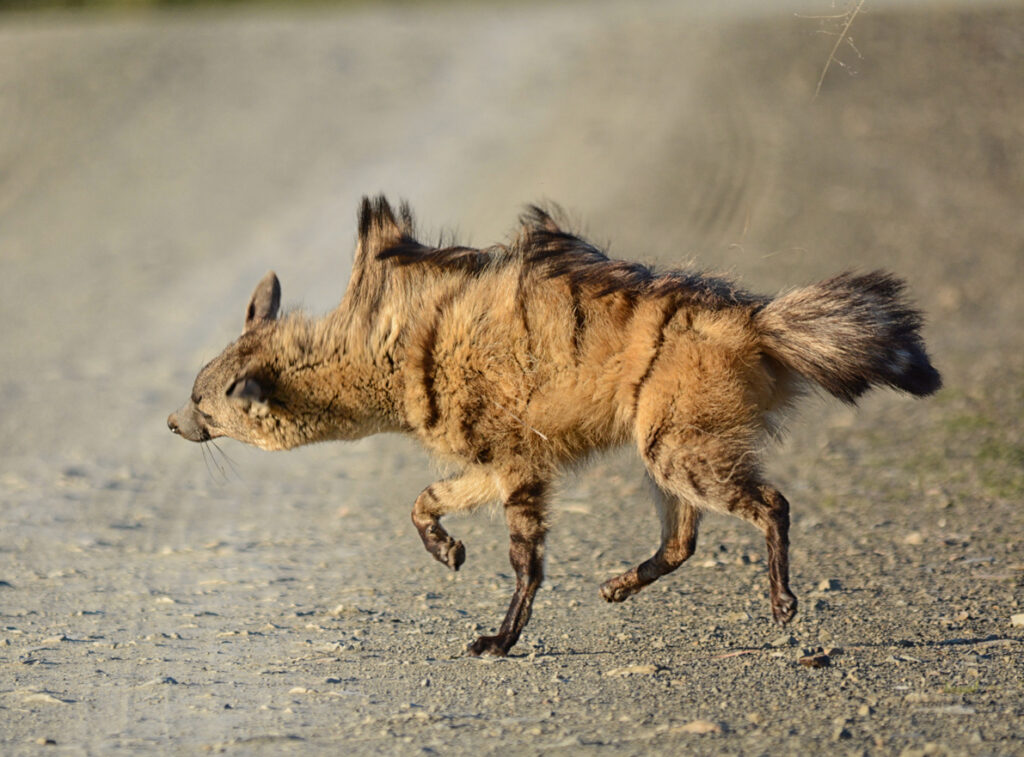
By consuming enormous numbers of termites, aardwolves help regulate insect populations and prevent outbreaks that could damage vegetation. This makes them valuable contributors to savanna ecosystems, even though they’re rarely noticed.
Because they feed without destroying termite colonies, their ecological impact is balanced. They reduce insect pressure on plants while allowing termites to continue recycling nutrients into the soil.
8. Its body language is all about display.
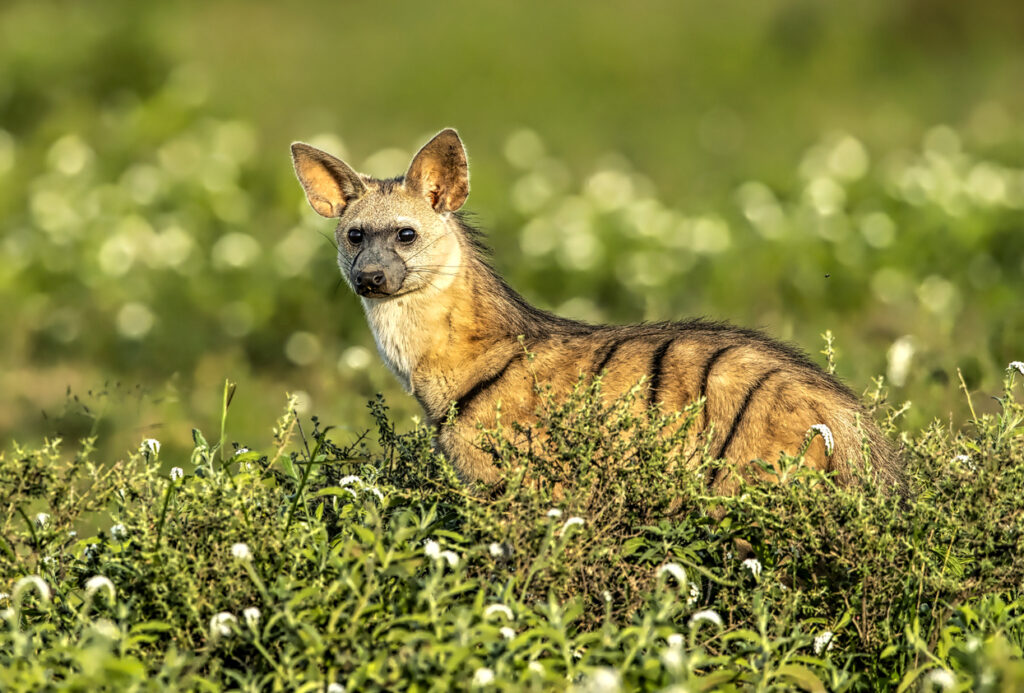
The aardwolf has a distinctive mane that runs along its back, which can be raised to nearly double its apparent size when it feels threatened. This visual warning helps ward off predators without physical conflict.
It also uses its bushy tail and striped coat as part of its defensive signals. These displays are effective deterrents, giving the aardwolf a way to stand its ground despite its smaller size.
9. It mates for life.

Aardwolves are monogamous, usually pairing with a single mate for life. Both parents help raise their cubs, which is unusual in the wider hyena family, where cooperative breeding isn’t the norm.
This family structure provides stability and increases the survival chances of young aardwolves. Their loyalty to mates is one of the traits that makes them especially interesting among carnivores.
10. Its home range is fiercely defended.
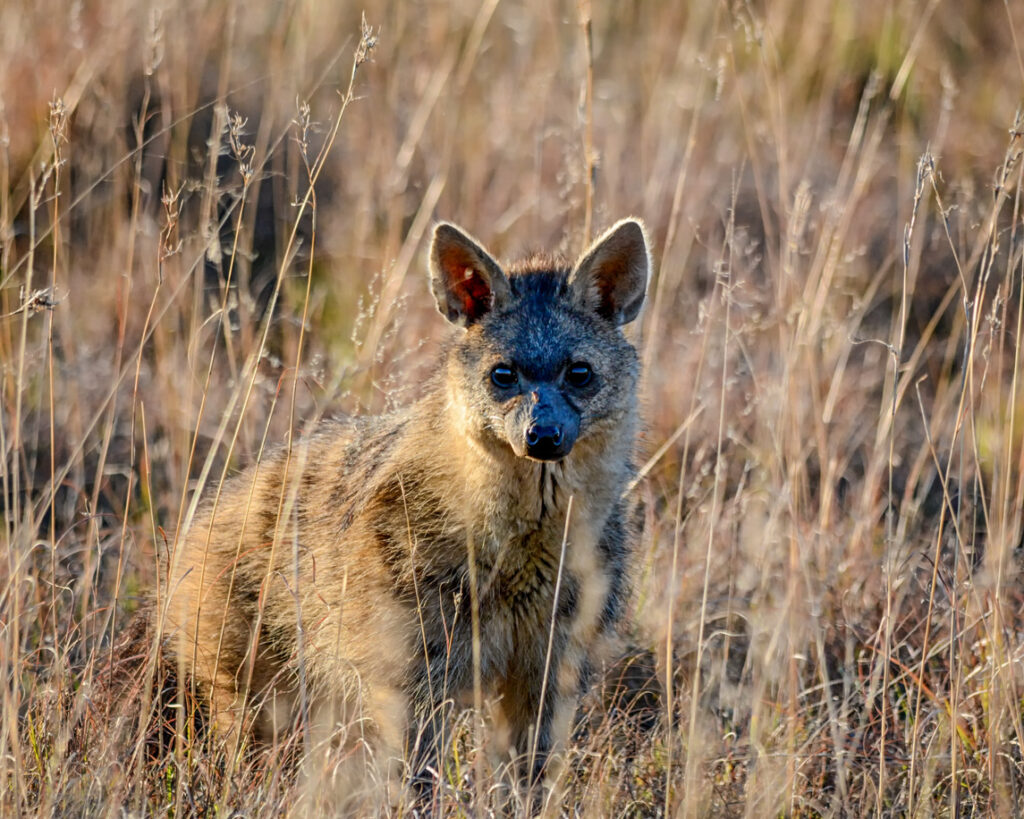
Although shy, aardwolves are territorial and mark their ranges with scent. They use glands near the tail to leave strong odours that signal ownership of an area, warning rivals to stay away.
These territories are important because they ensure a reliable food supply of termites. Both males and females patrol and defend their ranges, particularly during breeding season when cubs are vulnerable.
11. Cubs are hidden in underground dens.
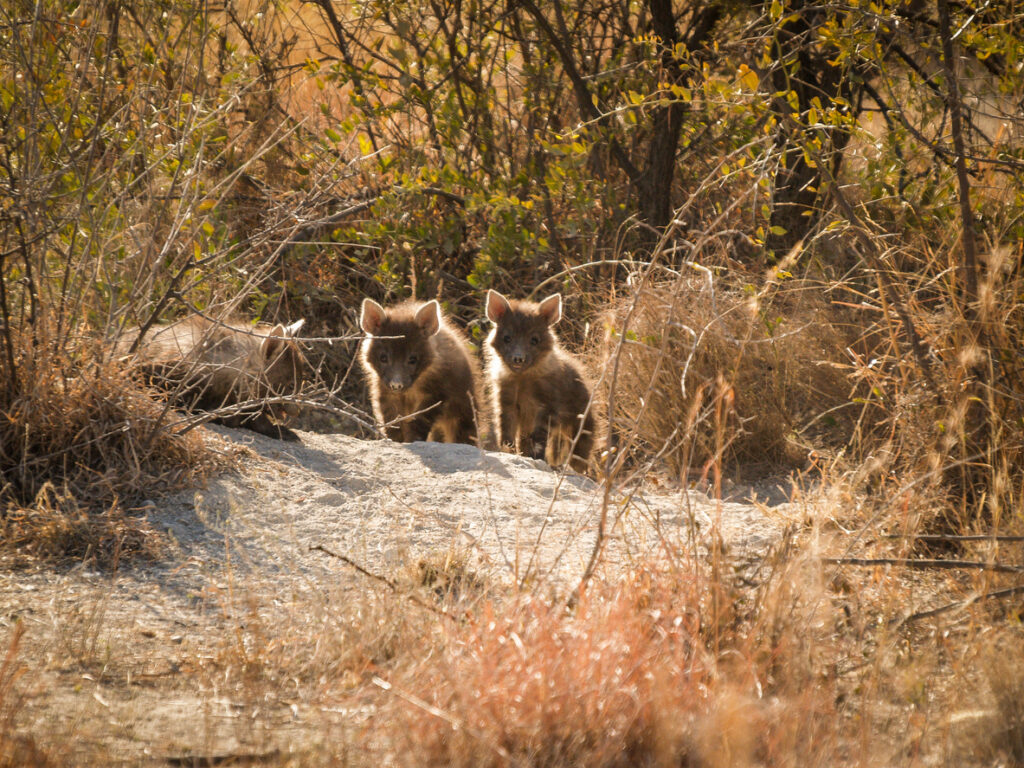
When cubs are born, they’re kept in burrows where they remain safe from predators. The mother nurses them for several weeks, and later both parents bring them insects as they begin to wean.
Cubs are extremely vulnerable in their early months, so secrecy is vital. Parents shift dens occasionally to reduce the chance of discovery, a strategy that helps increase the odds of survival.
12. It thrives in dry, open landscapes.
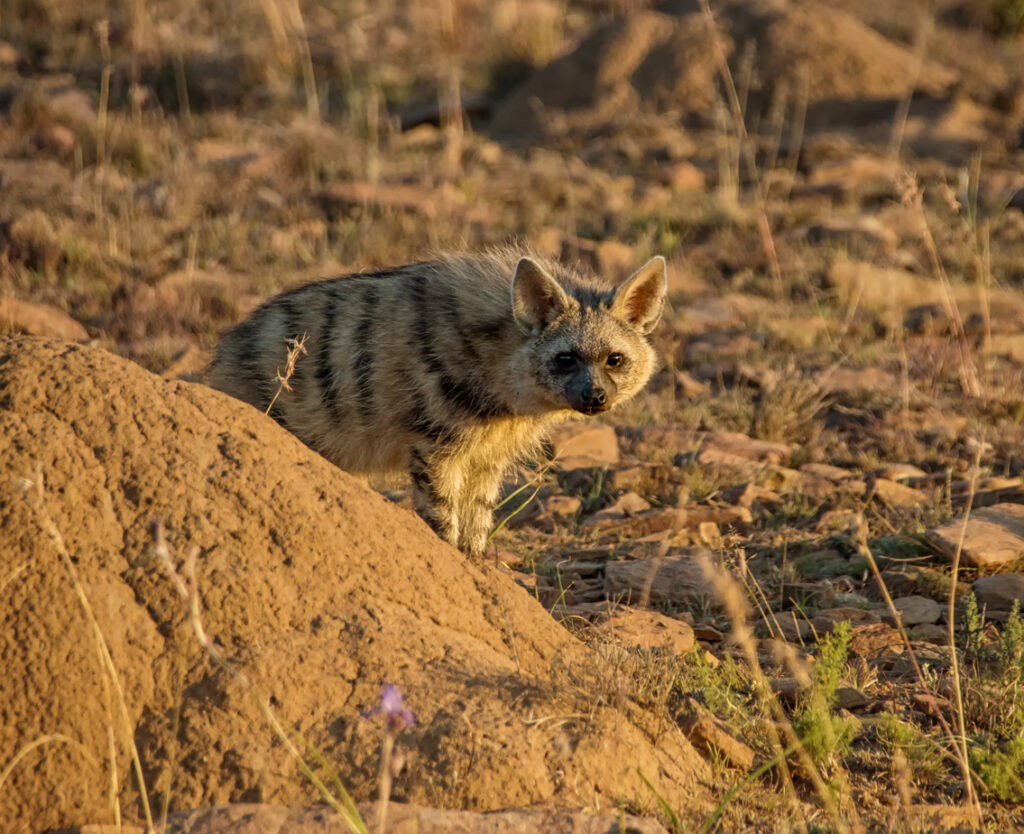
Aardwolves prefer semi-arid grasslands where termite populations are high. They avoid dense forests and wetlands, instead choosing habitats where their insect prey is most abundant and easiest to reach at night.
This preference means they’re often found in areas where other carnivores struggle, giving them a niche that allows them to survive without much competition for food resources.
13. It remains one of Africa’s most misunderstood animals.

Because it looks like a hyena but behaves so differently, the aardwolf is often misunderstood or overlooked. Its gentle habits and insect diet don’t fit the typical image of a carnivore, leading to confusion about its role in nature.
In reality, the aardwolf is a reminder of how diverse survival strategies can be. It’s proof that even within fierce families like the hyenas, there is room for a specialist that thrives by choosing a very different path.
The aardwolf may never inspire the fear or admiration given to lions or hyenas, but its lifestyle is just as remarkable. By relying on termites rather than blood, it has carved out a niche that highlights the ingenuity of evolution.