We’ve all seen the pictures of koalas looking like cuddly little teddy bears tucked up in the eucalyptus trees, but if you actually spent five minutes watching them in the wild, you’d realise they’re anything but sweet.
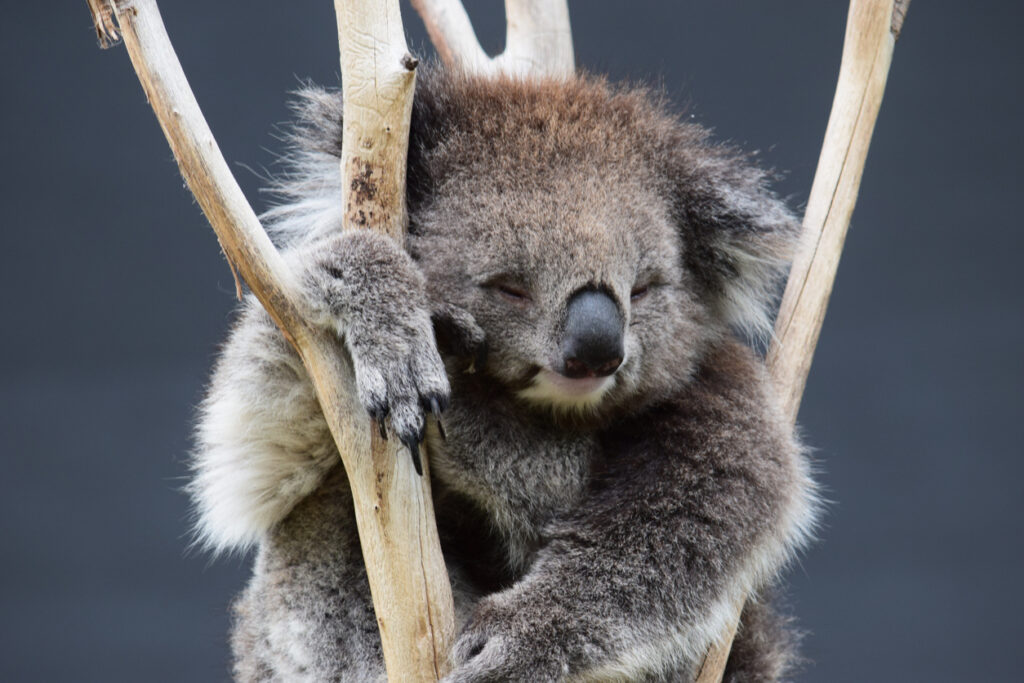
They’ve got a reputation for being adorable icons of the Australian bush, but the reality is a bit more, well, stomach-turning. From their questionable diet to the way they handle their personal hygiene, these creatures have a list of habits that’d make even the most hardened animal lover feel a bit green around the gills.
It’s not that they’re being intentionally nasty; it’s just that surviving on a diet of toxic leaves requires some pretty grim biological workarounds. Understanding these 11 habits is a proper eye-opener that proves being cute on the outside doesn’t mean you aren’t doing some properly grotty things behind the scenes.
1. Baby koalas eat their mother’s faeces.
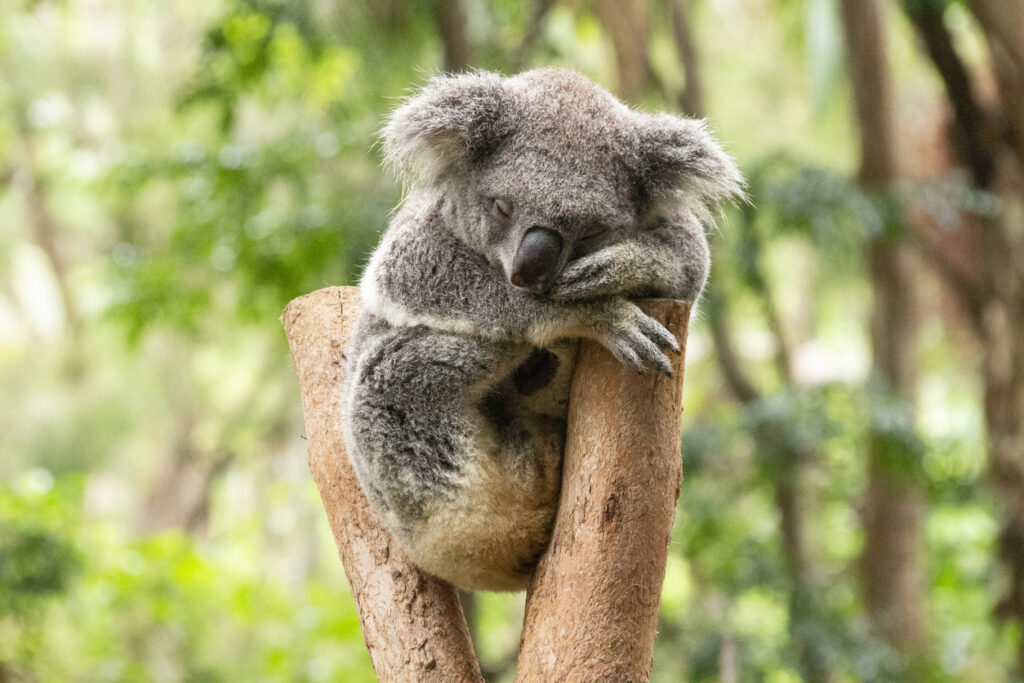
When koala joeys are ready to transition from milk to solid food, they don’t start with leaves. They eat a special substance called pap, which is basically partially digested poo that their mother produces. The joey sticks its head out of the pouch and nuzzles its mum’s bottom until she releases normal poo pellets, followed by this runnier faecal matter.
It looks as disgusting as it sounds. The pap is full of gut bacteria that the baby needs to digest toxic eucalyptus leaves for the rest of its life. Professional koala keeper Caroline Monro described feeding time as something that “can look really disgusting because the joeys use their mouth to stimulate the mother’s cloaca to produce the pap. And it’s quite wet. It gets everywhere.”
2. Up to 90% of koalas in some areas have chlamydia.
Koalas are ravaged by sexually transmitted infections. In some Australian populations, the infection rate is 80 to 90%. The chlamydia strains that affect koalas are different from the human version, but they spread the same way through mating, and mothers can pass it to their joeys.
The disease makes koalas blind, incontinent, infertile and can kill them. About half the koala population in Australia is infected. It’s become such a widespread problem that researchers have developed a vaccine, but rolling it out to wild populations remains a challenge.
3. Many koalas are incontinent because of disease.
Thanks to rampant chlamydia infections, loads of koalas suffer from incontinence. They can’t control their bowels or bladder properly, which means they’re often soiled and uncomfortable. This is particularly grim when you consider they’re sitting in trees all day with nowhere to properly clean themselves. The infection causes inflammation and damage to their urinary and reproductive systems, leaving many koalas in chronic discomfort while they try to go about their already difficult lives.
4. Male koalas have two-pronged reproductive organs.
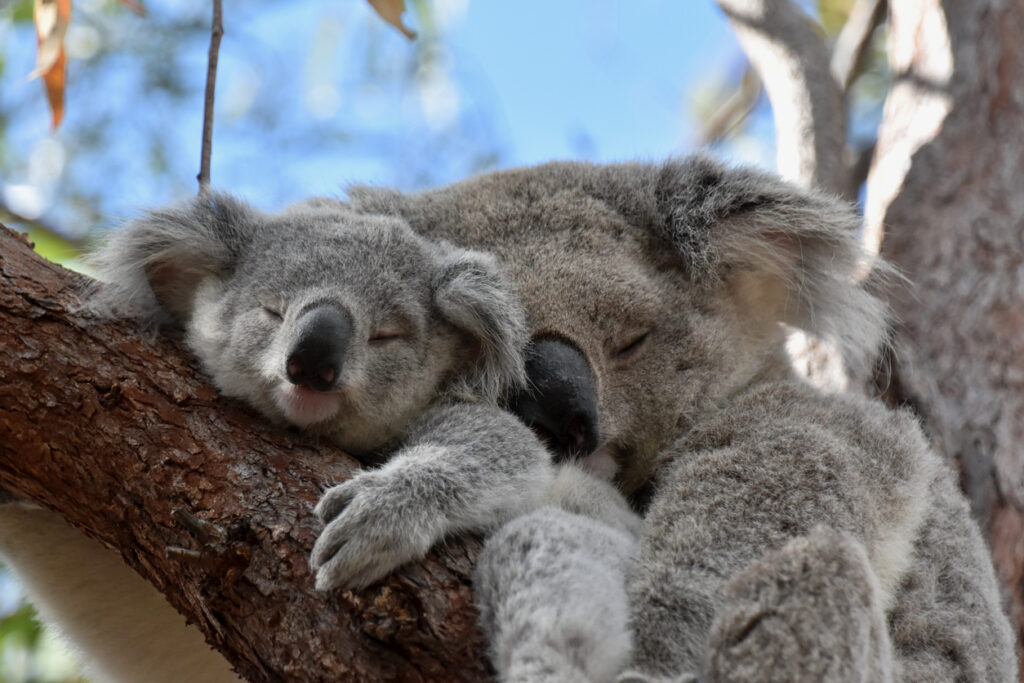
Like many marsupials, male koalas have bifurcated genitalia. That means their reproductive organ splits into two prongs. This anatomical quirk matches up with the female koala’s paired reproductive tract. It’s an evolutionary adaptation that’s common in marsupials, but it’s still pretty weird when you think about these cuddly-looking creatures having forked genitalia. Nature can be deeply strange.
5. They make absolutely terrifying sounds.
If you’ve never heard a koala, you’re in for a shock. They make some of the most unsettling noises in the Australian bush. Male koalas produce deep, bellowing grunts that sound like a cross between a pig snorting and a monster growling. These calls can be heard from over a kilometre away.
When koalas are distressed or fighting, they scream like babies or injured cats. Female koalas shriek, wail, and screech when they’re rejecting a male’s advances. The sounds are so horrifying that Jurassic Park used male koala bellows for the T. rex roar. Nothing about their vocalisations matches their adorable appearance.
6. Males are sexually aggressive and don’t take no for an answer.
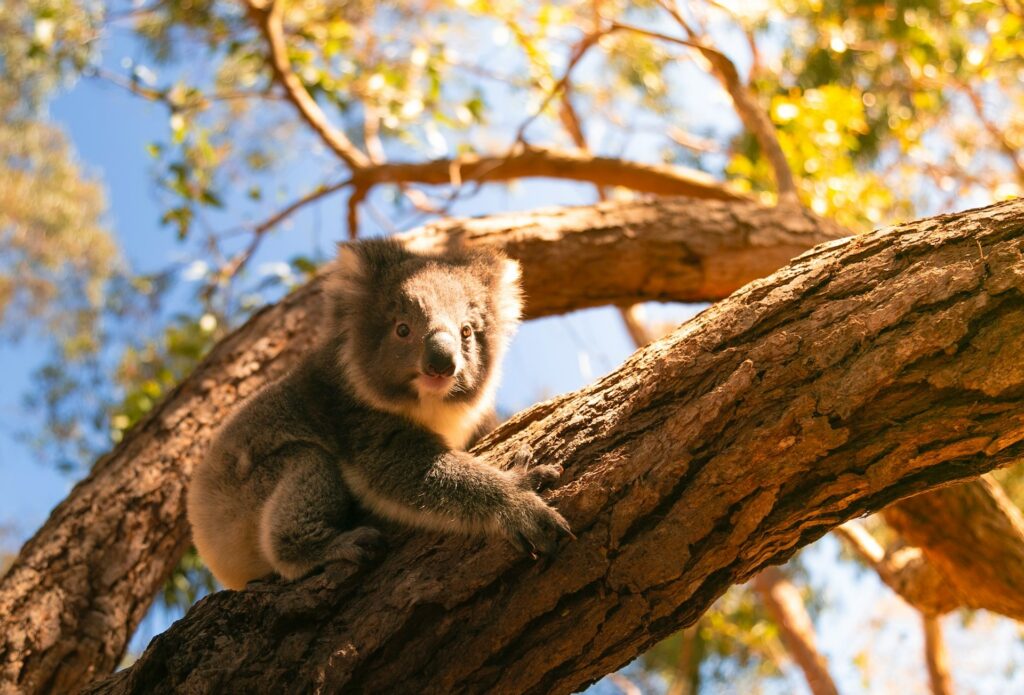
Male koalas can be forceful during mating season, often overpowering females whether they’re receptive or not. They don’t seem to care if a female is actually ready to mate, and they’ll pursue and force themselves on females who are clearly resisting.
Female koalas will scream, fight back and try to escape, but males are larger and stronger. If she fights hard enough, he might drag them both out of the tree in the struggle. It’s one of the few activities koalas will actually expend energy on, which tells you something about their priorities.
7. They only eat leaves that are toxic to almost everything else.
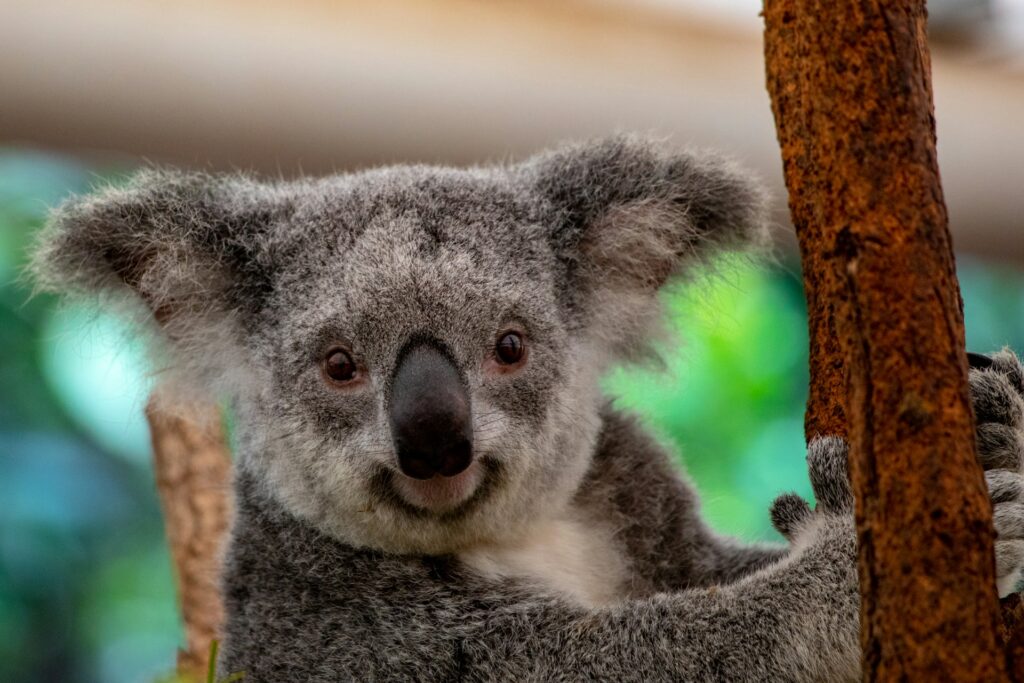
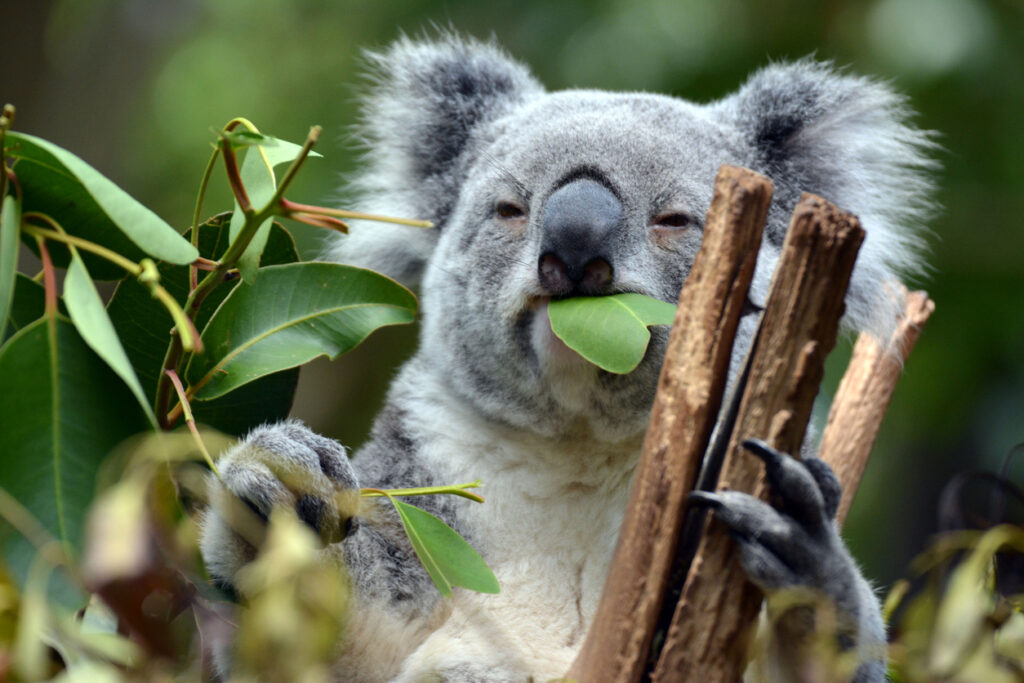
Eucalyptus leaves contain compounds chemically similar to cyanide and are poisonous to nearly every other animal. Koalas have evolved special digestive systems with specific gut bacteria that can break down these toxins, but it’s still a terrible diet. The leaves have almost no nutritional value, which is why koalas are so sluggish.
They’re essentially poisoning themselves every day and barely getting any energy from it. It’s such a rubbish food source that their entire lifestyle revolves around conserving energy because they’re essentially starving all the time.
8. They have ridiculously small, smooth brains.
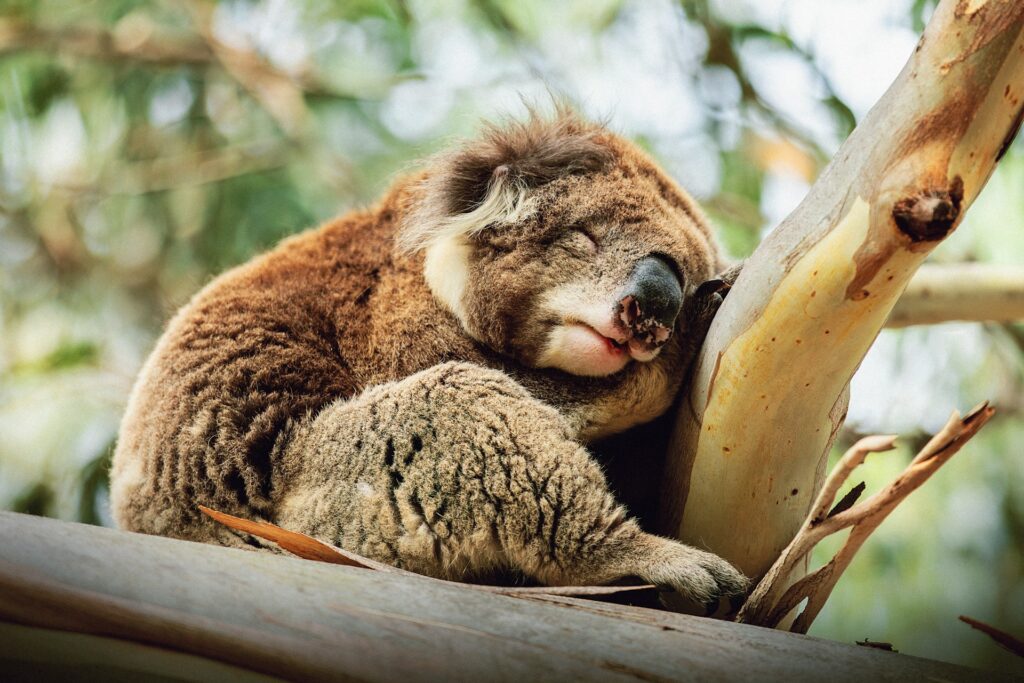
Koalas have one of the smallest brain-to-body ratios of any mammal. Their brains are also unusually smooth, lacking the folds that create surface area for neurons in most mammals. This makes them remarkably dim. If you present a koala with eucalyptus leaves that have been plucked from a branch and laid on a flat surface, it won’t recognise them as food.
They’re too thick to adapt their behaviour. Put a koala in a room full of food, and it could literally starve to death because it can’t work out that the leaves are edible if they’re not on a tree. They’ve been described as having built-in special ed helmets because they have extra cerebrospinal fluid in their skulls to protect their brains from injury when they fall out of trees.
9. They sleep 18 to 20 hours every single day.
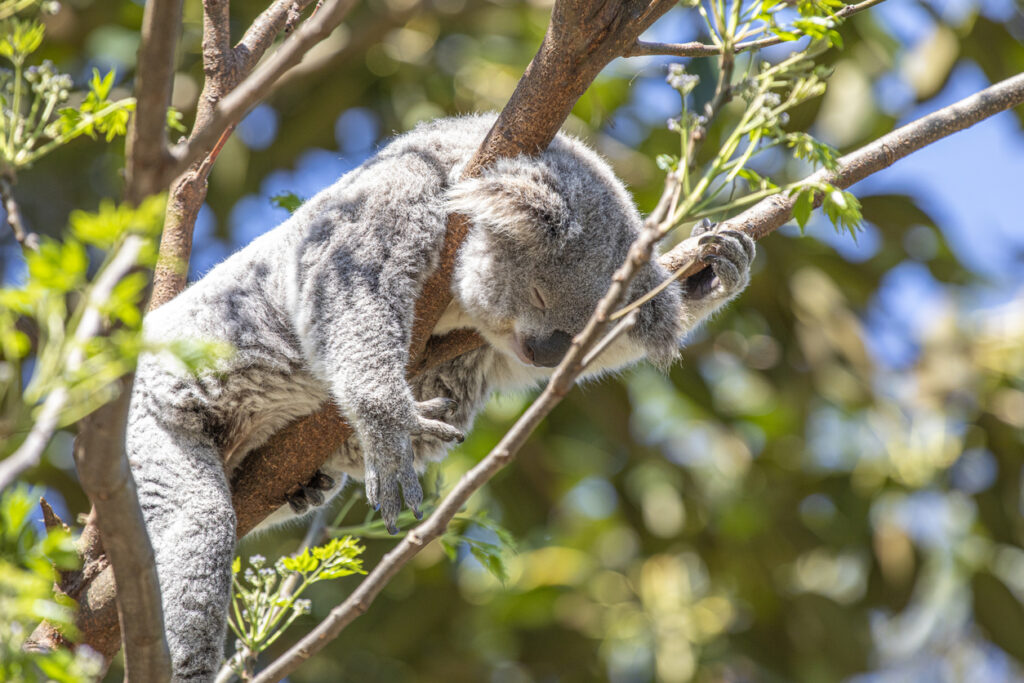
Koalas are asleep or resting for up to 22 hours a day. When they’re awake, they’re mostly just sitting there eating, occasionally moving between trees or screaming at each other. They can’t afford the energy to do anything else because their diet is so appalling. They’ve basically evolved to be as inactive as possible.
It’s not cute laziness, it’s nutritional desperation. They’re so low on energy from their toxic, nutrient-poor diet that they can barely function. Watching them is like watching something in extremely slow motion all the time.
10. They have enormous digestive systems to ferment leaves for days.
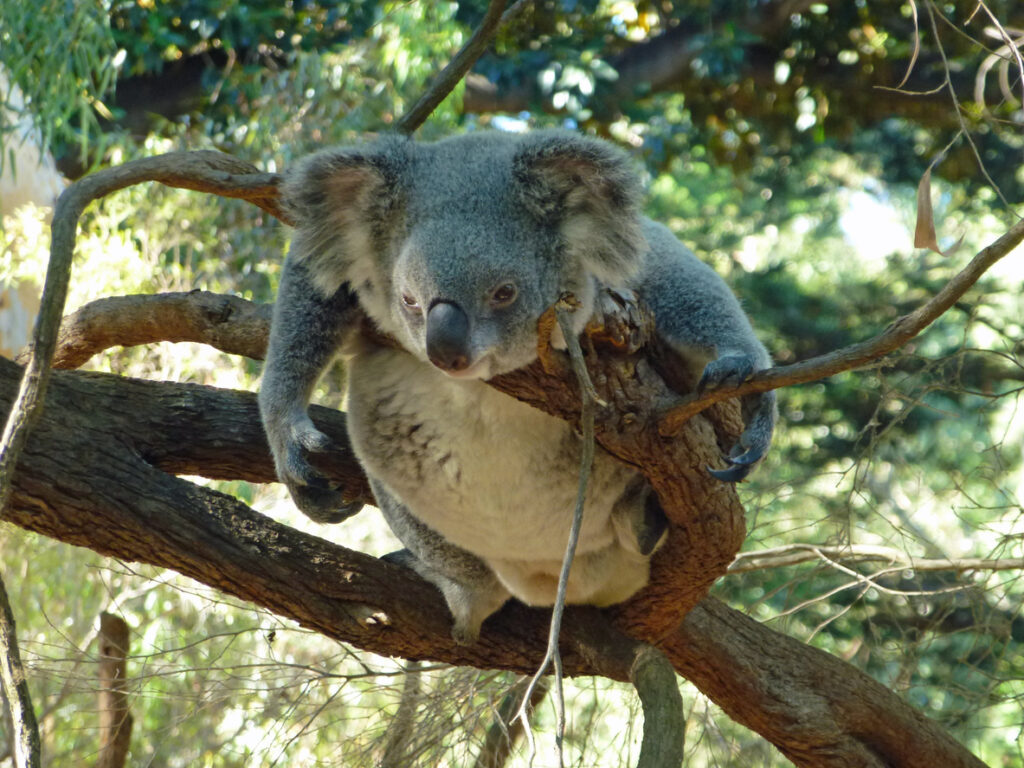
Because eucalyptus leaves are so difficult to digest and provide so little nutrition, koalas have to ferment them in their guts for days. They have the largest hindgut-to-body ratio of any mammal, which is a polite way of saying their digestive systems are absolutely massive compared to the rest of their organs.
Their intestines are incredibly long to extract any possible nutrients from the toxic leaves, and the fermentation process takes forever. Essentially, koalas are walking fermentation tanks slowly breaking down poison in their bellies while they sleep in trees.
11. Males have prominent scent glands on their chests.
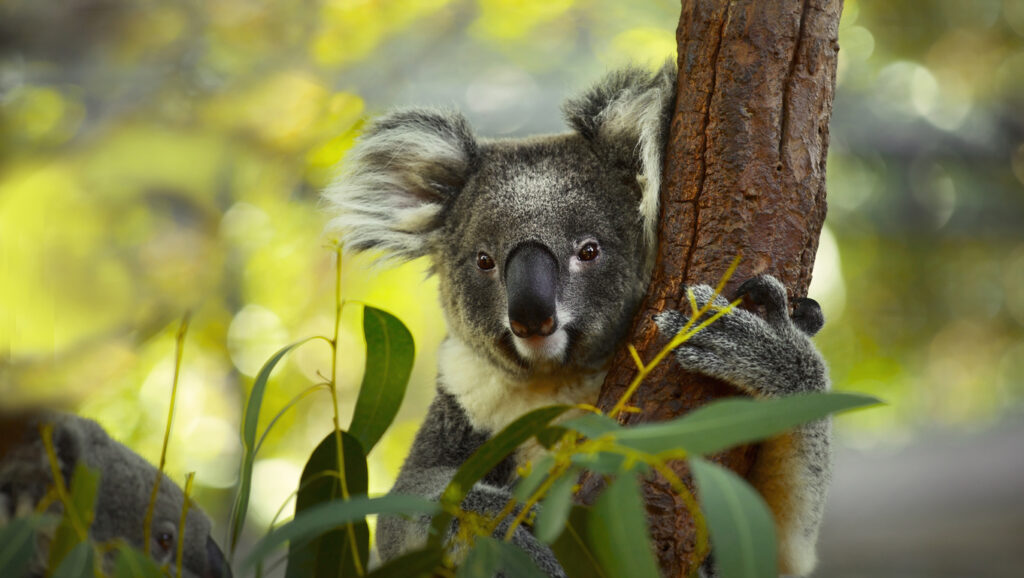
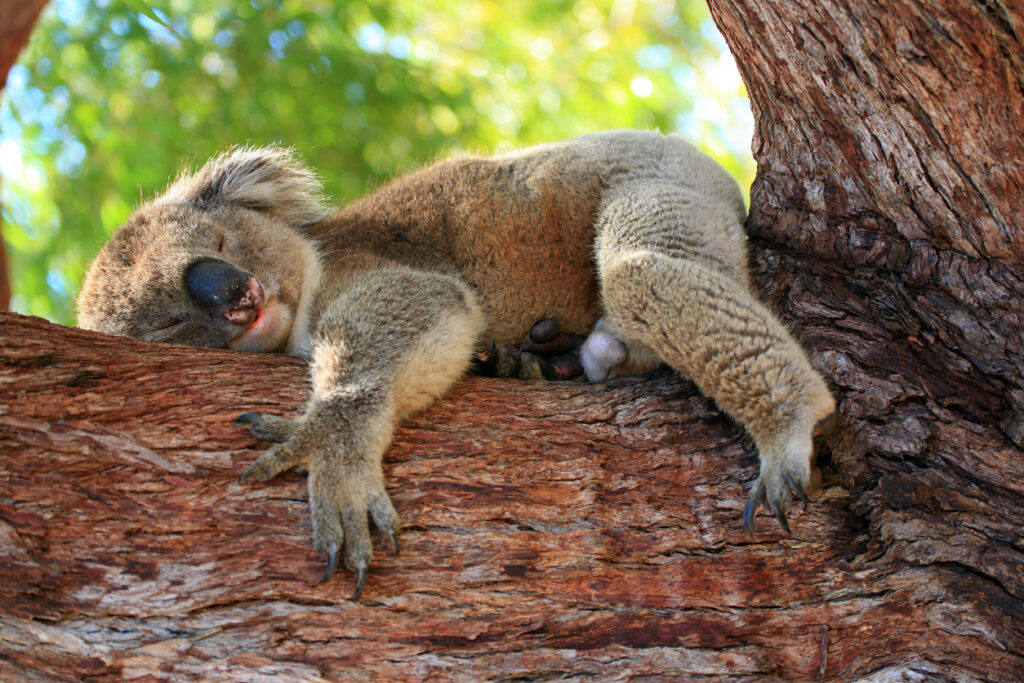
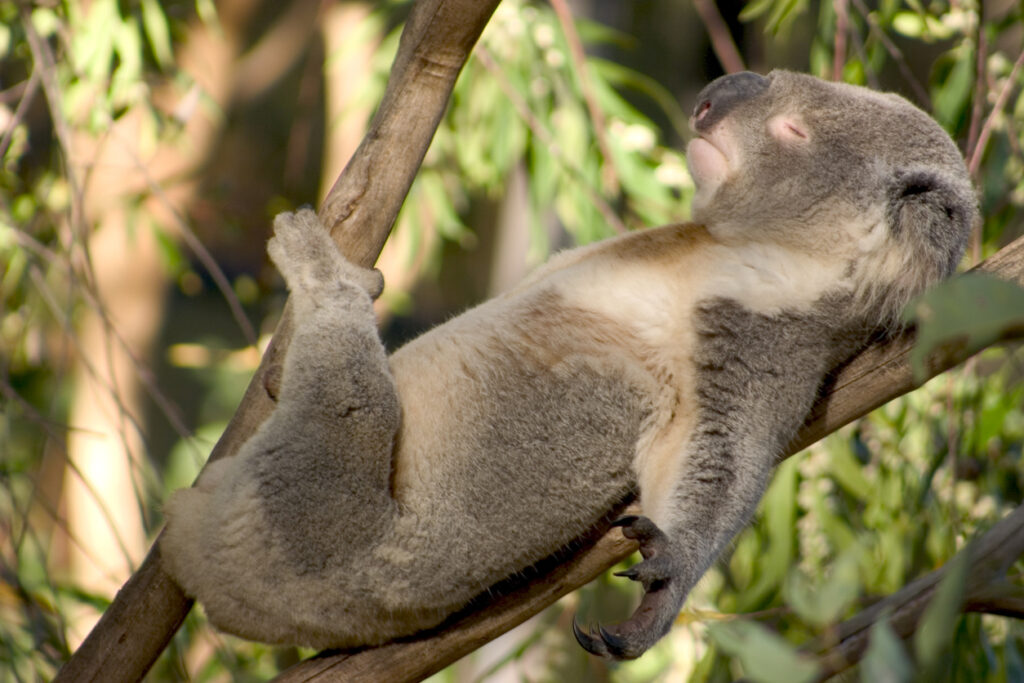
Male koalas have a large, brownish scent gland right in the middle of their chest that they use for marking their territory. They rub this gland against trees to leave their scent and let other koalas know who’s in charge of that area. The gland is quite visible and frankly a bit unpleasant looking.
They’ll spend time rubbing their chest all over branches to spread their smell around, essentially marking everything with their body secretions. It’s territorial behaviour, sure, but it’s still pretty gross when you think about these supposedly pristine forest creatures smearing themselves all over the place.