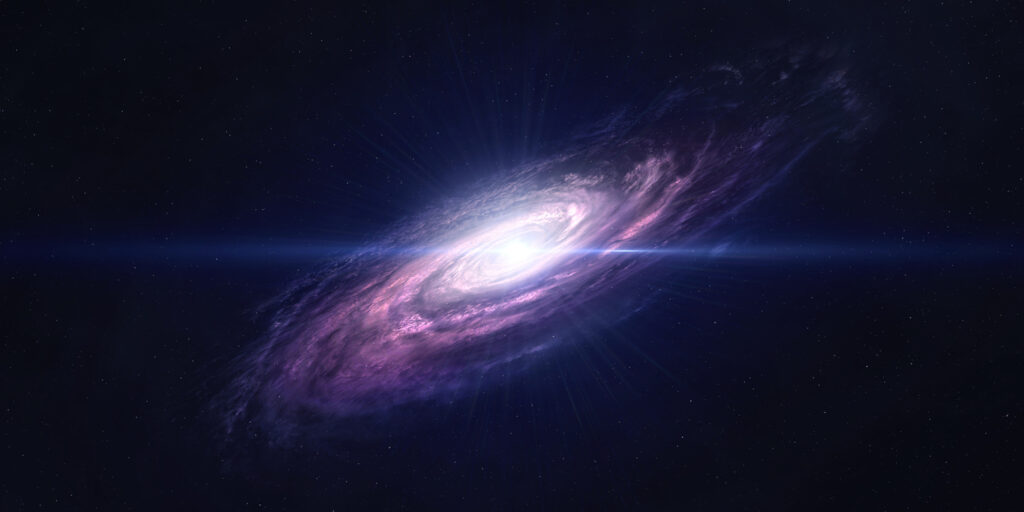
We live inside the Milky Way, yet most of us rarely stop to think about just how unusual it really is. It’s hard to fathom just how incredible it is from deep inside it—our human brains can’t even comprehend the reality of it! From strange shapes to mysterious behaviours, our galaxy is far from ordinary. Here are just some of the ways it stands out.
1. It’s warped instead of flat.
Many people imagine the Milky Way as a perfect flat disc, but it actually has a noticeable warp. Its edges twist up and down like a bent vinyl record, likely caused by neighbouring galaxies tugging on it. This makes our home galaxy structurally odd compared with others. Instead of being smoothly shaped, it carries a cosmic twist that still puzzles scientists.
2. It’s unusually massive.
The Milky Way is much larger than most spiral galaxies. With hundreds of billions of stars and enough mass to dwarf many neighbours, it sits in the heavyweight category of galactic structures. That size gives it significant gravitational pull, which shapes the movements of smaller galaxies nearby. It’s one reason we have so many satellite galaxies clustered around us.
3. It has a black hole at the centre.
At the very heart of the Milky Way sits Sagittarius A*, a supermassive black hole weighing millions of times more than our Sun. Though invisible directly, its presence is confirmed through the movement of nearby stars. Black holes at galactic centres are common, but ours has bursts of activity that hint at a more turbulent past. The fact we orbit a monster like this is a reminder of just how extreme our galaxy is.
4. Our galaxy is still growing, by the way.
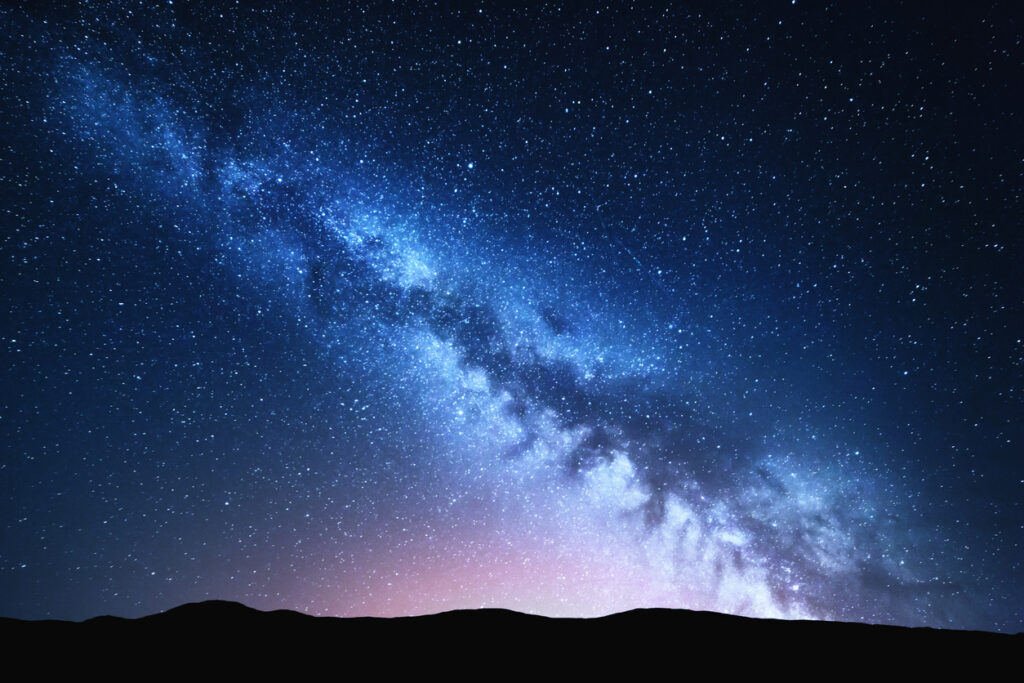
The Milky Way isn’t a finished product. It’s constantly absorbing smaller galaxies, pulling in their stars and gas to add to its bulk. This process is ongoing and will continue for billions of years. Right now, it’s slowly consuming the Sagittarius Dwarf Galaxy. This growth by galactic snacking makes it stranger than a stable, unchanging system.
5. It’s headed for a collision.
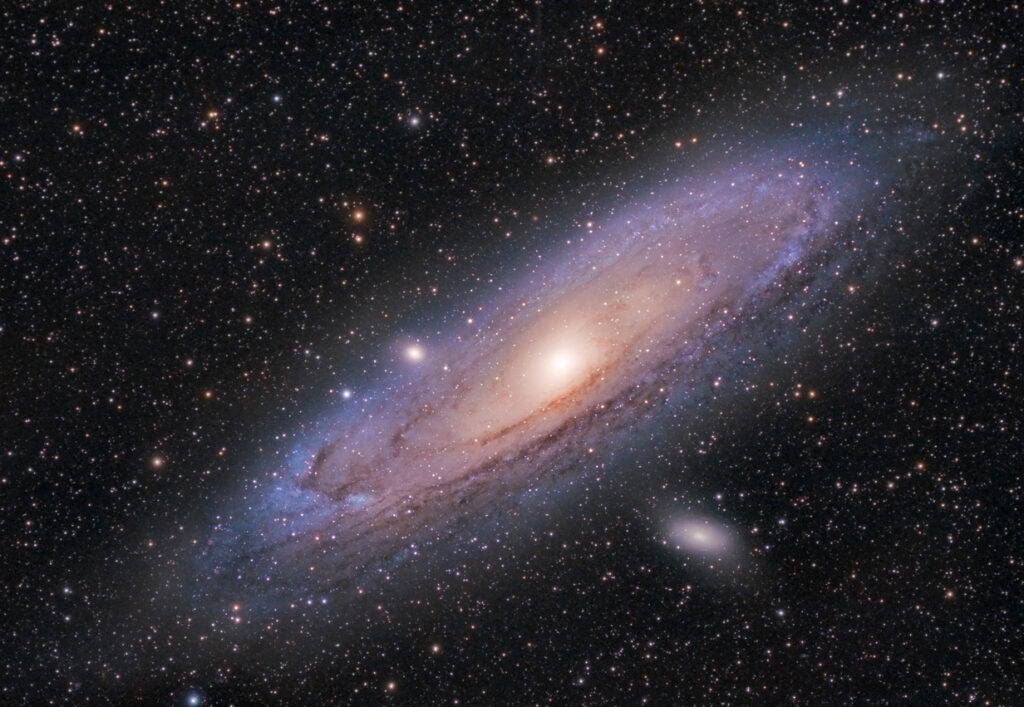
In about four billion years, the Milky Way will crash into the Andromeda Galaxy. Instead of a simple collision, the two will swirl together, creating an entirely new galaxy. This destiny means our galaxy’s current shape is temporary. In the grand timeline of the universe, we live in a fleeting stage before something even stranger takes its place.
6. The Sun sits in a quiet suburb.
Our solar system isn’t near the galactic centre or edge, but tucked in a calmer region known as the Orion Arm. This placement gives us more stability than stars in crowded or chaotic zones. It’s an oddly fortunate location. Without the calmer conditions of this galactic neighbourhood, life on Earth might not have had the chance to develop.
7. Stars orbit at surprising speeds.
In most systems, the outer parts move slower than the inner ones. But in the Milky Way, stars far from the centre orbit just as fast as those closer in. This odd behaviour is one of the main clues that dark matter exists. The strange speed patterns suggest an invisible mass holding everything together.
8. It’s filled with mysterious dark matter.
Scientists believe most of the Milky Way’s mass isn’t visible stars or gas but dark matter. This substance doesn’t emit light, yet its gravitational effects are undeniable. The fact that our galaxy is held together by something we can’t see makes it deeply weird. We’re essentially living in a structure supported by an unknown force.
9. It has giant bubbles of energy.
In 2010, astronomers discovered two massive bubbles of high-energy gas extending above and below the Milky Way. Known as the Fermi Bubbles, they span tens of thousands of light years. Their exact origin remains uncertain. Some think they came from past black hole eruptions, while others link them to bursts of star formation. Either way, they are unique features.
10. It recycles its own stars.
Stars in the Milky Way aren’t eternal. When massive ones explode, their material spreads into space, eventually forming new stars and planets. In a way, the galaxy is constantly recycling itself. The ongoing cycle is both violent and creative. It makes our galaxy a living system rather than a static collection of stars.
11. It’s unusually rich in heavy elements.
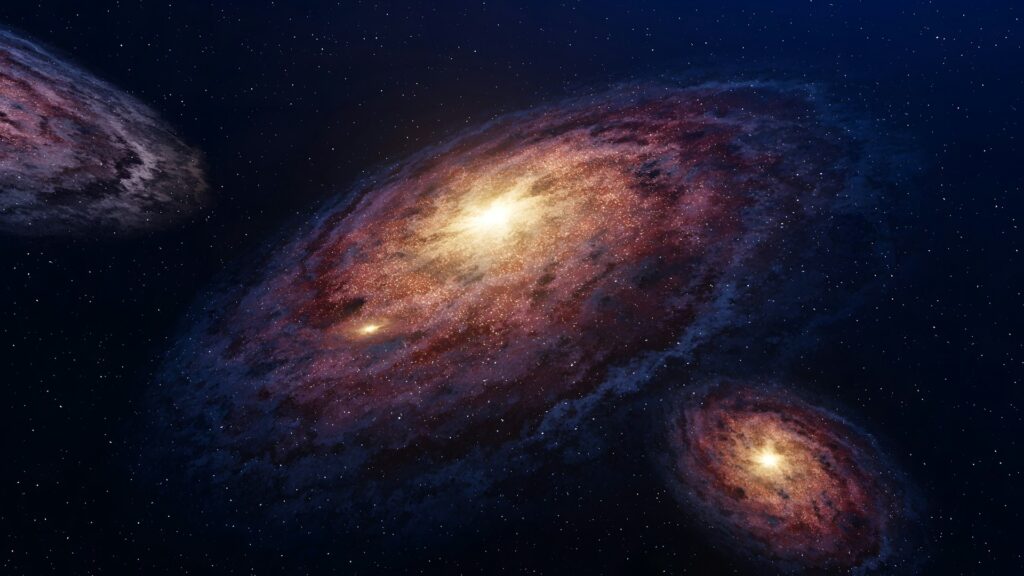
The Milky Way contains a higher percentage of heavy elements compared with many other galaxies. These elements are essential for planets and, ultimately, for life like ours to exist. Its chemical richness makes it stand out. Without it, Earth and everything on it may never have formed at all.
12. It contains billions of potentially habitable planets.
Estimates suggest there may be billions of Earth-like planets scattered across the Milky Way. Many of them sit in the “habitable zone” of their stars, where liquid water could exist. The sheer scale of potential life-supporting worlds is staggering. It makes our galaxy not just strange, but possibly teeming with possibilities we have yet to discover.