Growing an avocado seed is one of those projects people try once, forget about, and then feel amazed when they see someone else’s seed sprouting into a tall, glossy-leafed plant.
The truth is, it’s easier than most people think, and the results are far more impressive than a standard houseplant, even if it takes a while. An avocado grown from seed won’t give fruit indoors, but it will grow into a striking, sculptural tree with long stems and bold leaves that make it look totally different from anything you can buy in a shop.
If you want a houseplant that feels personal, unique and genuinely satisfying to watch develop, an avocado seed is a great place to start. These steps show how to take that leftover seed and turn it into a plant people actually comment on.
Start with a fresh seed and clean it properly.
Once you’ve scooped out the avocado, rinse the seed under warm water and remove the slippery coating. Leaving that coating on makes it harder for the seed to sprout because it traps moisture in odd places and slows down the rooting process. You don’t need to peel off the brown outer skin, just clean the seed so it’s ready to grow.
A clean seed helps you avoid mould and gives you a strong start. It also makes it easier to see which end is the top, because one side has a slight point and the other is flatter. The flatter end goes downwards because that’s where the roots will appear.
Use the water method to get reliable sprouting.
@creative_explained How to grow an avocado tree! 🥑 #avocado #plants #planttips #lifehacks #recycle #upcycle #gardening #gardeningtips #howto #diy ♬ original sound – creative explained
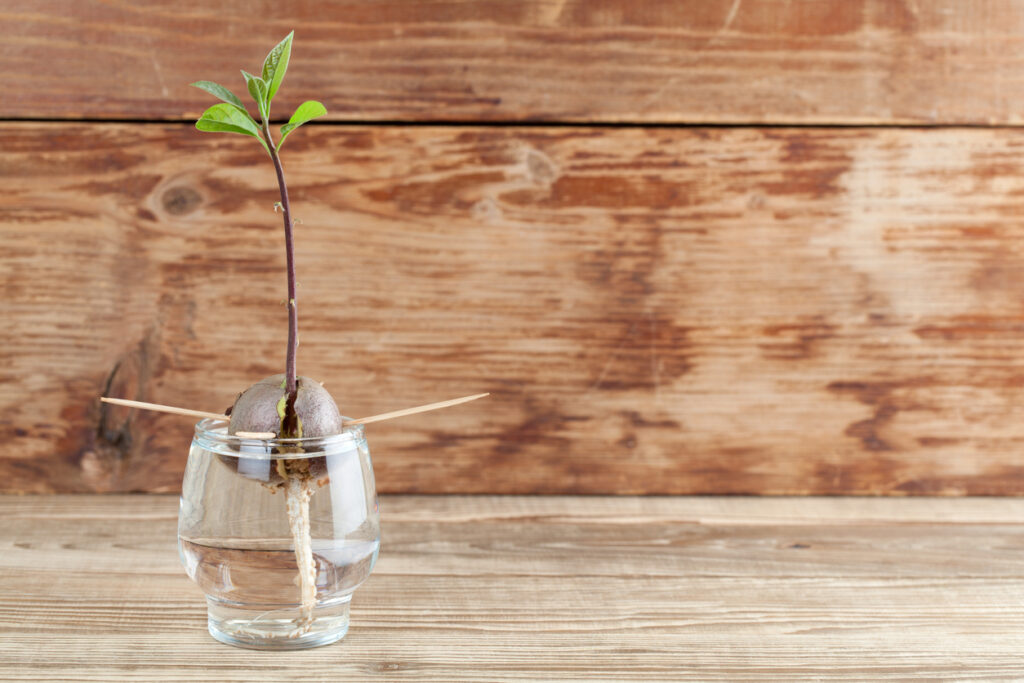
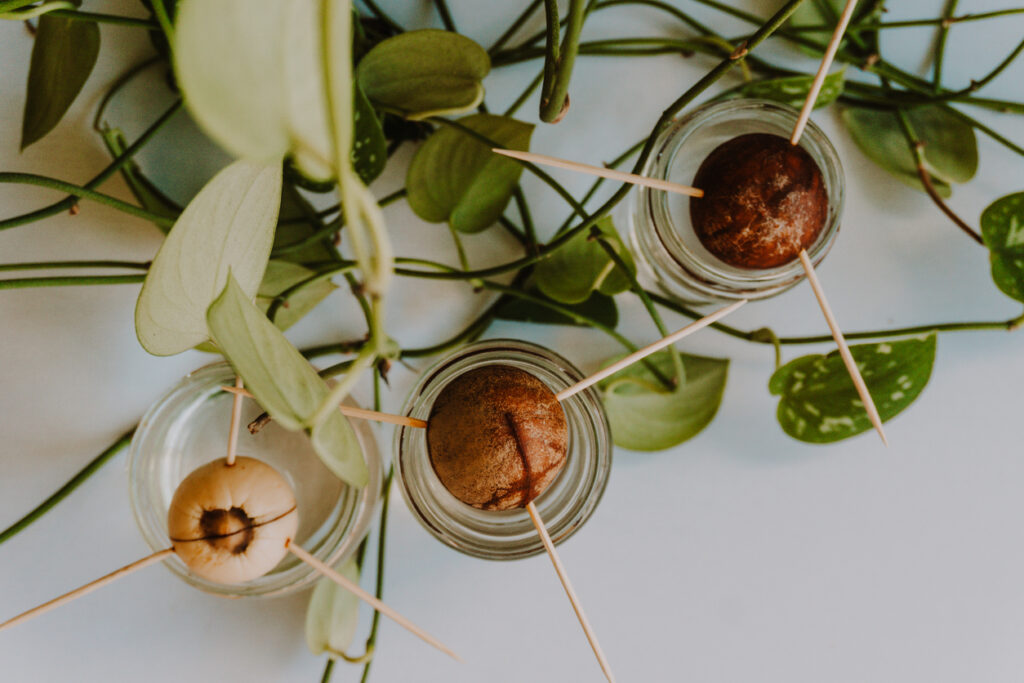
The classic way to sprout an avocado seed is to suspend it in a glass of water using three cocktail sticks. Push them in at an angle so the bottom half of the seed sits in the water and the top half stays dry. You only need the bottom portion touching water for roots to form.
Keep the glass in a bright spot and top up the water regularly so the base never dries out. After a few weeks, you’ll see the seed crack open from the bottom, which means it’s starting to push out roots. This is normal and shows the seed is waking up.
Be patient because avocado seeds sprout slowly.
Some seeds sprout in four weeks, while others take eight or more. It’s slow, and many people give up before anything happens. A long wait doesn’t mean failure. Avocados simply take their time to split, root and send up a shoot.
When growth finally starts, it happens quickly. Roots thicken within days and the first stem grows straight upward. Once you see that first bit of green, you can be confident the plant will keep going as long as you care for it properly.
Pot it up once the roots are strong.
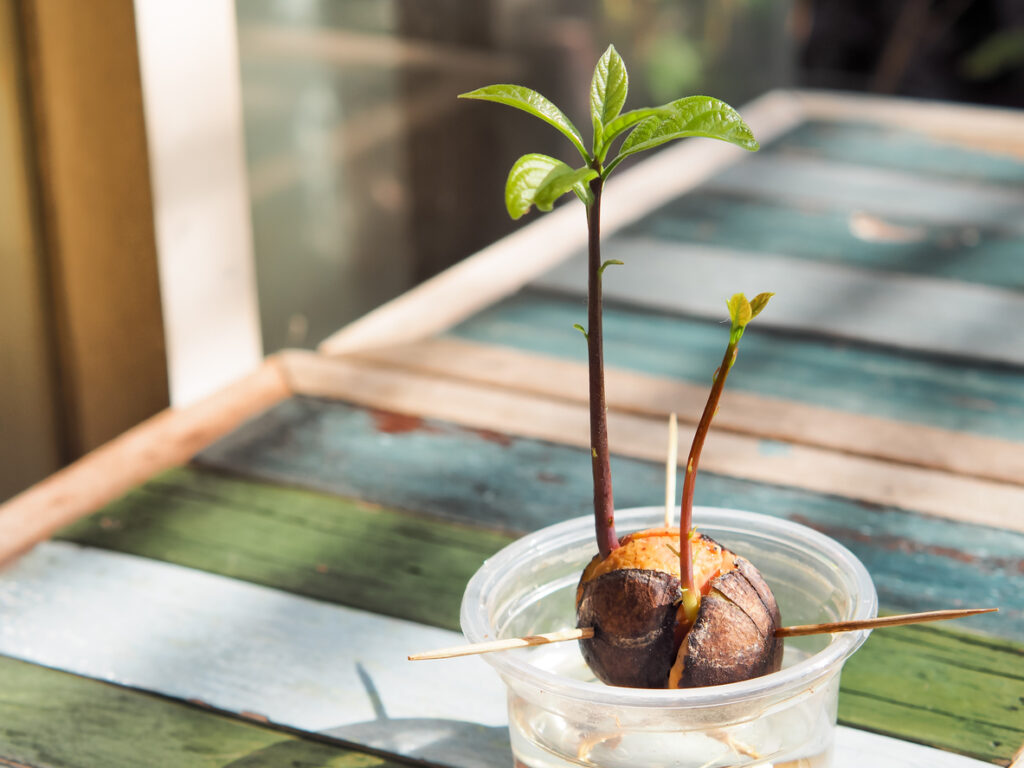
When the roots look thick and healthy and the stem reaches about 15 centimetres, move the seed into soil. Choose a pot with drainage holes and use a light indoor potting mix. Plant the seed so the top half stays above the soil. This helps prevent rot and lets you see the seed as it continues to develop.
After potting, water it lightly and place the plant somewhere bright but not in direct midday sun. The roots adjust quickly once they’re in soil, and you’ll see new leaves forming within a few weeks as the plant settles in.
Give it bright light to stop it growing thin and leggy.
Avocado plants stretch toward light, so if yours doesn’t get enough brightness, the stem becomes long and weak. A bright windowsill is ideal, especially if it faces east or west. Strong light helps the plant grow thicker stems and larger, healthier leaves.
If your home is dim or the plant starts leaning toward the window, rotate the pot every few days to keep it growing evenly. Light is one of the most important factors in making the plant look full and impressive rather than tall and spindly.
Pinch the top to encourage bushier growth.
Left alone, an avocado grows one long stem that keeps climbing higher. If you want a more decorative plant, pinch off the top set of leaves once the stem reaches around 25 centimetres. It sounds harsh, but it encourages the plant to branch out instead of shooting upward in a straight line.
Pinching creates a fuller shape, with new stems growing from the sides. The plant looks more like a small tree rather than a single pole with leaves at the top, which makes it far more attractive indoors.
Water consistently but don’t drown the roots.
Avocados like evenly moist soil, but they hate sitting in water. Overwatering is the most common reason young avocado plants fail. Check the top of the soil before watering. If it feels dry, then it’s time for a drink. If it still feels damp, wait a day or two.
A good rule is to water deeply, then let the soil dry slightly before watering again. This helps the roots grow strong and avoids the soggy conditions that can cause rot or fungus problems.
Repot it when the plant starts to outgrow its container.
Avocado roots grow fast and fill pots quickly. If you see roots coming out of the drainage holes or the plant starts drying out too fast between waterings, it’s time to repot. Move it to a pot one size bigger and refresh the soil so the plant can keep developing.
Repotting gives the roots more room and encourages stronger growth. As time goes on, this helps the plant become taller, sturdier and more leaf-filled, turning it into a statement piece in any room.
Expect leaves to drop now and then.
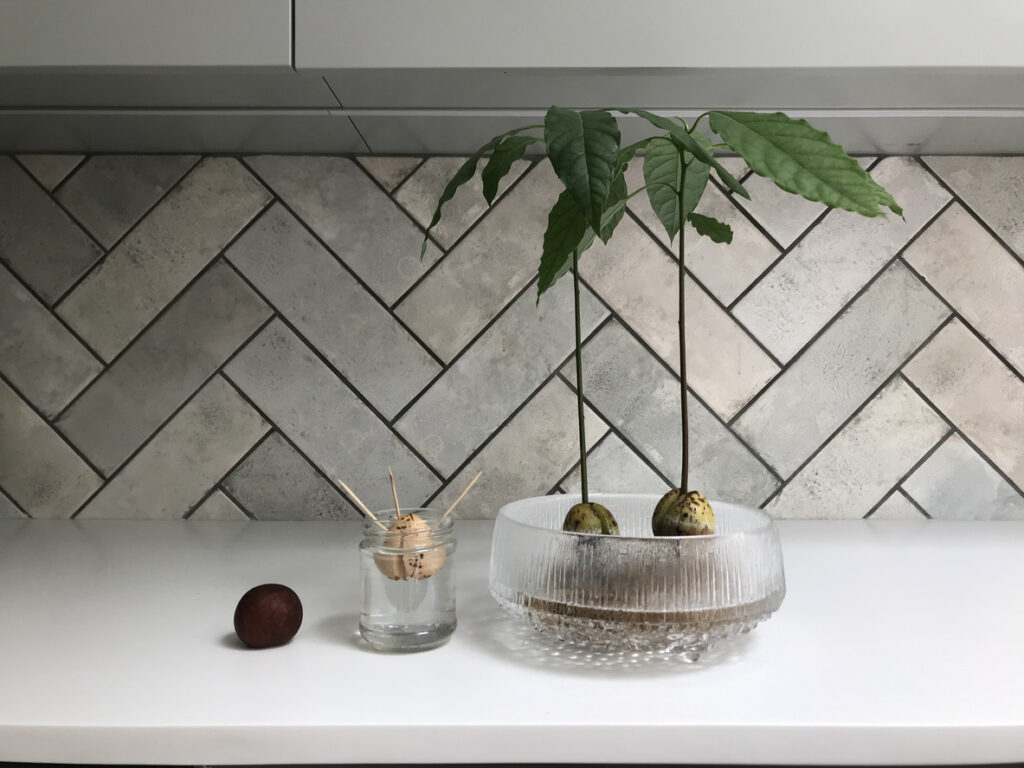
It’s normal for avocado plants to shed older leaves as new ones grow. Many people panic when they see a few yellowing leaves, but this is part of the plant’s cycle. It puts energy into new growth and lets go of older leaves that aren’t needed anymore.
Leaf drop only becomes a concern if it happens suddenly or in large amounts. If that happens, check light levels, watering habits and temperature changes, as these are the most common triggers.
Enjoy how unique the plant becomes as it matures.
An avocado plant doesn’t behave like a typical houseplant. It stretches, reshapes itself and grows new stems from unexpected places. Each one ends up looking different because the shape depends on how much light it gets, how often you pinch it back and how it responds to your environment.
That’s why many people love growing avocados from seed. The plant feels personal, and because you grew it from something you would have thrown away, it becomes a little project you can watch change month after month.