The northern lights feel almost unreal when you see them, but there’s a lot going on above your head to make that colour and movement possible.
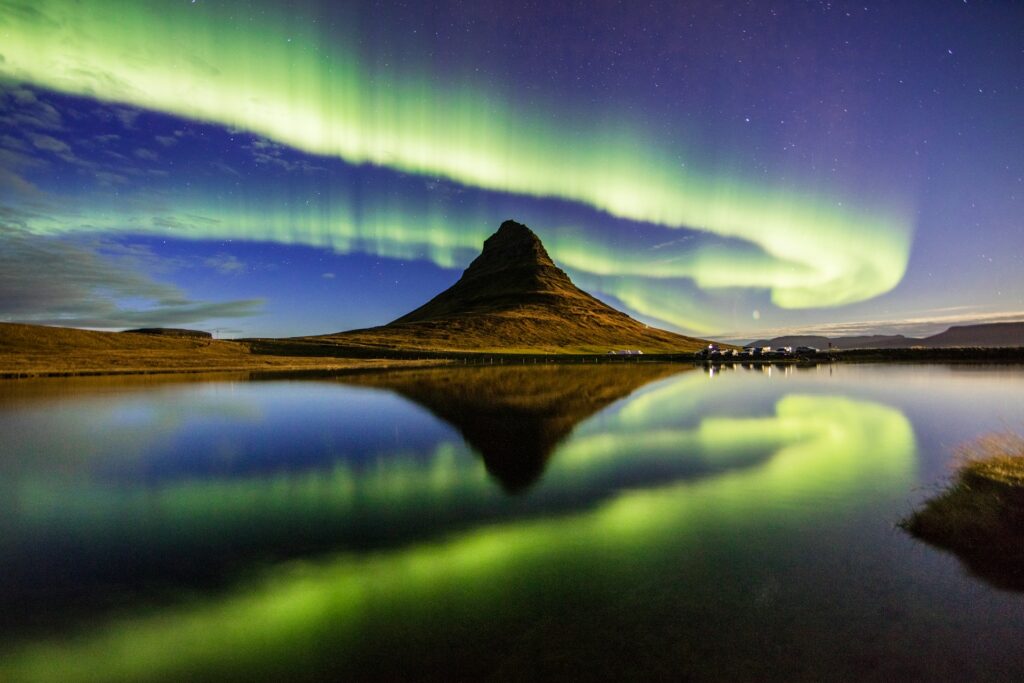
Most people know they happen high up in the atmosphere, but the exact height isn’t something you think about until you realise just how far from Earth that glow actually forms. The lights stretch across layers of air that are far beyond where planes fly, and each colour sits at a different height because of the way gases react with charged particles from space.
Once you dig into the science, the range is surprisingly wide. Some displays sit lower, giving off deeper reds, while the more familiar greens form much higher up. The tallest parts can reach hundreds of kilometres above the Earth, putting the whole show on a scale that’s easy to forget when you’re watching it from the ground. Understanding where it all happens adds a new layer of awe to something that already feels otherworldly, so here are some facts to help you do just that.
Most auroras form between 100 and 300 kilometres high.
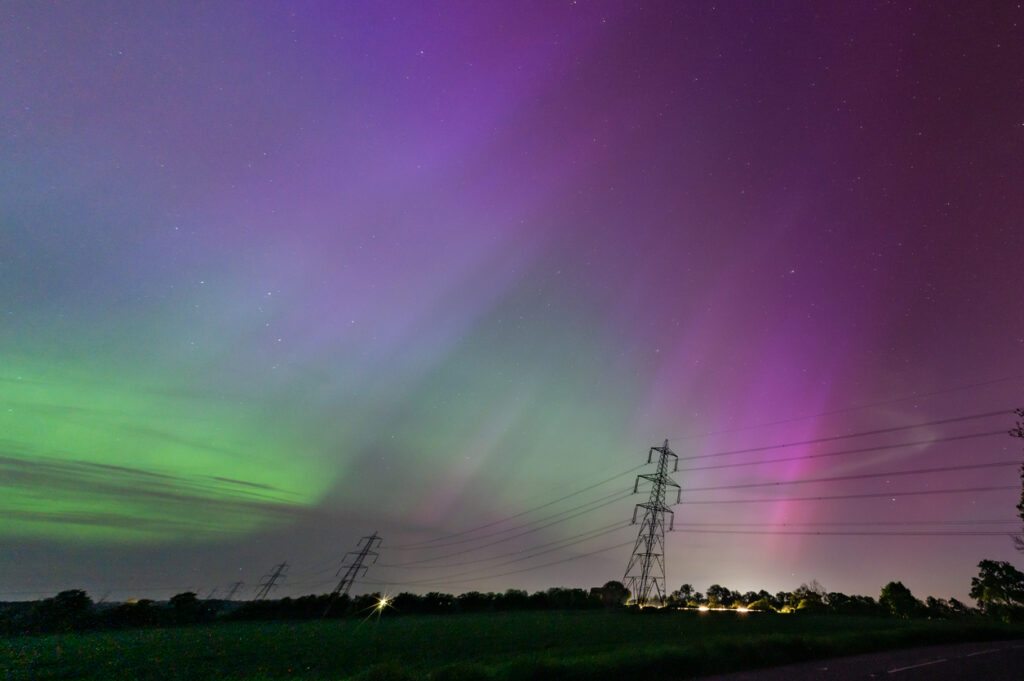
The most common Northern Lights appear about 100 to 300 kilometres above the Earth’s surface. That’s ten times higher than a passenger plane and higher than the altitude where meteors usually burn up. This layer of the atmosphere is called the thermosphere. At this height, charged particles from the Sun collide with atoms in the air, creating the famous glowing waves we see from the ground.
The green lights form the lowest in the sky.

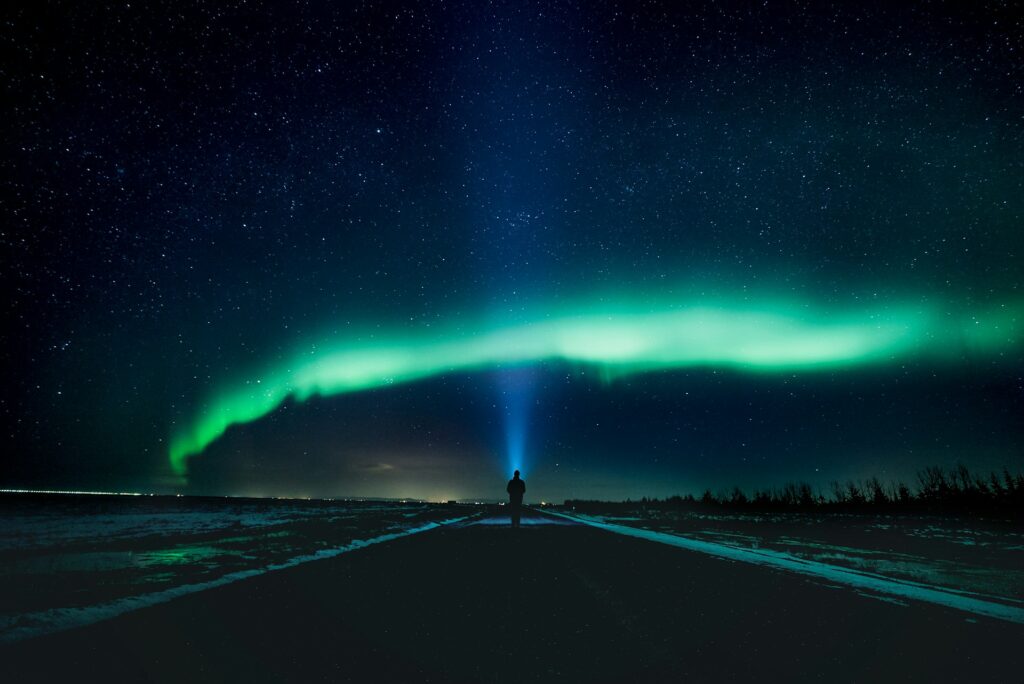
Green is the most common colour of the Northern Lights, and it usually appears around 100 kilometres up. That colour happens when solar particles hit oxygen molecules at lower altitudes. These green lights are brighter and more frequent because oxygen is more concentrated in this part of the atmosphere, making the reaction stronger and easier to see.
Red auroras form higher up.

When you see red or crimson lights, they are forming much higher than the green ones, often between 200 and 400 kilometres. These colours also come from oxygen, but at thinner parts of the atmosphere where the energy release looks different. Because they happen so high, red auroras are usually faint and can only be seen in very dark skies away from city lights.
Purple and blue lights form from nitrogen.
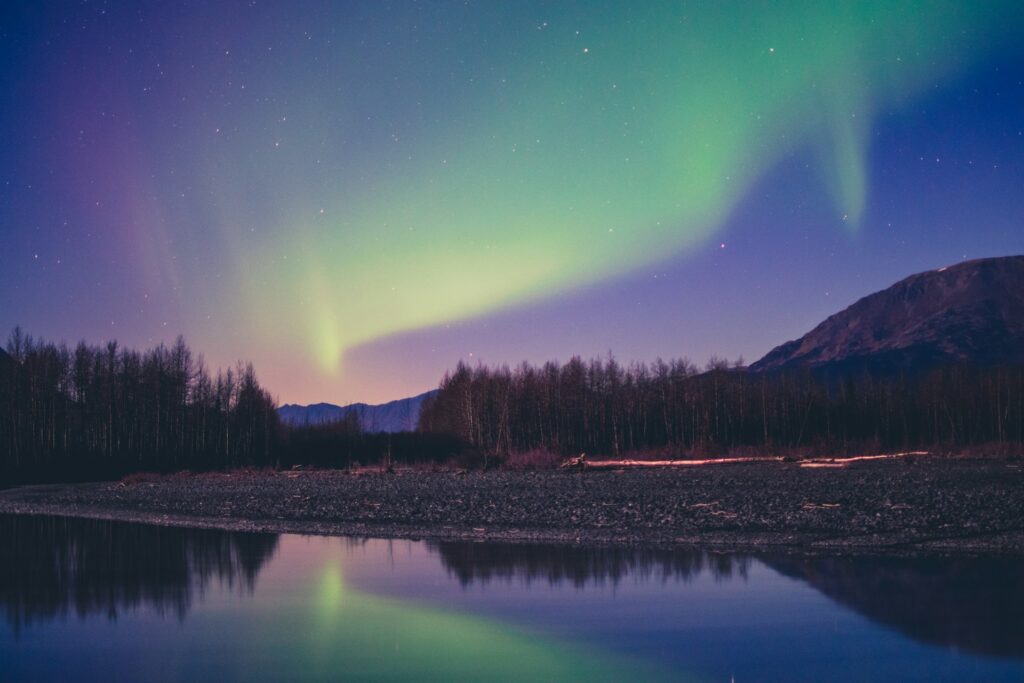
Blue and purple lights are created when solar particles interact with nitrogen instead of oxygen. These reactions take place at lower levels, usually between 90 and 120 kilometres up. They’re harder to see because our eyes are less sensitive to those colours in low light, but cameras often capture them clearly during strong aurora storms.
The highest lights can reach 500 kilometres.
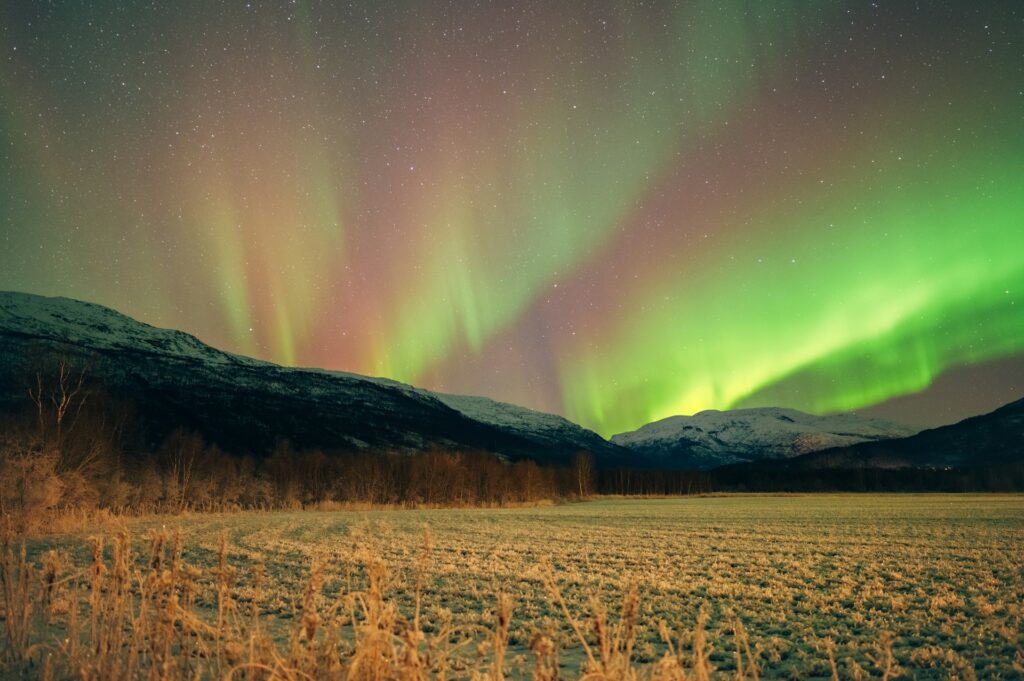
During powerful solar storms, auroras can stretch far beyond their usual range. Scientists have measured some lights forming as high as 500 kilometres above Earth’s surface, which is close to the orbit of the International Space Station. At that height, the atmosphere is extremely thin, but even a few particles are enough to create faint red glows visible from space.
No aircraft can reach the aurora zone.
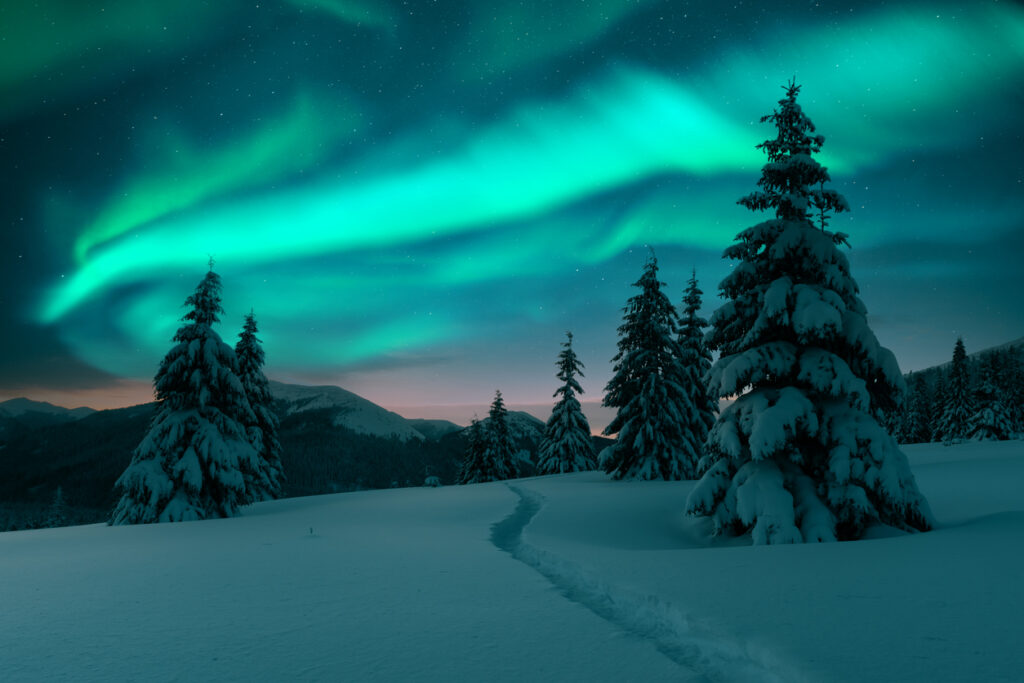
Commercial planes fly between 9 and 12 kilometres high, far below the aurora’s lower edge. Even the highest weather balloons and military aircraft can’t get anywhere near where the lights form. Only satellites and astronauts aboard the International Space Station can truly see the Northern Lights from within or above them.
The colours depend on altitude.
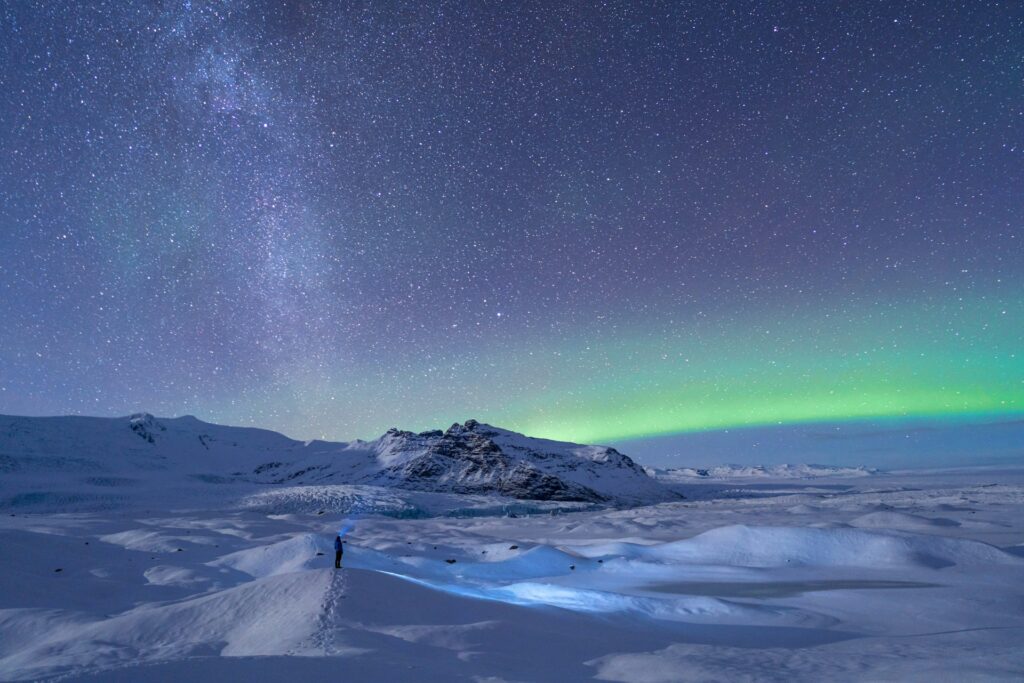
Each colour of the Northern Lights happens at a specific height. Green forms low, red appears higher, and purple or blue sits somewhere in between. The type of gas and its location in the atmosphere decide the shade you see. This layered effect is why photographs often show bands of colour stacked on top of each other like waves in the sky.
Auroras look closer than they are.
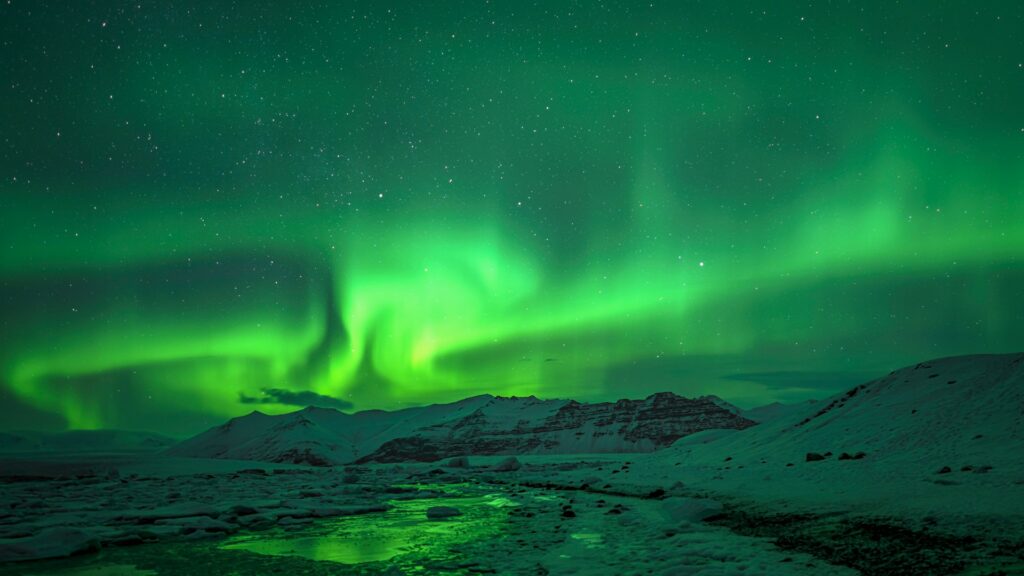
From the ground, the lights seem just above the clouds, but they’re actually hundreds of kilometres higher. Clouds form around 10 kilometres up, meaning auroras hover ten to thirty times higher than that. Our brains misjudge the distance because the lights move slowly and cover a wide area, making them look much nearer than they are.
The altitude changes during storms.
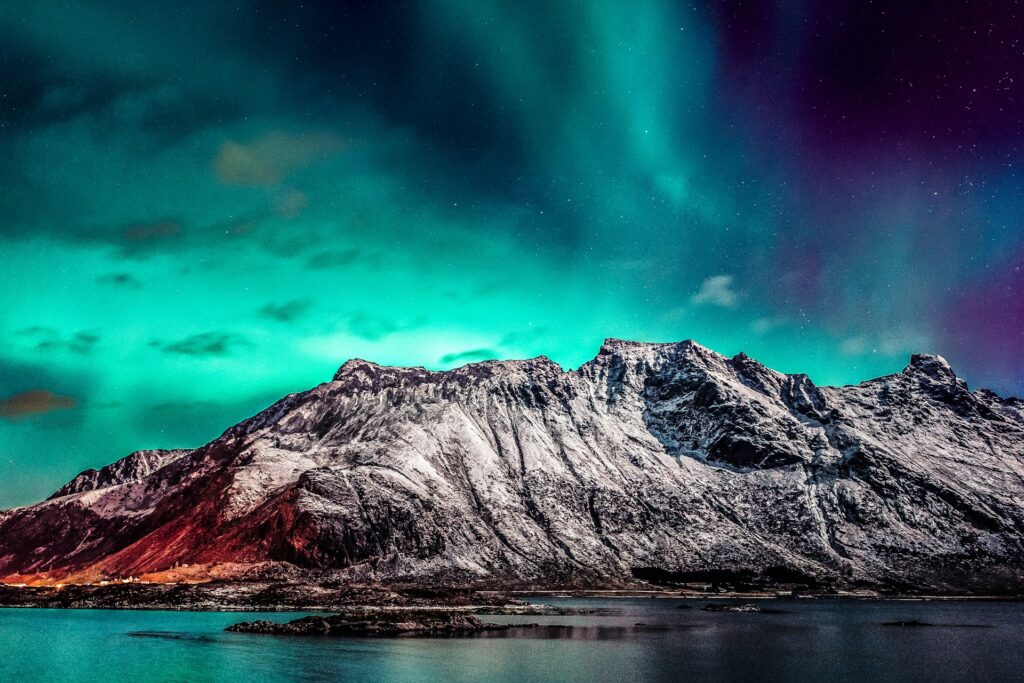
When solar activity increases, the energy hitting Earth’s atmosphere pushes auroras both higher and lower. In strong storms, the lights can dip closer to 80 kilometres, which makes them brighter and more colourful. During calm periods, they retreat upward again, becoming faint and harder to spot. The constant movement is part of what makes them so unpredictable and fascinating to watch.
Astronauts see auroras from above.
From the International Space Station, astronauts look down on the Northern Lights rather than up at them. They see them glowing along Earth’s curved edge, like a green and red halo surrounding the planet. At around 400 kilometres above the surface, astronauts orbit within the same region where many auroras form, giving them one of the most spectacular views of all.