Hammerhead sharks look absolutely mental, if we’re being honest.

It’s as if nature had a few too many drinks and decided to redesign a perfectly good shark with a sledgehammer. However, that bonkers head shape isn’t just for show because it’s actually millions of years of evolutionary brilliance that turned these underwater weirdos into some of the ocean’s most effective hunters.
1. They’ve got built-in metal detectors for finding hidden snacks.

That massive flat head is crammed full of special sensors that can pick up electrical signals from other fish, basically turning hammerheads into living metal detectors. When a stingray thinks it’s being clever by burying itself in the sand, the hammerhead can still sense its heartbeat and breathing.
It’s like having x-ray vision but for electricity. While other sharks are swimming around hoping to spot their dinner, hammerheads are getting constant updates about every fish within range, even the ones playing hide and seek.
2. Their weird heads make them surprisingly nimble.
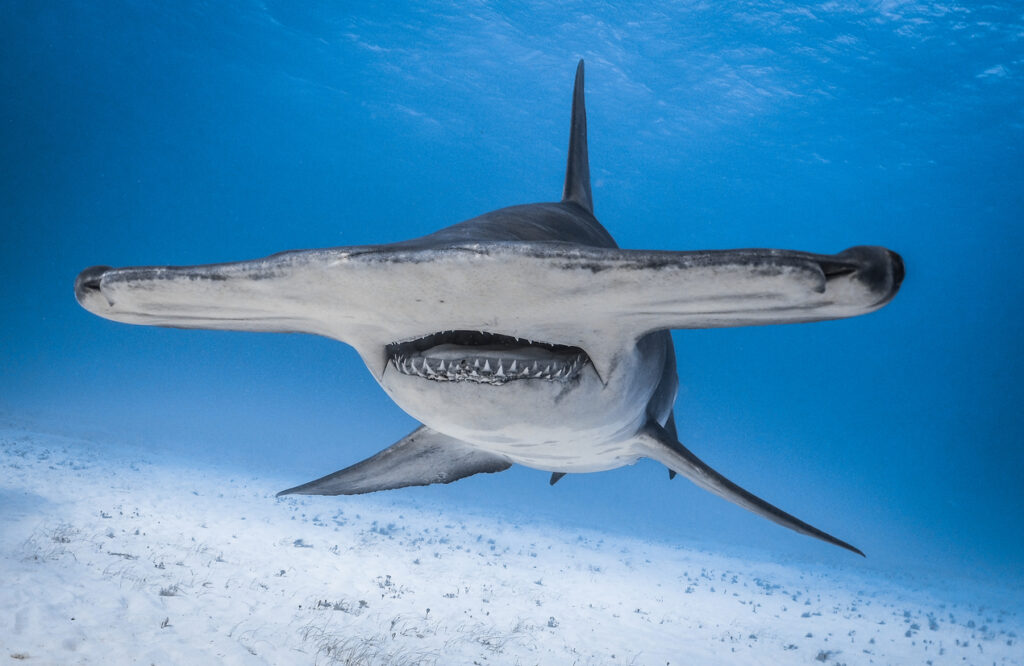
You’d think having a massive hammer for a head would make them clumsy, but it actually works like a sophisticated steering system. The wide-set head acts like the fins on a dart, helping them turn on a sixpence and chase down agile prey.
Regular sharks are like underwater buses—powerful, but not exactly graceful. Hammerheads are more like sports cars, using their bizarre head shape to pull off turns that would make other sharks jealous.
3. They can see absolutely everything around them.

With eyes positioned at the very ends of their hammer, these sharks have nearly 360-degree vision with hardly any blind spots. They can literally watch what’s happening behind them while also keeping an eye on what’s ahead, which is pretty handy when you’re both hunter and hunted.
Most animals have to choose between looking forward or checking behind them, but hammerheads solved that problem by putting their eyes as far apart as physically possible. They basically have rearview mirrors built into their skulls, which is pretty cool.
4. The shape helps them pin down slippery prey.

When hammerheads find a tasty stingray, they don’t mess about and instead use their wide heads like a club to pin the ray against the seafloor. The flat surface spreads the impact across a larger area, stopping their dinner from wriggling away.
It’s basically underwater wrestling, and the hammerhead’s head shape gives them a massive advantage. While other sharks have to rely on speed and sharp teeth alone, hammerheads can literally hammer their prey into submission.
5. Better water flow means more efficient swimming.

The flattened head creates improved hydrodynamics, helping water flow more smoothly around the shark’s body. This means they can cruise the oceans using less energy than their more traditionally shaped cousins.
Think of it like the difference between a sports car and a brick because both might have the same engine, but one cuts through the air much more efficiently. Hammerheads accidentally stumbled onto some pretty advanced engineering principles.
6. Enhanced smell detection across a wider area.

Those widely spaced nostrils work like a sophisticated scent-tracking system, allowing hammerheads to pinpoint exactly where interesting smells are coming from. The greater distance between their nostrils gives them better directional information about potential meals.
Their heightened sense of smell means they can not only detect blood in the water but work out precisely which direction it’s coming from. Other sharks might catch the scent, but hammerheads can follow it straight to the source.
7. The hammer evolved gradually over millions of years.

Fossil evidence shows that early hammerhead ancestors had slightly flattened heads that became more pronounced over time. Each generation with a slightly wider head had better hunting success, so the trait kept getting more extreme.
Evolution doesn’t usually go from normal to completely barmy overnight. The hammerhead’s bizarre appearance is the result of countless small improvements that eventually added up to something that looks utterly ridiculous but works brilliantly.
8. Different species developed different hammer styles.
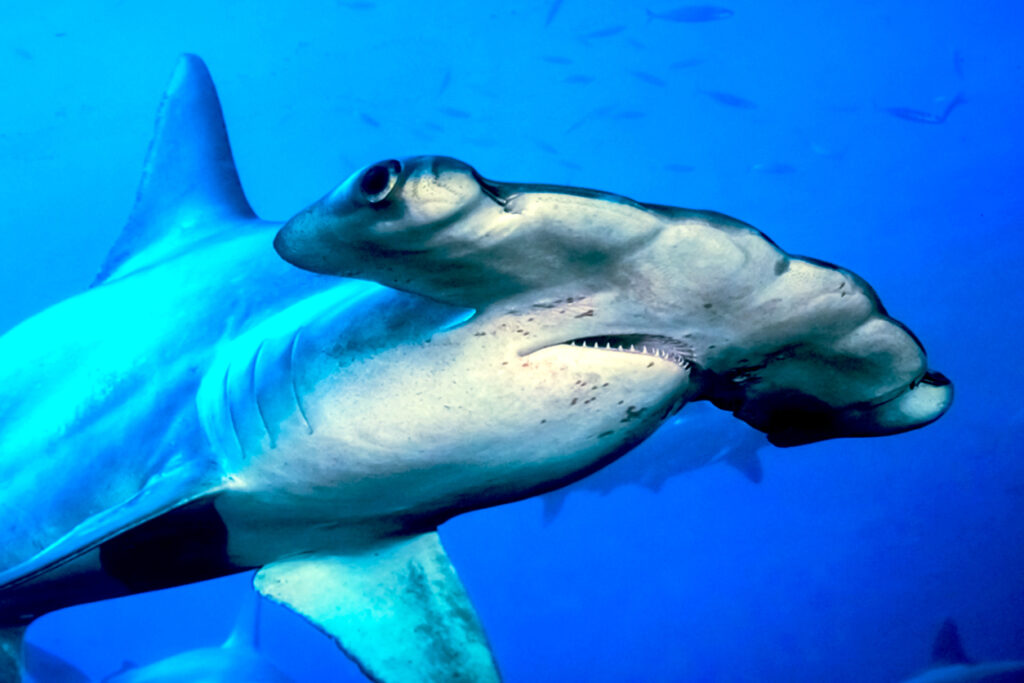
Not all hammerheads are created equal, since some have narrow, sleek hammers, and others sport massive, wide heads that look completely over the top. Each species fine-tuned their head shape for their particular lifestyle and hunting preferences.
Basically, they have different tools for different jobs. Great hammerheads have massive, wide heads perfect for hunting large stingrays. Meanwhile, scalloped hammerheads have more streamlined versions better suited for their more varied diet.
9. The shape improves their ability to sense vibrations.

Water movement and vibrations travel differently around the hammerhead’s flattened head, giving them enhanced ability to detect struggling fish or other disturbances in the water. Their head shape acts like a natural amplifier for these underwater signals.
While other sharks might miss subtle movements, hammerheads are picking up every little vibration in their neighbourhood. Their ability to pick up on the slightest changes extends to water movement, making them incredibly aware of everything happening around them.
10. Temperature regulation benefits from the increased surface area.
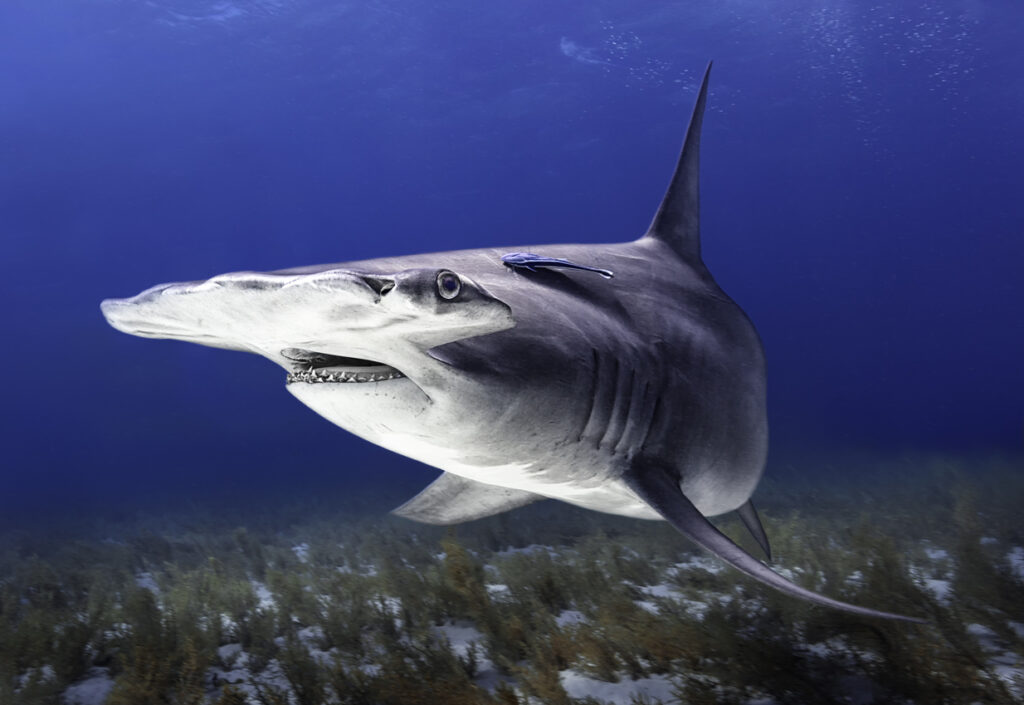
The larger head surface area helps hammerheads manage their body temperature more effectively in different water conditions. This adaptation allows them to hunt in a wider range of environments than sharks with more compact heads.
More surface area means better heat exchange with the surrounding water. Hammerheads can stay comfortable in temperature ranges that might be challenging for other shark species, giving them access to more hunting grounds.
11. Social advantages from their distinctive appearance.

That unmistakable head shape helps hammerheads recognise their own species from a distance, which is particularly important for the species that form large schools. Their unique silhouette acts like a natural species identifier in murky water.
When you look as distinctive as a hammerhead, there’s no confusion about who’s who underwater. This clear species recognition helps them form the massive schools that some hammerhead species are famous for, providing safety in numbers.
12. Modern hammerheads are still evolving their head shape.

Scientists have discovered that hammerhead populations in different regions show slight variations in head width and shape, suggesting they’re still adapting to local conditions. Evolution hasn’t finished tinkering with these underwater oddities yet.
The hammerhead story isn’t over, as they’re continuing to fine-tune their bizarre appearance based on local prey, water conditions, and environmental pressures. In a few million years, they might look even more ridiculous than they do today.