When you look at the sheer scale of an elephant, it is easy to assume that everything inside is just as massive, but the relationship between body size and intelligence is rarely that simple.

We’ve always been told that these animals have incredible memories and complex social lives, yet the actual physical makeup of their brain tells a story that goes way beyond just being a large organ in a large skull. There’s a specific balance between the size of the brain and the billions of neurons packed inside it that determines how these giants actually think and navigate their world. Looking at the raw data of an elephant’s biology reveals some pretty surprising facts about how they compare to us and what that weight actually means for their survival.
The headline number is roughly 4 to 6 kilograms.

Most of the time, when people talk about elephant brain size, they mean brain weight. A fully grown elephant’s brain is usually in the ballpark of 4 to 6 kilograms, depending on the species, age, and the individual animal. That is a genuinely chunky brain compared to most mammals, which is part of why it gets mentioned so often.
Even so, it’s not like every elephant walks around with the exact same brain weight stamped on the side. Bigger elephants tend to have heavier brains, older elephants can have different measurements than younger ones, and there’s normal variation just like there is in humans. If you want one simple answer, think around 5 kilograms as a decent middle-of-the-road estimate.
It’s around three to four times heavier than a human brain.
A typical adult human brain is roughly 1.3 to 1.4 kilograms. Put that next to an elephant brain that might sit around 4 to 6 kilograms, and you can see why the comparison sounds dramatic. It’s the kind of fact that makes people go, no wonder they’re clever.
The catch is that brain weight is only one piece of the puzzle. Humans have a smaller brain overall, but we pack a lot of processing power into a tight space, especially in certain brain regions. An elephant’s brain is larger and built for a different body and a different way of living, so it’s not a straight bigger equals smarter equation.
The brain is big, but the body is so huge that the ratio is small.
This is where people get surprised. Elephants have massive bodies, so even a 5-kilo brain is a small slice of their total weight. In other words, the brain-to-body ratio is much lower than it is in humans, and lower than in some smaller mammals too.
That doesn’t mean elephants are less intelligent. It just means they don’t need the same ratio to do impressive things because their brain is supporting a body that weighs thousands of kilograms and handles a lot of heavy-duty tasks. Some of that brain is busy running a giant animal, not just thinking big thoughts.
Brain size varies between African and Asian elephants.
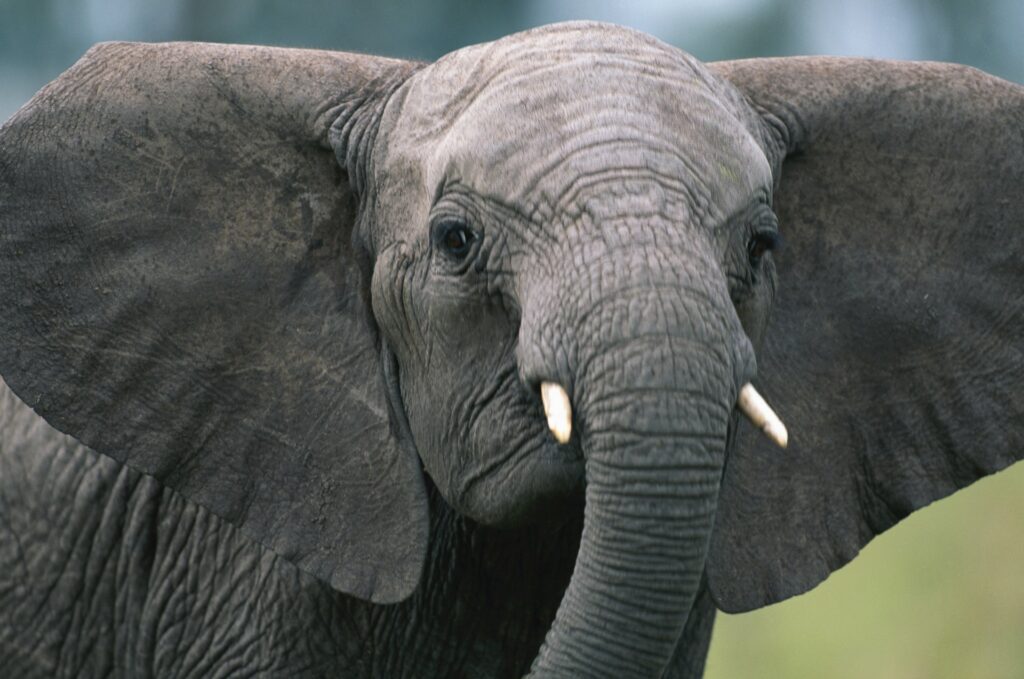
When people say elephant, they often mean African elephants, but there are different species with different body sizes. African elephants are generally larger animals than Asian elephants, so you often see a bit of a difference in average brain weight too. It’s not a massive gap every time, but it’s enough that the range matters.
Even within a species, you can’t assume one neat number. Sex, age, and overall body size can all change what you see on a scale. It’s like asking how much a car weighs without saying whether it’s a small hatchback or a big SUV because both are cars, but the numbers won’t match.
A lot of the brain’s heft is about motor control, not just thinking.
Elephants are doing an unbelievable amount of physical coordination all day. Their trunks are basically living multi-tools, with fine movement, strength, and sensitivity all happening at once. Add in huge bodies that need balance, controlled walking, and careful movement through rough terrain, and you start to see why they need serious brain power just to run the body smoothly.
That’s why it helps to think of the brain as a control centre first, and a thinking machine second. Intelligence still matters, but the wiring has to support a body that can lift tree branches, handle delicate food, pick up tiny objects, and also carry its own weight safely. A lot of the brain is busy doing the behind-the-scenes work that makes the animal look effortless.
The cerebellum is a big deal in elephants.

The cerebellum is the part of the brain that helps with coordination, timing, balance, and smooth movement. In elephants, this area is especially important because of the trunk, the size of the animal, and the precision they can show when they want to. Think about how an elephant can gently lift something fragile with the same trunk that can also rip bark off a tree.
That kind of control needs a lot of neural machinery. It’s not just strength, it’s finesse. People sometimes picture elephants as slow and clumsy because they’re big, but their movements can be incredibly controlled. The brain has to support that, which is part of why looking at total brain size alone can be misleading.
A bigger brain doesn’t automatically mean better memory, but it helps support it.
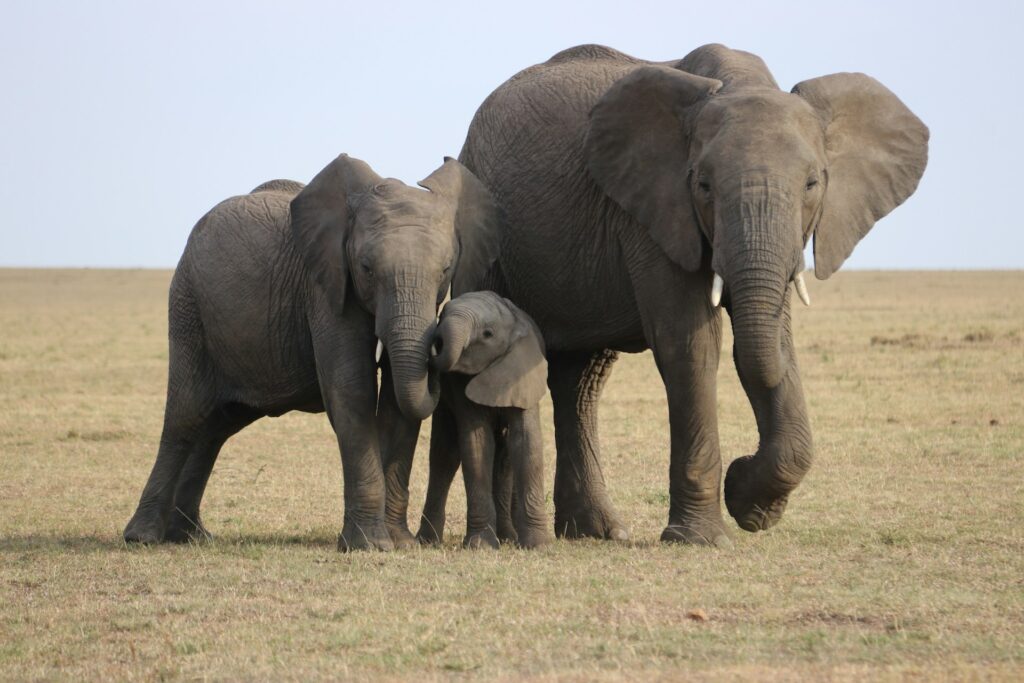
Elephants have a reputation for memory because they can recognise individuals, remember places, and navigate across large areas. Brain size can support the storage and processing needed for that kind of long-term learning, especially when your survival depends on remembering water sources, migration routes, and social relationships.
Still, memory is more about how the brain is organised than how heavy it is. Different regions handle different jobs, and brains can be very efficient in different ways. Elephants are social animals with long lives, so a strong memory system makes sense for their world. Their brains are built for a life where remembering matters.
The brain develops over a long time, which matches their long childhood.

Elephants are not like animals that are fully independent quickly. They have long childhoods, lots of learning, and a strong social culture where young elephants pick up behaviour by watching older ones. That kind of slow development often goes hand in hand with brains that keep building connections over time.
That’s important because intelligence is not only about what you’re born with, it’s also about how much learning your brain is designed to absorb. A long life with lots of social learning gives the brain a reason to keep adapting. When you see elephants showing empathy, problem-solving, or social awareness, you’re seeing the result of both brain structure and years of experience.
Neurons and connections matter more than raw size.
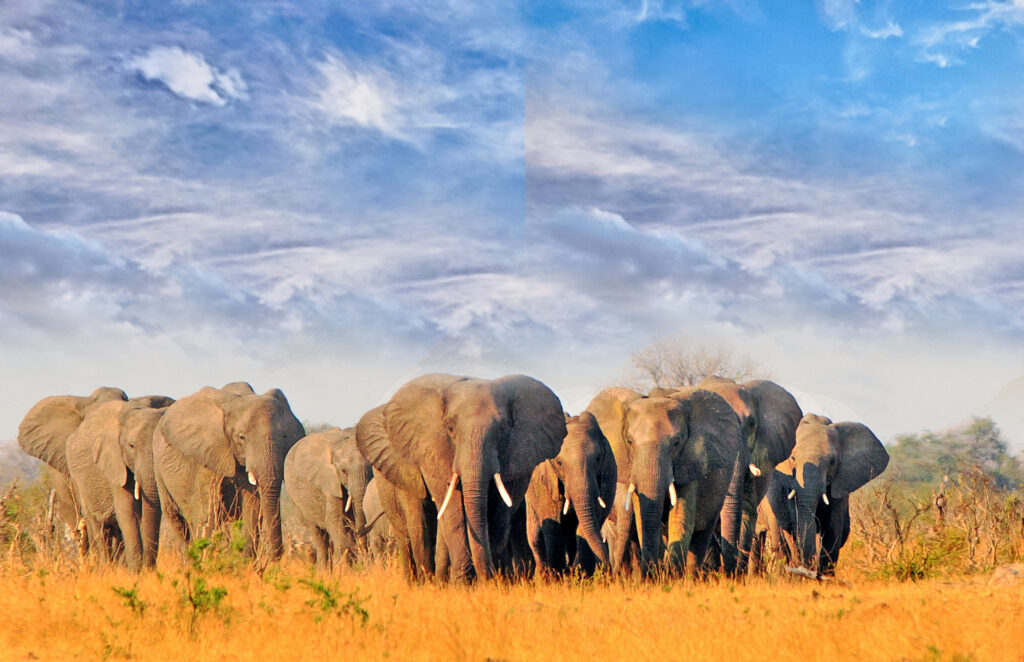
People love a single number, but the better question is how many nerve cells there are and where they sit, plus how they connect. Two brains can weigh the same and still work very differently, depending on how the wiring is arranged. Some parts of the elephant brain may be especially built up for sensory processing, movement, and social behaviour.
It’s similar to comparing two laptops that look the same size. One might have a faster processor, more memory, or better cooling, and those details change what it can do. A brain is even more complicated than that because it’s not one chip, it’s billions of cells working in patterns. Size tells you something, but it never tells you the full story.
The simplest takeaway is this: it’s huge, and it’s built for a huge, complex life.

An elephant brain is one of the biggest brains you’ll find in a land animal, and the rough weight range of 4 to 6 kilograms gives you a good sense of scale. Compared to humans it’s much heavier, but the elephant is also vastly heavier, so the ratio tells a different story. What makes it fascinating is not just the size, but what that size is doing.
It has to manage a powerful body, a trunk that works like a hand and a nose at the same time, and a social world that runs on recognition, memory, and relationships. That combination is why elephant behaviour can feel so human at times, even though they’re obviously not people. When you ask how big their brain is, you’re really asking how much machinery it takes to live an elephant’s life, and the answer is a lot.