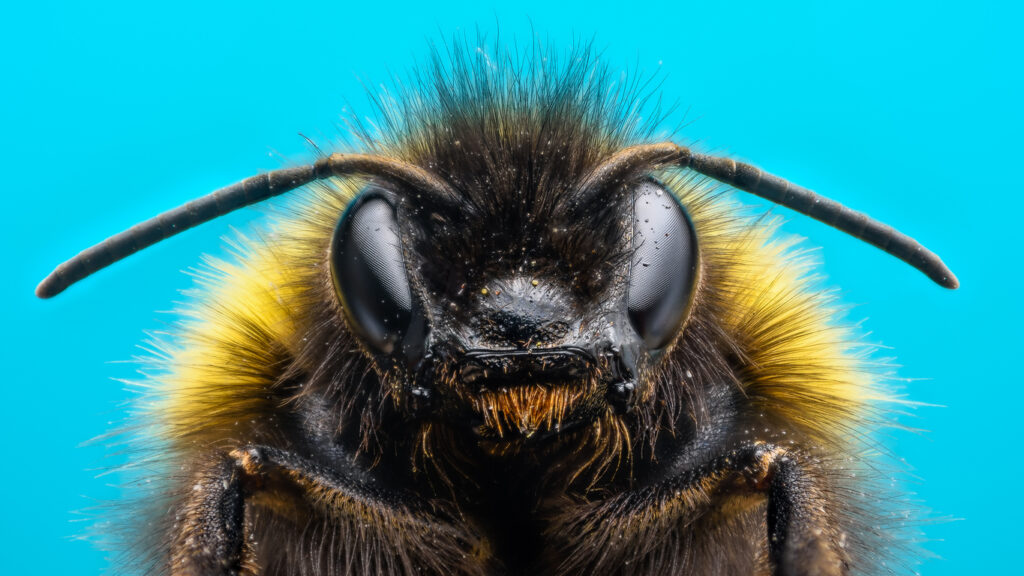
Scientists are discovering that tiny bee brains, no bigger than sesame seeds, might hold the secrets to building more efficient and intelligent artificial intelligence systems that don’t need massive computing power. Here’s why these adorable little creatures might be central to technological advancements.
Bees accomplish incredible tasks with surprisingly few brain cells.
A bee can recognise human faces, navigate complex environments, and make split-second decisions about which flowers to visit, all with fewer than one million neurons. Current AI systems often use billions of artificial neurons to perform similar tasks, suggesting we might be overcomplicating things.
Researchers found that even with just 16 specialised neurons, their bee-inspired model could still recognise patterns like spirals and tilted bars. This discovery suggests that smarter organisation matters more than raw computational power when building intelligent systems.
Bees actively shape what they see through movement.
Unlike cameras that capture static images, bees use their flight patterns to create better visual information. As they move through the air, their brains process the changing visual input in ways that make pattern recognition much easier and more accurate.
Their movement-based vision system means bees don’t just passively receive visual information. They actively participate in creating it. Future robots could use similar techniques to gather better visual data by moving strategically rather than relying purely on sophisticated cameras.
Bee decision-making breaks the usual rules about speed and accuracy.
Most systems, whether biological or artificial, face a trade-off: you can be fast, or you can be accurate, but not both. Bees somehow manage to be both faster and more accurate when making correct decisions, which shouldn’t be possible according to conventional thinking.
When bees quickly identify a good flower, they’re not just being impulsive. In reality, they’re demonstrating a type of decision-making that current AI systems haven’t figured out how to replicate. Understanding this could lead to AI that makes better choices more quickly.
Even bees need sleep, and that could improve AI memory.

Researchers studying bee sleep patterns have discovered that these tiny insects experience something similar to dreaming, which helps them consolidate memories and maintain their learning abilities. That insight could revolutionise how AI systems store and retain information.
Current AI often struggles with remembering old information when learning new things, but bee-inspired “sleep cycles” could allow AI systems to strengthen important memories without forgetting everything else they’ve learned.
Bee brains use incredibly efficient information processing.
The bee visual system processes information through three specialised layers that work together like a perfectly coordinated assembly line. Each layer handles specific types of visual information, and neurons only activate when they have something important to contribute.
That selective activation means that most bee brain cells stay quiet most of the time, only firing when they detect something relevant. Current AI systems could become much more energy-efficient by copying this approach instead of constantly running all their processing units.
Bees solve visual puzzles using smart shortcuts.
When researchers tested whether bees could tell the difference between a plus sign and a multiplication sign, they discovered something unexpected: bees only looked at the bottom half of each symbol to make their decision, ignoring the top half entirely.
Rather than analysing complete images like traditional AI systems, bees identify the minimum information needed for accurate recognition. The shortcut approach could help future AI systems work faster and more efficiently by focusing only on the most important visual clues.
Intelligence emerges from the whole system, not just the brain.
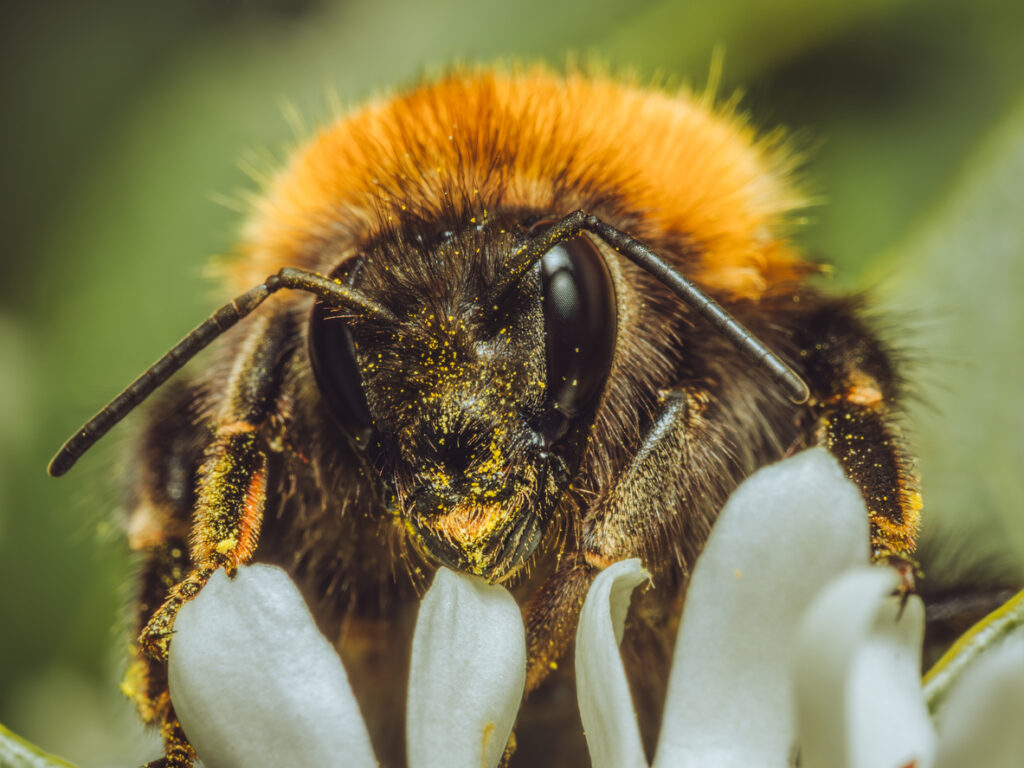
Bee intelligence doesn’t come from their brain alone. It emerges from how their brain, body, and environment work together as one integrated system. This challenges the current approach of trying to create AI through computation alone.
Future AI systems might need physical bodies and real-world interaction to achieve genuine intelligence, rather than just more powerful processors. The most intelligent solutions might come from systems that can move, explore, and interact with their surroundings.
Bee-inspired systems could dramatically reduce energy consumption.
Current AI systems consume enormous amounts of electricity. In fact, some large language models use as much power as small cities. Bee-inspired neuromorphic systems could potentially deliver similar capabilities while using a fraction of the energy.
These bio-inspired systems would work more like actual brains, processing information only when needed and learning through experience rather than requiring massive training datasets that consume enormous computational resources.
Bees learn effectively without massive training datasets.
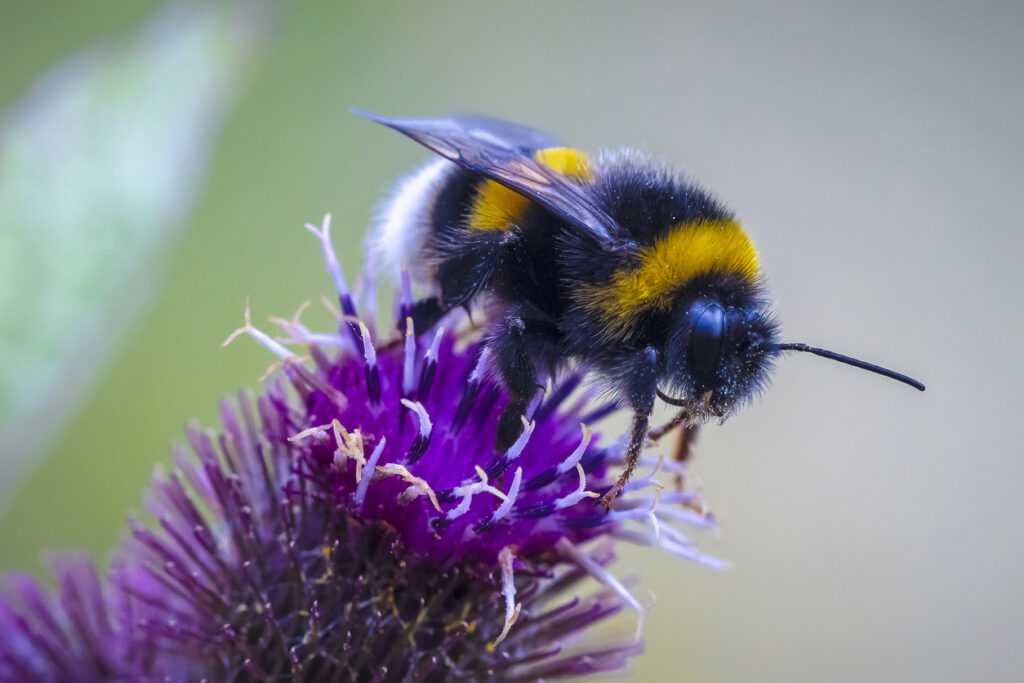
While current AI systems need to see millions of examples before they can recognise something reliably, bees can learn to identify new flowers or navigate new environments with just a few experiences. This efficient learning could revolutionise AI development.
A bee-inspired AI model successfully learned to recognise human faces using far fewer examples than traditional systems require. This suggests that better learning algorithms could be more important than bigger datasets for creating intelligent systems.
Small, well-organised systems can outperform large, inefficient ones.
The bee brain proves that intelligence isn’t about size. It’s about organisation and efficiency. This insight challenges the current trend of building ever-larger AI systems and suggests that smarter design could be more important than more computational power.
Understanding how bees pack so much capability into such a small brain provides a roadmap for sustainable AI development that doesn’t require constantly increasing energy consumption and computational resources to achieve better performance.