Giant sequoias don’t actually feel real when you first see them.

Even in photos, your brain struggles to scale them properly, and in person it’s even stranger. They’re not just tall trees; they’re wide, ancient, and quietly overwhelming in a way that makes everything around them feel suddenly very small.
What makes them so fascinating isn’t only their size, though that’s part of it. It’s the fact that they’ve been standing there for thousands of years, surviving fire, storms, and huge changes in the world around them. They don’t behave like the trees most of us grew up with, and once you start learning how they actually live and grow, they really do start to feel like something from a different place entirely.
They’re wider than your house and taller than a 26-storey building.
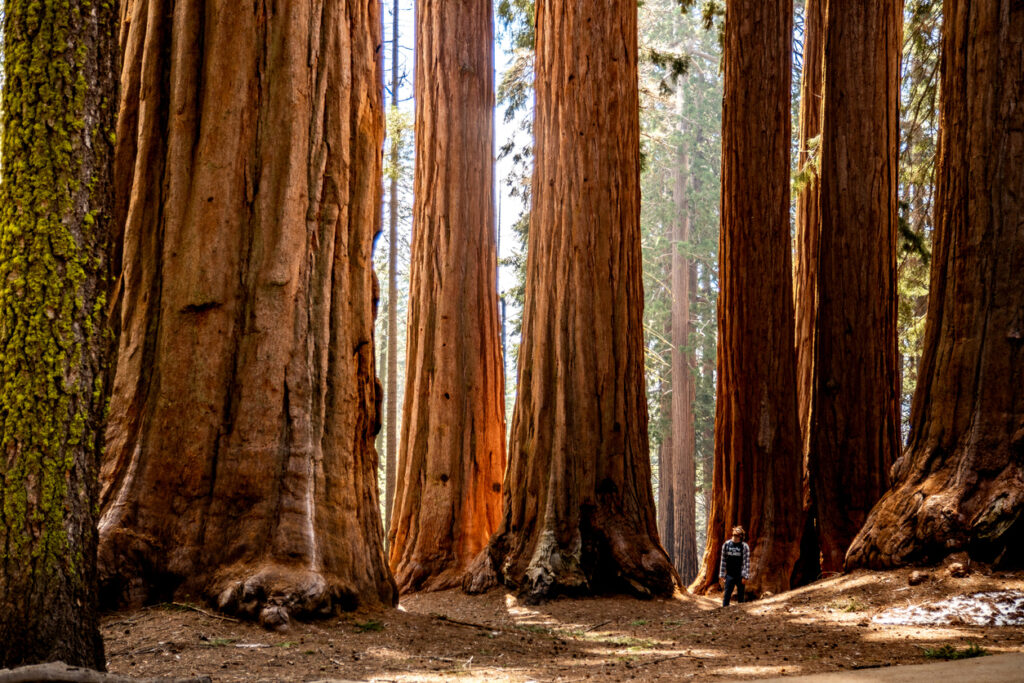
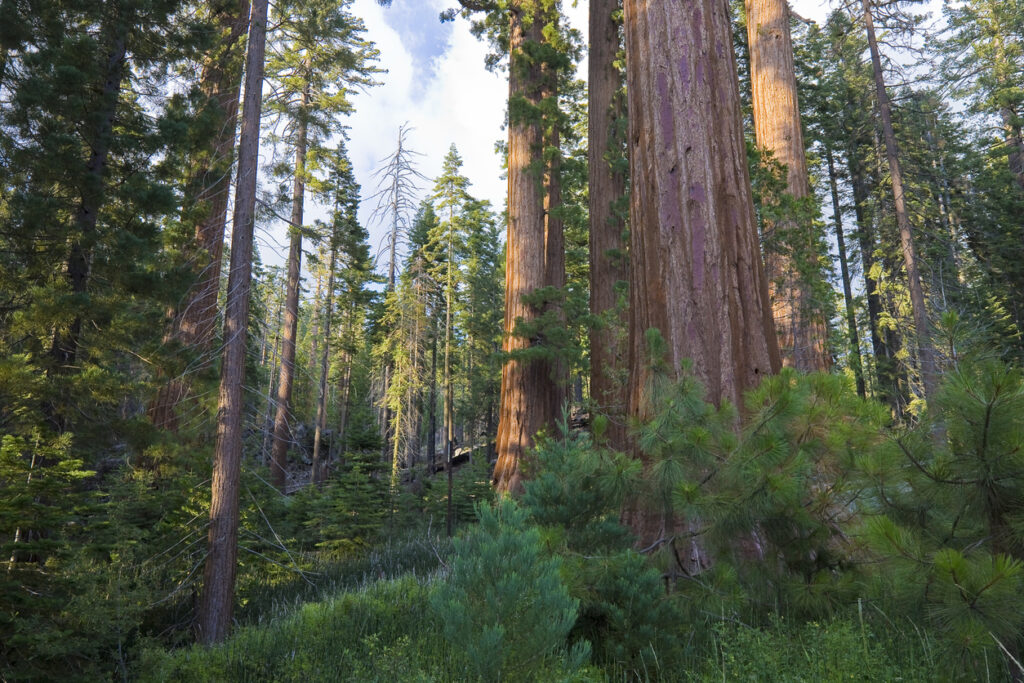
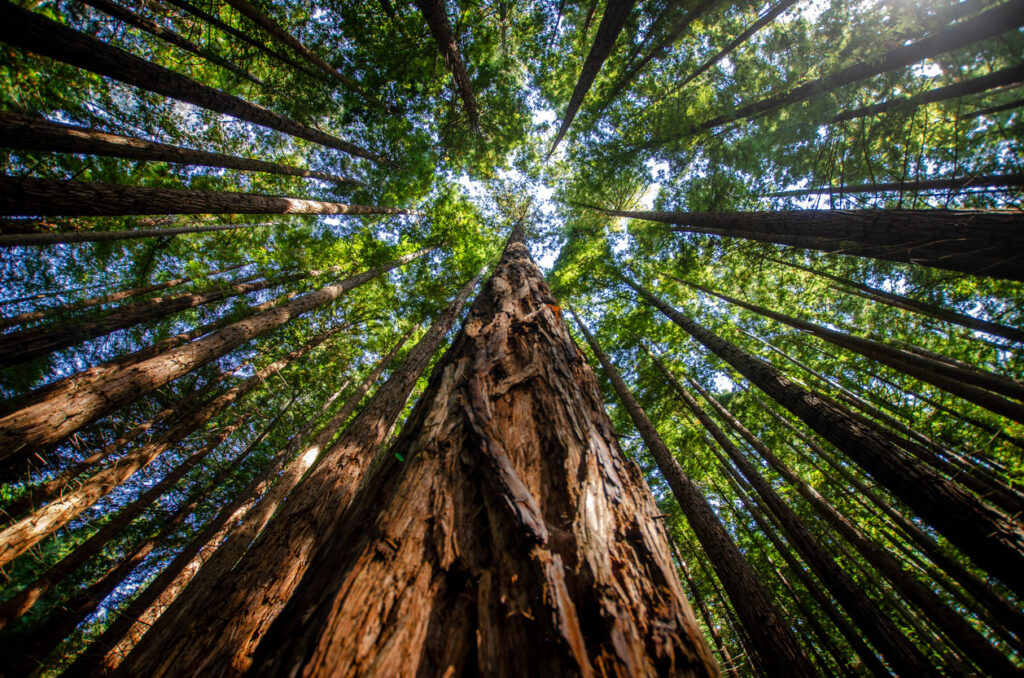
Giant sequoias can reach heights of 250 to 300 feet, with the tallest one measuring 325 feet. But it’s their width that truly scrambles your sense of scale. These trees can exceed 30 feet in diameter, with circumferences around 100 feet. That means it would take roughly six people lying head to toe to match the width of just the trunk. The largest branches alone can be eight feet in diameter, which is wider than most tree trunks.
The General Sherman tree, the world’s largest, measures 31 metres in circumference at its base and weighs an estimated 2,100 tonnes. That’s roughly 2.7 million pounds, about the weight of 10 blue whales. The tree has a total volume of over 52,000 cubic feet, which means you could theoretically fit a stadium full of people inside if it were hollow. Standing next to one genuinely feels like you’ve stepped into a fantasy film.
They’ve been alive for thousands of years.
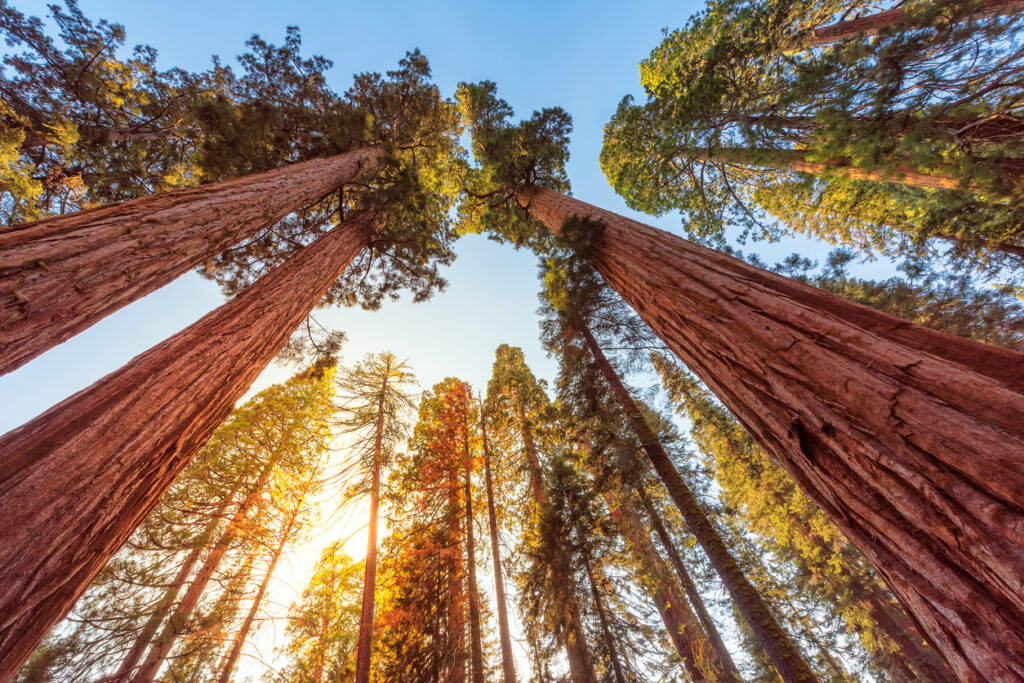
Giant sequoias regularly surpass 3,000 years old. The oldest recorded sequoia, named CBR26, lived to be 3,266 years old. Think about that for a moment. These trees were already ancient when the Roman Empire was founded. They were saplings when the pyramids were being built. The oldest ones have lived through the entire span of recorded human history and then some.
You can determine a tree’s age by counting the annual growth rings on a cross-section of the stump. Every ring represents one year of growth, and the oldest stumps examined in tree-ring studies show nearly 4,000 rings. The General Sherman tree itself is estimated to be around 2,100 years old, which means it was a young tree when Jesus walked the earth. These aren’t just trees, they’re living monuments to time itself.
They only exist in one tiny area of California.

Despite their enormous size, giant sequoias have an incredibly restricted range. They only grow naturally along a narrow 260-mile strip on the western slopes of California’s Sierra Nevada mountains, at elevations between 4,600 and 7,050 feet. There are only about 70 distinct groves scattered across this band, some containing 20,000 mature trees, while others have as few as six trees.
This makes them one of the rarest trees on earth in terms of natural distribution. The area they occupy is roughly the size of Cleveland, about 48,000 acres. That’s it. Nowhere else on the planet do these giants grow naturally. They need the specific combination of Sierra Nevada snowpack, moderate temperatures, and well-draining fertile soils found only on these western-facing mountain slopes.
Their bark can be up to three feet thick.

The bark of a giant sequoia is one of the most remarkable features of these alien-looking trees. It can grow up to 18 inches thick on average, with some of the largest trees having bark that reaches two to three feet thick. The bark is spongy, fibrous, and reddish-brown, with a texture that feels almost like coconut shell when you knock on it. It sounds nearly hollow, despite protecting something extraordinarily dense inside.
This bark isn’t just thick, it’s arranged in a three-dimensional network of fibres with air cavities throughout. The structure acts like open-pored foam, similar to insulation used in buildings. The fibres form bundles with hollow spaces between them, which distributes energy across the entire tissue. This unique structure makes the bark incredibly resistant to both fire and physical impacts, like falling rocks.
They’re built to survive fire.
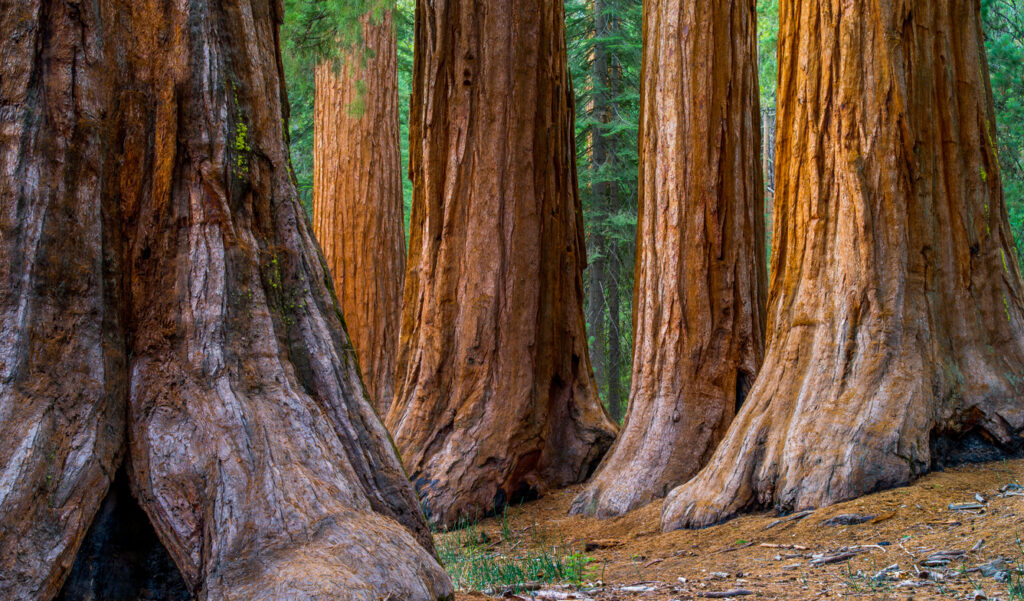
Giant sequoias have evolved alongside fire for millions of years, and their adaptations are extraordinary. The thick bark contains tannic acids that make it naturally fire-resistant. When flames hit the bark, it chars slowly rather than bursting into flames. This slow charring creates a protective crust that shields the living tissue underneath from additional heat. The air pockets in the bark act as insulation, keeping the tree’s vital cambium layer safe even during intense wildfires.
Nearly every old sequoia has fire scars at its base, showing it’s survived multiple fires over its lifetime. Trees over 1,000 years old have lived through countless wildfire seasons. Fire actually benefits sequoias by killing competing trees, clearing undergrowth, and creating the open conditions young sequoias need to germinate. However, the unnaturally intense fires we’re seeing now, fuelled by a century of fire suppression, are hot enough to kill even these flame-resistant giants.
They need fire to reproduce.
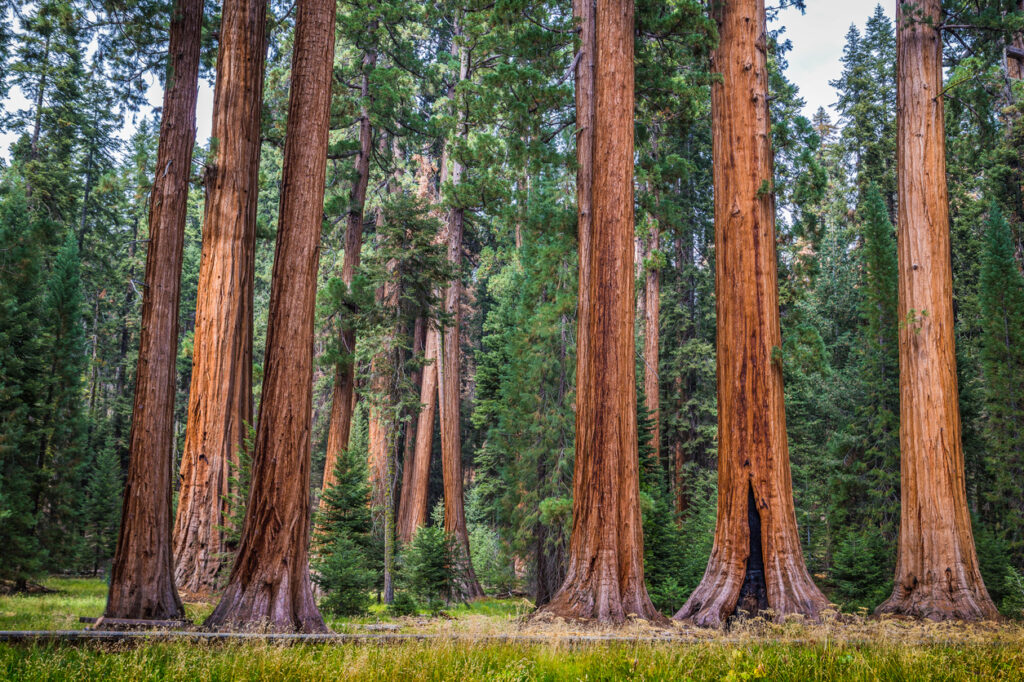
Giant sequoias have tiny cones, only about two inches long, but each mature tree can have as many as 11,000 cones. These cones are serotinous, which means they don’t open and release seeds unless exposed to heat. Fire is essentially the trigger for reproduction. When flames pass through, the intense heat causes the cones to dry out, open up, and drop their seeds. A mature tree disperses an estimated 300,000 to 400,000 seeds annually after fires.
The timing is perfect. By the time the seeds hit the forest floor, the fire has moved on, and the earth has cooled. The seeds land on freshly cleared soil enriched with ash, giving them the best possible chance to germinate. This is why fire suppression has been so damaging to sequoia reproduction. Without regular low-intensity fires, the cones stay closed and young sequoias struggle to establish themselves among thick undergrowth.
They never stop growing until they die.

Unlike most organisms that reach maturity and stop growing, giant sequoias keep getting bigger their entire lives. They grow at such a rate that they produce roughly 40 cubic feet of wood each year, which is approximately equal to the volume of a 50-foot-tall tree one foot in diameter. This makes them among the fastest-growing organisms on earth in terms of annual increase in mass.
Remarkably, older sequoias actually grow faster than young ones. Studies show that these ancient giants are still adding significant wood volume even at 3,000 years old. They just keep expanding outwards and upwards until something kills them. Interestingly, to sustain the species, a giant sequoia only needs to produce one successful offspring over its entire multi-thousand-year lifespan. With 400,000 seeds per year, the odds are pretty good.
The wood is surprisingly brittle and basically useless.
Despite their massive size, giant sequoias were never successfully logged for commercial timber. The wood is far more brittle than coast redwood, and when these enormous trees were felled in the late 1800s and early 1900s, they’d often shatter when they hit the ground because of their brittleness and tremendous weight. The impact would break the trunk into pieces, making it nearly impossible to harvest in large sections.
The leftover wood that could be salvaged was used mainly for shingles, fence posts, and matchsticks. It had little monetary value, which ironically helped save the species from destruction. Once people realised these giants weren’t profitable to log, tourism became a better incentive to protect them. The poor quality of the wood has been instrumental in ensuring these ancient trees survived into the modern era.
They once grew all over the Northern Hemisphere.

Today’s giant sequoias are the last survivors of a much more widespread population. Redwoods, including giant sequoias, once grew throughout the Northern Hemisphere. The oldest-known redwood fossils date back more than 200 million years to the Jurassic period. Fossil specimens have been found in sites across North America and Europe, and even as far away as New Zealand and Australia.
The range was greatly reduced by the last ice age, which wiped out sequoia populations across most of their historical territory. What we see today in California is essentially a tiny remnant population that survived in this one climatically favourable location. These 70 groves scattered along the Sierra Nevada are all that remain of trees that once dominated forests across entire continents.
They’re now critically endangered.
Despite their incredible adaptations and ancient lineage, giant sequoias are now listed as endangered. Between 2020 and 2021 alone, three major wildfires killed an estimated 14,000 large giant sequoias, representing 19 percent of all large sequoias in their entire range. These losses were unprecedented. Climate change, prolonged drought, and decades of fire suppression have created conditions where fires burn too hot for even these super-trees to survive.
The trees are under immense stress. Drought causes dieback in their foliage, making them vulnerable to bark beetle infestations that would normally not trouble them. When fires do occur now, they’re catastrophically intense rather than the low-to-moderate severity fires sequoias evolved with. The seeds cook and become nonviable, preventing natural regeneration. In high-severity burn areas, any seedlings that manage to sprout quickly die from lack of soil moisture and excessive heat. We’re potentially watching the final chapter of a species that has existed for 200 million years.