Evolution has a habit of doing its weirdest work in places most of us never see—pitch-black caves, remote sinkholes, deep-sea trenches. And while most animals adapt in predictable ways, some species end up evolving into something almost unrecognisable. From pale predators with ghostly fur to blind fish navigating total darkness, here are 10 strange creatures shaped by extreme environments and the wild twists of evolution.
Ghost cats with cave camouflage
Some wild cat species in remote European cave systems have gradually evolved paler coats and sharper night vision. These ghost-like cats don’t just look eerie—they’ve adapted over generations to thrive in places with very little light and even fewer visual cues to help them hunt or hide.
Their subtle colouring helps them blend into moonless terrain, while their heightened senses give them an edge where sight doesn’t go far. It’s not magic, it’s survival. Evolution strips away what’s not needed and enhances what works, even if it leaves the animal looking otherworldly in the process.
Blind Mexican cavefish
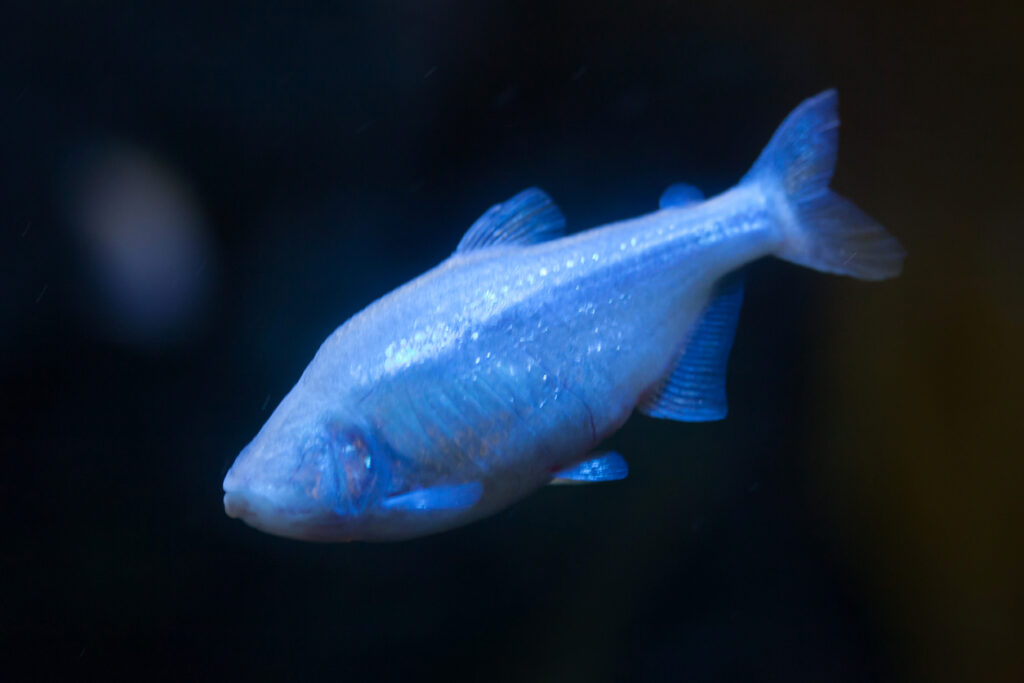
The Mexican tetra is a regular fish when it lives near the surface—bright, alert, and full of colour. But drop its cousins into a cave for a few thousand years, and they evolve into something completely different. These cave-dwelling fish lose both their eyesight and their pigment, becoming pale and blind as the dark becomes home.
What’s wild is that this isn’t a flaw; it’s a brilliant energy-saving adaptation. Without the need to see, the fish stop wasting precious resources developing eyes and visual processing power. It’s a quiet example of nature cutting corners in all the right ways.
Blindness as an energy hack
For young fish, developing eyes and the brainpower to use them is a massive energy expense, especially when you live in total darkness and that effort goes completely unused. So in the pitch-black world of cave life, blindness becomes a strategic win.
Instead of wasting oxygen and nutrients on sight, cavefish reroute those resources into other survival tools. Their bodies grow more sensitive to movement, vibrations, and water pressure. The result? A creature that’s perfectly tuned to thrive in the dark, without the extra baggage of unnecessary features.
Evolution repeats itself in different caves
One of the strangest things about these cavefish is that blindness didn’t evolve once and spread. It evolved independently, over and over, in separate cave systems around the world. Different species, same outcome. That’s convergent evolution—when nature solves the same problem multiple times in similar ways.
This repeat performance shows just how predictable some parts of evolution can be under pressure. If the environment stays harsh enough, long enough, life will start trimming off the excess until only the essentials remain. And apparently, in a cave, eyes just don’t make the cut.
How they ‘see’ without seeing
Even without eyes, cavefish aren’t stumbling around aimlessly. They’ve got an incredible system of lateral lines—tiny sensors that run down their sides to detect the slightest changes in water movement. It’s a built-in sonar system, like a sixth sense for navigating the unknown.
Add to that an ultra-sensitive sense of touch, and they move through complete darkness with the kind of precision that puts most sighted animals to shame. It’s not that they’ve lost a sense. It’s that evolution swapped one out for another that actually works better where they live.
The horned Chinese cavefish
One of the strangest finds in recent years is the horned Chinese cavefish. These bizarre little swimmers have what look like single horns protruding from their heads—soft, fleshy growths that likely help them feel their way around tight cave spaces.
No one’s entirely sure what the horn does, but it’s probably a touch organ or something that helps with orientation in total darkness. Either way, it’s another example of how animals in isolation can start to evolve features that make no sense—until you realise they’re perfect for the life they lead.
The ancient coelacanth
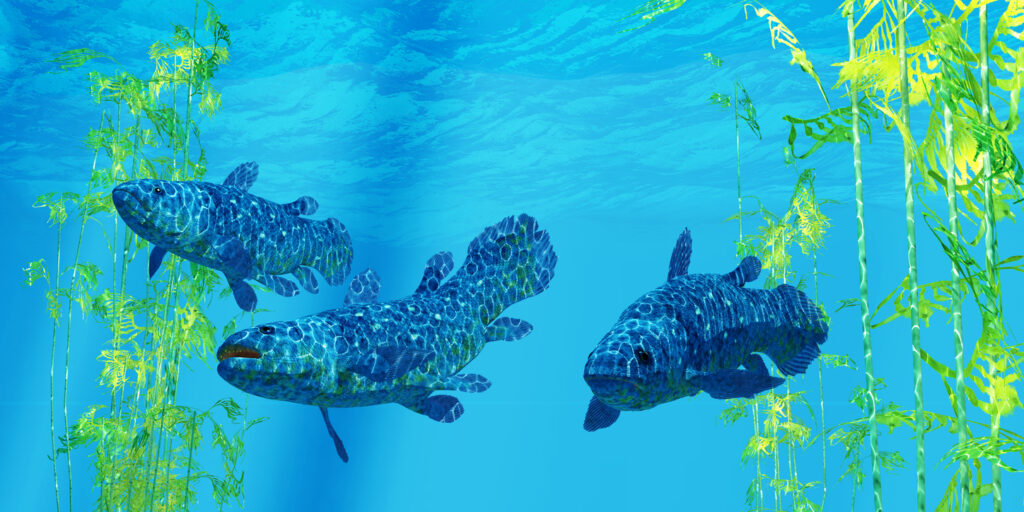
Long thought extinct, the coelacanth made headlines when it was rediscovered alive and well in the deep sea. These fish have been around since before the dinosaurs, and they’ve barely changed in millions of years. Their secret? Living in a niche no one else bothers with.
Coelacanths live slow, grow old, and gestate for nearly five years—one of the longest known periods in the animal kingdom. It’s like they’ve figured out that the best way to survive is to not compete. Stay deep, stay weird, and outlast everything else.
Europe’s first cavefish—fast-track evolution
In the underground rivers of the Dinaric Alps, scientists recently discovered Europe’s first true cavefish. Pale, eyeless, and adapted to darkness, they evolved from surface-dwelling loaches in just around 20,000 years. In evolutionary terms, that’s ridiculously fast.
This discovery shows that evolution doesn’t always take millions of years. Under the right pressure—total darkness, limited food, zero predators—creatures can change dramatically in a short space of time, becoming something new in just a few thousand generations.
Madagascar’s rule-breaking cavefish
Not all cavefish follow the usual script. Some species in Madagascar’s sinkholes have retained dark pigmentation, even though they live in near-total darkness. It goes against what you’d expect—and no one’s exactly sure why they didn’t follow the usual path to blindness and pallor.
This is what makes evolution so fascinating: it’s not always predictable. Even in similar conditions, life can go rogue. Maybe the environment’s different in ways we don’t fully understand, or maybe these fish found their own way to survive without ditching all their old traits.
What these creatures tell us about the future
Cavefish aren’t just evolutionary curiosities. They offer real insight into how life can adapt under pressure, and what happens to brains, bodies, and behaviours when one sense disappears. Studying them helps scientists understand everything from sensory processing to genetic flexibility.
They also remind us how adaptable life is, and how quickly things can change when the environment demands it. In a world facing climate shifts and habitat loss, these strange survivors might hold clues for how other species, including us, could evolve to handle the unknown.