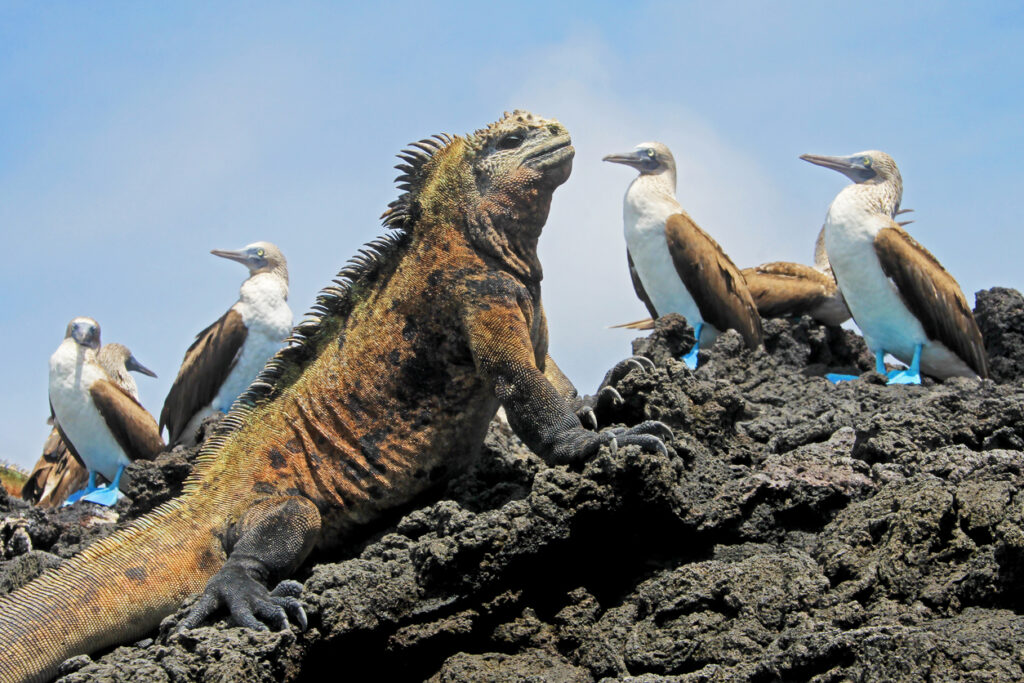
Most people look at an iguana and think slow, sleepy, slightly grumpy lizard that mostly just sits there. Fair enough—they do spend a lot of time sunbathing like they’ve got nowhere to be. However, under that chilled exterior, iguanas are packed with strange little abilities that feel almost prehistoric. The more you learn about them, the more you realise they’re not just decorative reptiles. They’re full of odd, clever survival tricks.
Iguanas can drop their tails on purpose.
If a predator grabs an iguana by the tail, it can literally detach it and make a run for it. The tail keeps wriggling on the ground for several minutes, which distracts the predator just long enough for the iguana to escape. It sounds dramatic, but it’s a calculated move. The tail eventually grows back, though never quite as perfectly as the original. Still, losing part of your body to save your life is a wild party trick most animals don’t have.
They can hold their breath underwater for ages.
Despite looking like desert reptiles, many iguanas are excellent swimmers. Some species can stay submerged for up to 30 minutes if they need to avoid danger. They flatten their bodies slightly and use powerful tail strokes to glide through water. If you see one dive off a riverbank, it’s not panicking. It’s switching to aquatic mode like it’s done it a hundred times before.
@animalogic Green Iguna’s have a 3rd eye! #fyp #iguana #nature #wildlife #thirdeye #spirituality #spiritualtok ♬ original sound – Animalogic
They have a built-in third eye.
It’s not an eye in the way you’re picturing, but iguanas have a light-sensitive organ on top of their head called a parietal eye. It can’t form images, but it detects changes in light and shadow. That extra sensor helps them spot predators swooping in from above. If a shadow suddenly passes over, they react fast. It’s like having a built-in motion detector on the roof of your head.
They can survive big falls without much drama.
Iguanas often live high up in trees. When threatened, they sometimes leap from surprising heights straight into water or onto the ground. Young iguanas in particular can fall several metres and just run off like nothing happened. Their light bodies and strong limbs help absorb the impact. It looks reckless, but for them, it’s routine.
They sneeze out excess salt.
If you’ve ever seen a white crust around an iguana’s nostrils, it’s not dirt. Iguanas have special salt glands that remove excess salt from their bodies. They expel it through sneezing, which looks funny but keeps their internal balance stable. It’s especially useful for species that live near coastal areas or eat salty plants.
Some iguanas can change shade slightly.
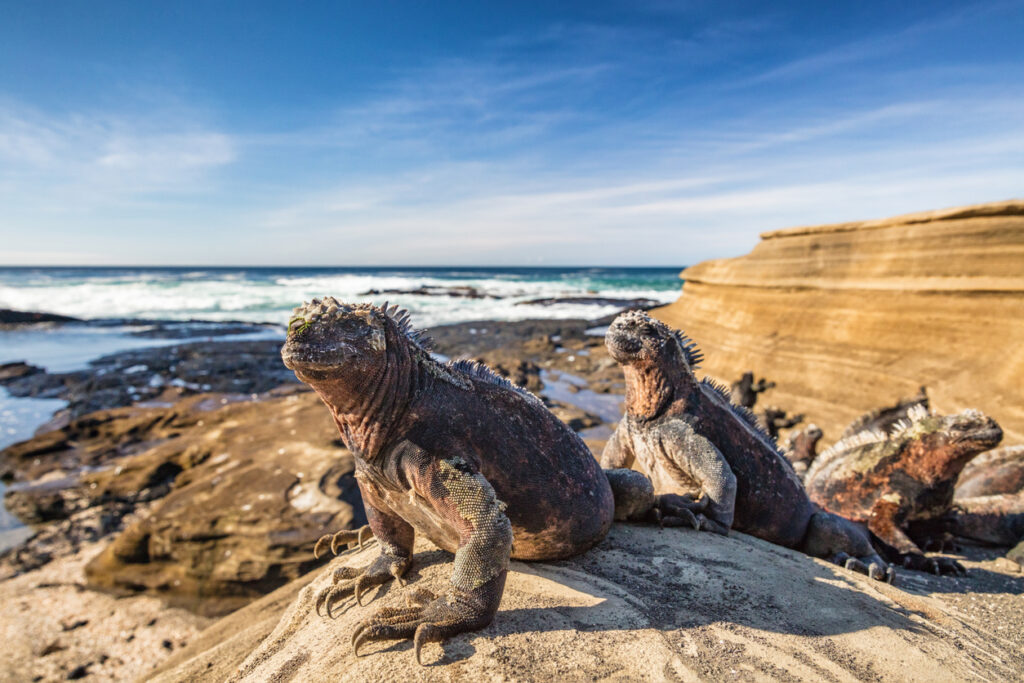
They don’t change colours as dramatically as chameleons, but iguanas can darken or lighten their skin a bit depending on temperature and mood. When they’re cold, they often appear darker to absorb more heat from the sun. When they’re warm or relaxed, their colour can lighten. It’s a subtle thermostat built into their skin.
Marine iguanas feed underwater on algae.
The marine iguana found in the Galápagos Islands is the only lizard in the world that forages in the ocean. These iguanas dive down to scrape algae off rocks, sometimes swimming through cold currents that would challenge other reptiles. After feeding, they haul themselves back onto warm lava rocks to heat up again. It’s an unusual mix of reptile and marine behaviour.
They have surprisingly strong jaws.
Iguanas are mostly herbivores, but they don’t nibble like rabbits. Their jaws are powerful enough to tear through tough leaves and stems. Their teeth are serrated and designed for slicing plant material efficiently. It’s less gentle grazing and more efficient shredding, which helps them process fibrous vegetation quickly.
They can stay still for an incredibly long time.
Stillness is one of their best defence strategies. An iguana can freeze completely, blending into branches or rocks so effectively that predators overlook it. That patience isn’t laziness. It’s calculated energy conservation. By not moving, they avoid drawing attention and save energy in hot climates.
@creaciongrandiosa 🦎WHO RUNS FASTER THAN THIS BEAUTY!🦎IGUANA🦎 #iguana #iguanalovers #animals #nature #naturaleza #tiktokanimals #fyp #foryoupage #thankyou ♬ original sound – creaciongrandiosa
They communicate with head bobs and body language.
Iguanas aren’t silent statues. They use head bobs, dewlap extensions, and posture to communicate with each other. A quick series of head bobs can signal dominance. A slower movement can mean something entirely different. It looks subtle to us, but in iguana terms, it’s a full conversation.
They can run faster than you’d expect.
When startled, iguanas don’t shuffle. They sprint. Some can reach speeds of around 20 miles per hour over short distances. That sudden burst of speed often surprises people who assume they’re sluggish. One moment they’re lounging, the next they’re gone in a flash of claws and tail.
Their tails double as powerful whips.
An iguana’s tail isn’t just for balance. It can be used as a defensive weapon. If cornered, they’ll lash it side to side with enough force to sting. Combined with sharp claws and strong jaws, they’re not as helpless as their calm appearance suggests.
Once you look past the slow blinking and sunbathing, iguanas feel less like background scenery and more like small, scaly survival experts. They’ve evolved to fall, swim, whip, sneeze salt, and even detach body parts if necessary. Not bad for an animal most people assume just sits on a branch all day.