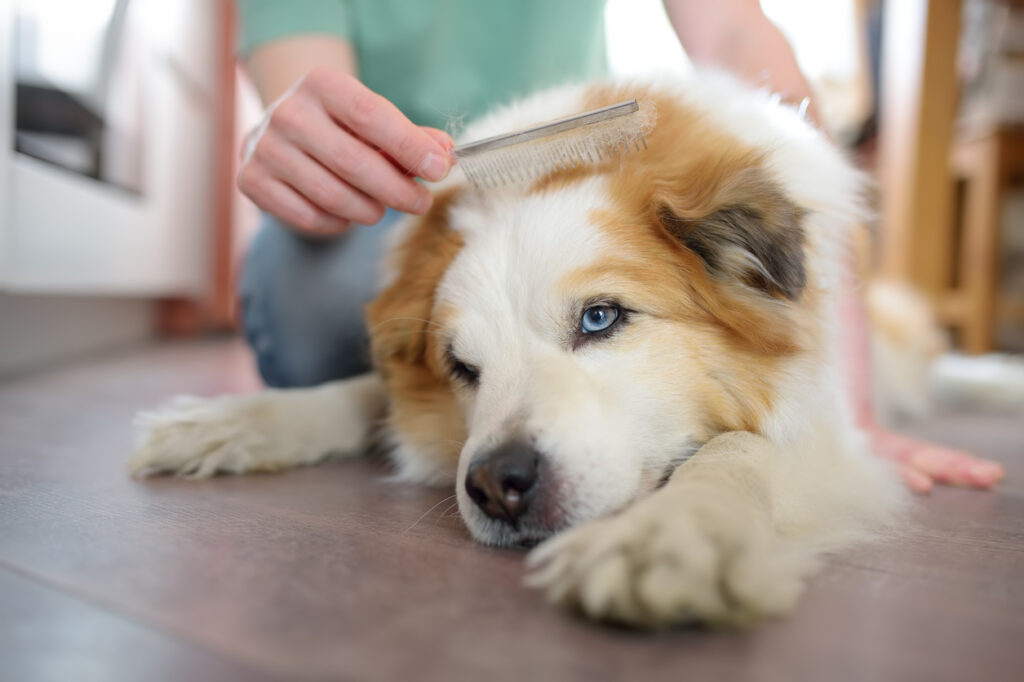
Taking your dog to the groomer regularly adds up fast, and for a lot of breeds it’s simply not necessary as often as people think. With a few basic tools and some patience, you can keep your dog looking and feeling great between professional appointments, or skip them altogether.
Invest in the right brush for your dog’s coat type.
This is the foundation of everything else, and getting it wrong makes the whole process harder than it needs to be. A slicker brush works well for most coat types and helps detangle without pulling too aggressively. If your dog has a double coat, an undercoat rake will do far more than a standard brush ever could. Long-haired breeds often need a wide-tooth comb on top of regular brushing to catch knots before they turn into mats. Spending a bit more on decent tools upfront saves a lot of frustration later, and your dog will tolerate grooming far better when it’s not uncomfortable.
Brush regularly rather than leaving it until it’s a problem.
Ten minutes three times a week is dramatically more effective than an hour-long session once a month. By the time a coat has knotted and matted badly, brushing it out at home isn’t really an option without causing your dog real discomfort, and that’s when you end up at the groomer anyway. Keeping on top of it consistently means each session stays quick and easy, and your dog gets used to it as a normal part of their routine rather than something to brace themselves for. If they associate brushing with something calm and low-key, they’ll stop making it a battle.
@bridgitsbarkingbowtique My secrets out! How to bathe your digs at home 🤫 #dogbath #bathing #doggroomer #dogsoftiktok #doglover #spaday #tips #westie ♬ original sound – Bridgit’s Barking Bow-tique
Learn to bathe your dog at home properly.
Home baths are one of the easiest grooming costs to cut, and most dogs tolerate them perfectly well once they’re used to the routine. Use a dog-specific shampoo that suits their skin, as human shampoo disrupts their skin’s pH balance and can cause irritation over time. Wet the coat thoroughly before applying anything, work the shampoo right down to the skin rather than just the surface, and rinse for longer than you think is necessary because leftover product causes itching. Having a non-slip mat in the bath makes a real difference for anxious dogs, and keeping the whole process calm and consistent helps them learn that it’s not something to worry about.
Deal with matting early before it becomes serious.
Small mats caught early can usually be worked out with a detangling spray and a bit of patience. The mistake most people make is trying to brush straight through them, which hurts and makes the dog less cooperative every time afterwards. Instead, hold the mat at the base close to the skin so you’re not pulling, and work through it gradually from the ends inward. If a mat is tight against the skin or covering a large area, it’s safer to carefully cut it out with blunt-ended scissors rather than cause your dog pain trying to save it. Getting mats out early means they never reach the point where a groomer has to shave the coat off entirely.
Trim around the eyes and face with small scissors.
For dogs with hair that grows over their eyes, regular trimming makes a real difference to their comfort and visibility. Small, round-ended scissors are the safest option; they reduce the risk of an accidental poke if your dog moves suddenly. Trim little and often rather than trying to do a lot at once, and always make sure your dog is calm and still before you start. Getting them used to having their face handled from an early age makes this much easier, but even older dogs learn to tolerate it when it’s done gently and without rushing.
@vigothetoller This is a video I wish I’d seen when I was new to puppy parenthood. I hope it helps someone else out! #dogearcleaning #doghygiene #dogcleaning #dogcleaningtip #newpuppymom #newdogmomlife ♬ original sound – Vigo the Toller
Keep on top of ear cleaning yourself.
Ears are one of the things groomers routinely do that’s straightforward to handle at home. Use a vet-approved ear cleaning solution and cotton wool—never cotton buds, which can push debris further in or cause damage. Apply a small amount of solution, gently massage the base of the ear for about thirty seconds, then let your dog shake their head before wiping away what comes out. Once a week is usually enough for most dogs, though breeds with floppy ears or dogs that swim regularly may need it more often. Catching the early signs of infection—smell, redness, or your dog scratching persistently—means you can get it sorted before it becomes a bigger problem.
Trim nails at home with the right technique.
Long nails affect how a dog walks and can cause joint problems over time, so keeping them short matters beyond the aesthetics. Dog nail clippers are inexpensive and easy to use once you know what you’re doing. The key thing is to avoid the quick, which is the blood vessel running through the nail; cutting into it is painful and bleeds a fair amount, though it’s not dangerous. On light-coloured nails you can see it clearly. On dark nails, trim small amounts at a time and look at the cross-section as you go. When you start to see a dark circle forming in the centre, stop. Having some styptic powder nearby for mistakes makes the whole thing less stressful.
Use dry shampoo between baths.
Dog-specific dry shampoo is genuinely useful for keeping your dog smelling reasonable between washes without the full bath commitment. It’s particularly handy after muddy walks or for dogs that seem to seek out unpleasant things to roll in. Work it through the coat, leave it for a minute or two, then brush it out. It won’t replace a proper bath but it buys time comfortably and keeps your sofa smelling less like wet dog on a rainy afternoon.
Get your dog comfortable with being handled early.
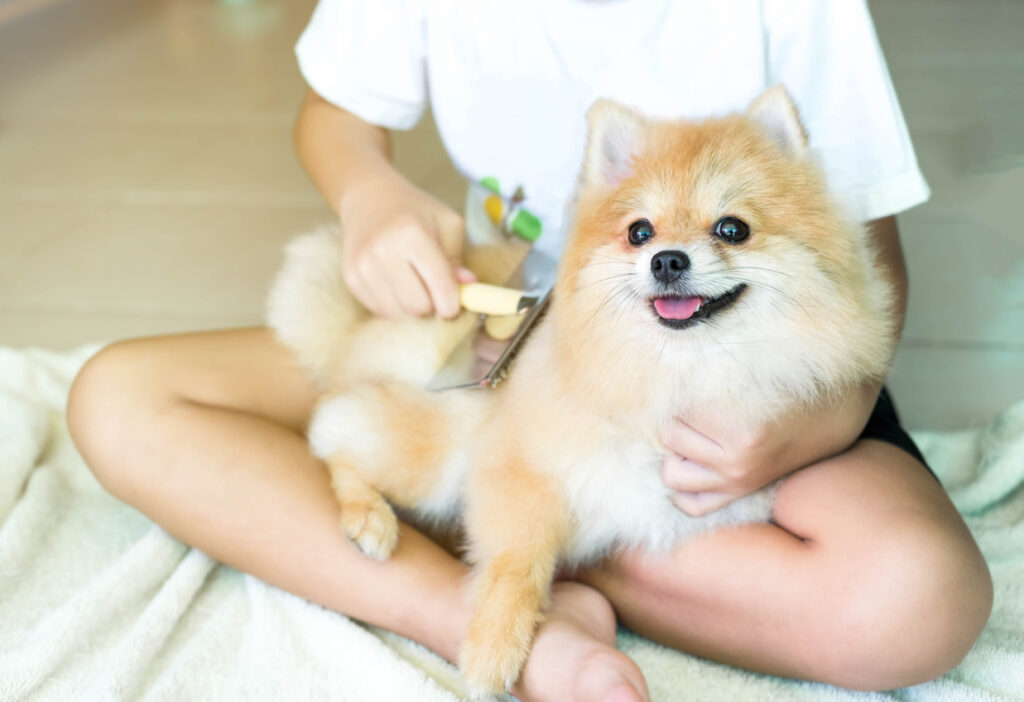
The biggest obstacle to home grooming is usually a dog that won’t cooperate, and the best time to address that is before it becomes a problem. Regularly handling paws, ears, mouth, and tail, even when you’re not actually doing anything, teaches your dog that being touched in those areas isn’t a cause for alarm. Pair it with calm praise and the occasional treat and most dogs come around quickly. If you’re starting with an older dog that’s already anxious about grooming, go slowly, keep sessions short, and build up gradually rather than trying to power through.
Know which parts of grooming still need a professional.
None of this means you never need a groomer again. After all, certain breeds with complex coats genuinely benefit from a professional cut a few times a year, and there are things like anal gland expression that are better left to someone trained to do them. The goal is to reduce how often you need professional help, not to replace every aspect of it entirely. Going less frequently because your dog’s coat is well-maintained in between is a completely realistic outcome, and it means the visits you do make are quicker and cheaper because there’s less work to do.
Finish every grooming session on a positive note.
This sounds small but it has a real effect on how cooperative your dog is next time. If a session ends badly with the dog stressed, you frustrated, or both, that’s what gets associated with grooming going forward. Even if things got a bit difficult in the middle, take a moment at the end to do something your dog enjoys, whether that’s a treat, a bit of play, or just a calm fuss. It closes the session on a note that makes the next one easier, and over time that adds up to a dog who’s genuinely relaxed about the whole thing rather than one you have to catch first.
@snipofdogs How to cut your dog’s nails in 3 EASY steps #doggroomer #nailcutting ♬ original sound – Snip Of Dogs
Tackle paws and pads as part of your routine.
Paw maintenance is easy to overlook but genuinely useful to keep on top of. Hair that grows between the paw pads can cause slipping on smooth floors and collect debris uncomfortably, so trimming it flush with the pad every few weeks makes a difference. While you’re there, check the pads themselves for cracking or soreness, particularly in winter when pavements can be harsh. A small amount of paw balm works well for dogs prone to dry or cracked pads and takes about thirty seconds to apply. Most dogs don’t mind paw handling once they’re used to it, and catching minor issues early saves a trip to the vet as much as to the groomer.
Build a simple routine and stick to it.
The dogs that are easiest to groom at home are the ones whose owners do it consistently rather than in occasional frantic bursts. A simple routine, such as a quick brush on set days, nails checked monthly, and ears cleaned weekly, takes very little time once it’s established and keeps everything manageable. Write it down if it helps, or tie it to something you already do regularly so it doesn’t get forgotten. The grooming itself is rarely the hard part once it becomes habit; it’s the irregularity that lets things build up to the point where they feel like a project.